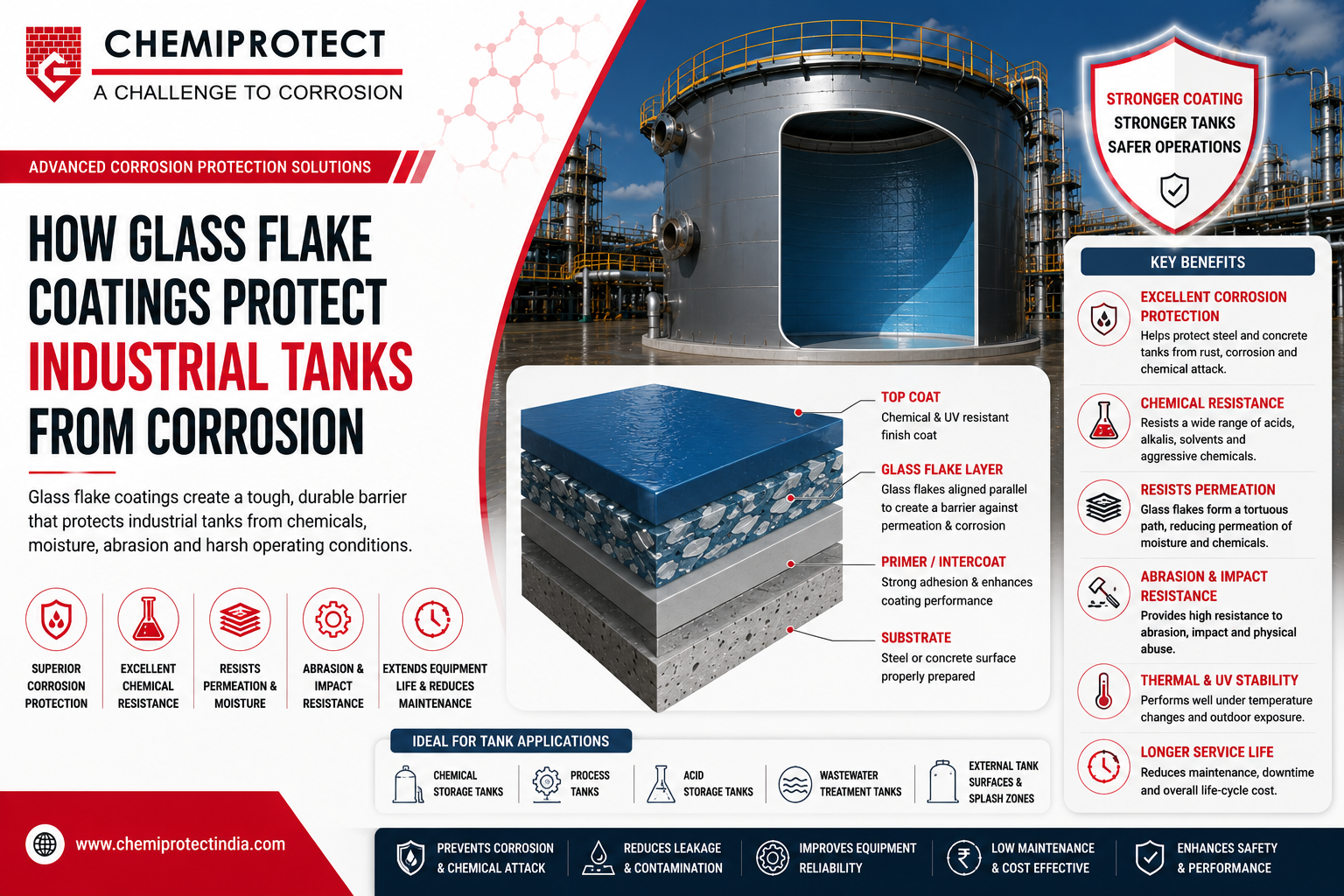
How Glass Flake Coatings Protect Industrial Tanks from Corrosion
Industrial tanks are regularly exposed to
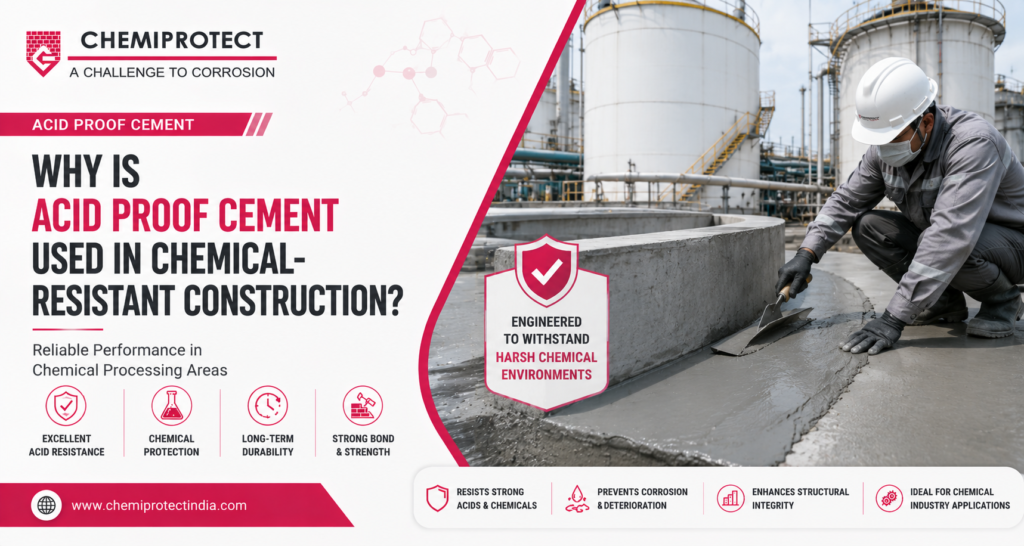
Acid proof cement is used in chemical-resistant construction because normal cement cannot handle acids, alkalis, wastewater, and corrosive liquids for a long time. In industries like chemical processing, pharmaceuticals, fertilizer, battery manufacturing, laboratories, and effluent treatment, surfaces often face harsh chemical exposure.
When normal cement comes in contact with aggressive chemicals, it may weaken, crack, or lose bonding strength. This can damage floors, tanks, drains, pits, and lining systems. That is why industries use acid proof cement for stronger and safer protection. CHEMIPROTECT provides reliable solutions for industrial areas that need long-lasting chemical resistance.
Acid proof cement is a special cement-based material used in areas exposed to acids and corrosive chemicals. It helps protect industrial surfaces, joints, and lining systems from chemical attack.
It is commonly used in combination with acid proof tiles, acid resistant bricks, acid proof mortar, and acid resistant concrete systems. The main purpose of acid proof cement is to improve durability in chemical-prone environments.
Chemical industries need strong materials that can survive harsh conditions. Normal cement may absorb chemicals and start breaking down. This can create weak joints, damaged floors, and unsafe working areas.
Acid proof cement helps reduce these risks. It supports chemical-resistant construction and improves the performance of protective lining systems.
Acid proof cement provides better protection against acids and corrosive liquids compared to normal cement.
It helps protect joints in tile and brick lining systems where chemical leakage can cause damage.
Using the right cement system can increase the life of floors, tanks, drains, and other industrial structures
When surfaces and joints are protected properly, industries face fewer repair problems and lower maintenance costs.
Acid proof cement is used in many industrial areas where chemical resistance is required.
Common application areas include:
These areas need strong protection because chemical damage can affect both safety and production.
Acid resistant cement is used to resist chemical attack in industrial construction and repair work. It helps improve the durability of surfaces exposed to acids, alkalis, and corrosive substances.
Acid resistant cement is selected based on chemical type, concentration, temperature, and application area. It supports the performance of lining systems and helps protect the base structure.
Both acid proof cement and acid resistant cement are used in chemical-prone areas. However, the final selection depends on the exposure level and project requirement.
In simple terms:
CHEMIPROTECT helps industries select the right cement system based on real site conditions.
Acid proof mortar is prepared using suitable chemical-resistant materials for bonding and joint filling. It is used in acid proof tile lining, acid proof brick lining, tanks, drains, pits, and trenches.
Joints are one of the most important parts of any lining system. If joints are weak, chemicals can enter through gaps and damage the surface below. Acid proof mortar helps seal these joints and improves the life of the lining.
Acid proof mortar is used for:
A strong mortar system helps the complete lining perform better.
Acid resistant mortar is needed because normal mortar may fail when exposed to chemicals. It can absorb acids, crack, and lose strength. This can cause leakage and damage to the base structure.
Acid resistant mortar helps protect the joints and improves bonding between lining materials. It is used where floors, tanks, drains, and walls need chemical protection.
Acid resistant mortar offers:
CHEMIPROTECT provides suitable acid resistant mortar solutions for different industrial applications.
Acid proof concrete is used where concrete surfaces need extra protection from acids and corrosive chemicals. It helps protect floors, pits, drains, tanks, and chemical handling areas.
In many cases, acid proof concrete works with other protection systems like acid proof cement, acid resistant mortar, tiles, bricks, and coatings. This creates a complete chemical-resistant surface.
Acid proof concrete is useful in:
It helps improve the durability and safety of industrial structures.
Acid resistant concrete helps protect industrial surfaces from chemical attack, moisture, and corrosion. It is more suitable than normal concrete in areas where acids and aggressive liquids are present.
When used correctly, acid resistant concrete can reduce cracks, surface damage, and maintenance problems.
Acid resistant concrete helps with:
The right system should be selected according to the type of chemical exposure and site condition.
Normal cement is designed for general construction work. It performs well in regular buildings, but it may not survive in chemical-prone areas. Acids and corrosive liquids can react with normal cement and weaken it over time.
Normal cement may cause problems such as:
For chemical industries, acid proof cement is a better and safer option.
Choosing the right acid proof cement system depends on the actual industrial condition. Every area has different chemical exposure, temperature, moisture, and traffic level.
Before selecting a system, check:
CHEMIPROTECT helps industries choose practical and suitable solutions based on these factors.
Even strong chemical-resistant systems need proper maintenance. Regular inspection helps prevent major damage.
These simple steps help increase the life of the protection system.
CHEMIPROTECT provides reliable chemical-resistant solutions for industrial floors, tanks, drains, pits, trenches, and lining systems. The company understands that chemical exposure can damage normal construction materials and increase long-term repair costs.
CHEMIPROTECT offers suitable solutions for acid proof cement, acid resistant cement, acid proof mortar, acid resistant mortar, acid proof concrete, and acid resistant concrete. With proper product selection and application guidance, industries can build safer and more durable surfaces.
Acid proof cement is an important material for chemical-resistant construction. It helps protect joints, floors, tanks, drains, pits, and lining systems from acids, alkalis, wastewater, and corrosive liquids.
For industries that deal with chemicals, normal cement is not enough. Choosing the right acid proof cement system can improve surface life, reduce maintenance, and support safer operations. CHEMIPROTECT helps industries select reliable solutions for long-term chemical protection.
Acid proof cement is used in chemical-resistant construction, lining, repair, jointing, and bonding work. It helps protect industrial floors, tanks, drains, pits, and trenches from acid and chemical attack.
Yes, acid proof cement is better for chemical-prone areas because normal cement can weaken when exposed to acids and corrosive liquids. Acid proof cement provides better protection and longer service life.
Acid proof cement is generally used for stronger acid protection needs, while acid resistant cement helps resist chemical attack. Both are used in industrial chemical-resistant applications.
Acid proof mortar is important because it bonds tiles or bricks and seals joints. It prevents chemicals from entering through gaps and protects the base concrete from damage.
CHEMIPROTECT provides reliable solutions for acid proof cement, acid resistant cement, acid proof mortar, acid resistant mortar, acid proof concrete, and acid resistant concrete. The company helps industries choose suitable systems for long-term chemical protection.
When used with chemical resistant masonry units and the proper membrane MIPRO-VE will protect concrete and steel sub base from chemical attacks and physical abuse. MIPRO-VE is silica filled vinyl ester mortar supplied in two parts .
Industrial tanks are regularly exposed to
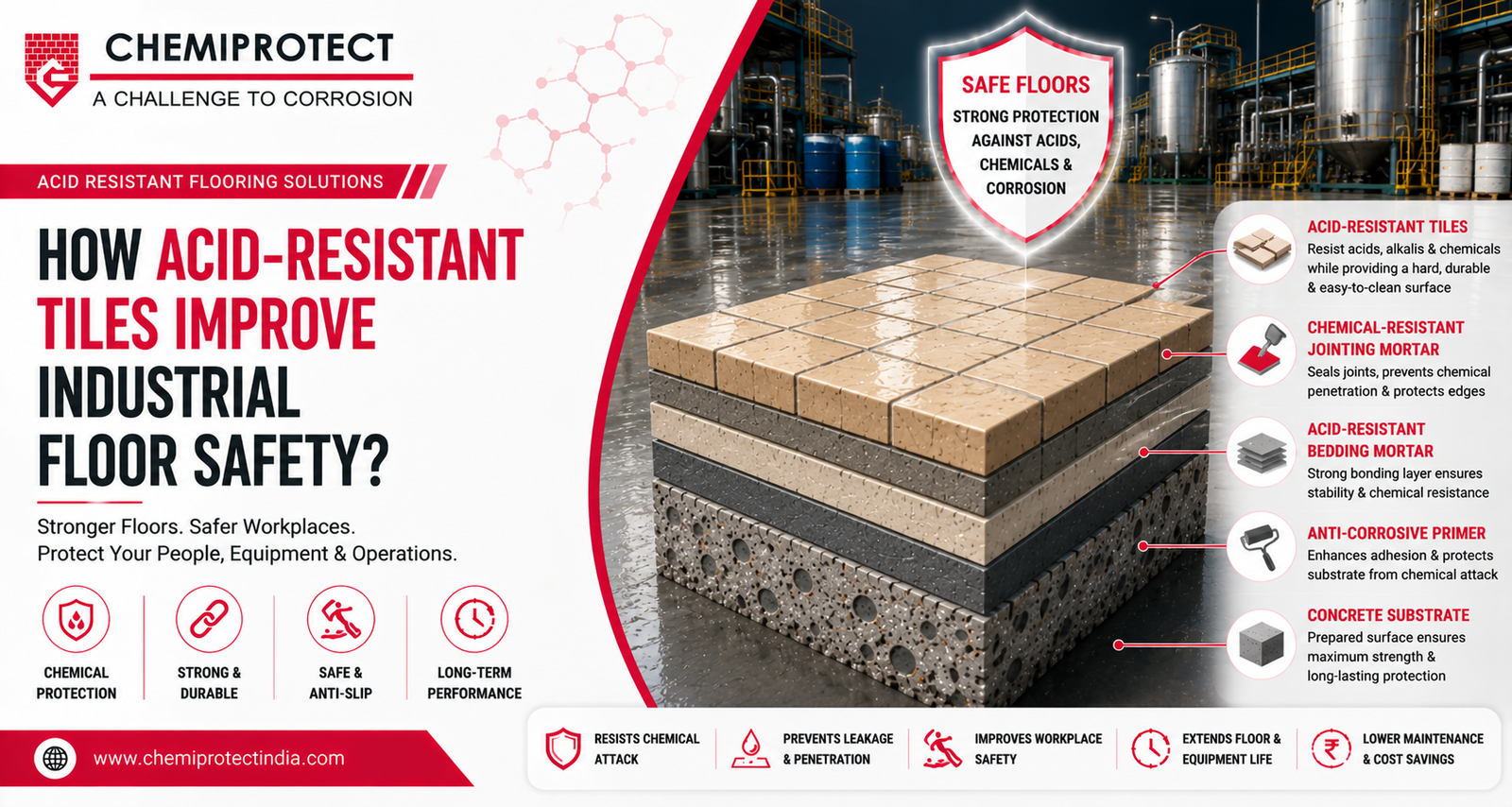
Industrial floors can face demanding conditions
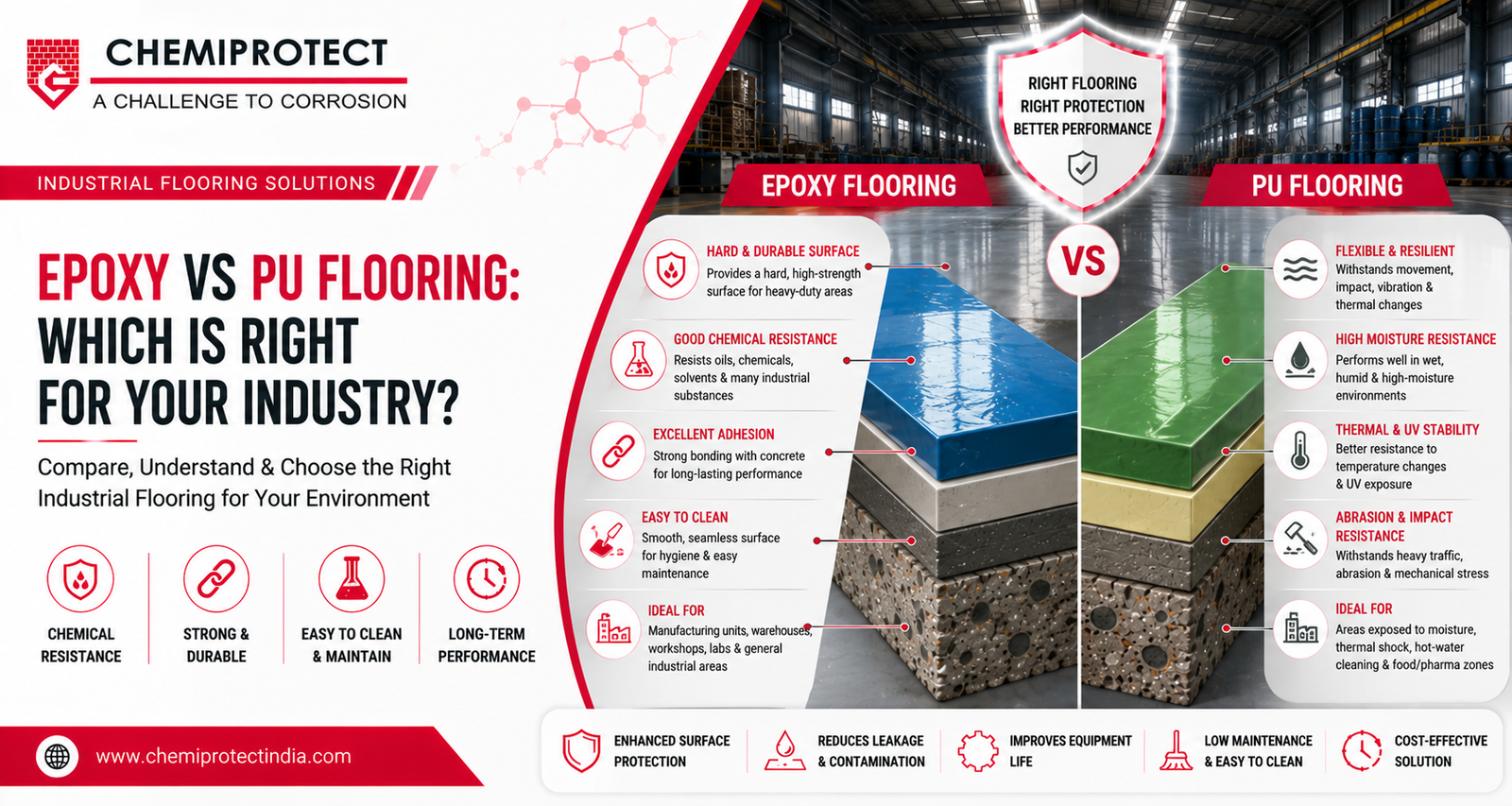
Industrial floors have to withstand much
Connect Now