Polyurethane Flooring for Industrial Applications – Benefits and Uses
Polyurethane Flooring for Industrial Applications – Benefits and Uses
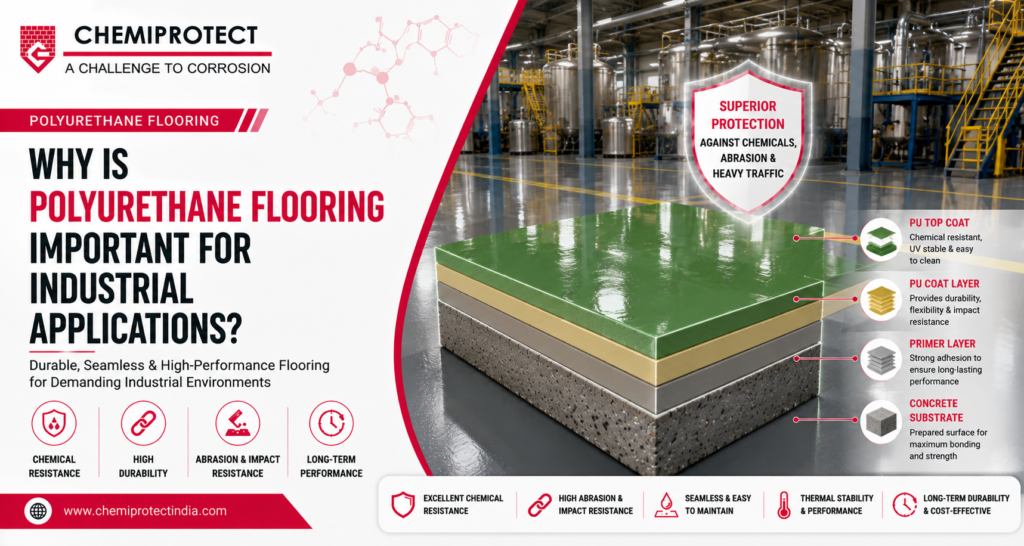
Industrial floors face demanding conditions every day. Heavy equipment, chemical spills, temperature variations, moisture, abrasion and continuous movement can damage conventional flooring. For industries requiring durable and reliable surfaces, selecting the right protective flooring system is essential.
Polyurethane Flooring for Industrial Applications provides a durable surface designed for challenging operating environments. Polyurethane, commonly known as PU, can offer resistance to chemicals, abrasion, impact and temperature changes when the appropriate system is selected.
Chemiprotect Engineers provides PU-based protective solutions for industrial environments where flooring must perform under demanding conditions.
What Is Polyurethane Industrial Flooring?
Polyurethane Industrial Flooring is a resin-based flooring system applied over a prepared concrete or other suitable substrate. The cured surface forms a continuous protective layer that helps protect the underlying floor from mechanical and chemical stresses.
PU flooring systems can be designed for areas exposed to heavy traffic, chemicals, moisture, impact and temperature fluctuations. Performance depends on the formulation, thickness, substrate condition and application method.
Why Do Industries Need Protective Flooring?
Industrial floors experience more stress than conventional commercial spaces. Forklifts, machinery, heavy loads, chemicals, oils and continuous traffic can contribute to surface deterioration.
Unprotected concrete may develop cracks, dusting, staining and surface damage. Chemical exposure can accelerate this deterioration.
A suitable industrial flooring system creates a protective barrier while providing a durable and easier-to-maintain surface.
Benefits of Polyurethane Flooring
Chemical Resistance
Industrial facilities may handle acids, alkalis, solvents, oils and other chemicals. PU flooring can provide resistance against selected chemical exposures when the correct formulation is chosen.
Chemical compatibility should be evaluated according to the specific substance, concentration, temperature and exposure duration.
Abrasion Resistance
Industrial floors experience mechanical wear from vehicles, machinery and heavy foot traffic. A properly specified polyurethane system can provide a durable surface that withstands repeated movement and abrasion.
Impact Resistance
Dropped tools, equipment movement and heavy loads can place significant stress on industrial floors. PU systems can provide resistance to physical impact and mechanical activity, depending on the specification.
Thermal Resistance
Some industrial facilities experience temperature variations or exposure to hot and cold conditions. Polyurethane flooring can be considered where thermal performance is important, with the appropriate system selected according to operating temperatures.
Seamless Surface
PU flooring can create a continuous surface without numerous joints. This can reduce areas where dirt, moisture or chemical residues accumulate and support easier cleaning.
Applications of PU Flooring for Industries
PU Flooring for Industries can be used across industrial environments where durable and protective flooring is required.
Manufacturing Facilities
Manufacturing floors experience heavy traffic, machinery movement and mechanical wear. PU flooring can provide a robust surface for production areas and walkways.
Chemical Processing Plants
Chemical facilities require flooring that can withstand specific chemicals and spills. A compatible polyurethane system can help protect the underlying substrate.
Food and Beverage Facilities
Hygiene and easy cleaning are important in food-processing environments. Seamless flooring can provide smooth surfaces that are easier to clean and maintain.
Pharmaceutical Facilities
Pharmaceutical manufacturing environments require controlled and hygienic surfaces. PU flooring can be considered where seamless, durable and easy-to-maintain flooring is required.
Warehouses
Warehouses experience continuous movement from forklifts, trolleys and personnel. Durable industrial flooring can help withstand this traffic while maintaining a functional surface.
Workshops
Workshops may experience oil spills, mechanical impact, heavy loads and abrasion. A suitable PU flooring system can provide additional protection against these stresses.
Polyurethane Flooring vs Conventional Flooring
Traditional concrete floors may be suitable for low-stress environments, but industrial operations often require additional protection.
Concrete can absorb moisture and may be affected by chemicals, abrasion and impact. Resin-based flooring provides an additional protective layer over the substrate.
Polyurethane flooring can also offer seamless application, chemical resistance, durability and easier maintenance when correctly specified.
However, flooring selection should always be based on the actual operating environment rather than choosing a system solely because it is polyurethane.
Factors to Consider Before Choosing PU Flooring
Chemical Exposure
Identify chemicals that may contact the floor and evaluate their concentration, temperature and exposure duration.
Traffic and Load
Consider forklifts, machinery, vehicles, heavy equipment and pedestrian traffic. The flooring should handle the expected mechanical load.
Temperature
Determine normal and maximum operating temperatures, particularly in manufacturing and food-processing environments.
Substrate Condition
The existing substrate should be evaluated before installation. Cracks, moisture, contamination and surface damage may need to be addressed.
Hygiene Requirements
Pharmaceutical and food-processing facilities may require smooth, seamless and easy-to-clean surfaces.
Importance of Surface Preparation
Proper surface preparation is essential for resin flooring performance.
The substrate should be clean, dry and free from contaminants that could interfere with adhesion. Existing damage, cracks or weak areas should be appropriately addressed before application.
Preparation methods depend on the substrate and flooring system. Following manufacturer recommendations can improve adhesion and long-term performance.
Installation of Polyurethane Flooring
Installation depends on the specific PU flooring system.
Generally, the prepared substrate receives the appropriate primer or base layer, followed by the required polyurethane layers. The number of coats and overall thickness depend on the application and performance requirements.
Temperature, humidity and site conditions can influence curing. Industrial flooring should therefore be installed by trained professionals according to the manufacturer’s recommendations.
Maintenance of PU Industrial Flooring
A properly installed PU floor can be relatively straightforward to maintain.
Regular cleaning helps remove dust, oils, chemical residues and other contaminants. Spills should be addressed promptly, particularly when aggressive chemicals are involved.
Periodic inspections can also identify wear or damage early and allow maintenance to be planned before larger problems develop.
Why Choose Chemiprotect Engineers?
Chemiprotect Engineers provides industrial protection solutions for challenging operating environments. Its range includes PU systems alongside acid-resistant tiles, bricks and mortar, glass flake lining and epoxy solutions.
This range allows protective systems to be considered according to requirements such as chemical exposure, abrasion, temperature and substrate conditions.
Conclusion
Polyurethane Flooring for Industrial Applications provides a durable surface for facilities exposed to heavy traffic, chemicals, abrasion, impact and temperature variations.
Its seamless nature, chemical resistance, durability and ease of maintenance make PU flooring suitable for manufacturing plants, warehouses, chemical facilities, pharmaceutical environments, food-processing units and workshops.
The right system depends on the facility’s specific conditions. Chemical exposure, traffic, temperature, hygiene requirements and substrate condition should all be evaluated before installation.
Proper surface preparation and professional application are equally important for achieving long-term performance.
Chemiprotect Engineers provides PU-based and other industrial protection solutions that can be selected according to the requirements of industrial flooring and surface-protection projects.
FAQs
1. What is Polyurethane Industrial Flooring?
Polyurethane Industrial Flooring is a resin-based flooring system applied over a prepared concrete or suitable substrate. It forms a continuous protective layer that helps protect the floor from mechanical and chemical stresses.
2. What are the main benefits of Polyurethane Flooring?
PU flooring can provide chemical resistance, abrasion resistance, impact resistance, thermal resistance, and a seamless surface that supports easier cleaning and maintenance.
3. Where can PU Flooring be used?
PU flooring can be used in manufacturing facilities, chemical processing plants, food and beverage facilities, pharmaceutical facilities, warehouses, and workshops.
4. What factors should be considered before choosing PU Flooring?
Important factors include chemical exposure, traffic and load, operating temperature, substrate condition, and hygiene requirements.
5. Why is surface preparation important for PU Flooring?
Proper surface preparation helps ensure good adhesion and long-term flooring performance. The substrate should be clean, dry, and free from contaminants, with existing cracks or weak areas appropriately addressed before application.
Let’s Blog
Latest Blog
When used with chemical resistant masonry units and the proper membrane MIPRO-VE will protect concrete and steel sub base from chemical attacks and physical abuse. MIPRO-VE is silica filled vinyl ester mortar supplied in two parts .
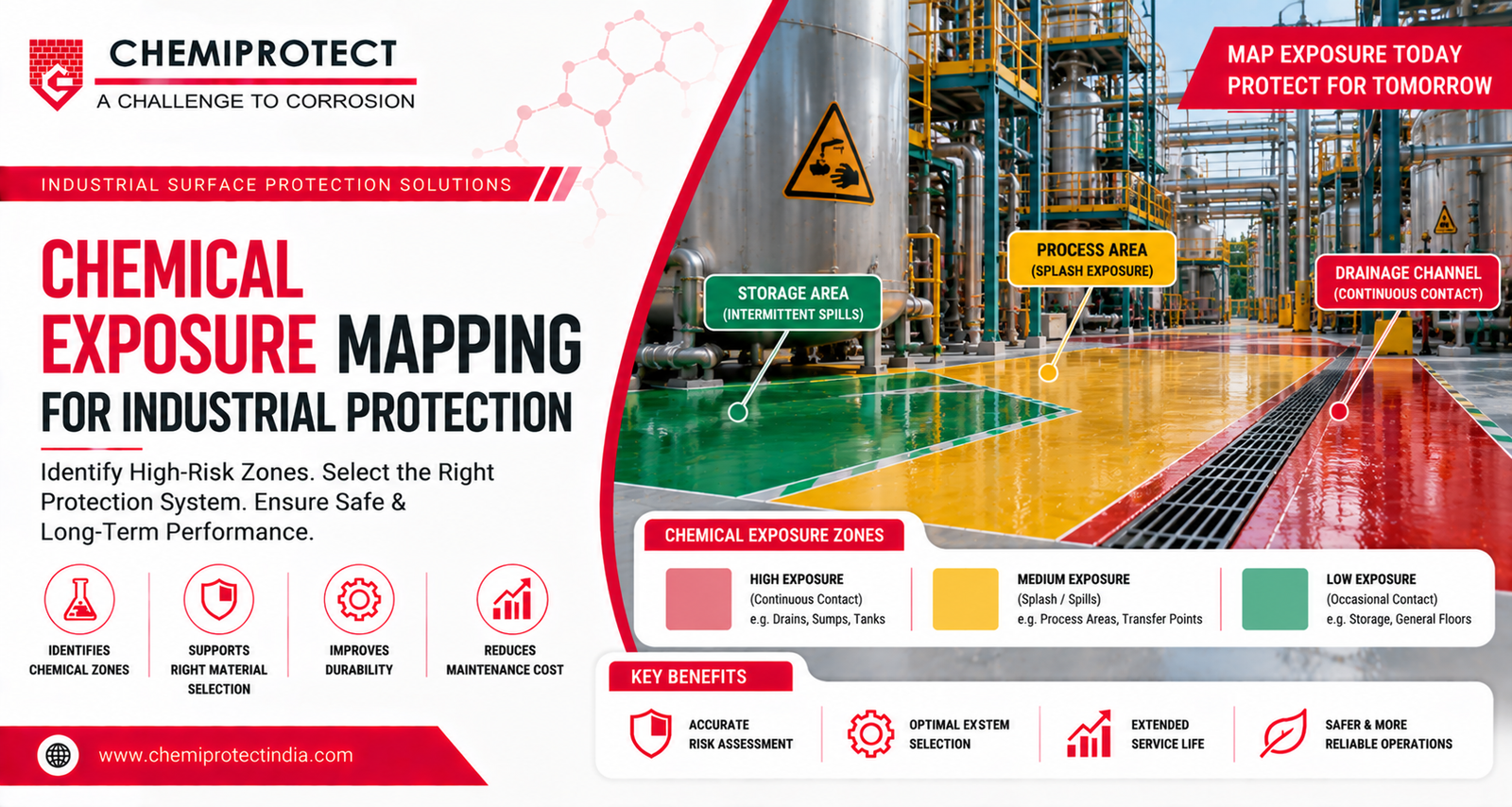
Chemical Exposure Mapping for Industrial Protection
October 6, 2026
What Is Chemical Exposure Mapping? Industrial
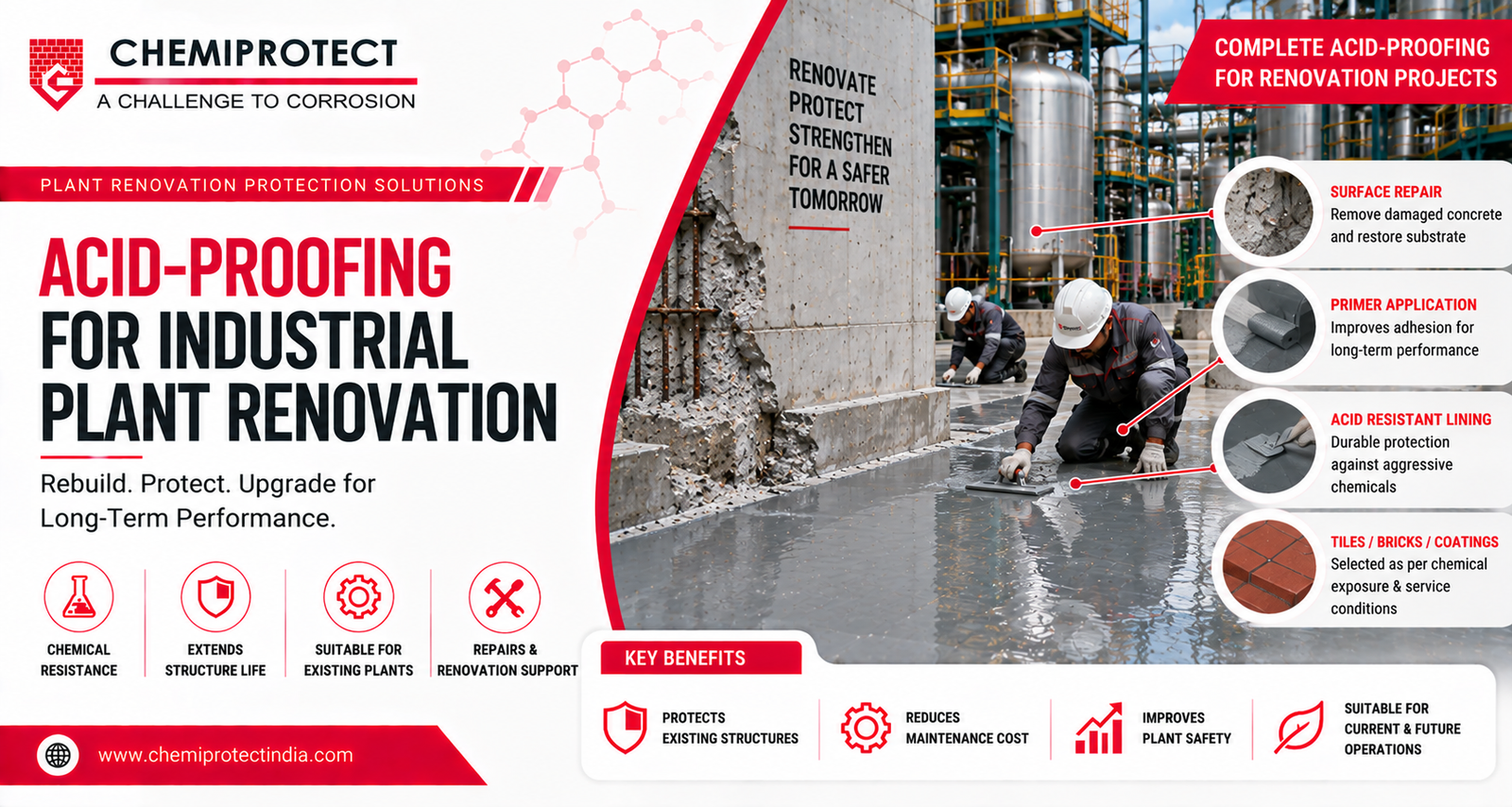
Acid-Proofing for Industrial Plant Renovation
October 3, 2026
Why Acid-Proofing Needs a Renovation-Specific Approach