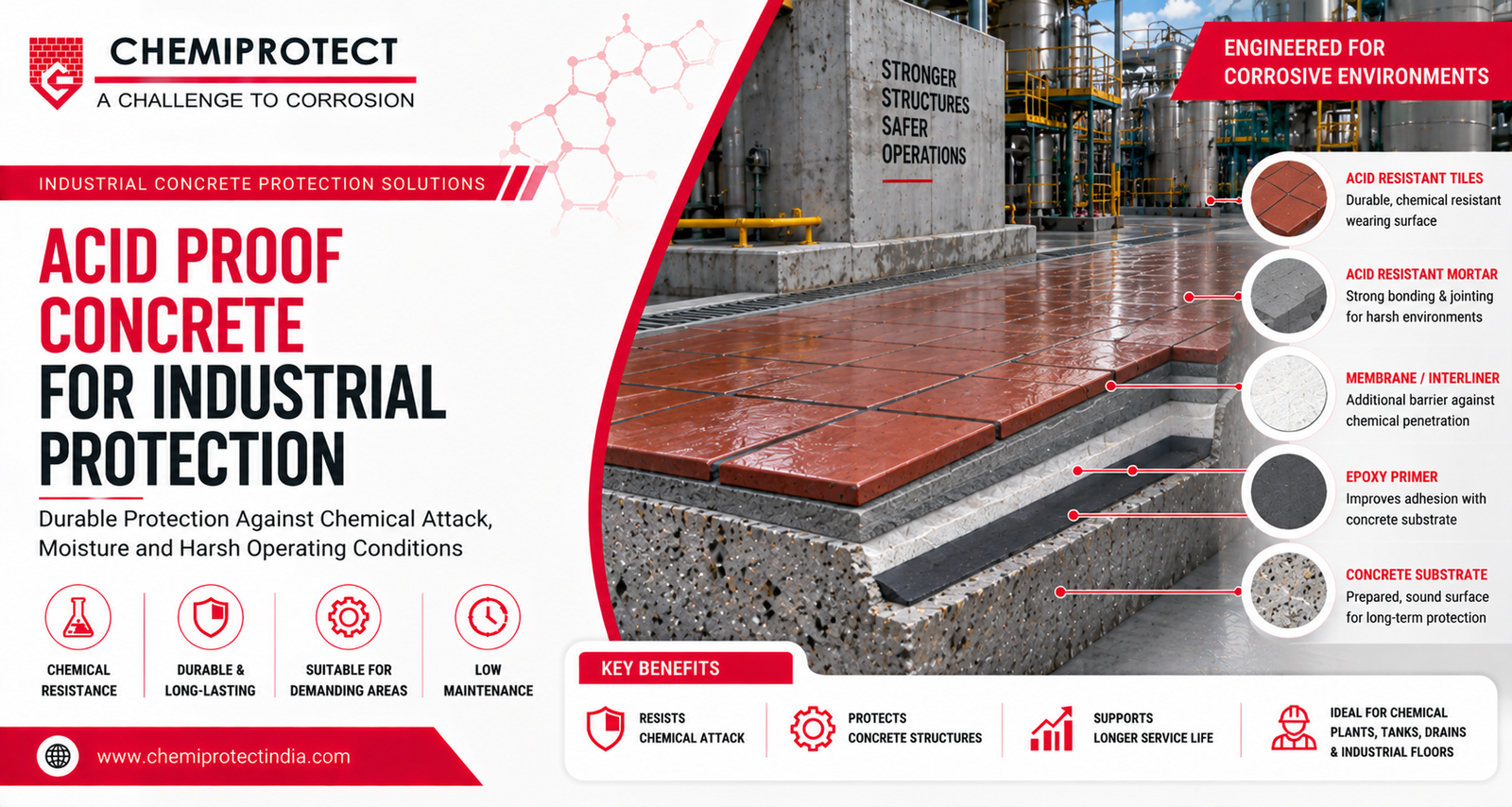
Acid Proof Concrete for Industrial Protection
Industrial concrete structures face demanding conditions
Industrial floors can face demanding conditions every day. Chemical spills, acids, alkalis, moisture, heavy movement and regular cleaning can gradually affect unprotected surfaces. In chemical plants, laboratories, pharmaceutical facilities and other industrial environments, choosing the right flooring system is therefore an important part of protecting both the floor and the working environment.
Acid-resistant tiles are designed for applications where ordinary flooring materials may not provide the required chemical resistance. Chemiprotect’s acid-resistant tile solutions are used as part of acid- and alkali-resistant lining systems for chemically aggressive environments.
However, industrial floor safety is not simply about selecting a tile that resists chemicals. The complete flooring system, including the substrate, bedding, jointing material and installation, needs to be suitable for the operating conditions. Understanding how acid-resistant tiles improve industrial floor safety can help industries make more informed flooring decisions.
Industrial floors can come into contact with chemicals during manufacturing, processing, storage, transportation and cleaning operations. Repeated exposure can damage conventional flooring materials and affect the underlying concrete or structure.
Chemical attack can lead to surface deterioration, cracks, staining and other forms of damage. Once the protective surface is compromised, aggressive substances may have greater opportunity to reach the underlying substrate.
A suitable acid-resistant flooring system creates a protective layer designed to withstand the expected chemical environment and help maintain the integrity of the floor.
Acid-resistant tiles are specialised tiles designed for environments where floors and surfaces may be exposed to acids, alkalis and other chemically aggressive substances.
Chemiprotect describes its acid-resistant tiles as suitable for chemical industries, laboratories and other high-risk environments. The tiles are used as part of acid- and alkali-resistant lining systems where chemical resistance is an important requirement.
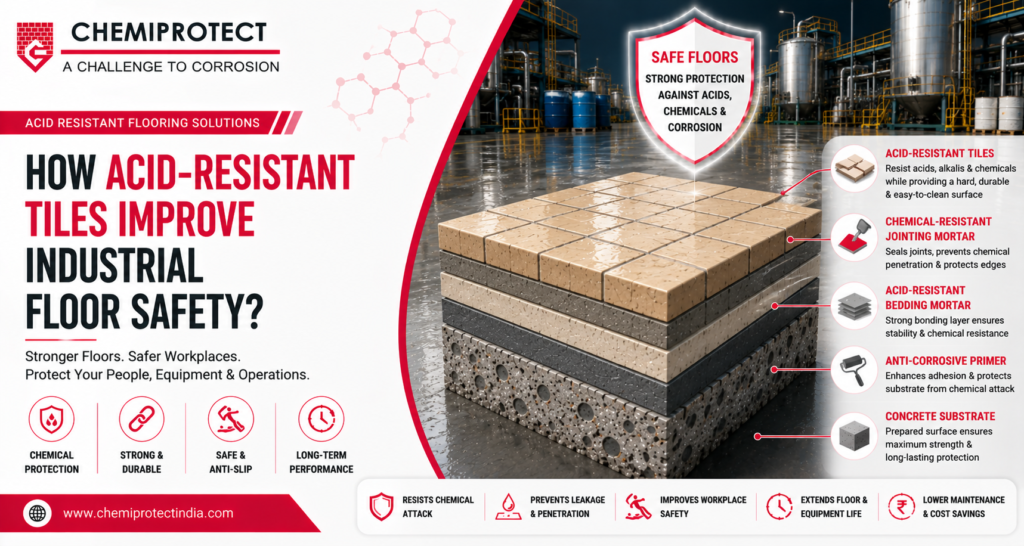
The tiles form one part of a complete lining system. Depending on the application, the system can include acid-resistant tiles or bricks, chemical-resistant bedding and jointing mortar, anti-corrosive primer and the concrete substrate.
The primary safety benefit comes from protecting the underlying floor from aggressive chemical exposure.
Acid-resistant tiles are designed for environments where chemical exposure is expected. Their use can help create a surface more suitable for aggressive industrial conditions than conventional flooring materials.
A properly designed lining system can reduce direct exposure of the substrate to chemicals. This helps protect concrete and other underlying surfaces from deterioration.
Industrial floors need to remain functional despite demanding conditions. A suitable acid-resistant lining can help maintain surface integrity when the system is correctly selected and installed.
Floor safety therefore begins with selecting materials that are compatible with the environment in which they will be used.
Acid-resistant tiles do not work in isolation. The performance of an industrial floor depends on how the complete lining system is designed and installed.
Chemiprotect’s acid-resistant lining systems can include several layers, including a concrete substrate, anti-corrosive primer, chemical-resistant bedding material, acid-resistant tiles or bricks and chemical-resistant jointing mortar.
The bedding material supports the tiles while helping maintain resistance to the surrounding chemical environment.
Joints between tiles are important because they can otherwise become potential paths for chemical penetration. Suitable chemical-resistant jointing material helps complete the protective surface.
A suitable primer can provide additional protection between the substrate and the lining system, depending on the application requirements.
The individual components need to work together as a complete system.
Different industrial environments can benefit from acid-resistant flooring where chemical exposure is part of normal operations.
Chemical manufacturing facilities can experience exposure to acids, alkalis and other aggressive substances. Acid-resistant flooring can help protect areas where chemical contact is expected.
Laboratories may handle a variety of chemicals and require flooring surfaces that can withstand potential spills and exposure.
Pharmaceutical manufacturing and processing environments can have strict requirements for cleanability, surface protection and chemical resistance.
Acid-resistant tiles can also be considered for other industrial spaces where chemical exposure presents a flooring challenge.
Chemiprotect identifies chemical industries, laboratories and other high-risk environments among the applications for its acid-resistant tile solutions.
Industrial floor maintenance can become more difficult when the surface is vulnerable to chemical damage. A chemically resistant lining can help protect the surface and support easier maintenance of the flooring system.
A properly installed tiled surface can provide a durable working platform for industrial environments. However, routine inspection and maintenance remain important.
Facilities should look for damaged tiles, deteriorated joints, cracks or other signs that could allow chemicals to reach the underlying structure.
Addressing local damage early can help prevent a small problem from developing into more extensive flooring deterioration.
Chemical exposure is not always the only challenge faced by an industrial floor. Moisture, cleaning processes and regular wet conditions can also affect flooring performance.
Before selecting an acid-resistant tile system, the complete operating environment should be evaluated. Consider the type of chemicals present, concentration, frequency of exposure, temperature, moisture conditions and cleaning methods.
A flooring system suitable for one chemical environment may not automatically be suitable for another. Material compatibility should therefore be established before installation.
Even high-quality acid-resistant tiles require proper installation to deliver the intended performance. The condition of the substrate, preparation methods, bedding material, jointing system and tile installation can all influence the final result.
The underlying concrete should be properly prepared and free from conditions that could interfere with the lining system.
Tiles, bedding, primer and jointing materials should be selected to work together and withstand the expected chemical environment.
Joints should be properly designed and installed because they form an important part of the overall chemical-resistant surface.
Following the recommended installation system helps create a more consistent and reliable protective floor.
Not every industrial floor has the same requirements. The correct acid-resistant tile system depends on the substances present and the conditions under which the floor operates.
Consider:
Chemiprotect provides acid-resistant tiles in different specifications and offers technical information covering factors such as chemical resistance, physical properties and recommended applications.
Technical evaluation is important before selecting a flooring system for a specific industrial application.
A well-maintained industrial floor contributes to a safer and more reliable working environment. Protecting the surface against chemical deterioration can help reduce the risk of damaged flooring becoming a larger maintenance concern.
The flooring system should remain suitable for the activities taking place in the area. This includes considering chemical handling, movement of workers and equipment, cleaning operations and potential spill conditions.
Acid-resistant tiles are therefore best viewed as part of a broader industrial floor protection strategy rather than as a standalone safety measure.
Good housekeeping, appropriate spill management, regular inspection and correct maintenance should continue alongside a suitable flooring system.
Acid-resistant tiles can play an important role in protecting industrial floors exposed to acids, alkalis and other aggressive substances. By forming part of a properly designed lining system, they can help protect the underlying substrate and support long-term floor performance.
The benefits depend on selecting suitable tiles, bedding, jointing materials and primers for the actual operating environment. Proper surface preparation and installation are equally important.
Chemiprotect Engineers provides acid-proofing and corrosion-resistant solutions for demanding industrial applications, including acid-resistant tiles and complete acid- and alkali-resistant lining systems.
To explore more about acid-resistant flooring solutions, view Chemiprotect’s acid-resistant tile systems. You can also explore Chemiprotect’s industrial services to learn more about its flooring, coating, lining and corrosion-protection solutions.
With the right materials, proper installation and regular maintenance, acid-resistant flooring can help industrial facilities protect their floors, manage chemical exposure and maintain a safer working environment.
They help protect industrial floors by resisting chemical attack, protecting the underlying concrete, and supporting long-term surface performance.
They are used in chemical industries, laboratories, pharmaceutical facilities, and other high-risk industrial environments exposed to acids and alkalis.
A complete system includes acid-resistant tiles, chemical-resistant bedding, jointing mortar, primer, and the substrate, all working together for reliable protection.
Correct substrate preparation, compatible materials, and well-designed joints help ensure strong adhesion and long-term chemical resistance.
Selection should be based on chemical type, concentration, operating temperature, moisture exposure, traffic, substrate condition, and the required lining system.
When used with chemical resistant masonry units and the proper membrane MIPRO-VE will protect concrete and steel sub base from chemical attacks and physical abuse. MIPRO-VE is silica filled vinyl ester mortar supplied in two parts .
Industrial concrete structures face demanding conditions
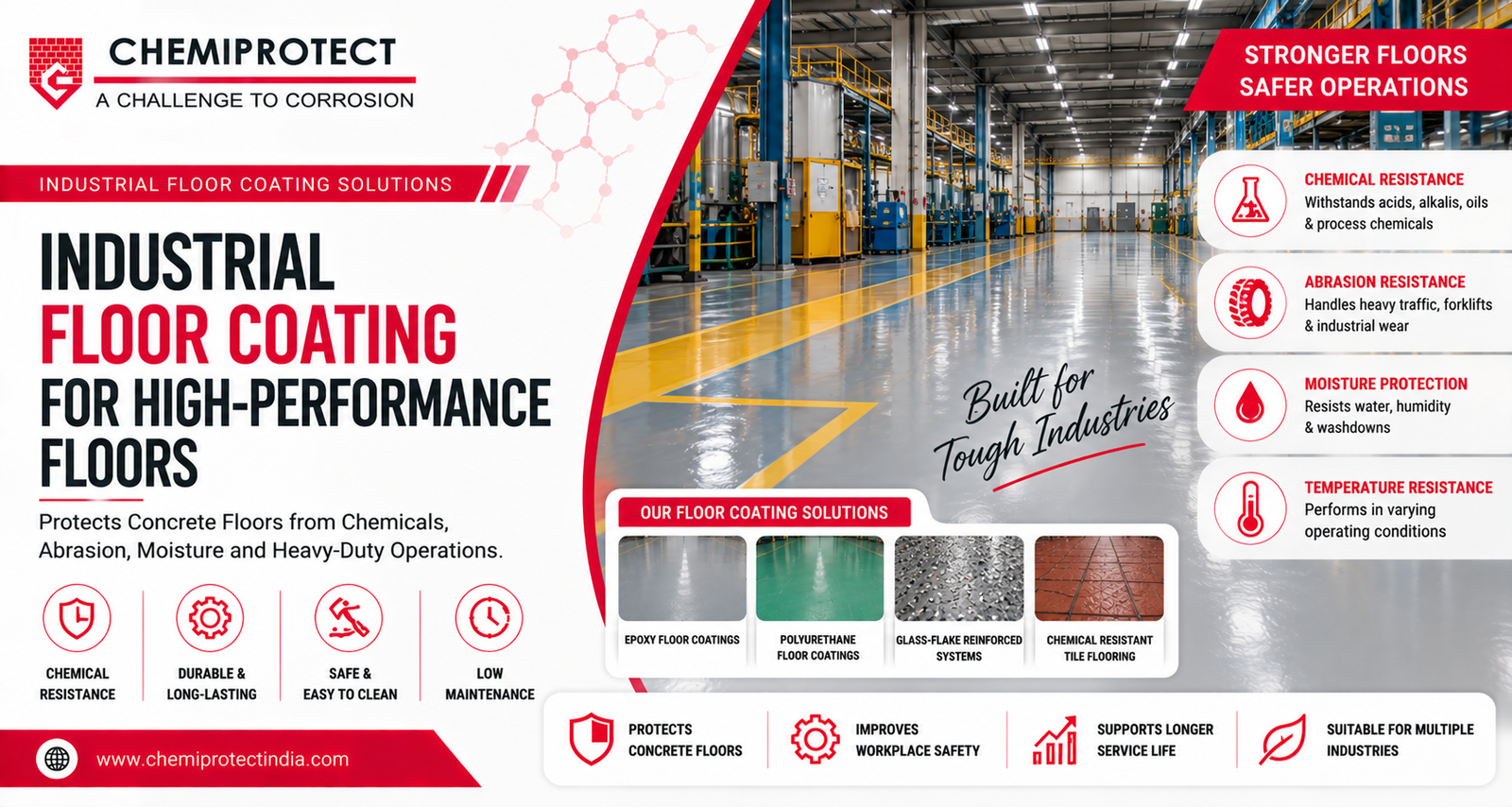
Industrial Floor Coating: A Practical Guide
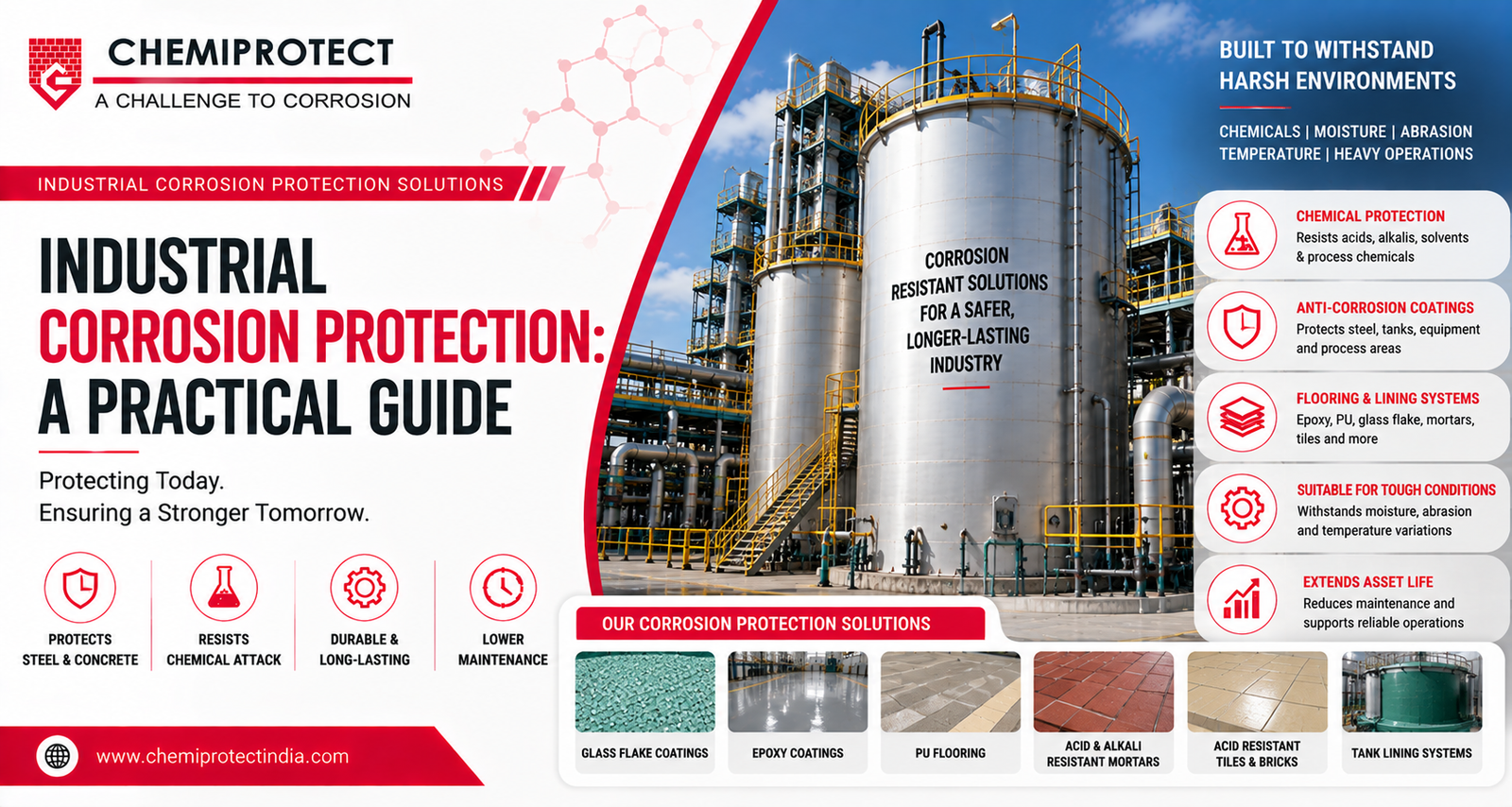
Industrial Corrosion Protection for Demanding Environments
Connect Now