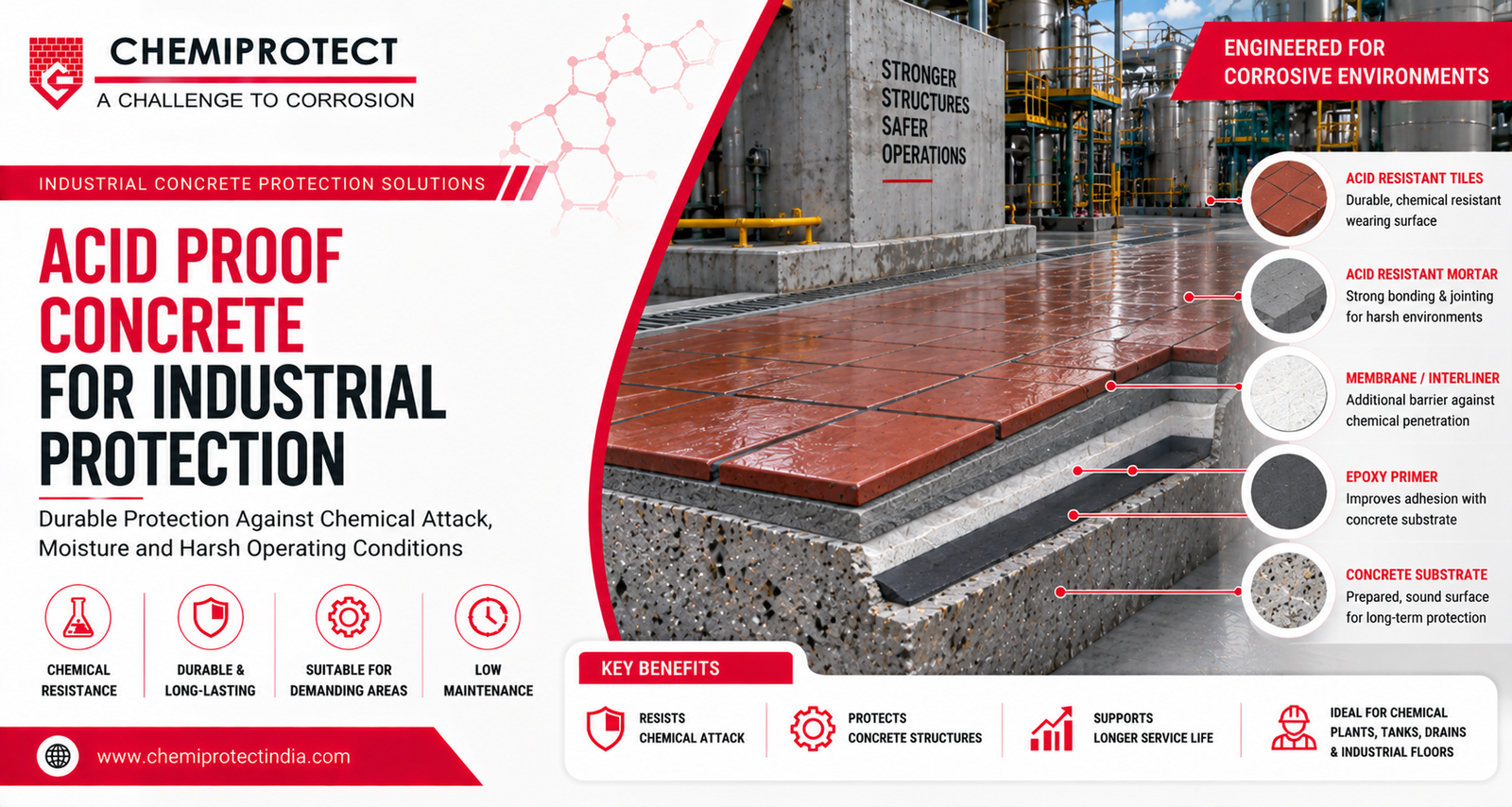
Acid Proof Concrete for Industrial Protection
Industrial concrete structures face demanding conditions
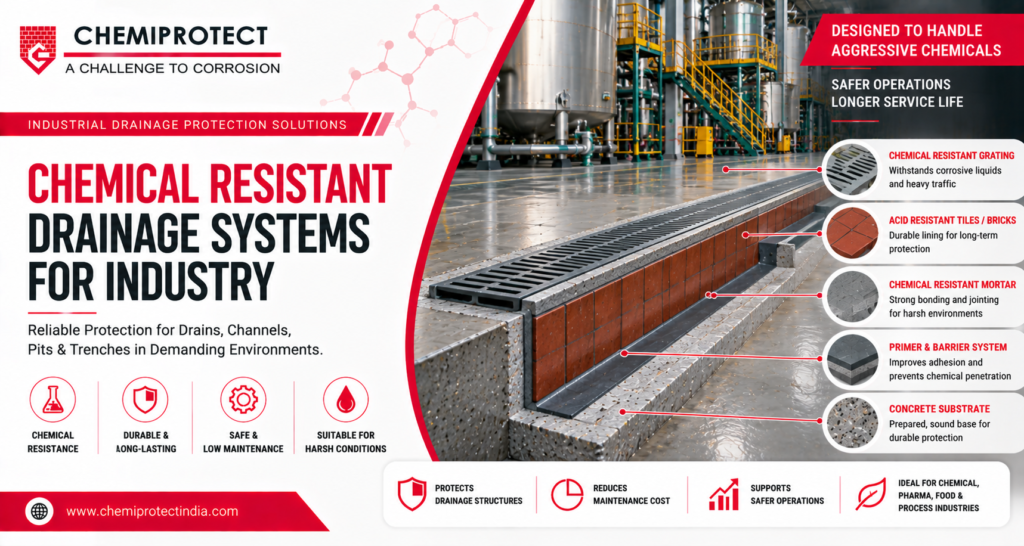
Industrial drainage systems are exposed to more than water. Process liquids, acids, alkalis, cleaning chemicals, wastewater, oils, and contaminated fluids can pass through drains, channels, trenches, and collection points. Repeated chemical contact can damage vulnerable surfaces, affect joints, and create maintenance problems. Chemical Resistant Industrial Protection Solutions.
can help form part of a coordinated protection strategy when drainage areas need resistance to aggressive chemicals, moisture, abrasion, and routine industrial use.
Chemical resistant drainage systems are drainage structures designed or protected to withstand contact with aggressive liquids without allowing the drainage surface to deteriorate prematurely. The system may include a concrete or masonry base combined with a primer, chemical-resistant lining, protective mortar, tile or brick facing, or a seamless resin-based coating.
The objective is not simply to create a drain that carries liquid away. The drainage surface must remain compatible with the substances it encounters while also handling cleaning, temperature changes, traffic, impact, and other operating stresses. The exact construction should therefore be selected according to the actual service environment.
Drains are collection points, which means they can receive concentrated liquids and may remain wet for long periods. In chemical processing or manufacturing areas, a small leak or spill can move directly into a drain and remain in contact with the surface.
If the drainage material is not compatible with the chemical exposure, deterioration can affect the surface, joints, and underlying structure. Chemical-resistant protection can help reduce direct contact with the substrate and support a more durable drainage environment.
Chemical plants may have drainage channels, trenches, pits, and collection areas exposed to acids, alkalis, solvents, or process liquids. Protection should match the actual chemical duty.
Processing facilities can experience frequent washing, sanitation, moisture, and chemical cleaning agents. Drainage surfaces should be durable, hygienic, easy to maintain, and suitable for the expected exposure.
Battery manufacturing, recycling, electroplating, and related operations can involve corrosive substances. Protected drainage areas can help safeguard surrounding concrete and reduce premature deterioration.
Wastewater channels, pits, and trenches may encounter contaminated or aggressive liquids. Protection needs to account for continuous moisture and chemical exposure.
The underlying drainage structure provides the physical base of the system. It should be sound, clean, and suitable for the selected protective treatment. Cracks, weak areas, moisture, contamination, and existing coatings should be assessed before application.
A compatible primer can improve adhesion between the substrate and protective layer. Where required, an impervious interliner can provide a barrier between the substrate and the exposed chemical-resistant facing.
Mortar is particularly important around joints and bonding areas because these locations can become vulnerable paths for chemical penetration. Acid and Alkali Resistant Mortars.
Mortar systems should be selected according to chemical exposure, temperature, substrate conditions, and the facing material.
The exposed surface can use acid-resistant tiles or bricks where a robust lined surface is required. Epoxy, polyurethane, or glass-flake systems may provide a seamless alternative. Choice depends on geometry, chemical exposure, traffic, abrasion, and maintenance.
A suitable protective system can reduce direct exposure of the underlying substrate to acids, alkalis, corrosive liquids, and aggressive wastewater.
Industrial drains can experience wetting, chemical exposure, abrasion, cleaning, and physical stress. A suitable system can improve durability under these conditions.
Premature deterioration can result in repairs, downtime, and operational disruption. Appropriate drainage protection can help reduce avoidable damage and support longer service intervals.
Well-detailed protective surfaces can make drainage areas easier to inspect and maintain. Drain cleanliness is important because deposits can increase local exposure and restrict flow.
Begin with the liquids entering the drainage system. Record chemical type, concentration, temperature, exposure frequency, immersion or splash conditions, and possible chemical mixing.
Chemical exposure is only one part of the specification. Traffic, loads, impact, abrasion, vibration, thermal cycling, and cleaning methods can influence the required system.
Corners, joints, level changes, grates, outlets, penetrations, and connections deserve attention. These areas can concentrate stress or create paths for chemical penetration if poorly detailed.
Concrete condition, moisture, surface profile, and existing coatings should be evaluated before selecting materials. The complete assembly should be compatible from substrate to exposed surface.
Even a chemically resistant material can underperform if installation is poorly controlled. Surface preparation, mixing, application thickness, curing, joints, and termination details influence final performance.
The installation team should consider access, drainage falls, outlet connections, and curing conditions. Product data sheets and installation instructions should be followed. Inspection can identify defects before the area returns to service.
Regular inspection can identify cracks, damaged joints, worn areas, standing liquid, or surface defects early. Chemical spills should be cleaned promptly using compatible methods.
Drains should remain clear of solids and deposits so liquid does not remain unnecessarily on the protected surface. Repairs should match the original system and chemicals rather than use an incompatible patch material.
Chemiprotect Engineers has more than five decades of experience in acid-proofing and corrosion-resistant solutions. Its range includes acid and alkali resistant mortars, epoxy, glass-flake, polyurethane, acid-resistant bricks and tiles, waterproofing products, and construction chemicals.
The company serves chemical processing, pharmaceuticals, food, beverage, battery manufacturing and recycling, electroplating, fertilizers, pulp and paper, power plants, steel, petroleum, and other demanding industries. Its customized approach considers project-specific exposure and operating conditions.
Chemical resistant drainage systems help protect facilities where corrosive liquids, wastewater, cleaning chemicals, and process fluids are handled. A drainage system should be designed for liquid movement as well as chemical, mechanical, and maintenance conditions.
The right approach may combine a concrete base with primer, interliner, chemical-resistant mortar, acid-resistant tiles or bricks, or a seamless resin coating. Selection should consider concentration, temperature, exposure duration, traffic, abrasion, substrate condition, and drainage details.
Before specifying a system, review the expected chemical exposure and installation requirements carefully. Chemiprotect’s industrial protection resources and chemical resistance guidance.
can support project teams with product information, safety documentation, installation guidance, detail drawings, and chemical resistance references when developing a suitable protection strategy.
A chemical resistant drainage system is a protected drain structure designed to withstand acids, alkalis, wastewater, solvents, and other aggressive industrial liquids.
They are used in chemical processing plants, pharmaceutical and food facilities, battery manufacturing, electroplating, and industrial wastewater areas.
The system may include a concrete or masonry base, primer, protective barrier, chemical resistant mortar, and acid resistant tiles, bricks, or resin coatings.
Selection should be based on chemical type, concentration, temperature, traffic, abrasion, substrate condition, and drainage details.
Proper surface preparation, mixing, curing, joint detailing, and outlet connections help ensure long-term drainage performance and chemical resistance.
When used with chemical resistant masonry units and the proper membrane MIPRO-VE will protect concrete and steel sub base from chemical attacks and physical abuse. MIPRO-VE is silica filled vinyl ester mortar supplied in two parts .
Industrial concrete structures face demanding conditions
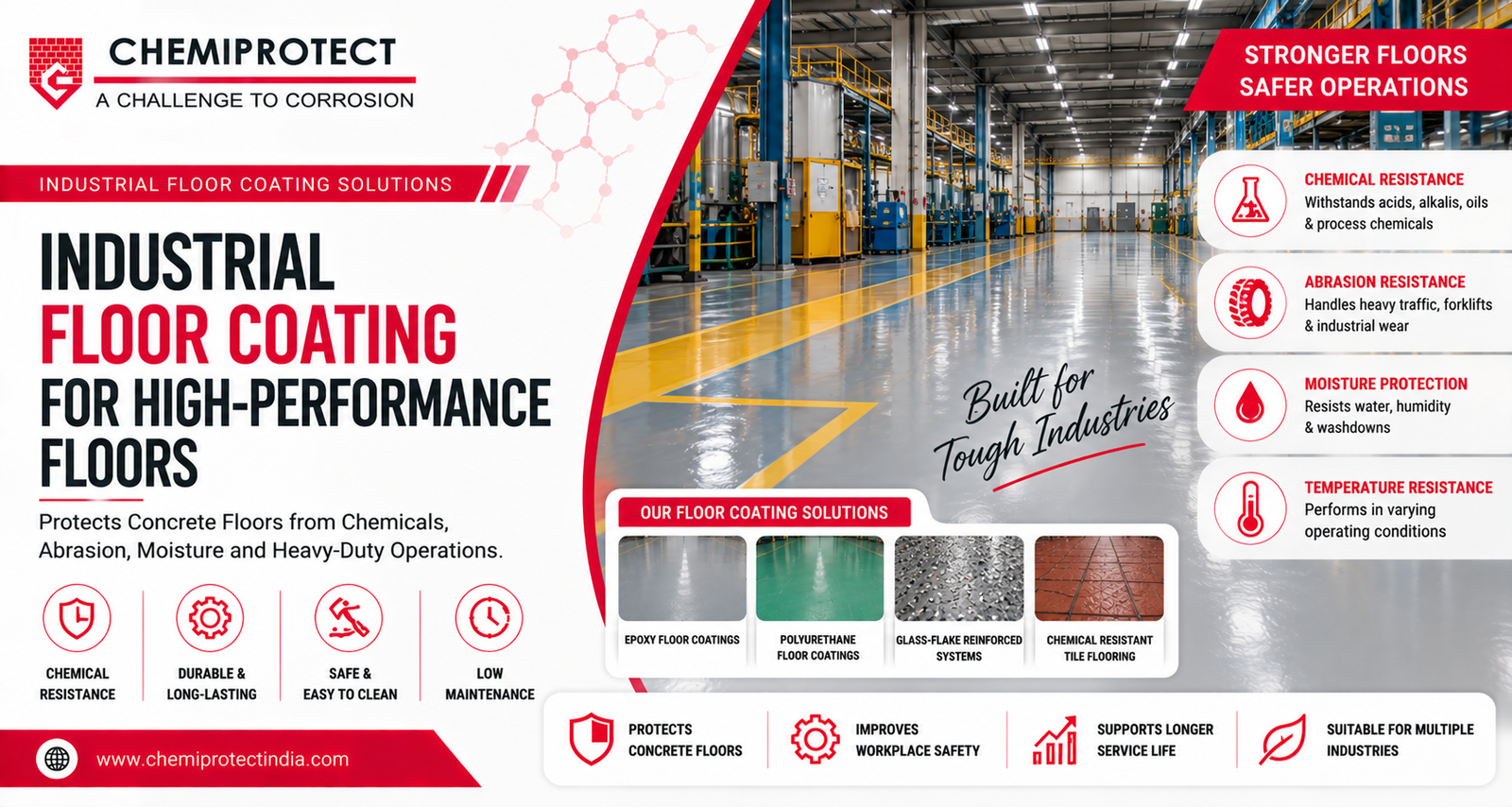
Industrial Floor Coating: A Practical Guide
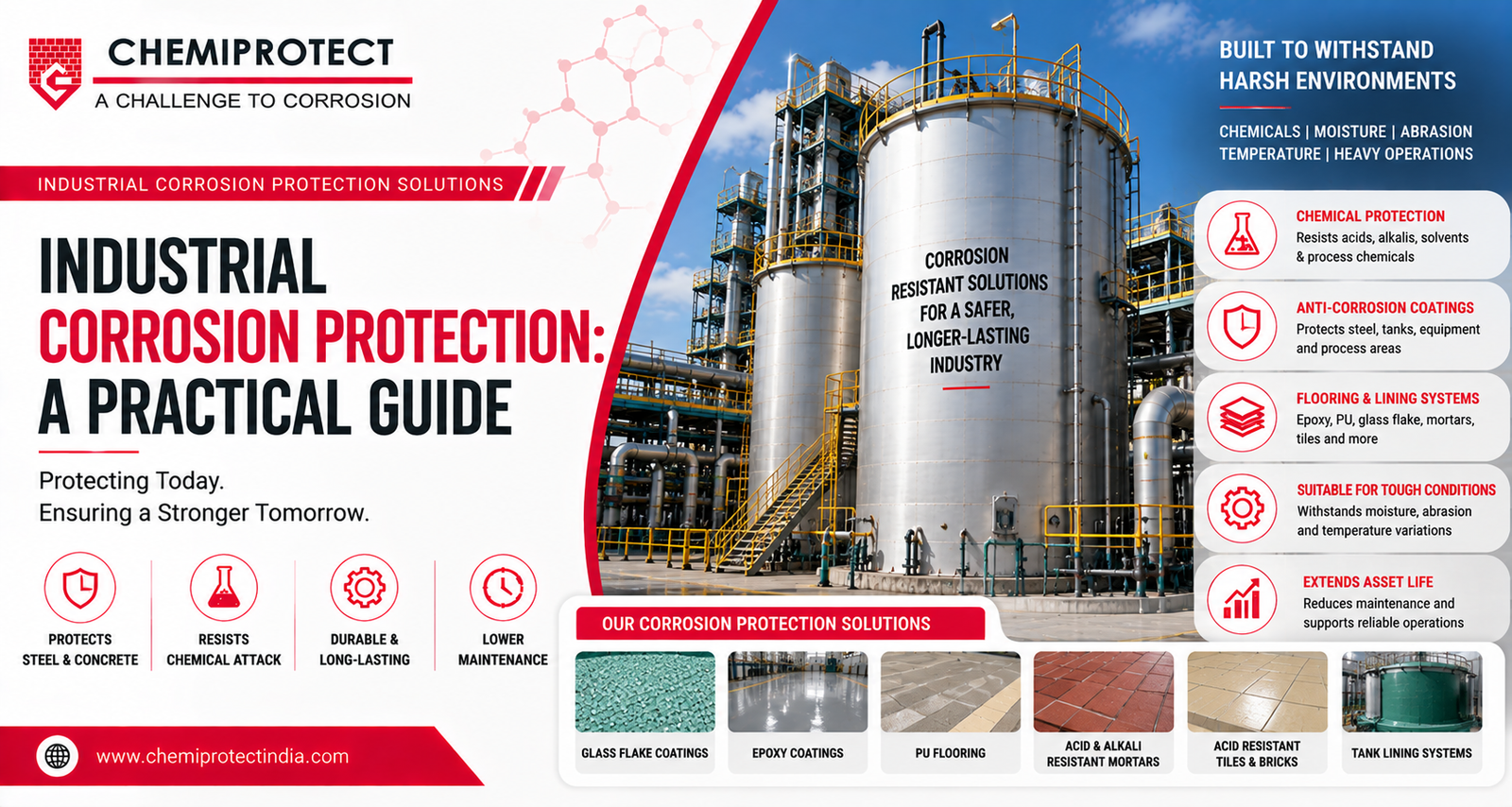
Industrial Corrosion Protection for Demanding Environments
Connect Now