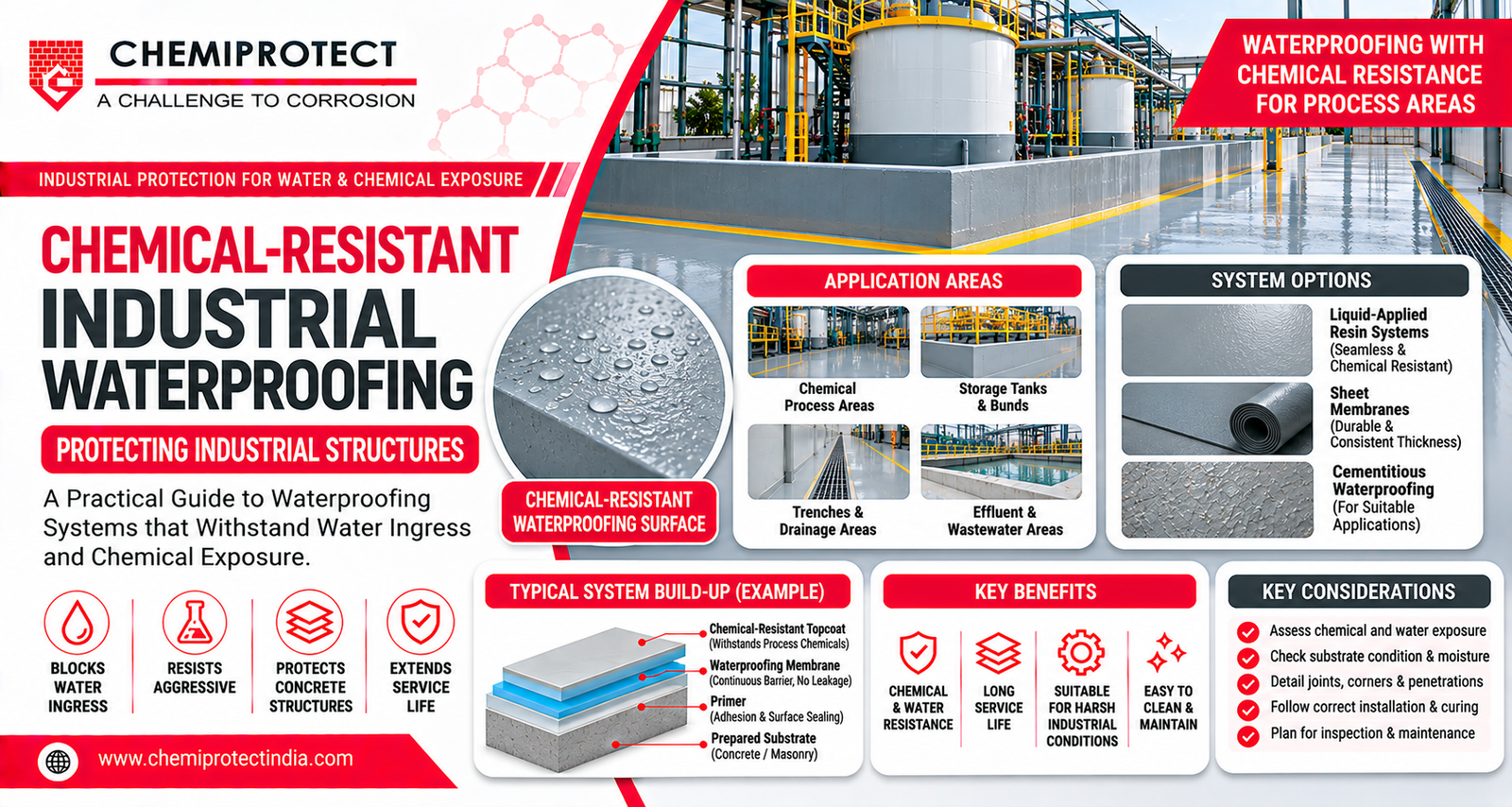
Chemical Resistant Waterproofing: Protecting Industrial Structures
Learn how chemical resistant waterproofing protects
Battery manufacturing facilities place demanding requirements on floors. Production and maintenance areas may experience contact with electrolyte, cleaning solutions, process chemicals, oils, water and abrasive traffic. In lead-acid battery operations, sulphuric acid is a particularly important exposure to assess. A floor that is selected only for appearance or general durability may deteriorate when the actual chemical, concentration, temperature and exposure duration are not considered. Battery manufacturing plant flooring should therefore be treated as part of the facility’s process-safety and asset-protection strategy, not simply as a finishing layer. A review of industrial chemical protection solutions can help connect the selected surface system to the actual process environment.
Battery production includes different work zones, and each zone can expose the floor to a different combination of chemicals and physical stresses. Electrolyte preparation, filling, charging, testing, assembly, storage and maintenance do not necessarily share the same spill frequency or traffic pattern. A single specification applied everywhere may be inefficient, while an under-designed area can become a recurring maintenance problem. Begin by mapping each process and identifying where liquids are stored, transferred, dispensed, tested or cleaned. The suitability of chemical-resistant floor systems should be confirmed against the site’s actual operating conditions.
Chemical exposure is only one part of the duty cycle. Forklifts, pallet trucks, battery handling equipment, dropped components, thermal variation and repeated washdowns can challenge the surface. The floor must also support safe movement by employees and equipment. A suitable system balances chemical compatibility with abrasion resistance, impact tolerance, slip characteristics, cleanability and the condition of the concrete substrate.
Before choosing a coating, mortar or tiled lining, document the chemicals present and the way they may contact the floor. Record chemical names, concentrations, temperatures, likely spill volumes, contact duration and cleaning procedures. Distinguish between occasional splashes, routine washdown and prolonged pooling. A material that tolerates brief contact may not be appropriate where liquid can remain beneath equipment or inside a bunded area for extended periods.
Also review the mechanical and environmental conditions. Note vehicle routes, turning points, loading locations, drainage falls, joints, cracks and areas exposed to sunlight or temperature changes. Check whether the concrete is new or existing, whether moisture is present, and whether previous coatings have failed. This information creates a practical design brief and helps suppliers assess the proposed system against real service conditions.
No single flooring material is ideal for every battery plant. Resin-based systems can provide a continuous surface when the substrate is properly prepared and the formulation is matched to the chemicals and operating conditions. Epoxy products are commonly considered where adhesion, abrasion resistance and a seamless finish are priorities, but compatibility must be verified for the actual electrolyte and process chemicals. Polyurethane systems may be considered where thermal or impact demands influence the specification. Review the available industrial chemical-resistant materials against the specified exposure before finalising the design.
Acid-resistant tiles or bricks combined with compatible chemical-resistant mortars may be appropriate in severe exposure zones or where a maintainable, modular lining is preferred. The joints are critical: a resistant tile does not create a resistant floor if the bedding and jointing materials are incompatible. Review the complete assembly, including primer, membrane where specified, bedding, joints, coves and terminations. Chemiprotect’s range of [industrial chemical protection materials] is a relevant starting point for discussing system components and application needs.
Floor geometry and detailing often determine whether a technically suitable material performs well. Provide falls towards compatible collection points without creating abrupt transitions or ponding. Where containment is required, coordinate the floor finish with kerbs, plinths, sumps and bund walls so that liquid cannot migrate through weak interfaces. Corners should be detailed to reduce dirt accumulation and simplify cleaning. Coving can help create a continuous junction between floors and walls where the selected system supports it.
Construction joints, movement joints and cracks require particular attention. They should not simply be bridged with a rigid finish unless the system is designed for that movement. Detail joints with compatible materials and follow the manufacturer’s recommendations for width, depth, backing and sealant. Penetrations around columns, drains, machine bases and pipe supports should be sealed carefully because these locations can become pathways for chemical ingress.
Successful installation starts with substrate assessment. Concrete should be sound, adequately cured, clean and prepared to the profile required by the selected system. Remove laitance, oil, weak material and incompatible residues. Moisture testing and repair of cracks or damaged concrete should be completed before application. Application thickness, mixing ratios, working time, environmental limits and curing periods must follow the product documentation rather than assumptions based on a different system.
After handover, establish a maintenance plan that includes routine cleaning, prompt spill response, inspection of joints and edges, and repair of local damage. Use cleaning agents approved for the floor finish. Avoid dragging sharp equipment and investigate recurring wet patches or discolouration instead of covering them with another layer. Maintain records of repairs, chemical incidents and changes in process conditions so that the floor specification can be reviewed when production changes.
Floor selection should be coordinated with the plant’s environmental, health and safety procedures. A slip-resistant texture can improve traction, but excessive roughness may make cleaning difficult or trap residues. The required balance depends on footwear, contamination, cleaning methods and the movement of wheeled equipment. Mark pedestrian routes and keep emergency access clear. Chemical storage and spill-control arrangements should be designed as part of the wider facility plan.
An upgrade in an operating battery plant needs a realistic phasing plan. Divide the facility into manageable work zones and coordinate shutdowns with production, maintenance, logistics and safety teams. Identify temporary routes for people and materials, isolate the work area, and control dust, fumes and access during installation. Confirm how long each system needs before foot traffic, equipment traffic and chemical exposure can resume.
A common mistake is specifying the same floor system throughout the plant without distinguishing filling, charging, storage and maintenance zones. Another is checking chemical resistance but overlooking forklift movement, impact, drainage and joints. These omissions can create weak points even when the selected surface material is suitable.
Do not rely on a general claim such as acid proof without checking the actual electrolyte concentration, temperature and contact duration. Avoid commissioning the floor before the specified cure is complete, and do not use unapproved cleaning chemicals during routine maintenance.
A reliable battery plant floor begins with a clear assessment of electrolyte exposure, cleaning practices, traffic and containment needs. Match the complete flooring assembly to each operating zone, prepare the substrate correctly and maintain the surface through planned inspections. For industrial facilities reviewing suitable materials, consult the Chemiprotect Engineers website and discuss the actual site conditions before finalising a specification.
When used with chemical resistant masonry units and the proper membrane MIPRO-VE will protect concrete and steel sub base from chemical attacks and physical abuse. MIPRO-VE is silica filled vinyl ester mortar supplied in two parts .
Learn how chemical resistant waterproofing protects
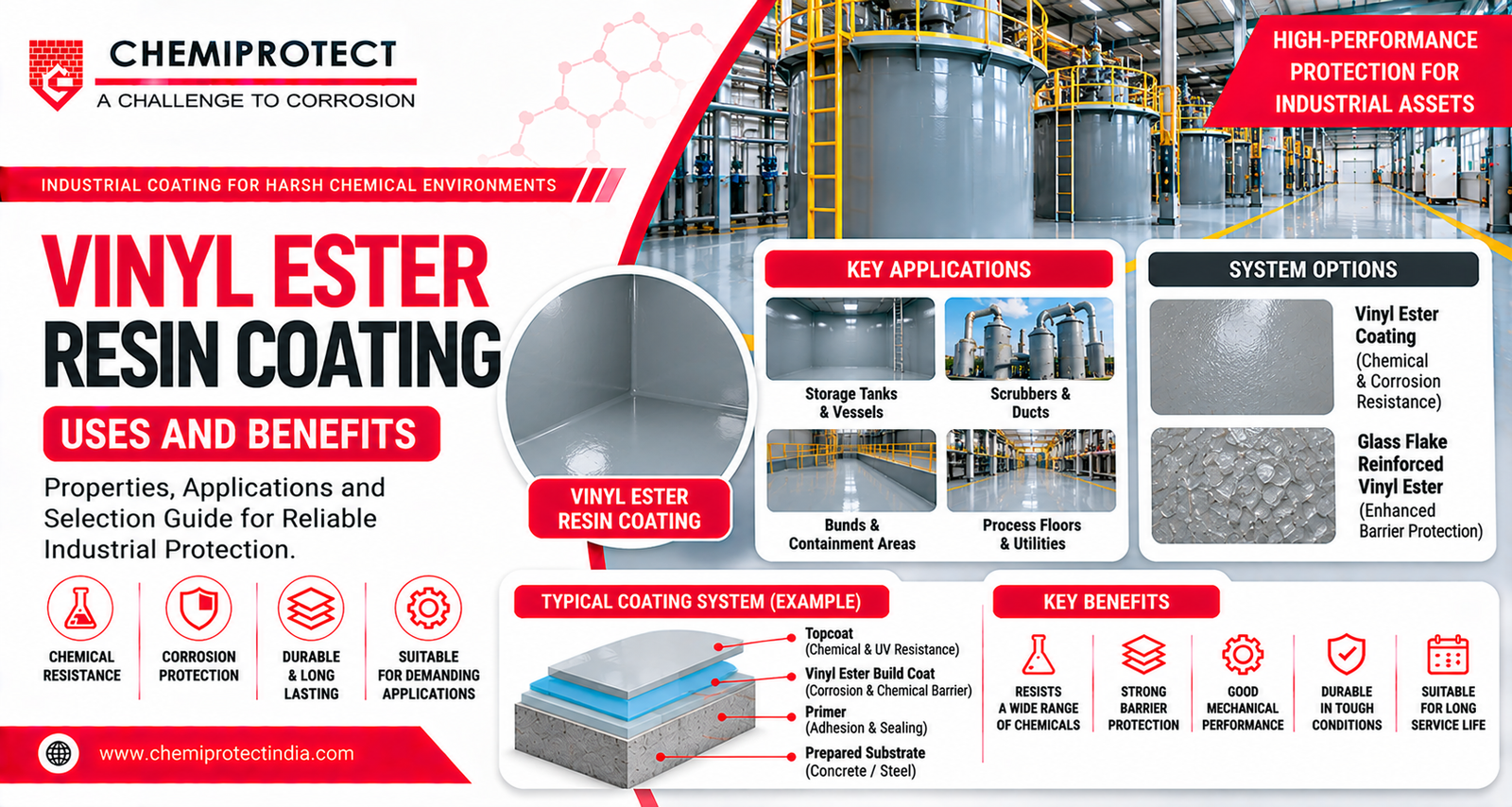
Discover vinyl ester resin coating applications,
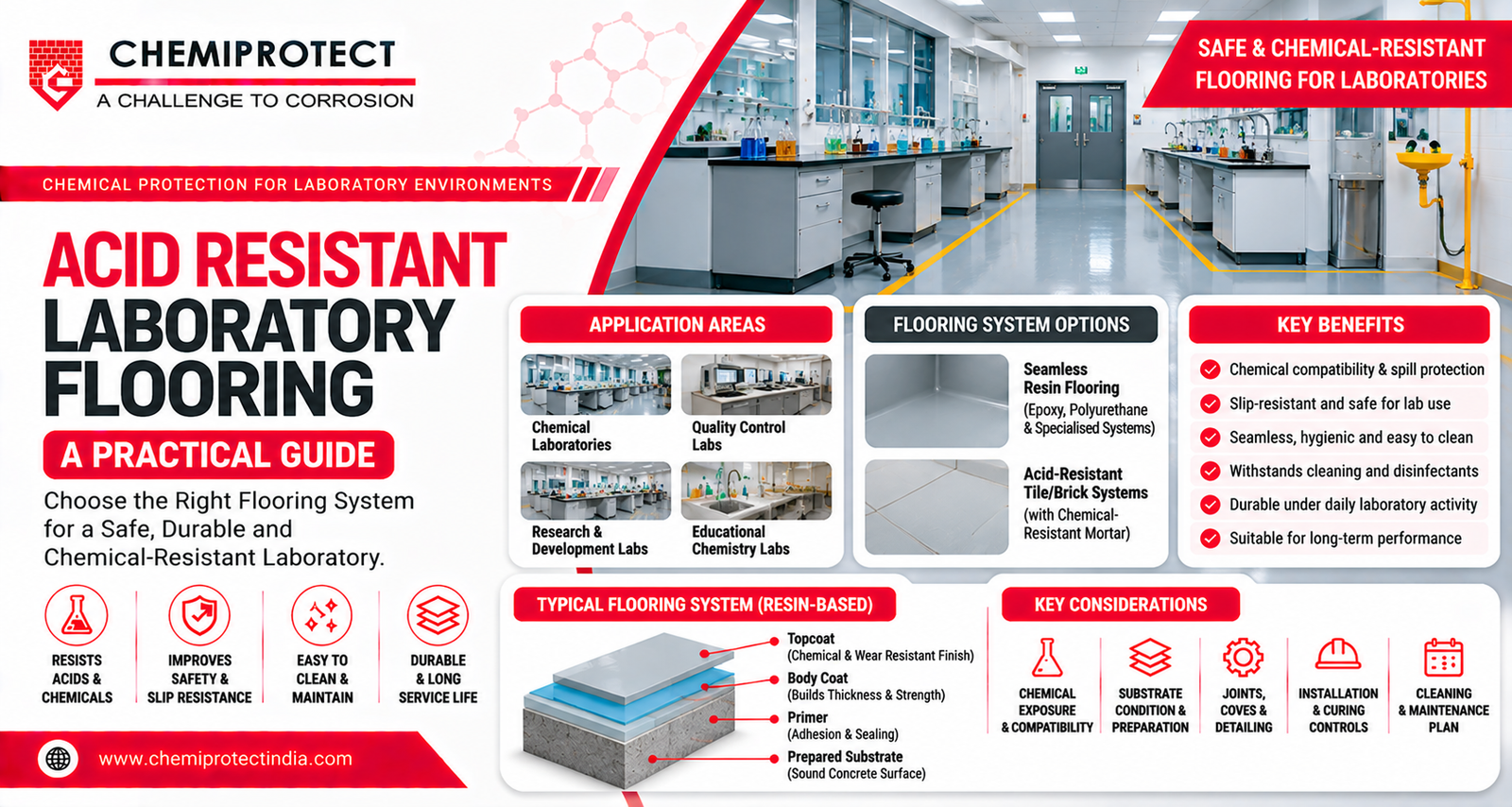
A guide to acid resistant laboratory
Connect Now