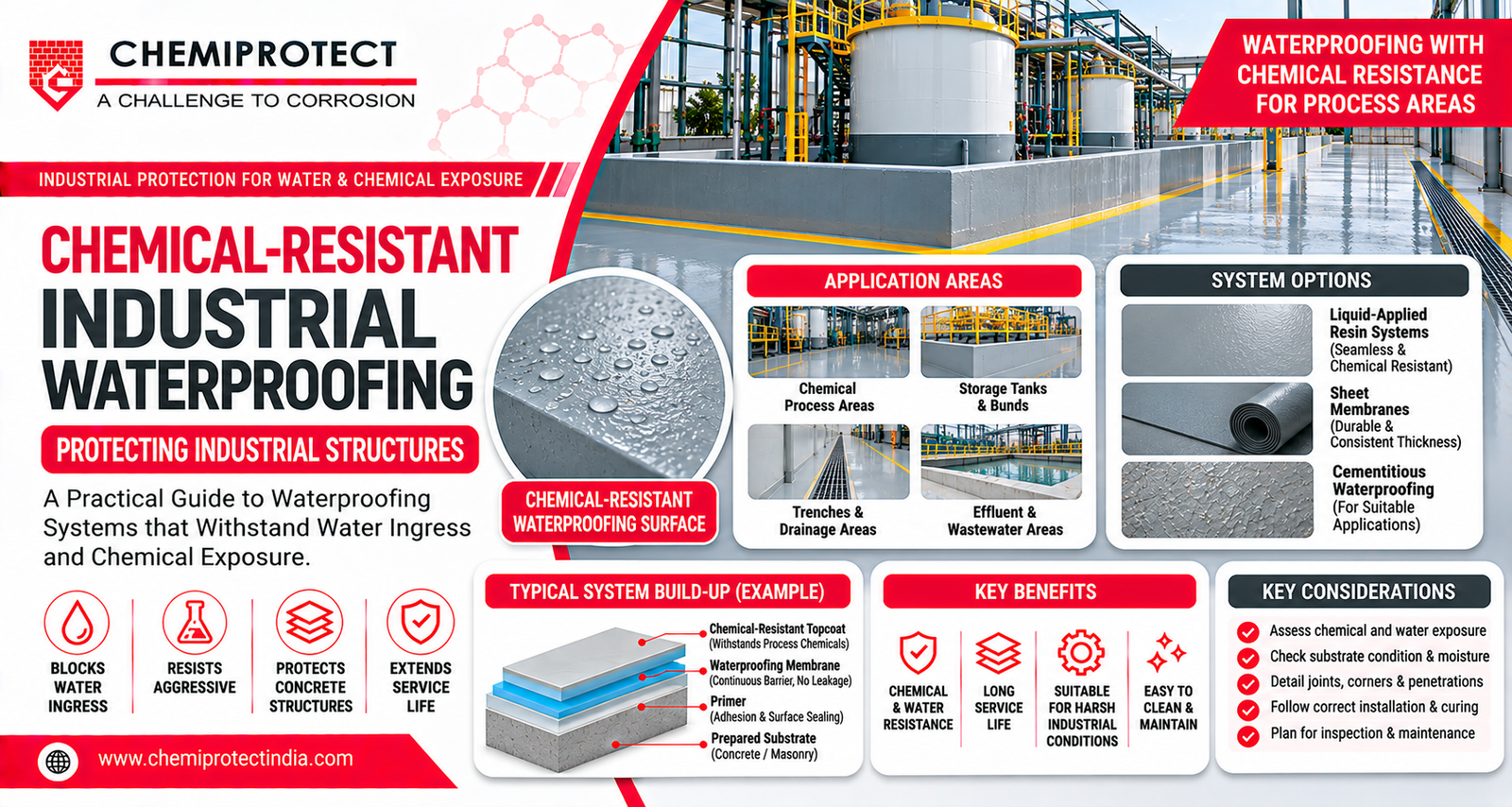
Chemical Resistant Waterproofing: Protecting Industrial Structures
Learn how chemical resistant waterproofing protects
Acid-resistant tiles are used in selected industrial environments to protect floors, walls, trenches and process areas from corrosive exposure. Their performance, however, depends on more than the tile itself. The bedding and jointing materials form part of the protective assembly and must be compatible with the chemicals, temperature and operating conditions. Acid resistant tile adhesive is therefore a critical specification item: a resistant tile installed with an unsuitable mortar can leave pathways for chemical ingress and undermine the entire lining. A review of industrial chemical protection solutions can help connect the selected surface system to the actual process environment.
A tiled lining contains several interfaces: substrate to bedding, bedding to tile, tile edges, joints, movement joints and perimeter terminations. Chemical liquid can exploit gaps or weak bonds and reach the underlying concrete. If the mortar softens, dissolves or loses adhesion, tiles may become loose and allow liquid to travel beneath the lining. The adhesive or bedding mortar must therefore be selected as part of the complete chemical-resistant system. The suitability of chemical-resistant mortars should be confirmed against the site’s actual operating conditions.
Industrial conditions can include acid or alkali splashes, immersion, washdown, abrasion, thermal change and heavy traffic. Each affects the assembly differently. A mortar suitable for a dry wall may not be suitable for a process floor. Likewise, a material intended for intermittent exposure may not tolerate prolonged contact. Define the duty before selecting the product.
The term tile adhesive is often used broadly, but industrial acid-resistant installations may use specialised chemical-resistant mortars for bedding and jointing rather than ordinary cement-based adhesive. Depending on the exposure, systems may be based on resin, silicate or other engineered binders. Their chemical resistance and installation requirements differ, so the product must be selected for the intended service.
Do not assume that a material labelled acid resistant is resistant to every acid, concentration or temperature. Check the product’s technical documentation and confirm whether it is suitable for the tile type, substrate and installation orientation. Also distinguish bedding mortar from jointing mortar: both need to be compatible, and the joint material may experience direct chemical exposure.
Prepare a chemical schedule listing each substance, concentration, temperature, contact duration and cleaning procedure. Include the possibility of mixed or changing chemicals, periodic hot washdown and accidental pooling. Identify whether the tiled surface is horizontal, vertical or overhead, and whether it will be exposed to vibration or impact. These factors influence workability, bond requirements and the choice of system. Review the available acid-resistant bedding materials against the specified exposure before finalising the design.
Assess the substrate as well. Concrete should be sound and properly prepared, with cracks and weak areas repaired. Check moisture, surface profile, contamination and dimensional tolerances. Uneven substrates can lead to inconsistent mortar thickness and voids beneath tiles. Where a membrane or primer is part of the design, verify compatibility with the bedding mortar and confirm the required curing sequence.
Tile material, thickness, dimensions and surface finish should match the process exposure and mechanical demands. Consider whether the surface needs slip resistance, ease of cleaning or resistance to thermal shock. Large tiles may reduce the number of joints but can be harder to install over uneven substrates. Smaller units can accommodate complex geometry but create more joints that require careful filling and inspection.
Joint design is as important as the tile specification. Joint width, depth and filling method should follow the system supplier’s guidance. Movement joints must be retained where required and detailed with compatible materials rather than rigidly filled. Plan terminations around drains, kerbs, channels, columns and equipment bases. Avoid narrow cuts or unsupported edges that may be vulnerable to impact.
Set out the area before mixing materials. Confirm tile alignment, falls, drain positions, edge details and access routes. Prepare only the quantity of mortar that can be placed within its working time. Apply the bedding material at the specified thickness and use the recommended technique to achieve adequate contact without creating voids. Follow the manufacturer’s instructions for tile placement, adjustment and curing.
Jointing should begin only when the bedding has reached the stage specified by the system. Clean excess material without washing or contaminating joints. Maintain the required temperature and humidity conditions, and protect the installation from traffic, vibration, water and chemical exposure during cure. Keep records of batch numbers, mixing ratios, working times and environmental conditions.
Inspect the completed lining for hollow areas, loose tiles, cracked joints, incomplete filling, damaged edges and poor terminations. Testing methods should be agreed with the system supplier and project specification. Do not accept a tiled surface solely because it looks even; the bedding and joints must meet the specified installation requirements. Record any areas that require correction before the system is commissioned.
During service, inspect joints and perimeter details for cracking, erosion or discolouration. Remove spills and residues according to the site procedure and approved cleaning guidance. If a tile becomes loose, investigate the cause before replacing it. The problem may involve substrate movement, chemical incompatibility, voids or impact. Repair using compatible bedding and jointing materials, and allow the specified cure before returning the area to service.
A useful specification names the tile, bedding mortar, joint mortar, primer or membrane where applicable, movement-joint sealant and termination details. It should state the substrate, chemical exposure, temperature, traffic, cleaning regime, installation thickness and curing requirements. Include drawings for drains, corners, coves, penetrations and transitions. This makes it easier for suppliers and contractors to price the same scope.
Request written confirmation that the complete assembly is suitable for the service conditions. Ask for technical data, chemical resistance information, safety data and installation instructions. Chemiprotect’s [acid and alkali resistant mortar solutions] may be relevant when evaluating bedding and jointing materials for industrial tile or brick lining. Final selection should be based on technical review, not a product label alone.
Common mistakes include using ordinary tile adhesive in an industrial chemical environment, selecting resistant tiles but unsuitable bedding mortar, and overlooking the jointing material. Voids beneath tiles and poorly detailed movement joints can also create routes for chemical ingress.
Do not assume that one mortar suits every acid, concentration or temperature. Avoid exposing newly installed tiles to chemicals before the specified curing period has been completed.
An acid-resistant tiled lining performs as a complete assembly, with the tile, bedding mortar, jointing material and details working together. Select each component for the actual exposure and verify workmanship before commissioning. For industrial mortar and lining material options, visit the Chemiprotect Engineers website and review the requirements of the proposed installation.
When used with chemical resistant masonry units and the proper membrane MIPRO-VE will protect concrete and steel sub base from chemical attacks and physical abuse. MIPRO-VE is silica filled vinyl ester mortar supplied in two parts .
Learn how chemical resistant waterproofing protects
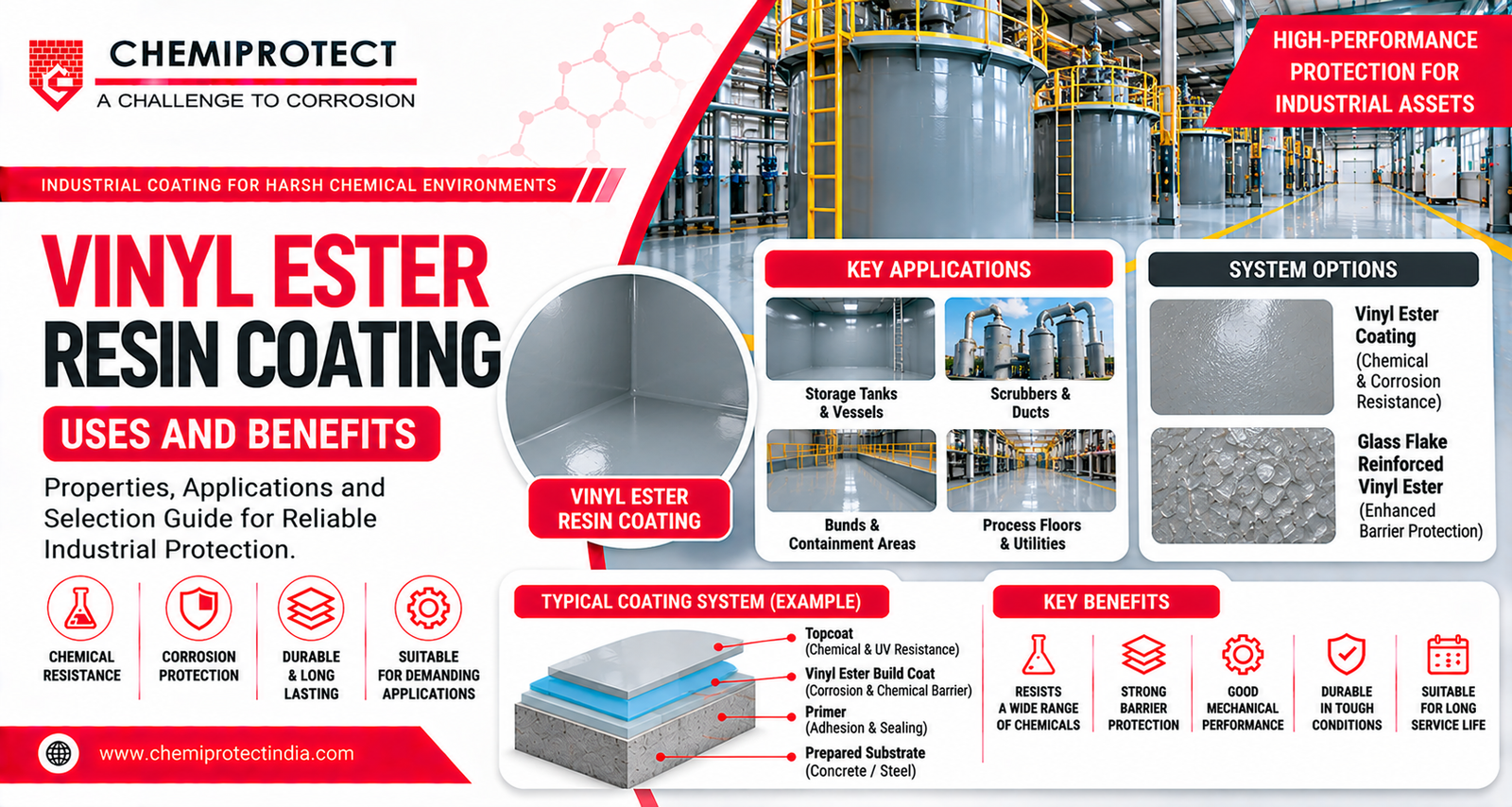
Discover vinyl ester resin coating applications,
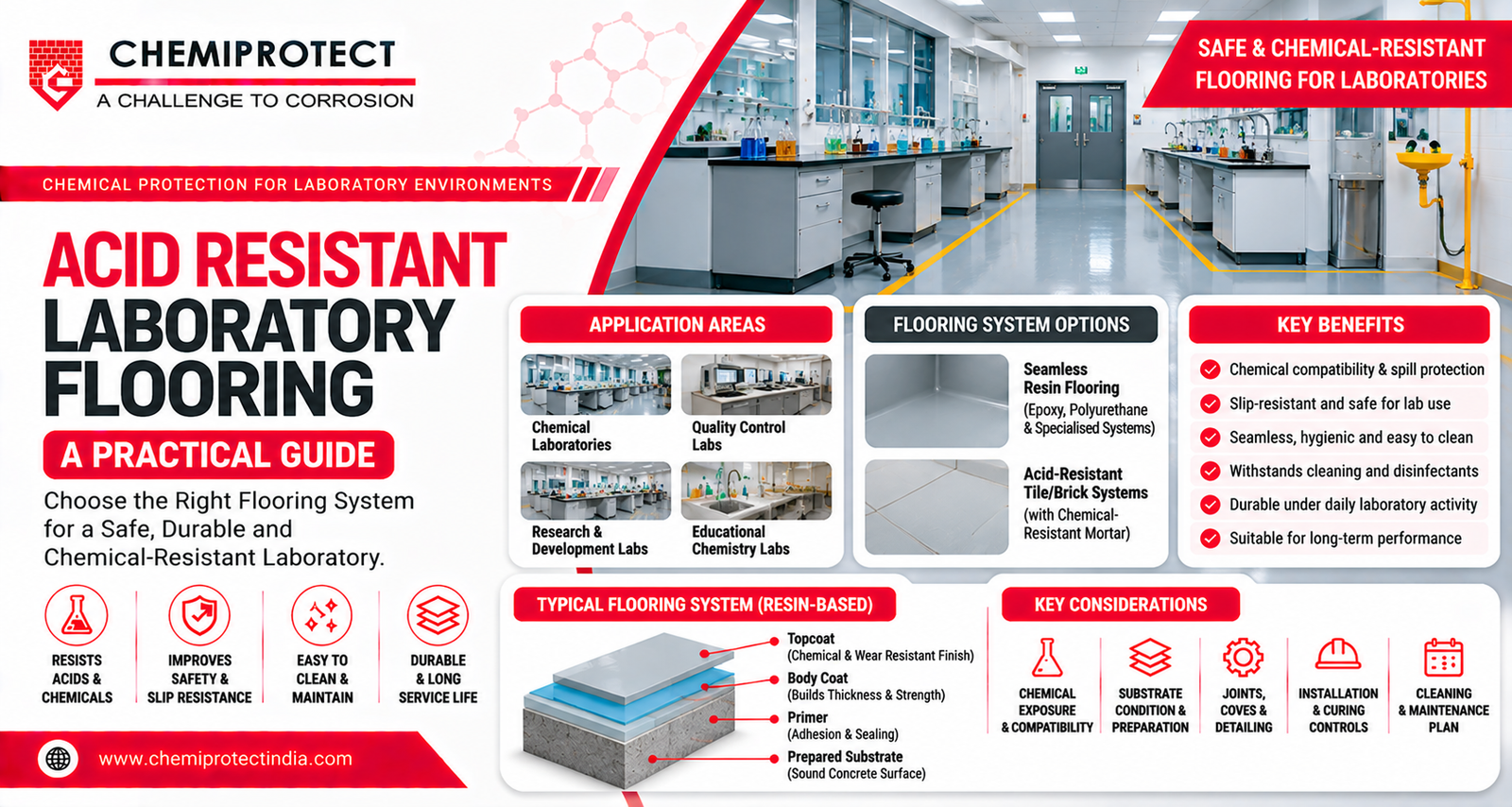
A guide to acid resistant laboratory
Connect Now