Acid-Proofing for Industrial Plant Renovation
Acid-Proofing for Industrial Plant Renovation
Why Acid-Proofing Needs a Renovation-Specific Approach
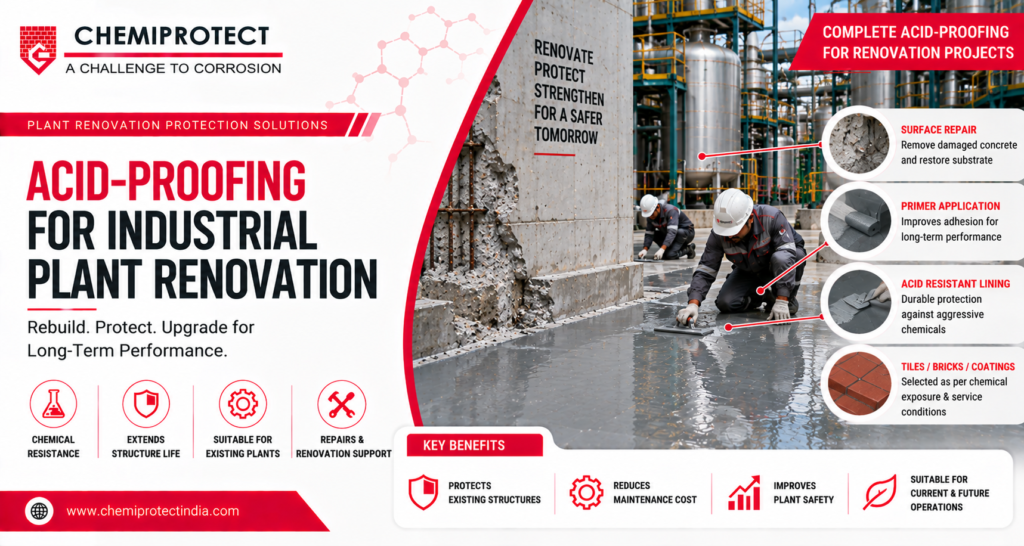
Renovating an operating industrial plant presents a different protection challenge from constructing a new facility. Existing concrete, steel, masonry, coatings, joints, drains, and process areas may already show years of chemical exposure, traffic, moisture, repairs, or wear. Before a new protective layer is installed, the condition of the existing construction has to be understood.
A renovation project is therefore an opportunity to reassess the entire protective assembly rather than simply replacing a visibly damaged surface. A planned industrial acid-proofing system should be designed around the plant’s current and future operating conditions, including changes to chemicals, process temperatures, production capacity, cleaning practices, and equipment layout.
Start With an Existing-Condition Assessment
The first stage should be a detailed inspection of the areas being renovated. Identify cracked concrete, delamination, exposed reinforcement, chemical staining, deteriorated joints, damaged tiles or bricks, failed coatings, moisture, and previous repair patches. Areas that look intact should also be assessed because chemical deterioration is not always visible at the surface.
Map the Condition by Area
Divide the plant into functional zones such as process floors, tank foundations, trenches, sumps, drains, loading areas, chemical storage zones, and wash-down areas. Recording the condition of each zone helps distinguish isolated repairs from areas requiring complete removal and replacement of the protective system.
Check the Substrate Before Choosing the Finish
Concrete moisture, surface strength, cracks, joints, contamination, and profile can affect adhesion and long-term performance. Existing coatings should be checked for bonding and compatibility before deciding whether they can remain. Where the substrate has deteriorated significantly, repairs may need to be completed before any new lining or coating begins.
Review the Actual Chemical Exposure
Plant renovation is also a good time to update the chemical exposure profile. Do not rely only on drawings or historical specifications. Confirm which chemicals are actually present, their concentrations, operating temperatures, contact frequency, and whether surfaces experience splash, spills, intermittent contact, or continuous immersion.
Cleaning chemicals and process residues should be included in the assessment. A surface that primarily handles one chemical during production may encounter a different chemical during cleaning. These secondary exposures can influence the selection of the resin, mortar, tile, brick, membrane, or coating system.
Using chemical resistance information alongside current operating data can help engineers shortlist materials that are compatible with the actual exposure rather than relying on broad product descriptions.
Decide Whether to Repair, Remove, or Replace
Not every existing surface needs complete removal. A renovation assessment can classify areas into three broad conditions: surfaces suitable for preparation and recoating, surfaces requiring localized repair before protection, and surfaces where the existing system has deteriorated enough to require full removal.
When Localized Repair May Be Appropriate
Localized repair can be considered where deterioration is limited and the remaining substrate and protective system have adequate integrity. Damaged joints, isolated cracks, broken tiles, or small areas of delamination can sometimes be repaired before reinstating the surrounding system, provided compatibility and detailing are addressed.
When Full Removal May Be Necessary
Widespread debonding, deep chemical deterioration, extensive cracking, persistent moisture, or loss of substrate integrity may indicate that simply applying another layer is unsuitable. Removing failed materials can expose the true substrate condition and create a better foundation for the new system.
Select the Protection System Around the Service Conditions
Once the substrate and exposure are understood, the renovation team can evaluate the appropriate protective construction. Depending on the area, options may include epoxy or polyurethane coatings, glass-flake linings, acid-resistant brick or tile systems, chemical-resistant mortars, membranes, or combinations of these components.
For example, a high-traffic floor may require a system designed for both chemical exposure and abrasion, while a sump or process pit may place greater emphasis on immersion resistance and containment. A wall subjected mainly to splash exposure may have different requirements from a tank that remains in continuous contact with chemicals.
Chemiprotect’s acid-resistant lining and protection solutions cover multiple system components and can be considered as part of a project-specific specification rather than a one-product approach.
Plan Renovation in Phases
For an operating plant, execution planning is as important as material selection. If production cannot stop completely, the renovation may need to be divided into manageable zones. Define access routes, isolation requirements, surface preparation windows, curing periods, inspection points, and the sequence for returning each area to service.
Coordinate With Plant Operations
The acid-proofing contractor and plant operations team should coordinate shutdowns, equipment movement, chemical isolation, cleaning, ventilation, and access. This reduces the risk of installing a system while the substrate is still exposed to contamination or while nearby operations can interfere with curing.
Allow Time for Curing and Inspection
A protective system is not ready for service merely because application is complete. Curing conditions and required inspection should be included in the project schedule. Depending on the system, checks may include visual inspection, thickness verification, adhesion testing, holiday or pinhole detection, and examination of joints and terminations.
Do Not Overlook Details During Renovation
Renovation often focuses on large visible surfaces, but failures can originate at small details. Drains, pipe penetrations, corners, equipment bases, expansion joints, construction joints, door thresholds, and changes in level should be included in the lining design.
Existing details may also have changed over the life of the plant. New equipment can introduce penetrations, altered drainage can change chemical exposure, and repeated repairs can create transitions between old and new materials. These interfaces should be reviewed before the final system is specified.
Renovation Can Also Be an Opportunity for Better Drainage
Chemical protection and drainage should be considered together. Standing liquid increases contact time and can place additional demands on floors and joints. During renovation, check whether slopes, drains, channels, sumps, and collection points are functioning as intended.
Where practical, correcting drainage problems before installing the protective system can reduce recurring exposure. The lining itself should still be chemically compatible, but good drainage can help the finished surface operate under more controlled conditions.
Document the New System for Future Maintenance
A renovated plant should not depend on memory for future repairs. Record the products used, system build-up, application areas, substrate repairs, joint details, thickness requirements, curing information, and inspection results. Photographs and area drawings can also help identify where specific materials were installed.
Conclusion
Successful acid-proofing during industrial plant renovation starts well before the new coating or lining is applied. Existing-condition assessment, chemical exposure mapping, substrate repair, system selection, detailing, phased execution, curing, and inspection all contribute to the final result.
The renovation should be treated as a complete protection project rather than a cosmetic resurfacing exercise. By matching the protective assembly to the plant’s real operating conditions and documenting the completed work, facility teams can create a more structured basis for long-term maintenance. For teams planning industrial acid-proofing and chemical protection during a renovation, a project-specific technical assessment can help establish the appropriate system and execution strategy.
FAQs
1. What is acid-proofing in industrial plant renovation?
It is the process of protecting renovated industrial structures with suitable chemical-resistant coatings, linings, mortars, tiles, and related systems based on actual operating conditions.
2. Why is an existing-condition assessment important?
It helps identify cracked concrete, failed coatings, damaged joints, moisture, chemical staining, and hidden deterioration before renovation begins.
3. When should a surface be repaired instead of replaced?
Localized repair is suitable for limited damage, while widespread debonding, deep deterioration, and extensive cracking may require complete removal.
4. Why should chemical exposure be reviewed during renovation?
Current chemicals, concentrations, temperatures, splash conditions, and cleaning chemicals should all be verified to select the correct protection system.
5. Why is phased renovation important in an operating plant?
Phased execution allows production to continue while managing access, curing time, inspections, shutdown coordination, and safe return to service.
Let’s Blog
Latest Blog
When used with chemical resistant masonry units and the proper membrane MIPRO-VE will protect concrete and steel sub base from chemical attacks and physical abuse. MIPRO-VE is silica filled vinyl ester mortar supplied in two parts .
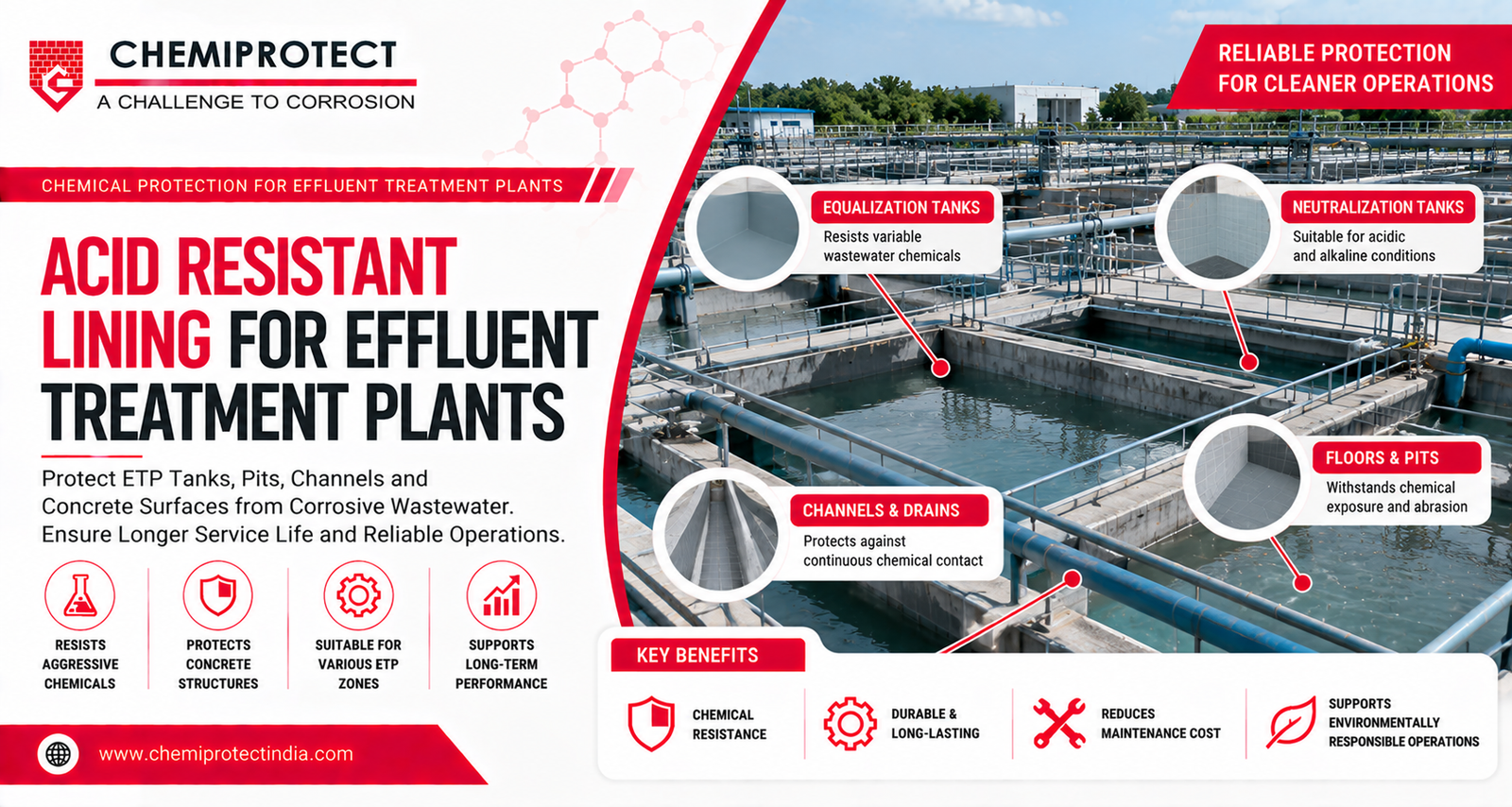
Acid Resistant Lining for Effluent Treatment Plants
October 18, 2026
Learn how acid resistant lining protects
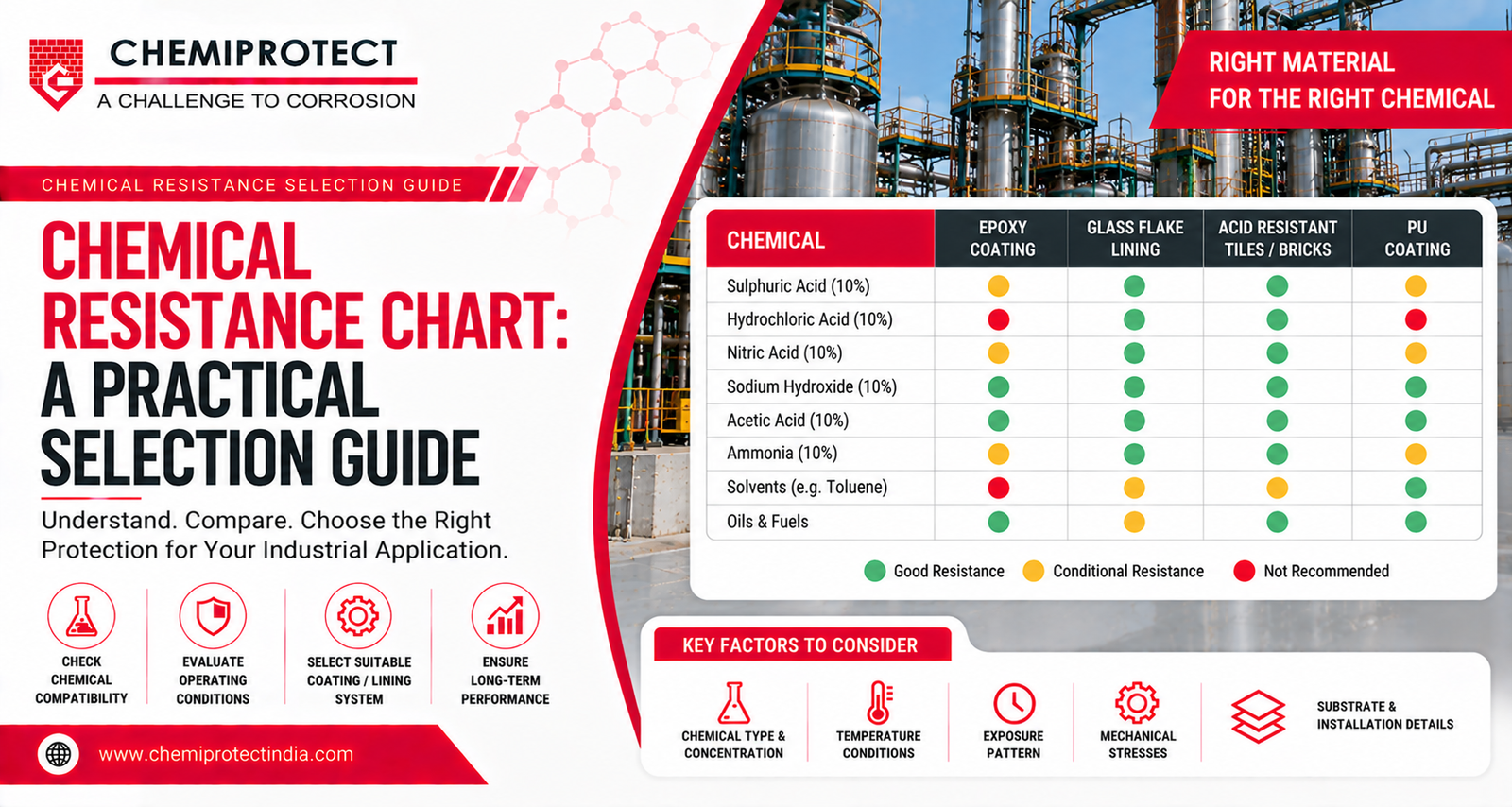
How to Read a Chemical Resistance Chart for Industrial Applications
October 15, 2026
Learn how to read a chemical