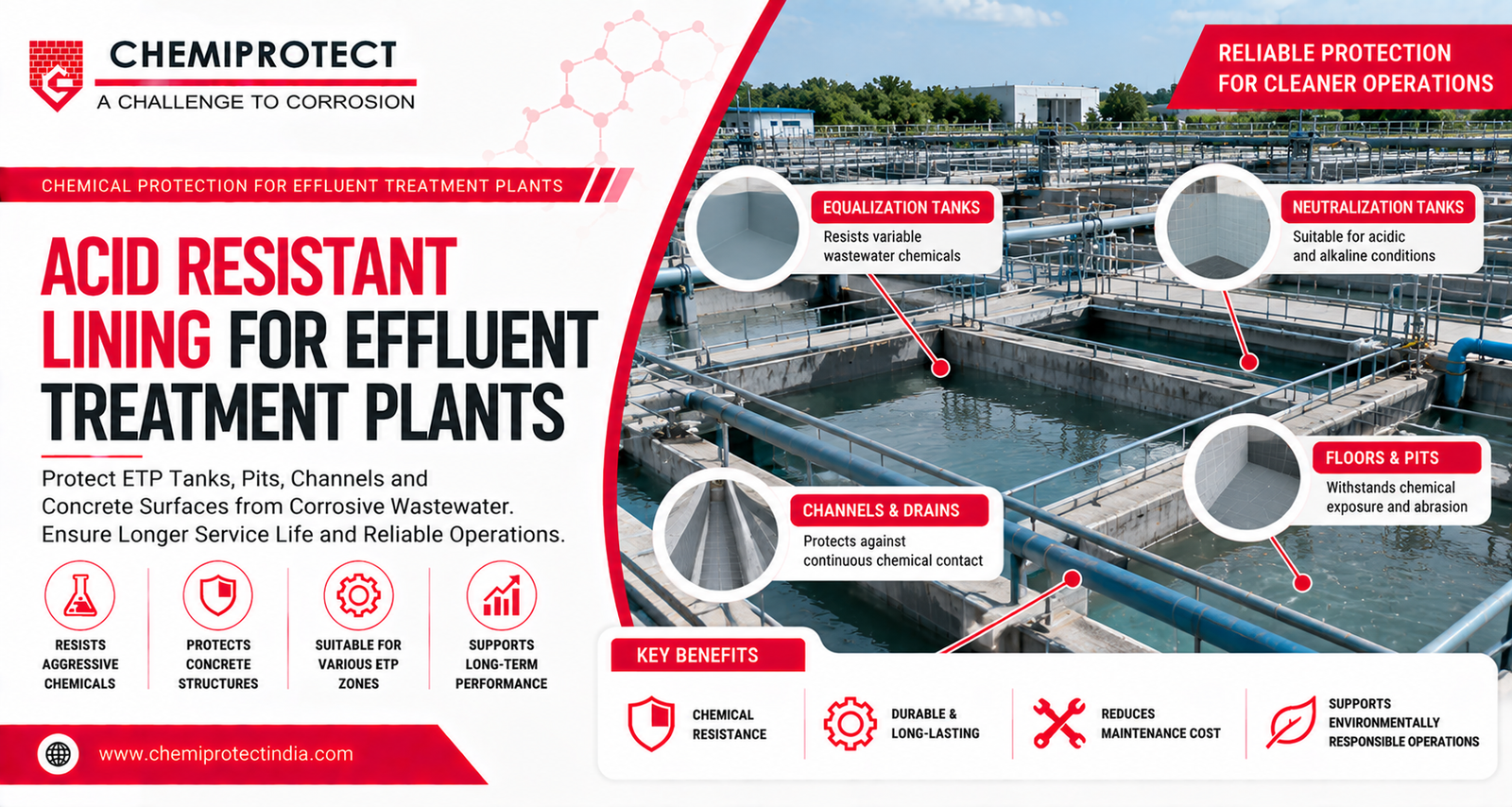
Acid Resistant Lining for Effluent Treatment Plants
Learn how acid resistant lining protects
Industrial scrubbers operate in environments where acidic gases, corrosive liquids, moisture, salts, and chemical condensates can attack concrete or metal surfaces. Process conditions may also involve temperature changes, liquid circulation, abrasion, and repeated cleaning. A suitable acid resistant lining system creates a protective barrier between the aggressive process environment and the underlying substrate. For scrubbers, protection should be selected according to the actual chemistry, operating temperature, wet-service conditions, and mechanical demands of each area.
Corrosion risk is not identical throughout a scrubber installation. Gas-contact surfaces, liquid collection zones, ducts, tanks, channels, equipment bases, drains, and surrounding floors may experience different combinations of chemical exposure and moisture. Protection should therefore be selected for the actual duty of each area.
Scrubber towers and wet-contact sections may experience continuous exposure to acidic or chemically contaminated liquids. Internal surfaces should be assessed for chemical concentration, temperature, immersion, and potential abrasion before selecting the lining system.
Recirculation tanks, collection areas, and sumps can remain wet for extended periods. These zones may experience chemical accumulation, splash exposure, and repeated cleaning. The protective system should therefore be suitable for continuous or intermittent liquid contact and properly detailed around drains and connections.
Ducts and channels may receive corrosive condensate, while equipment bases can be exposed to splashes and accidental spills. Corners, joints, penetrations, and floor-wall transitions should be incorporated into the lining design so that chemical exposure does not bypass the main protective layer.
Before specifying a lining, the facility should identify the chemicals and process conditions that can reach each protected surface. These may include hydrochloric acid, sulfuric acid, chlorine-related condensates, caustic solutions, salts, wastewater, cleaning chemicals, and mixed process liquids. Concentration, temperature, immersion, splash frequency, and cleaning procedures can influence material performance.
A chemical resistant lining specification should therefore be based on the complete exposure profile rather than the equipment name alone. Process changes should also be considered because changes in concentration, temperature, gas composition, or cleaning practices can alter the demands placed on the lining.
The selected protective system should be compatible with the chemicals and concentrations expected in service, including operating and cleaning temperatures. Chemical resistance should be evaluated for the full exposure rather than an isolated chemical under unrelated conditions.
Wet scrubber zones, tanks, sumps, and containment areas may remain exposed to liquids for long periods. The lining or coating must suit the expected wet-service condition and maintain its protective function under continuous or intermittent immersion.
Protection should limit chemical penetration and direct contact with the substrate. Continuous coverage, suitable thickness, sound adhesion, and properly treated joints are important because small discontinuities can become pathways for chemical ingress.
Liquid circulation, suspended solids, maintenance work, and equipment movement can cause mechanical wear. Areas exposed to higher traffic or abrasion may require a more robust protective build-up, particularly where aggressive chemicals and physical wear occur together.
Different scrubber applications may require different systems. Resin-based coatings can provide seamless protection where chemical resistance and cleanability are important. Epoxy systems may be considered when their formulation matches the chemical and mechanical duty. Glass-flake linings can provide a reinforced barrier for aggressive environments, while acid-resistant brick or tile lining may be considered where a durable hard-facing layer is required.
Selection should account for the substrate, chemical exposure, temperature, immersion, abrasion, required thickness, and detailing. In some applications, a combination of systems may be appropriate, with different materials used for flat surfaces, severe exposure zones, joints, or mechanical protection.
For severe chemical service, acid resistant tiles and lining systems may be considered where a durable, chemically resistant facing is required. The final specification should be based on the actual operating conditions and the compatibility of the complete system.
Concrete and metal substrates should be inspected before installation. Concrete may contain laitance, dust, oil, moisture, cracks, voids, damaged sections, or previous coatings. Metal surfaces may require removal of rust, scale, oil, and other contaminants. Unsound material should be repaired with compatible materials.
Mechanical preparation may be required to establish a clean and suitably profiled surface. Moisture conditions should be checked against the selected system, particularly in tanks, pits, channels, and floors exposed to process liquids. Proper preparation supports adhesion and reduces premature failure.
Corrosion protection should cover more than large open surfaces. Construction joints, movement joints, corners, drains, pipe penetrations, nozzles, equipment bases, and floor-wall junctions can become concentrated exposure points. These details should be incorporated into the protective system using compatible materials and appropriate detailing.
Drainage and containment are also important. Spills and contaminated liquids should be directed toward suitable collection points rather than allowed to remain on exposed surfaces. Protected edges, sealed penetrations, and compatible drain interfaces help maintain continuity of the corrosion barrier.
Depending on the specified system, installation may include substrate preparation, primer, repair layer, resin or membrane layers, protective topcoat, chemical resistant mortar, or acid-resistant brick and tile facing. Mixing, application thickness, curing periods, recoat intervals, and environmental conditions should follow the technical requirements of the selected materials.
Quality checks should cover substrate condition, cleanliness, moisture where relevant, layer thickness, surface continuity, joint detailing, and curing. Inspection between stages can identify pinholes, missed sections, poor transitions, or other defects before the area returns to service.
Routine inspection should look for cracking, blistering, abrasion, impact damage, delamination, exposed substrate, and deterioration around joints, drains, penetrations, or equipment bases. Cleaning chemicals and maintenance procedures should remain compatible with the installed system.
Changes in process chemistry, concentration, temperature, gas composition, or cleaning procedures should prompt a review. Localized damage should be repaired promptly to reduce chemical access to the substrate.
A practical specification should divide the scrubber installation into zones according to actual service conditions. Record chemical composition, concentration, temperature, immersion or splash exposure, contact frequency, abrasion, substrate type, moisture, drainage, containment, and cleaning requirements. Then define surface preparation, lining build-up, thickness, joint treatment, curing, and inspection criteria.
For critical scrubber and containment areas, industrial corrosion protection should be documented against the exposure profile and intended service conditions. This gives the project team a clear basis for material selection, installation control, maintenance planning, and future process changes.
Service planning should account for shutdown windows, maintenance access, curing requirements, and contamination control during installation or repair.
Acid resistant lining for scrubbers requires protection against chemical exposure together with moisture, immersion, temperature changes, abrasion, spills, and demanding process details. The appropriate solution may involve resin, epoxy, glass-flake, acid-resistant brick, tile, or a combination selected for the specific area and substrate. A properly designed system can help protect scrubber surfaces while supporting durability and reliable operation.
For scrubber protection, industrial corrosion protection solutions should be specified around the exposure profile, substrate, and service requirements. An engineered lining can provide a durable barrier against aggressive conditions.
When used with chemical resistant masonry units and the proper membrane MIPRO-VE will protect concrete and steel sub base from chemical attacks and physical abuse. MIPRO-VE is silica filled vinyl ester mortar supplied in two parts .
Learn how acid resistant lining protects
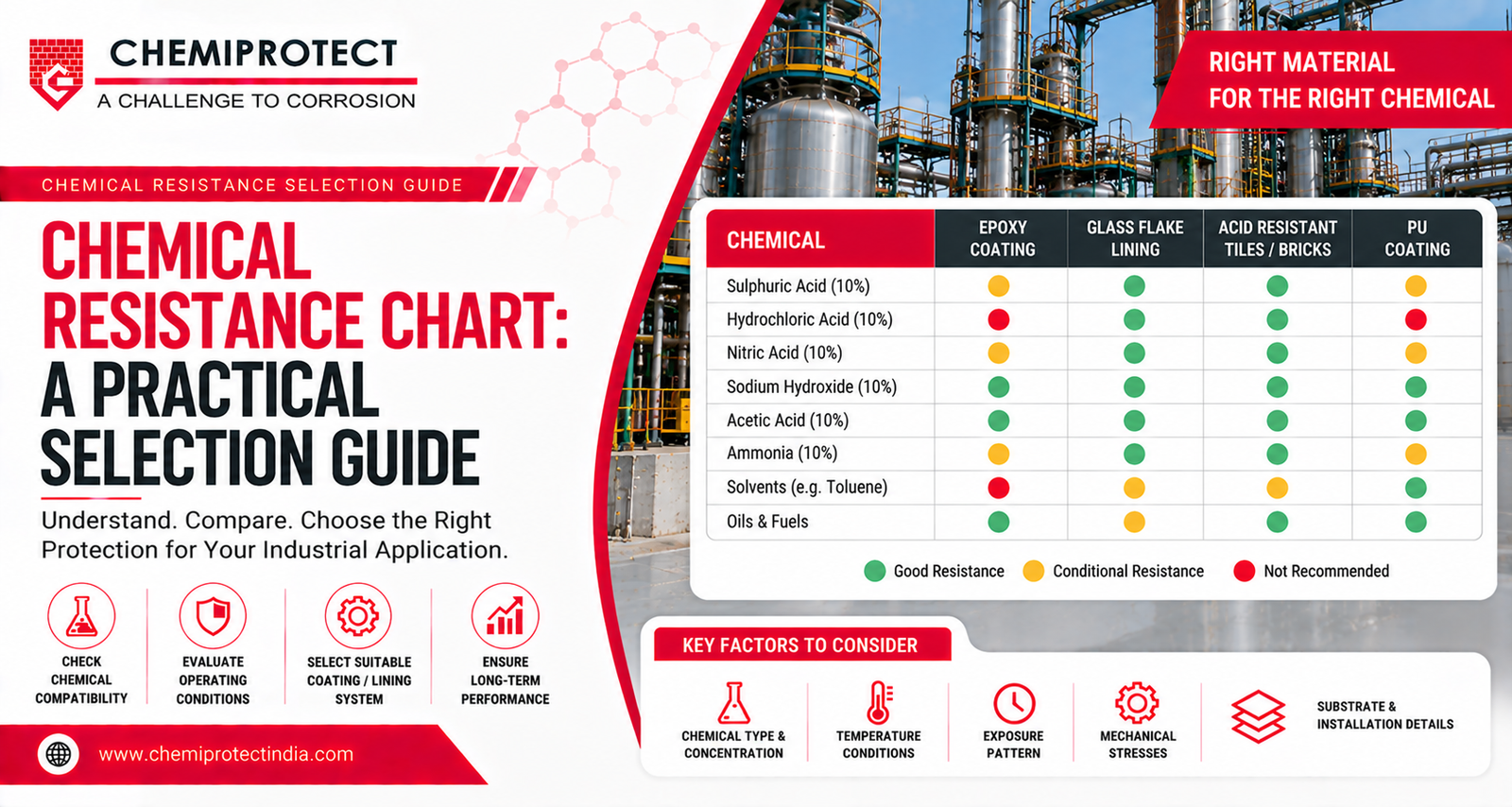
Learn how to read a chemical
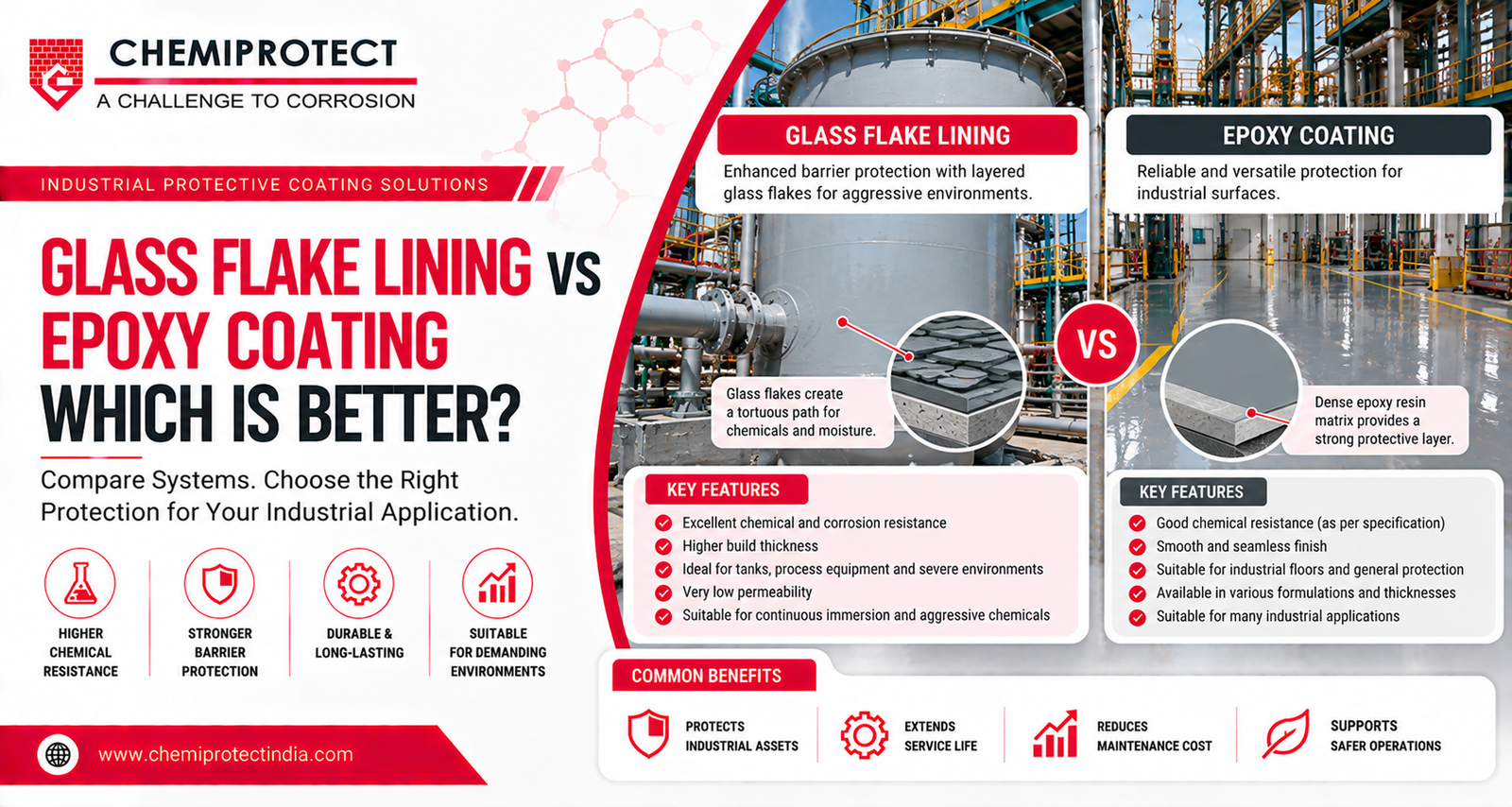
Understanding Glass Flake Lining and Epoxy
Connect Now