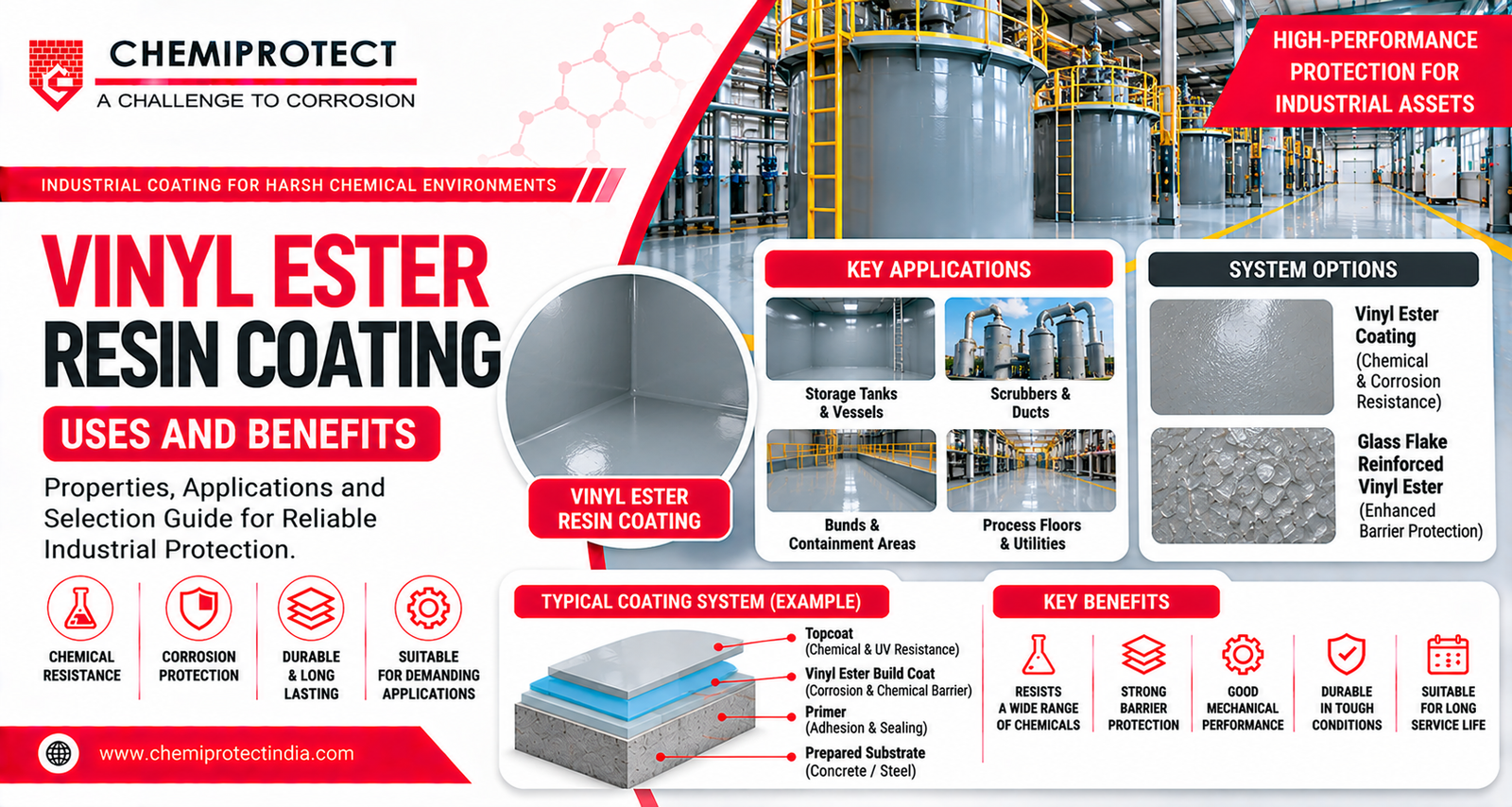
Vinyl Ester Resin Coating: Properties, Benefits and Industrial Uses
Discover vinyl ester resin coating applications,
Walls in industrial facilities are often exposed to more than ordinary dust and moisture. Chemical splashes, vapours, washdown water, cleaning agents and airborne process residues can gradually damage unprotected surfaces. In areas where hygiene, easy cleaning or containment matters, deteriorating walls can create maintenance problems and compromise the condition of the workspace. A chemical resistant wall coating can provide a protective, cleanable surface when its chemistry and application are matched to the actual environment. A review of industrial chemical protection solutions can help connect the selected surface system to the actual process environment.
Chemical processing rooms, battery areas, laboratories, pharmaceutical manufacturing spaces, food processing zones and wastewater handling areas can all place special demands on wall finishes. The exposure is not identical in every location. One wall may receive occasional splashes, while another may face regular washdown or vapour condensation. Identify the source and route of exposure before selecting a coating, including the possibility of liquid collecting at floor-wall junctions. The suitability of industrial wall protection should be confirmed against the site’s actual operating conditions.
Wall protection should also account for cleaning practices. Detergents, disinfectants, sanitising agents and periodic deep-cleaning chemicals can affect the finish over time. Temperature, humidity, sunlight, abrasion from carts and contact with tools may also influence performance. A wall coating should be selected for the combined environment rather than a single headline property.
Start by identifying whether the wall is concrete, cement plaster, masonry, steel or an existing coated surface. Check for cracks, dampness, efflorescence, loose plaster, oil, dust and previous coating failure. Moisture entering from behind the wall can cause blistering or loss of adhesion even when the topcoat has good chemical resistance. Resolve leaks and substrate defects before coating work begins.
Create an exposure schedule that lists chemicals, concentrations, temperatures, contact duration and cleaning frequency. Distinguish between direct splash, intermittent washdown, vapour exposure and continuous immersion. The last condition may require a lining rather than a conventional wall coating. Include abnormal events such as hose failures or accidental spills when these are credible for the area.
Epoxy coatings are often considered for industrial walls where adhesion, a hard finish and cleanability are required. However, chemical resistance varies with resin type, curing agent, formulation and exposure. Polyurethane coatings may be considered where appearance, abrasion resistance or weathering characteristics are important, subject to chemical compatibility. Specialised resin systems may be needed for more aggressive chemicals or higher operating temperatures. Review the available chemical-resistant coating materials against the specified exposure before finalising the design.
The choice should be based on documented performance for the specific chemical and service conditions. Ask whether the coating is suitable for vertical application, the intended film thickness and the substrate. Consider whether a primer, intermediate coat and topcoat are required, and whether the system can be repaired locally. Chemiprotect’s [industrial coating and protection solutions] provide a useful point of reference when discussing the appropriate material family for a project.
Even a high-performance coating cannot compensate for a weak or contaminated substrate. Remove loose material, dust, grease, salts and incompatible coatings. Repair cracks and damaged plaster with compatible materials, then allow repairs to cure as specified. The surface profile should match the coating system’s requirements. Where moisture is suspected, investigate the source rather than sealing over a persistent problem.
Pay close attention to corners, pipe penetrations, wall-floor junctions, door frames and equipment supports. These locations are difficult to coat uniformly and may be exposed to concentrated splashes. A compatible cove or reinforced detail can help create a more maintainable transition. Protect edges and terminations so liquid cannot travel behind the coating. Coordinate the wall system with floor, drain and containment details.
Prepare a method statement covering environmental conditions, mixing, application tools, coat sequence, wet and dry film thickness, recoat intervals and curing. Vertical surfaces can be vulnerable to sagging or uneven coverage, so the applicator should use a method suited to the product viscosity and specified thickness. Keep batch records and check that the correct components are used within their working life.
Inspect the completed finish for pinholes, missed areas, runs, bubbles, cracking and damage. Verify thickness and adhesion using methods appropriate to the coating and project specification. Do not expose the coating to chemicals or aggressive cleaning before it has achieved the required cure. The handover should include product data, batch details, inspection records, cleaning instructions and repair guidance.
Routine cleaning should use methods approved for the coating. Strong solvents, abrasive pads or unapproved chemicals can damage the finish and reduce its service life. Train cleaning teams to recognise early signs of deterioration, particularly at corners, splash zones and around fixtures. Promptly remove residues where the process requires it, while avoiding cleaning practices that are harsher than necessary.
Inspect walls after process changes, spills, equipment relocation or maintenance work. Small areas of damage should be repaired before moisture or chemicals reach the substrate. If blistering or peeling appears over a large area, investigate the root cause: moisture, poor preparation, incompatible materials or exposure beyond the coating’s capability. A repair that treats only the visible symptom may not prevent recurrence.
Wall coatings are one component of a broader protection strategy. Floors, drains, kerbs, sumps, equipment plinths and pipe supports should be designed to manage the same exposure conditions. If a wall finish is resistant but the floor-wall junction is weak, liquid may still enter the structure. Coordinate specifications across trades and avoid mixing products from different systems without written compatibility confirmation.
Before procurement, prepare a schedule showing each area, substrate, chemical exposure, finish requirement and inspection method. This helps contractors price comparable scopes and reduces assumptions during installation. For specialist environments, involve the process, maintenance and safety teams in the review. A clear specification improves the chance that the finished wall is durable, cleanable and suitable for the actual industrial task.
One frequent mistake is choosing a coating based only on its generic chemical-resistance description. The actual concentration, temperature, cleaning agents and exposure duration must be considered. Another is coating over damp, cracked or weak plaster without correcting the underlying defect.
Do not overlook the lower wall, corners, penetrations and wall-floor junctions. These locations often receive more direct splash or washdown than the main wall surface. A coating specification should address them explicitly.
Effective wall protection depends on matching the coating to the chemical exposure, substrate and cleaning regime. Careful preparation and detailing around corners, penetrations and floor junctions are essential to long-term performance. For industrial wall protection requirements, visit the Chemiprotect Engineers website and review suitable systems against the conditions at the facility.
When used with chemical resistant masonry units and the proper membrane MIPRO-VE will protect concrete and steel sub base from chemical attacks and physical abuse. MIPRO-VE is silica filled vinyl ester mortar supplied in two parts .
Discover vinyl ester resin coating applications,
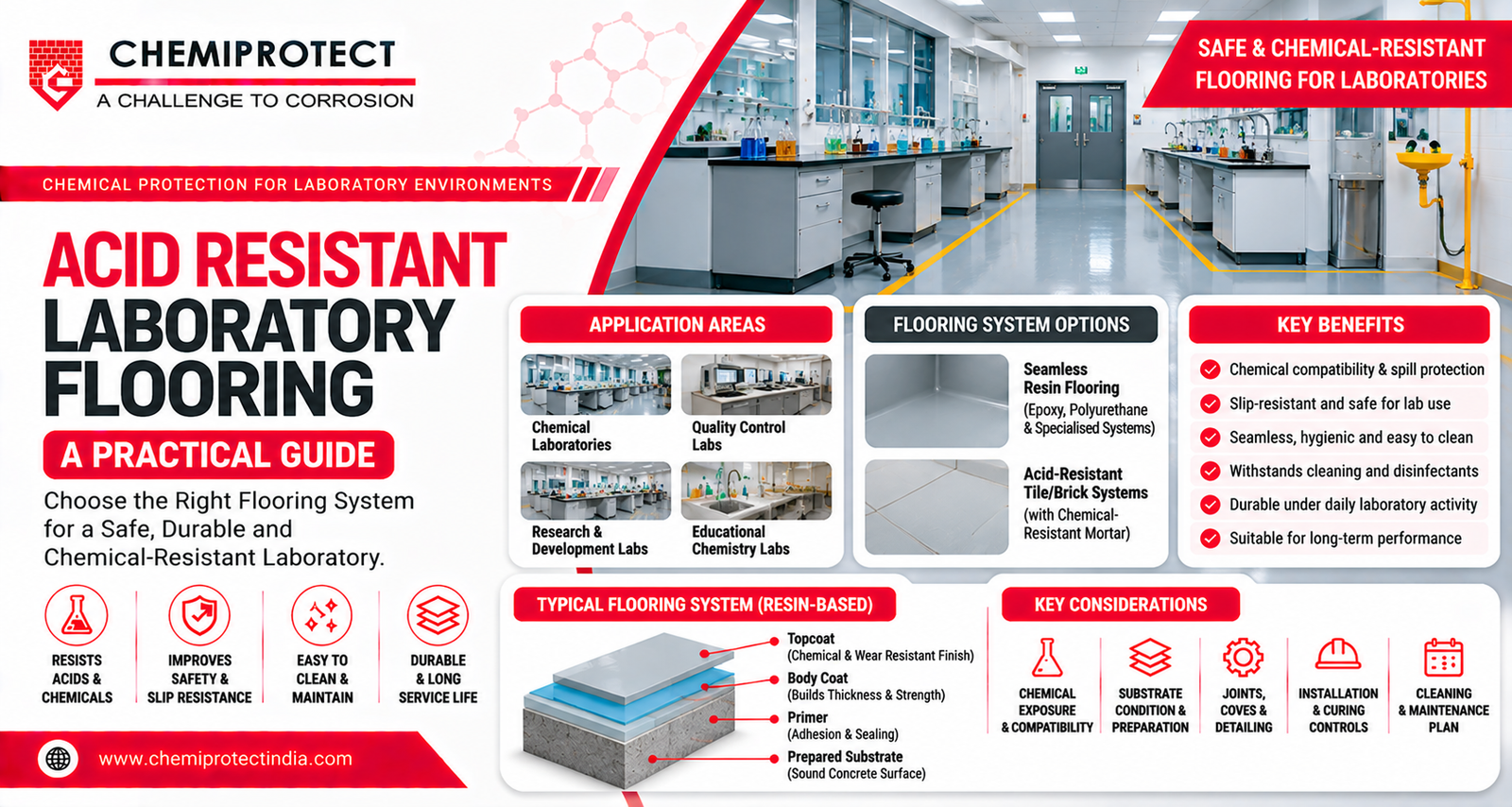
A guide to acid resistant laboratory
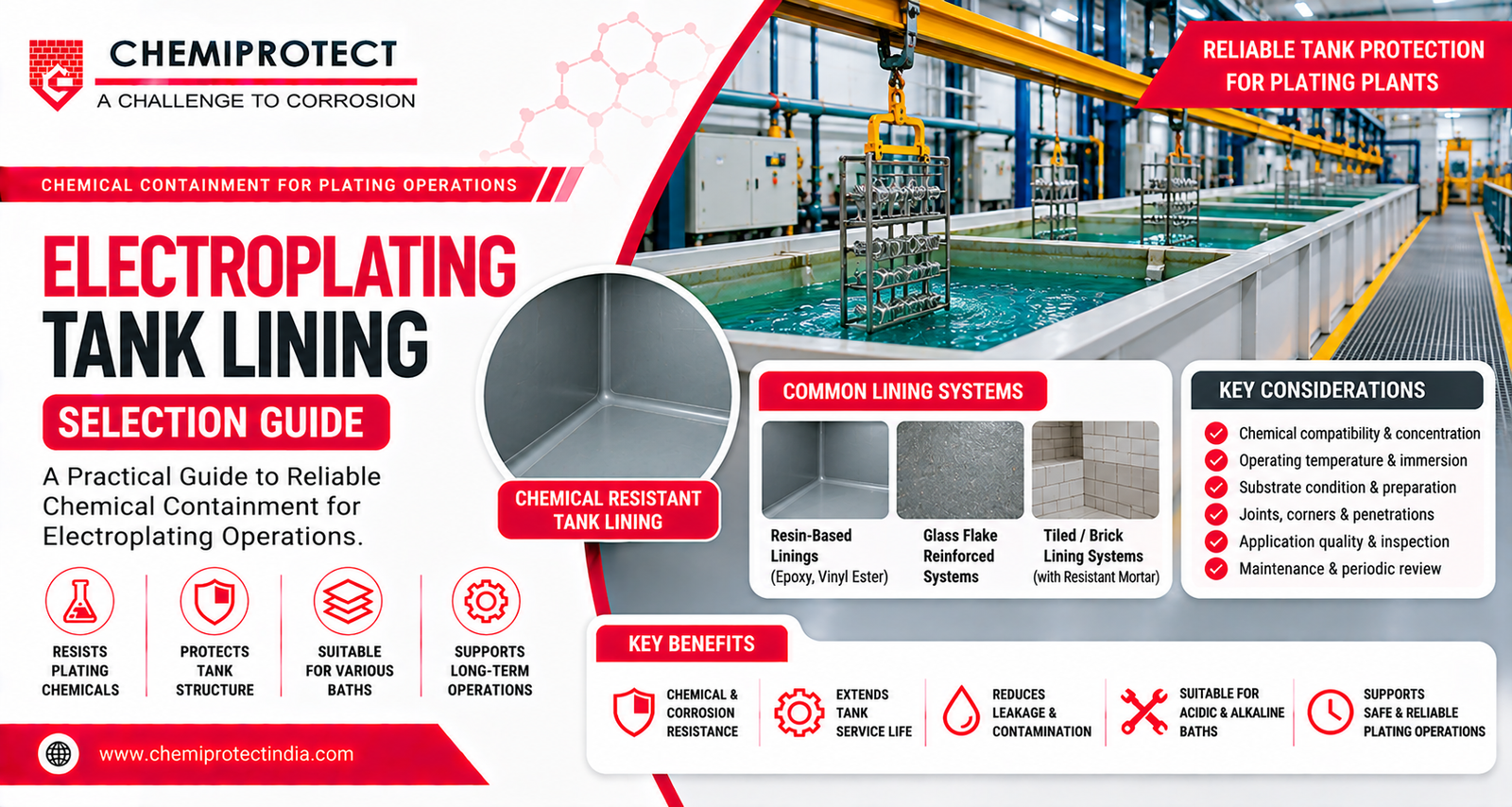
Understand electroplating tank lining, chemical compatibility,
Connect Now