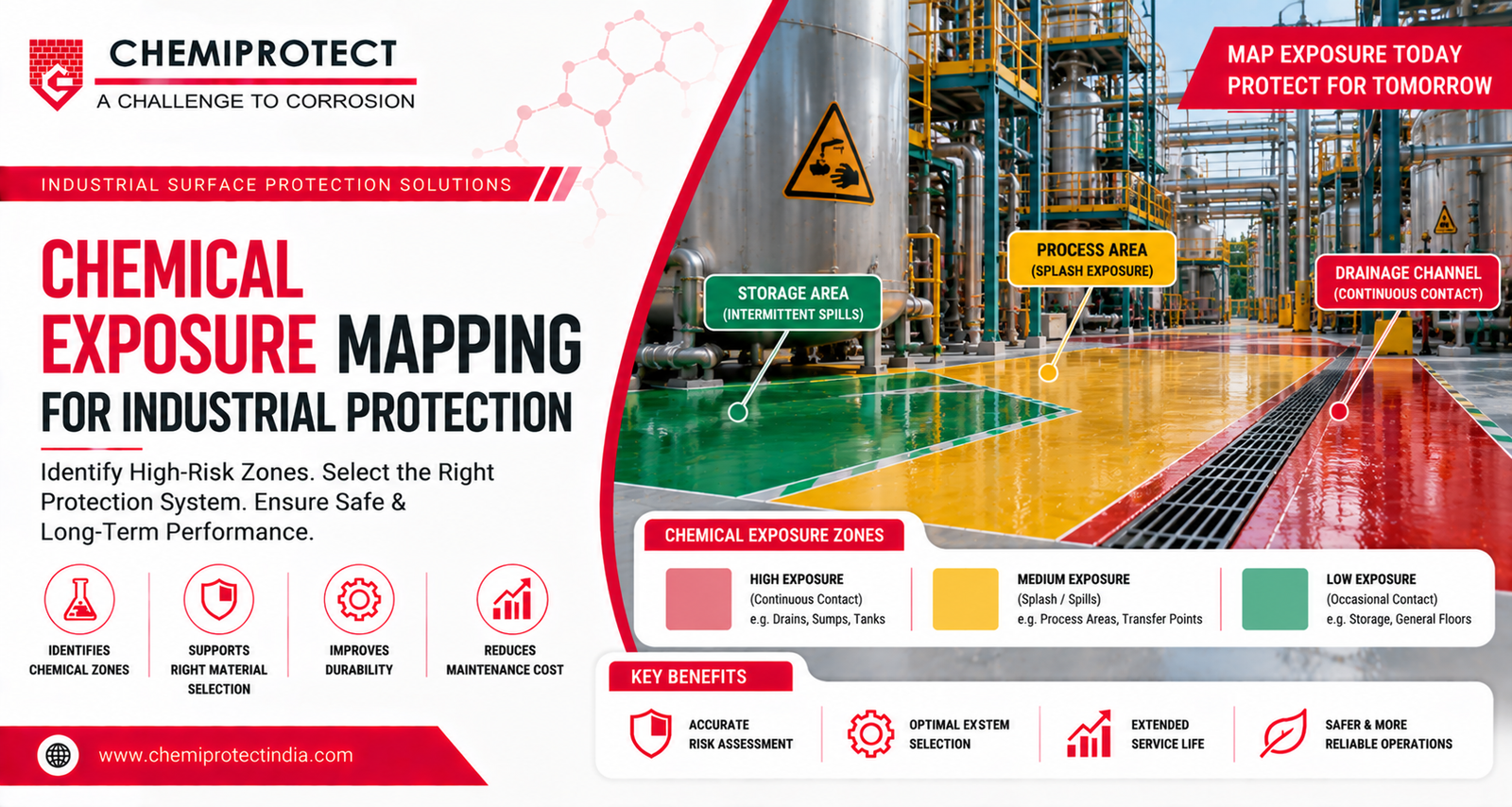
Chemical Exposure Mapping for Industrial Protection
What Is Chemical Exposure Mapping? Industrial
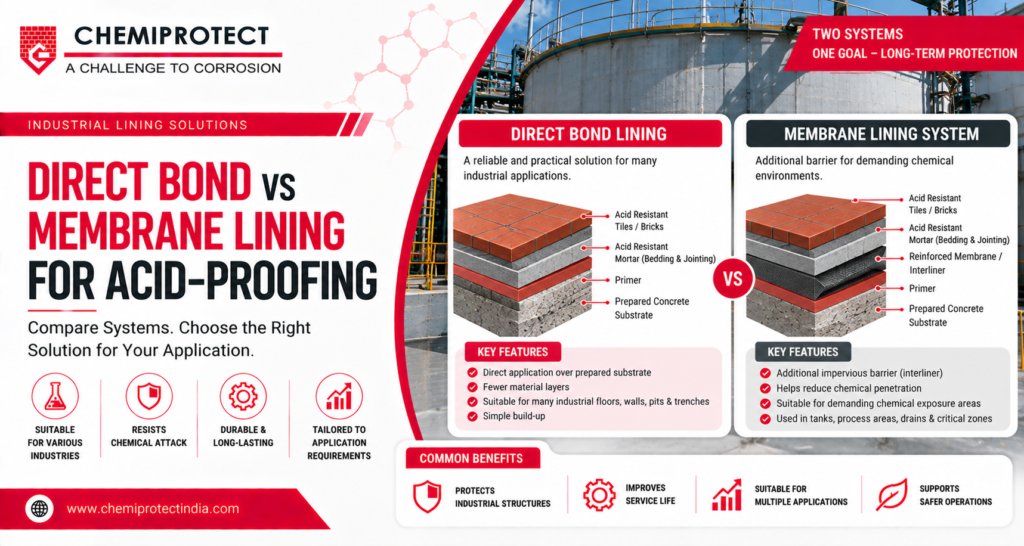
Industrial lining systems are designed to separate vulnerable substrates from aggressive chemicals, but not every application requires the same construction. Two established approaches for brick, tile, or stone lining are direct bond and membrane lining. The key difference is the protective layer between the substrate and the facing material. A direct bond acid resistant lining places the chemical-resistant facing and bedding system directly over the prepared substrate, while a membrane arrangement introduces an additional impervious interliner beneath the bedding and facing.
The choice should not be made simply because one system contains more layers. Chemiprotect’s published lining details show both configurations, demonstrating that system design can be adapted to the conditions of the installation. The relevant question is which construction matches the substrate, chemical exposure, moisture conditions, movement, and required level of separation.
In a direct bond system, the prepared concrete or other suitable substrate receives an appropriate primer, followed by acid- or alkali-resistant bedding and jointing mortar and the selected brick, tile, or stone facing. The layers are therefore relatively direct: substrate, primer, mortar, and exposed lining material.
This construction can be suitable where the substrate is sound, the operating conditions are well understood, and an additional membrane barrier is not required by the project design. Because there is no separate interliner, the installation has fewer material layers and may involve a simpler build-up.
Direct bond construction may be considered for industrial floors, walls, trenches, pits, drains, and other areas where a robust chemical-resistant facing is required and the substrate conditions support the arrangement. Chemical compatibility, mechanical loading, joint design, and surface preparation still need to be evaluated before specification.
A membrane lining introduces an impervious interliner between the prepared substrate and the chemical-resistant bedding and facing. In a typical arrangement, the build-up can include concrete, an anti-corrosive primer, a reinforced membrane or interliner, acid-resistant bedding and jointing mortar, and acid-resistant brick or tile.
The interliner creates an additional barrier that can be valuable where limiting chemical penetration toward the substrate is a major design consideration. Chemiprotect’s technical resources describe membrane construction using a primer, glass-matt reinforced interliner, hybrid epoxy mortar, and acid-resistant facing materials.
Membrane systems can be considered for demanding chemical environments, particularly where the project requires an additional impervious barrier beneath the exposed lining. The arrangement may be relevant in process areas, tanks, pits, floors, drains, and other locations where chemical containment and substrate protection are important design objectives.
The most obvious distinction is the presence of an interliner. Direct bond construction relies on the primer, mortar, joints, and facing as the protective assembly. Membrane lining adds a dedicated barrier below the mortar and facing. This difference changes the way the system manages potential chemical migration toward the substrate.
Substrate assessment is essential for both systems. The concrete should be sound and suitably prepared, with weak material, contaminants, laitance, and loose particles removed. Cracks, joints, moisture, and existing coatings should also be evaluated. A membrane does not eliminate the need for proper substrate preparation; it becomes another component of the designed system.
Chemical type, concentration, temperature, exposure frequency, and immersion conditions should be identified before selecting either construction. The facing material and mortar must be compatible with the actual chemical environment, while the membrane system must also be suitable for the same exposure. A system should never be selected solely from a generic description such as “acid resistant.”
Where the design places particular importance on limiting migration toward the substrate, the additional interliner in a membrane system can be a significant consideration. Direct bond construction may be appropriate where the exposure and substrate conditions support that simpler configuration. The decision depends on the complete service environment.
Both systems depend heavily on detailing. Corners, drains, joints, penetrations, equipment bases, terminations, and changes in plane can become vulnerable areas if they are not designed and executed correctly. Membrane systems also require controlled installation of the interliner, including reinforcement, coverage, curing, and continuity.
Start with an exposure assessment. List the chemicals present, their concentrations, operating temperatures, contact frequency, and whether the area experiences splash, intermittent spills, or continuous immersion. Then evaluate traffic, abrasion, impact, thermal cycling, cleaning procedures, and other mechanical stresses.
Next, inspect the substrate and identify cracks, joints, moisture conditions, surface profile, previous repairs, and any existing protective layers. These details can influence whether direct bond construction is appropriate or whether the project requires the additional separation provided by a membrane arrangement.
Finally, evaluate the complete system rather than one component. Bedding and jointing mortar, brick or tile, primer, membrane where specified, and substrate preparation all work together. Chemiprotect’s acid-resistant tile and brick systems provide examples of how these components can be arranged for industrial lining applications.
One mistake is assuming that a membrane automatically makes a lining suitable for every aggressive chemical environment. The membrane, mortar, facing, primer, and substrate still need individual compatibility checks. Another is selecting direct bond simply because it has fewer layers, without considering whether the operating conditions justify an additional barrier.
Ignoring joints is another frequent specification weakness. Chemical attack can exploit discontinuities, so jointing materials and termination details should be considered as part of the protective system. Installation conditions also matter: surface preparation, mixing, application thickness, curing, and inspection can influence finished performance.
Direct bond and membrane lining should not be treated as competing products. They are different construction approaches that can serve different project requirements. The appropriate selection depends on chemical exposure, substrate condition, containment objectives, physical stresses, detailing requirements, installation constraints, and expected service conditions.
For project teams, this system-based approach also makes specifications more precise. Instead of requesting an “acid-proof lining” in general terms, the project can define the substrate preparation, primer, interliner where required, mortar, facing material, joints, thickness, and exposure conditions. This reduces ambiguity during procurement and execution.
The practical difference in direct bond vs membrane lining is the protective architecture between the substrate and exposed chemical-resistant facing. Direct bond systems offer a more direct construction, while membrane systems introduce an additional impervious interliner when the project design calls for greater separation from the substrate.
The right choice should come from the actual service conditions rather than from a simple preference for one construction. Assess the chemicals, concentration, temperature, exposure pattern, substrate, moisture, mechanical stresses, joints, and installation requirements before finalizing the specification. For projects requiring detailed evaluation of acid-proof lining and chemical protection solutions, Chemiprotect’s technical resources can support a more informed system selection.
Direct bond systems bond the lining directly to the prepared substrate, while membrane lining adds an impervious interliner beneath the bedding and facing for additional substrate protection.
Direct bond lining is suitable for industrial floors, walls, trenches, pits, and drains where the substrate is sound and operating conditions are well understood.
Membrane lining is commonly considered for tanks, pits, process areas, floors, and containment structures where an additional chemical barrier is required.
Selection should consider substrate condition, chemical type, concentration, temperature, moisture, joint detailing, traffic, and mechanical stresses.
A successful lining depends on the complete system—including substrate preparation, primer, membrane (if required), mortar, tiles or bricks, joints, and installation quality—not a single product alone.
When used with chemical resistant masonry units and the proper membrane MIPRO-VE will protect concrete and steel sub base from chemical attacks and physical abuse. MIPRO-VE is silica filled vinyl ester mortar supplied in two parts .
What Is Chemical Exposure Mapping? Industrial
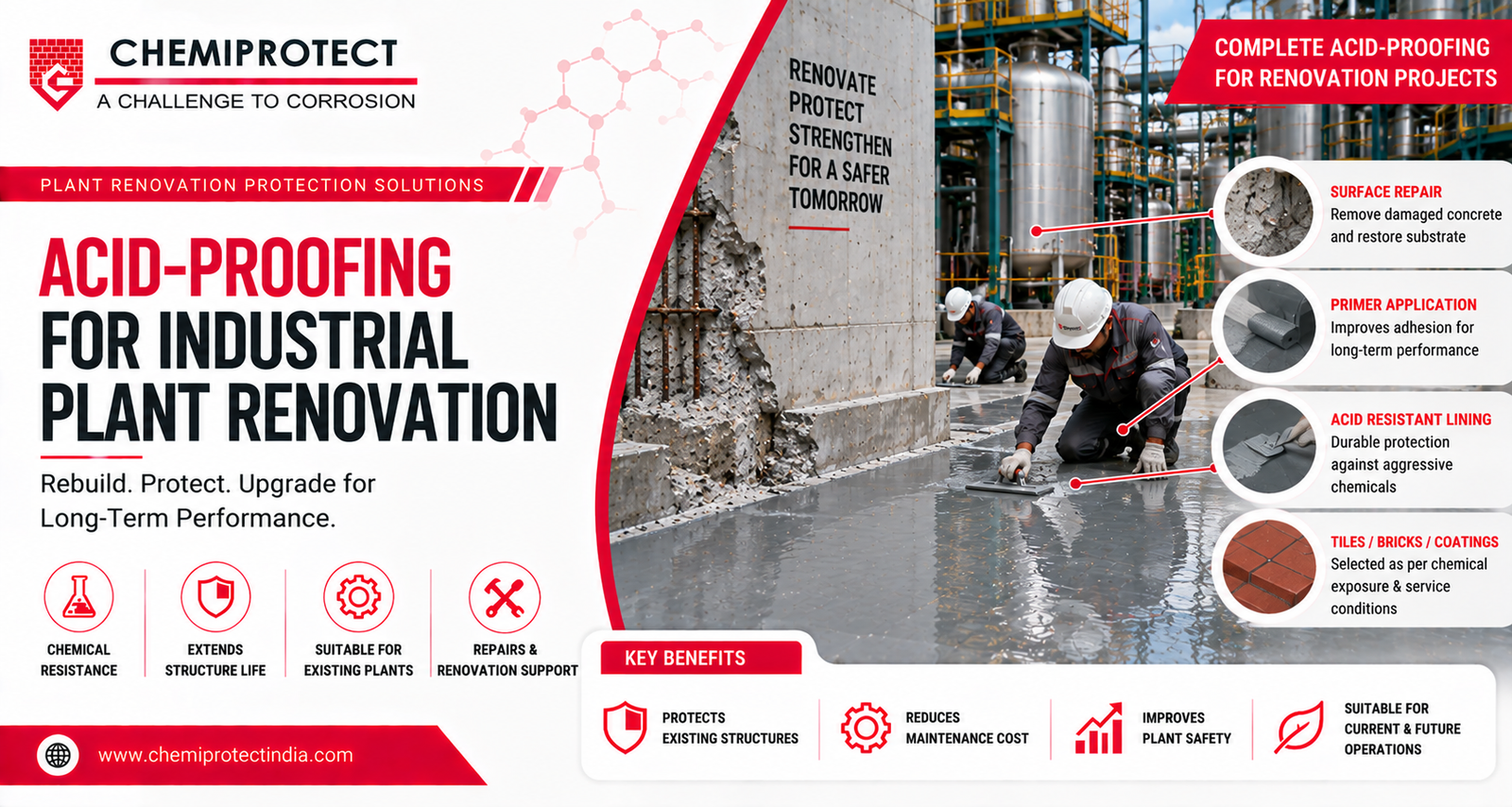
Why Acid-Proofing Needs a Renovation-Specific Approach
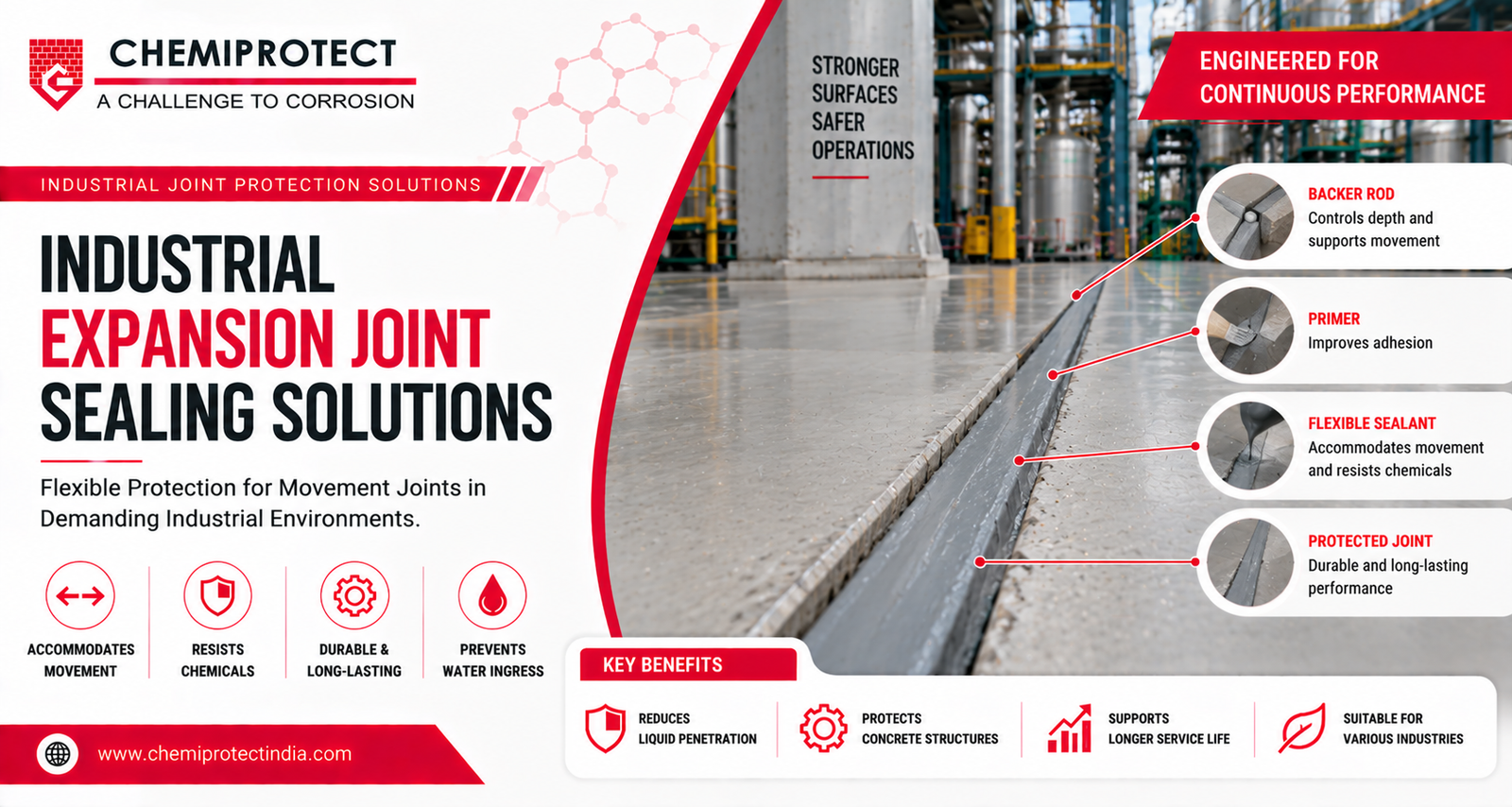
Industrial floors, tanks, process areas, and
Connect Now