How Does Acid Resistant Cement Help in Industrial Protection?
How Does Acid Resistant Cement Help in Industrial Protection?
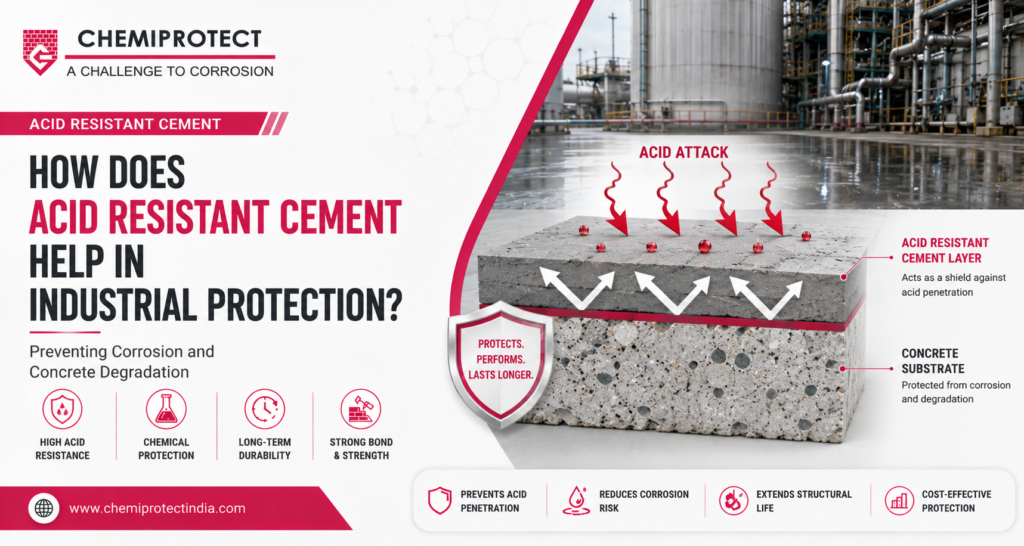
Acid resistant cement helps industries protect floors, tanks, drains, pits, trenches, and other surfaces from chemical damage. In chemical plants, pharmaceutical units, fertilizer industries, battery rooms, laboratories, and wastewater treatment areas, normal cement may not perform well. Acids, alkalis, corrosive liquids, and wastewater can slowly damage normal cement surfaces.
That is why many industries use acid resistant cement for chemical-resistant construction, repair, and lining work. It helps improve durability, reduce surface damage, and support long-term protection. CHEMIPROTECT provides reliable industrial protection solutions for areas where chemical resistance is important.
What Is Acid Resistant Cement?
Acid resistant cement is a special cement-based material used in areas exposed to acids, alkalis, and corrosive chemicals. It is designed to perform better than normal cement in harsh industrial conditions.
It is commonly used for chemical-resistant floors, drains, tanks, pits, trenches, and lining systems. In many applications, acid resistant cement is used with acid proof tiles, acid resistant bricks, acid resistant mortar, and protective lining materials.
Why Is Acid Resistant Cement Needed in Industries?
Industries need acid resistant cement because normal cement can break down when exposed to chemicals. Acids and corrosive liquids can react with normal cement and reduce its strength. This can lead to cracks, leakage, weak joints, and surface failure.
Acid resistant cement helps reduce these problems. It supports safer and more durable industrial surfaces.
Common Problems with Normal Cement in Chemical Areas
Chemical Damage
Normal cement may not resist acids and corrosive liquids. Continuous exposure can weaken the surface.
Cracks and Weak Joints
Chemical attack can create cracks and weak joints. This may allow chemicals to enter deeper into the surface.
Surface Breakdown
When cement loses strength, the surface may become rough, dusty, or damaged.
Frequent Repair Cost
Weak cement areas need regular repairs. This increases cost and may disturb industrial operations. epairs, which can affect production and increase maintenance cost.
What Are the Main Benefits of Acid Resistant Cement?
Acid resistant cement offers many practical benefits for industrial applications. It helps protect surfaces and supports long-term performance.
Key Benefits of Acid Resistant Cement
Better Chemical Resistance
Acid resistant cement helps protect surfaces from acids, alkalis, and corrosive liquids.
Longer Surface Life
It improves the durability of floors, tanks, drains, pits, and trenches.
Stronger Industrial Performance
It is suitable for chemical-prone areas where normal cement may fail.
Reduced Maintenance
When the right material is used, industries can reduce frequent repair and maintenance work.
Where Is Acid Resistant Cement Commonly Used?
Acid resistant cement is used in many industries where chemical protection is required.
Common application areas include:
- Chemical processing plants
- Pharmaceutical manufacturing units
- Fertilizer industries
- Battery rooms
- Electroplating units
- Pickling plants
- Laboratories
- Wastewater treatment plants
- Effluent treatment plants
- Acid storage areas
- Industrial drains
- Neutralization pits
- Tanks and trenches
- Process floors
These areas need strong protection because chemical exposure can damage normal construction materials.
What Is Acid Proof Cement?
Acid proof cement is used in areas where stronger acid protection is needed. It helps protect surfaces, joints, and lining systems from acid attack. Like acid resistant cement, it is used in industrial chemical-resistant work.
The correct choice between acid resistant cement and acid proof cement depends on chemical type, concentration, temperature, and surface condition.
Acid Resistant Cement vs Acid Proof Cement
Both materials are used in chemical-prone areas, but their use depends on the project need.
- Acid resistant cement helps resist chemical attack.
- Acid proof cement is used for stronger acid protection.
- Both are useful in industrial lining and repair work.
- Both need proper application for long-term results.
- Both can support chemical-resistant flooring and surface protection.
CHEMIPROTECT helps industries choose the right system based on actual site requirements.
How Does Acid Resistant Mortar Support Cement-Based Protection?
Acid resistant mortar is used for bonding, fixing, and joint filling in chemical-resistant lining systems. It is commonly used with acid proof tiles, acid resistant bricks, and industrial lining materials.
Even if the surface material is strong, weak joints can cause failure. Chemicals can enter through gaps and damage the base structure. Acid resistant mortar helps seal the joints and improve the life of the complete system.
Common Uses of Acid Resistant Mortar
Acid resistant mortar is used for:
- Acid proof tile lining
- Acid resistant brick lining
- Industrial floor joints
- Chemical drains
- Tanks and pits
- Trenches
- Acid handling areas
- Wastewater treatment sections
A strong mortar system helps improve chemical protection and surface durability.
What Is Acid Proof Mortar Used For?
Acid proof mortar is used where joints and bonding areas need protection from acids and corrosive liquids. It supports lining work and helps prevent chemical leakage.
In chemical industries, joints are often the weakest part of a surface protection system. Acid proof mortar helps protect these joints and keeps the lining stronger for a longer time.
Benefits of Acid Proof Mortar
Acid proof mortar helps with:
- Strong bonding
- Better joint sealing
- Acid resistance
- Reduced leakage risk
- Longer lining life
- Protection for concrete base
- Lower repair needs
CHEMIPROTECT provides suitable solutions for acid proof mortar and related chemical-resistant materials.
Role of Acid Resistant Concrete in Industrial Areas
Acid resistant concrete is used where concrete surfaces need better protection against chemical attack. It helps reduce damage caused by acids, alkalis, wastewater, and corrosive liquids.
Acid resistant concrete can be used in floors, tanks, pits, drains, trenches, and process areas. In many cases, it is also combined with acid resistant cement, acid resistant mortar, tiles, bricks, or coating systems for complete protection.
Benefits of Acid Resistant Concrete
Acid resistant concrete helps with:
- Stronger chemical protection
- Longer surface life
- Better durability in wet areas
- Reduced surface cracks
- Lower maintenance cost
- Improved workplace safety
It is useful for industries where normal concrete may fail due to harsh chemical exposure.
How Acid Proof Concrete Helps Chemical Industries
Acid proof concrete helps chemical industries protect structures from acids and corrosive liquids. It is suitable for areas where chemical exposure is regular or severe.
Normal concrete can absorb chemicals and lose strength. Acid proof concrete gives better protection and supports safer industrial operations.
Where Acid Proof Concrete Is Useful
Acid proof concrete is useful in:
- Chemical floors
- Industrial drains
- Neutralization pits
- Wastewater treatment areas
- Effluent treatment plants
- Chemical storage zones
- Process areas
- Laboratories
CHEMIPROTECT helps industries select suitable concrete protection systems based on site conditions.
Why Proper Application Is Important
The performance of acid resistant cement depends on proper material selection and application. If the surface is not prepared well or the wrong system is used, the protection may fail early.
Before application, industries should check the surface condition, chemical exposure, moisture, temperature, and traffic load.
Important Application Factors
- Clean and prepared surface
- Correct material selection
- Proper mixing method
- Suitable joint filling
- Correct curing process
- Proper lining support
- Regular inspection after installation
Following these steps helps improve performance and service life.
How to Choose the Right Acid Resistant Cement System
Choosing the right acid resistant cement system depends on the project requirement. Every industrial area has different exposure levels.
Before selecting a system, check:
- Type of chemical exposure
- Acid or alkali concentration
- Operating temperature
- Moisture level
- Surface condition
- Traffic and load level
- Cleaning process
- Need for mortar, concrete, tiles, or bricks
- Expected service life
CHEMIPROTECT helps industries choose suitable chemical-resistant solutions for long-term protection.
Maintenance Tips for Acid Resistant Cement Areas
Even strong chemical-resistant systems need regular maintenance. Simple inspection and cleaning help improve service life.
Simple Maintenance Practices
- Clean chemical spills quickly
- Check cracks regularly
- Inspect joints and corners
- Repair damaged areas early
- Keep drains and pits clean
- Avoid heavy impact on protected areas
- Use suitable cleaning methods
These steps help reduce repair problems and keep industrial areas safe.
Why Choose CHEMIPROTECT?
CHEMIPROTECT provides reliable chemical-resistant solutions for industrial floors, tanks, drains, pits, trenches, and lining systems. The company understands that acids, alkalis, wastewater, and corrosive liquids can damage normal materials quickly.
CHEMIPROTECT offers suitable solutions for acid resistant cement, acid proof cement, acid resistant mortar, acid proof mortar, acid resistant concrete, and acid proof concrete. With proper product selection and application support, industries can protect surfaces from chemical damage and reduce long-term maintenance problems.
Final Thoughts
Acid resistant cement is an important material for industrial chemical protection. It helps protect floors, tanks, drains, pits, trenches, and lining systems from acids, alkalis, wastewater, and corrosive liquids.
For chemical plants, pharmaceutical units, fertilizer industries, laboratories, and wastewater treatment areas, normal cement may not be enough. CHEMIPROTECT helps industries choose the right acid resistant cement system for safer, stronger, and longer-lasting surface protection.
FAQs About Acid Resistant Cement
1. What is acid resistant cement used for?
Acid resistant cement is used in chemical-resistant construction, repair, flooring, lining, drains, tanks, pits, and trenches. It helps protect industrial surfaces from acids, alkalis, and corrosive liquids.
2. Is acid resistant cement better than normal cement?
Yes, acid resistant cement is better for chemical-prone areas because normal cement can weaken when exposed to acids and corrosive liquids. Acid resistant cement provides better durability and protection.
3. What is the difference between acid resistant cement and acid proof cement?
Acid resistant cement helps resist chemical attack, while acid proof cement is used for stronger acid protection needs. Both are used in industrial chemical-resistant applications.
4. Why is acid resistant mortar important?
Acid resistant mortar is important because it seals joints and bonds tiles, bricks, and lining materials. It helps prevent chemicals from entering through gaps and damaging the base surface.
5. Why choose CHEMIPROTECT for acid resistant cement solutions?
CHEMIPROTECT provides reliable solutions for acid resistant cement, acid proof cement, acid resistant mortar, acid proof mortar, acid resistant concrete, and acid proof concrete. The company helps industries choose suitable systems for long-term chemical protection.
Let’s Blog
Latest Blog
When used with chemical resistant masonry units and the proper membrane MIPRO-VE will protect concrete and steel sub base from chemical attacks and physical abuse. MIPRO-VE is silica filled vinyl ester mortar supplied in two parts .
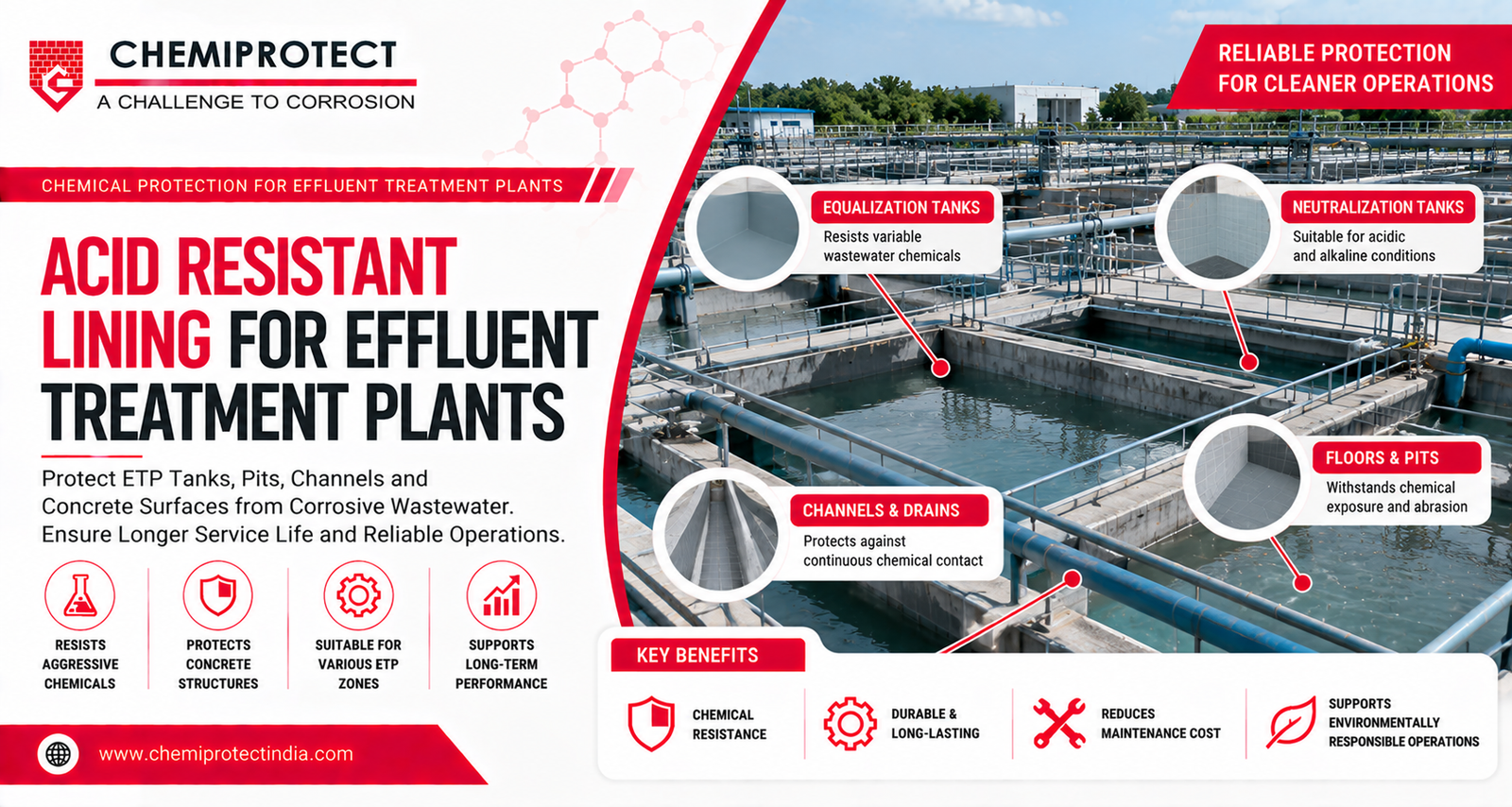
Acid Resistant Lining for Effluent Treatment Plants
October 18, 2026
Learn how acid resistant lining protects
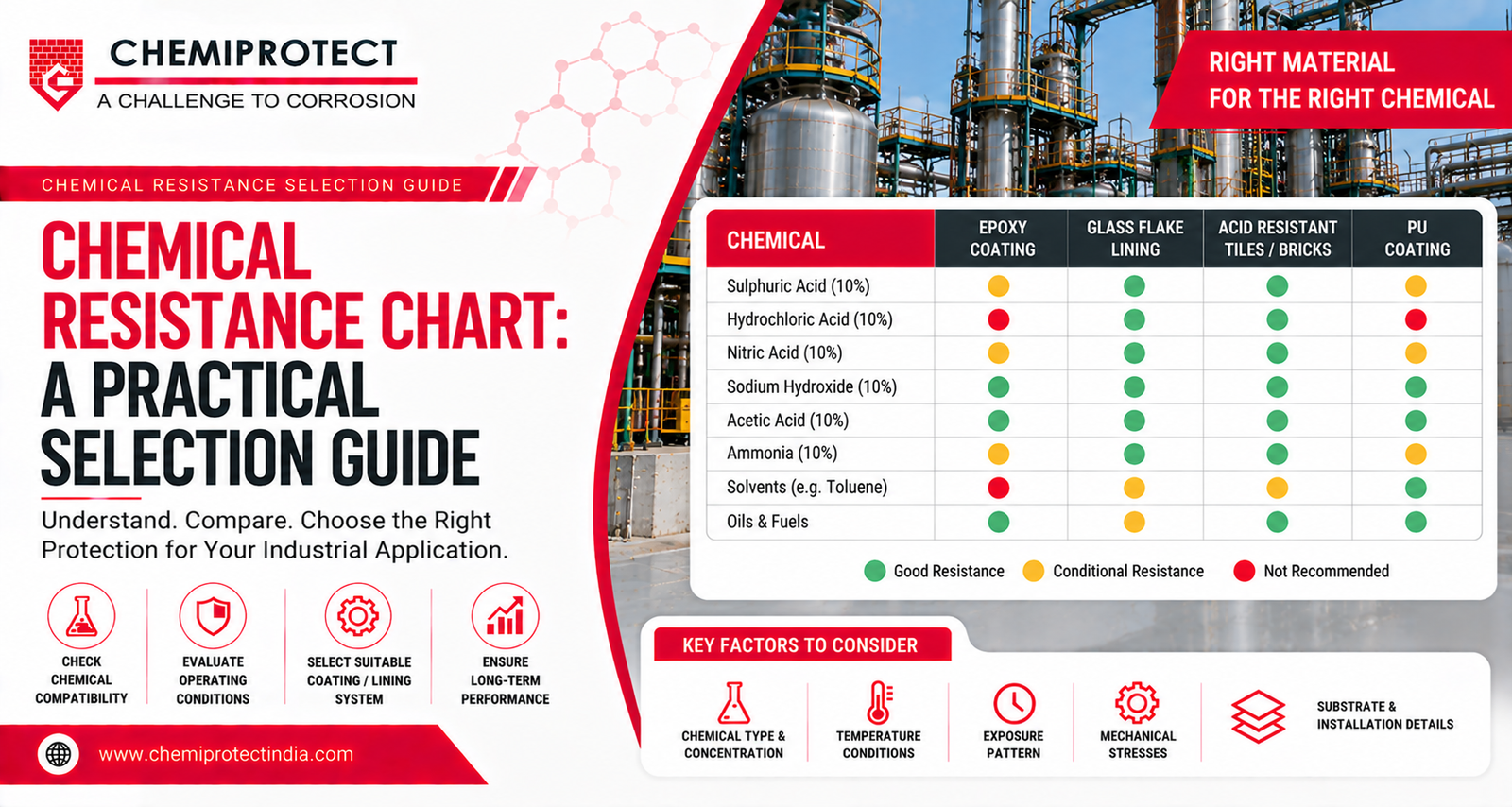
How to Read a Chemical Resistance Chart for Industrial Applications
October 15, 2026
Learn how to read a chemical