How to Choose Acid Resistant Lining for Chemical Tanks: A Complete Guide
How to Choose Acid Resistant Lining for Chemical Tanks: A Complete Guide
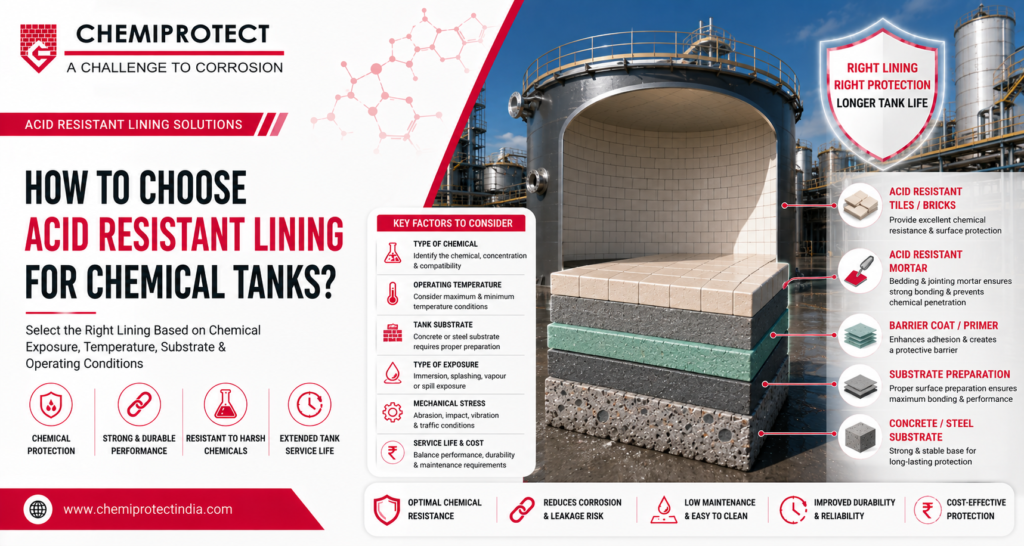
Chemical storage and processing tanks are regularly exposed to acids, alkalis, solvents, moisture, temperature variations, and mechanical stress. Without proper protection, these conditions can cause corrosion, surface deterioration, leakage, and premature damage to the tank structure.
Choosing the right lining is therefore essential for protecting chemical tanks and improving their service life. The appropriate lining system depends on several factors, including the chemical being handled, its concentration, operating temperature, substrate condition, exposure pattern, and mechanical requirements.
If you are looking for how to choose acid resistant lining for chemical tanks, understanding these factors can help you select a suitable protection system for your industrial application.
What Is Acid Resistant Tank Lining?
Acid resistant tank lining is a protective layer applied to tank surfaces to protect the underlying substrate from aggressive chemicals and corrosive environments. Depending on the application, lining systems can include acid-resistant bricks and tiles, chemical-resistant mortars, epoxy systems, glass-flake coatings, and other specialized materials.
The primary purpose of a lining is to create a protective barrier between the tank surface and the chemical environment. A properly selected lining can improve chemical resistance, reduce corrosion, minimize maintenance requirements, and extend the service life of industrial tanks.
Why Is Choosing the Right Tank Lining Important?
Chemical tanks can operate under demanding conditions, and a lining suitable for one chemical may not provide the same performance with another chemical, concentration, or temperature.
An unsuitable lining can lead to chemical attack, cracking, blistering, loss of adhesion, abrasion, and premature failure. These problems can increase maintenance expenses and cause operational downtime.
A suitable Chemical Tank Lining should therefore be selected after evaluating the complete operating environment rather than relying only on a general claim of chemical resistance.
Factors to Consider When Choosing Acid Resistant Lining
Type of Chemical
The first factor to consider is the chemical that will come into contact with the lining. Different acids, alkalis, solvents, salts, and chemical mixtures can affect lining materials differently.
Before selecting a lining, identify the chemical composition, concentration, and expected exposure conditions. The manufacturer’s chemical resistance data should be reviewed to determine whether the material is compatible with the intended application.
Chemical Concentration
Chemical concentration can significantly influence lining performance. A material that performs well against a diluted chemical may require a different specification when exposed to a highly concentrated solution.
The expected concentration should therefore be considered during selection. If the tank contains a chemical mixture, the relevant components should be evaluated rather than considering only the primary chemical.
Operating Temperature
Temperature is another important consideration. Elevated temperatures can affect chemical activity and may influence the performance and service life of a lining.
The minimum and maximum operating temperatures should be determined before selecting the material. Temperature fluctuations and thermal shock should also be considered where applicable.
Selecting a lining based only on chemical resistance without considering temperature can result in reduced performance.
Type of Tank Substrate
The material and condition of the tank surface also influence lining selection. Chemical tanks may have concrete or steel substrates, and the selected system must be compatible with the underlying surface.
Concrete surfaces require suitable preparation to achieve proper adhesion. Steel surfaces may require cleaning and an appropriate anti-corrosive primer before the lining is applied.
A properly prepared substrate provides a strong foundation for the complete lining system and helps improve its long-term performance.
Type of Chemical Exposure
The way the chemical comes into contact with the tank should also be considered. Some tanks experience continuous immersion, while others may be exposed to splashing, spills, intermittent contact, or chemical vapours.
Continuous immersion requires a lining capable of maintaining its properties during prolonged chemical exposure. Splashing and intermittent exposure may have different requirements depending on the chemical and operating conditions.
Understanding the exposure pattern helps determine the appropriate Acid Resistant Tank Lining for the application.
Abrasion and Mechanical Conditions
Chemical resistance is not the only requirement for many industrial tanks. Mechanical impact, abrasion, vibration, cleaning operations, and material movement can also affect the lining.
Where mechanical wear is expected, the selected system should provide suitable abrasion and impact resistance in addition to chemical resistance.
Glass-flake coatings, acid-resistant bricks and tiles, and specialized chemical-resistant mortars can be considered for applications requiring protection against demanding chemical and mechanical conditions.
Choosing Between Coating and Brick or Tile Lining
The appropriate lining type depends on the tank’s operating environment and protection requirements. Resin-based coatings can provide a continuous protective layer over suitable substrates, while glass-flake systems can provide additional resistance to corrosion and chemical permeation.
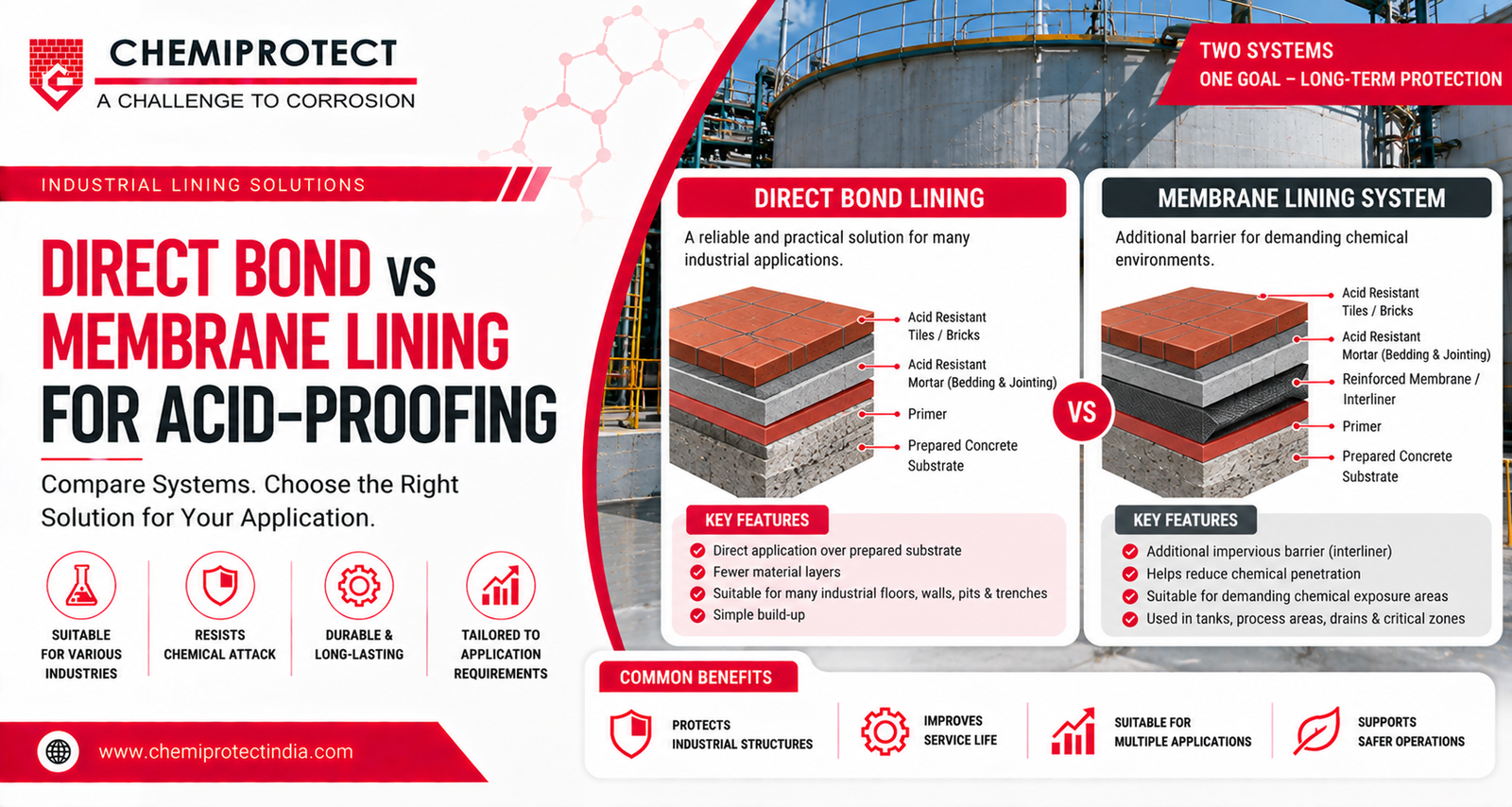
For demanding chemical environments, acid-resistant bricks or tiles combined with suitable chemical-resistant bedding and jointing mortars may be preferred.
Chemiprotect Engineers provides acid and alkali-resistant unglazed clay tiles for chemically aggressive environments, along with other corrosion-protection systems for industrial applications.
The choice between coatings, mortars, and brick or tile systems should be based on chemical exposure, temperature, mechanical conditions, substrate, and expected service life.
Importance of Surface Preparation
Proper surface preparation is essential for the performance of any lining system. Even a high-performance material can fail if the substrate is not prepared correctly.
Loose material, contamination, surface irregularities, and other conditions that can affect adhesion should be addressed before application. The appropriate primer, application thickness, curing conditions, and installation procedures should also be followed according to the manufacturer’s recommendations.
Proper installation helps the lining achieve the expected chemical resistance, adhesion, and durability.
Consider Long-Term Performance
The initial cost of a lining should not be the only consideration when selecting a protection system. A reliable lining with a longer service life can help reduce repairs, maintenance requirements, and operational interruptions.
A suitable Chemical Resistant Tank Lining should provide the required chemical resistance while also meeting the mechanical and environmental requirements of the application.
Considering expected service life and maintenance requirements can help industries make a more practical and cost-effective decision.
Applications of Acid Resistant Tank Linings
Acid-resistant and chemical-resistant lining systems are used in industries where tanks, equipment, and structures are exposed to aggressive chemicals.
Common applications include chemical processing plants, pharmaceutical industries, fertilizer plants, petrochemical facilities, petroleum refineries, battery manufacturing and recycling, metal refineries, power plants, electroplating facilities, and dye intermediate manufacturing.
These industries require dependable corrosion-protection systems capable of handling demanding chemical and operating conditions.
Why Choose Chemiprotect Engineers?
Chemiprotect Engineers specializes in corrosion protection and provides solutions for demanding industrial environments. Its product portfolio includes acid and alkali-resistant mortars, acid-resistant bricks and tiles, glass-flake products, epoxy products, polyurethane products, waterproofing products, and construction chemicals.
The company has been providing corrosion-protection solutions since 1970 and focuses on customized solutions based on individual industry requirements.
Chemiprotect also provides technical resources related to chemical resistance, installation guidance, product specifications, and lining systems to support appropriate material selection and application.
Conclusion
Choosing the right acid resistant lining is essential for protecting chemical tanks against corrosion, chemical attack, abrasion, and other demanding operating conditions. The selection should consider chemical type, concentration, temperature, exposure conditions, substrate, mechanical stress, and expected service life.
There is no single lining system suitable for every chemical tank. Coatings, glass-flake systems, acid-resistant bricks and tiles, and chemical-resistant mortars can serve different requirements depending on the application.
For reliable results, industries should evaluate the complete operating environment and select a lining system supported by appropriate technical and chemical resistance data.
Chemiprotect Engineers offers a range of acid-resistant and corrosion-protection solutions for demanding industrial applications. With appropriate material selection, surface preparation, and installation, chemical tanks can receive durable protection and improved long-term performance.
FAQs
1. How do I choose the right acid resistant lining for a chemical tank?
Select the lining based on the chemical type, concentration, operating temperature, substrate, exposure pattern, and mechanical requirements of the tank.
2. Why is chemical concentration important when selecting a lining?
The performance of a lining can change depending on chemical concentration, so compatibility should always be evaluated for the actual operating conditions.
3. Should steel and concrete tanks use the same lining system?
Not always. The lining must be compatible with the tank substrate, and steel and concrete surfaces require different preparation methods before application.
4. When should acid resistant bricks or tiles be preferred over coatings?
For aggressive chemical environments, brick or tile lining with chemical-resistant bedding and jointing mortars is often preferred over conventional coating systems.
5. Why is surface preparation critical for tank lining performance?
Proper surface preparation improves adhesion, durability, and long-term chemical resistance by removing contaminants and preparing the substrate correctly.
Let’s Blog
Latest Blog
When used with chemical resistant masonry units and the proper membrane MIPRO-VE will protect concrete and steel sub base from chemical attacks and physical abuse. MIPRO-VE is silica filled vinyl ester mortar supplied in two parts .
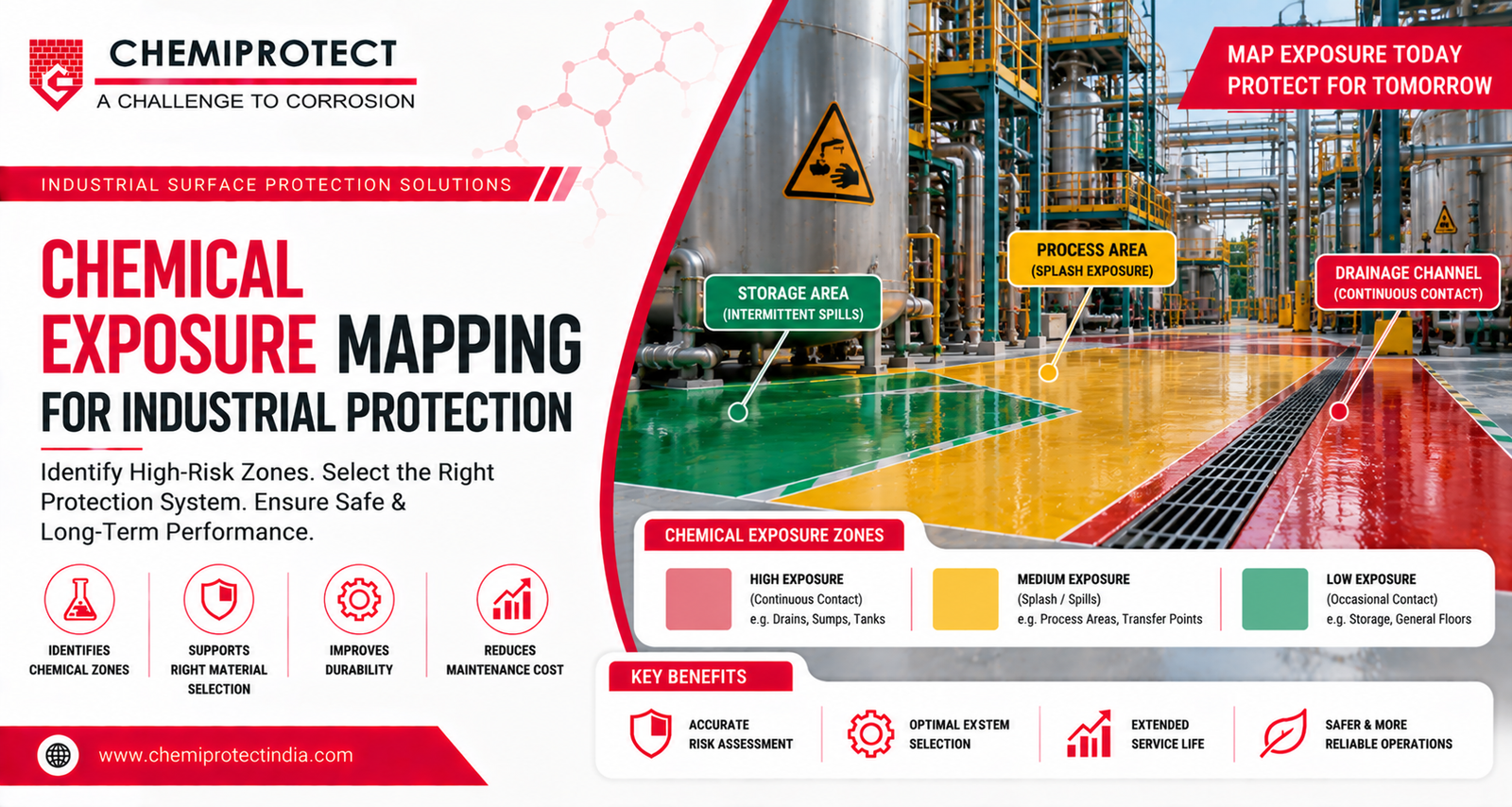
Chemical Exposure Mapping for Industrial Protection
October 6, 2026
What Is Chemical Exposure Mapping? Industrial
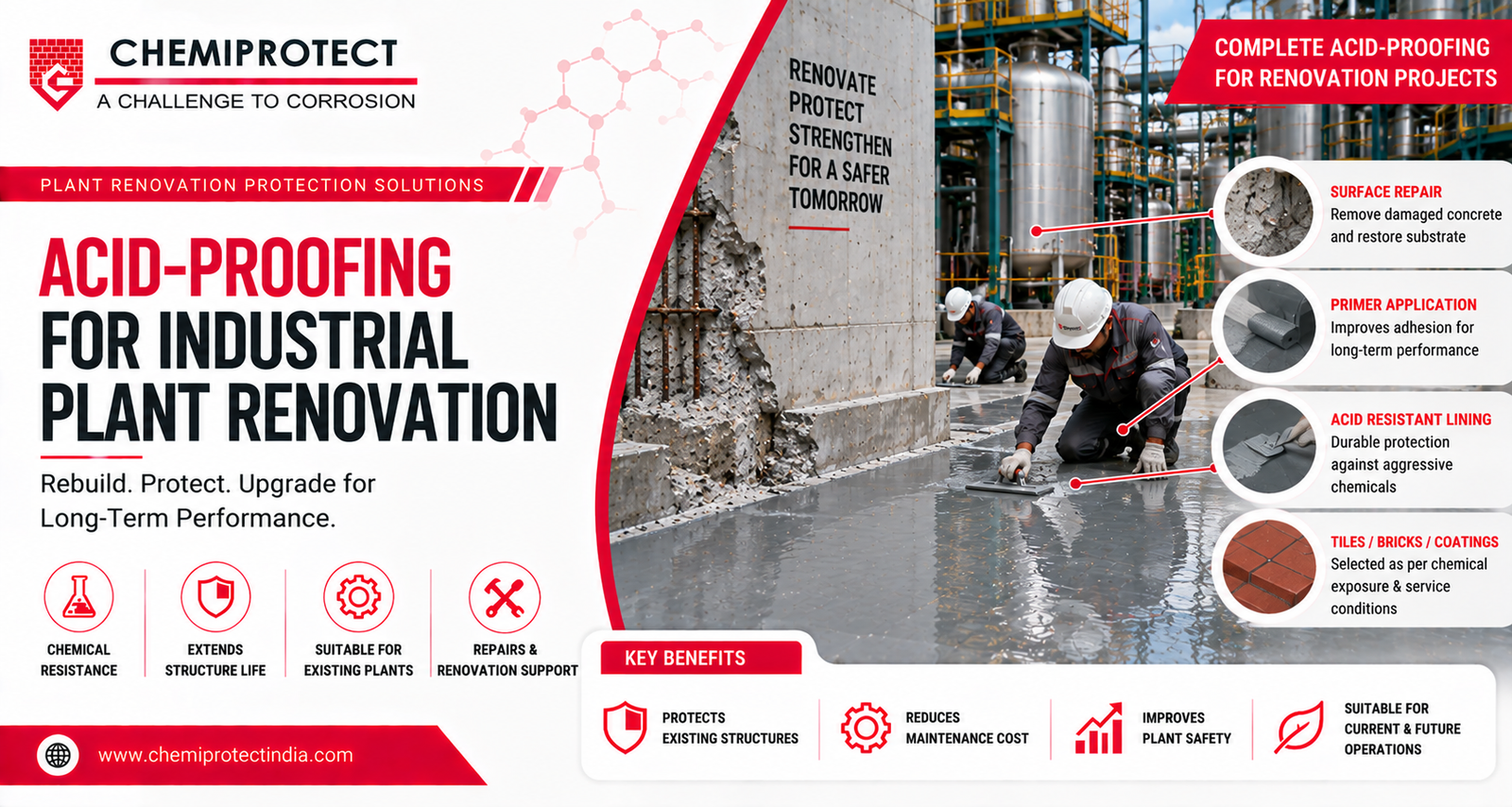
Acid-Proofing for Industrial Plant Renovation
October 3, 2026
Why Acid-Proofing Needs a Renovation-Specific Approach