How to Protect Concrete from Acid and Chemical Exposure
How to Protect Concrete from Acid and Chemical Exposure
Concrete is widely used in industrial floors, tanks, trenches, drains, processing areas, and other infrastructure because of its strength and versatility. However, concrete can deteriorate when repeatedly exposed to acids, alkalis, solvents, chemicals, moisture, and other aggressive substances.
Chemical exposure can damage the concrete surface, increase porosity, cause cracking, and reduce service life. For industries handling corrosive materials, protecting concrete with an appropriate chemical-resistant system is essential.
If you are looking for how to protect concrete from acid and chemical exposure, understanding the causes of chemical damage and selecting the right protective system can help improve durability and reduce maintenance.
Why Does Acid and Chemical Exposure Damage Concrete?
Concrete contains cement-based materials that can react with aggressive chemicals. Strong acids can attack components within the cement matrix and gradually weaken the surface. Repeated exposure can lead to surface erosion, cracking, and deterioration.
Chemical exposure can become more severe when combined with moisture, high temperatures, abrasion, or continuous contact. Once the surface becomes damaged, chemicals can penetrate deeper into the structure and accelerate deterioration.
Protecting the surface before significant damage occurs is therefore an important part of industrial maintenance.
How to Protect Concrete from Acid and Chemical Exposure?
The most effective approach is to select a protective system according to actual operating conditions. Chemical type, concentration, temperature, exposure duration, mechanical loading, and concrete condition should all be evaluated before selecting a solution.
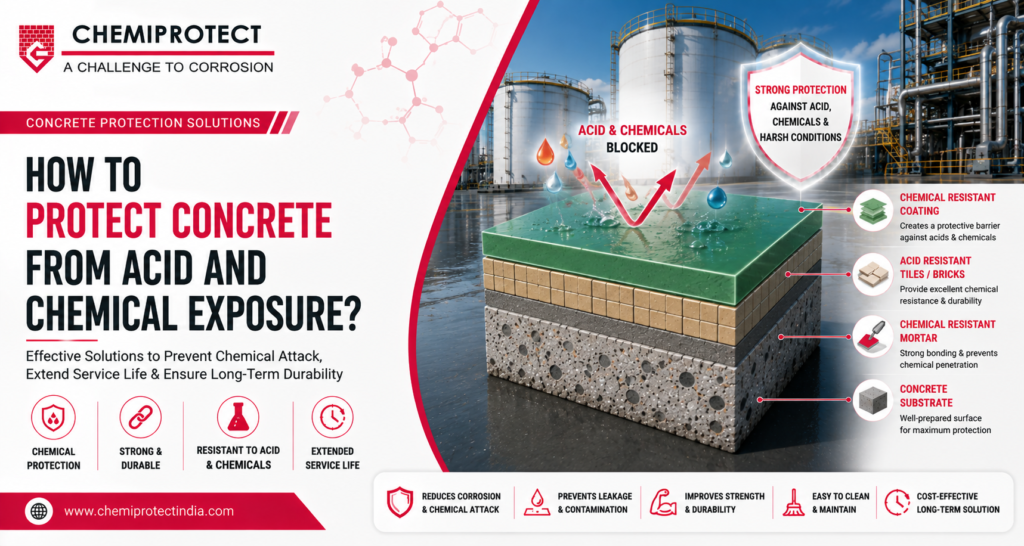
Use Acid and Chemical Resistant Coatings
Protective coatings can create a barrier between concrete and aggressive chemicals. Resin-based systems, including epoxy, vinyl ester, polyester, and glass-flake coatings, may be considered according to the required chemical and mechanical resistance.
A suitable Acid Resistant Coating for Concrete can reduce direct chemical contact with the substrate and protect surfaces against chemical attack, abrasion, and moisture.
The coating should always be selected according to the specific chemical exposure rather than relying on a general description such as chemical resistant or acid resistant.
Use Acid Resistant Tiles and Linings
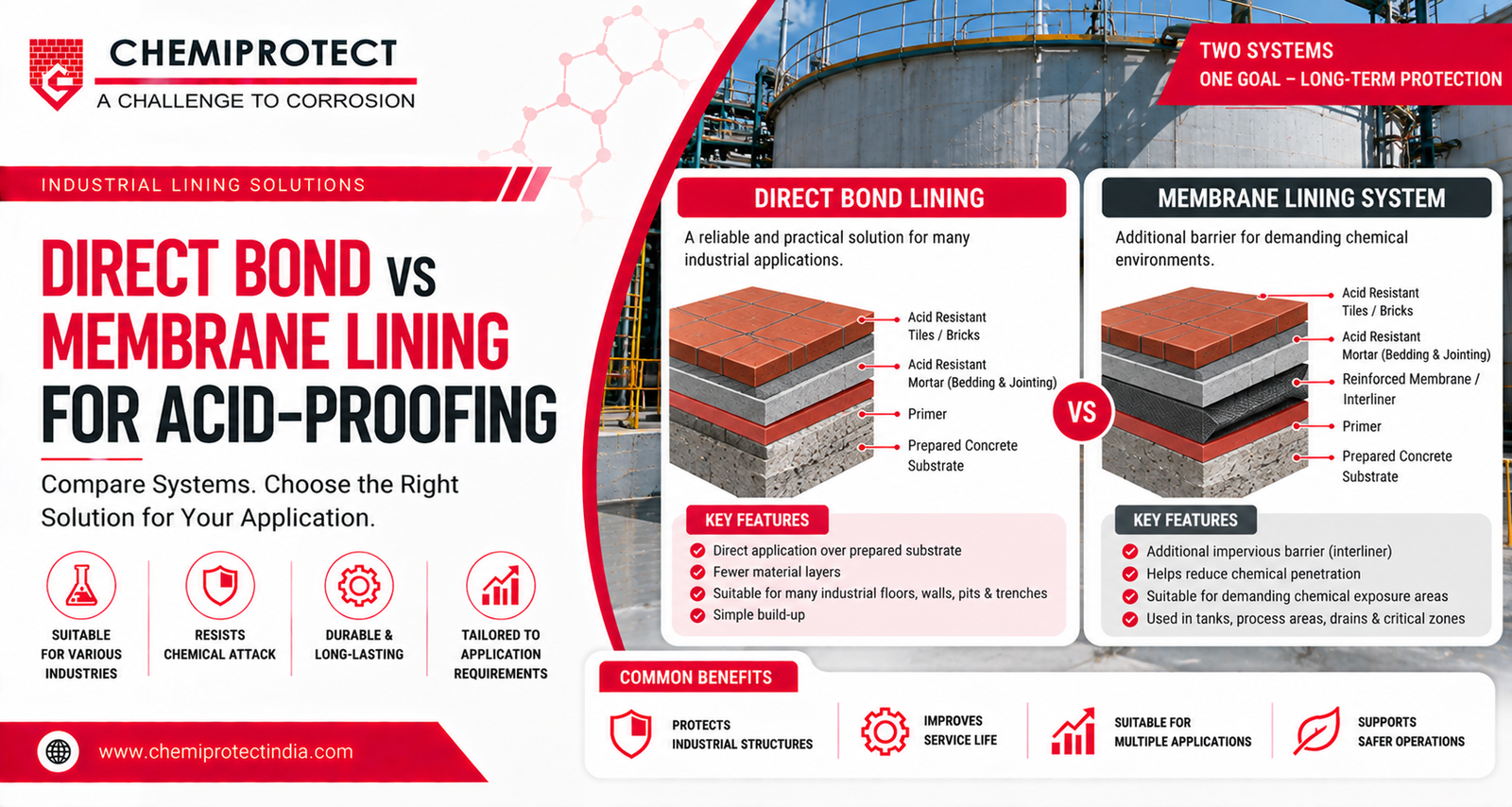
For areas exposed to severe chemical conditions, acid resistant tiles or bricks can provide a durable protective lining over concrete.
These systems are generally installed with chemical-resistant bedding and jointing materials to create a protective barrier. They can be considered for industrial floors, tanks, trenches, drains, and processing areas where aggressive chemicals are handled.
Tile and brick linings can be useful where a robust physical lining is required in addition to chemical resistance.
Apply Chemical Resistant Mortars
Chemical-resistant mortars can be used as part of protective flooring and lining systems. They can provide bedding, jointing, or surface protection depending on the selected system and application.
Different mortar formulations are designed for different operating conditions. The appropriate material should be selected according to chemical exposure, temperature, mechanical requirements, and the type of lining being installed.
Importance of Surface Preparation
Surface preparation is one of the most important factors in protecting concrete. A coating or lining can perform effectively only when it is applied over a suitable substrate.
The concrete should be inspected and prepared according to the selected protection system. Loose material, dust, oil, contamination, laitance, and damaged areas should be addressed before application.
Cracks, joints, surface defects, and existing deterioration may also require suitable repair before the protective layer is installed.
Poor preparation can result in weak adhesion, blistering, cracking, or premature failure even when a high-performance material is used.
Consider Chemical Concentration and Temperature
The chemical itself is not the only factor that determines the protection required. Concentration and operating temperature can significantly influence chemical attack.
A material that performs well with a diluted chemical may not provide the same performance at higher concentrations. Elevated temperatures can also affect the behaviour of chemicals and protective materials.
Before selecting a Chemical Resistant Concrete Coating, industries should identify the chemicals involved, their concentration, operating temperature, and expected exposure duration.
Consider Abrasion and Mechanical Stress
Industrial concrete surfaces may experience more than chemical exposure. Forklifts, heavy equipment, impact, material movement, cleaning operations, and abrasion can also damage protective systems.
Where mechanical stress is expected, the selected coating or lining should provide suitable abrasion and impact resistance in addition to chemical resistance.
For demanding environments, a complete system rather than a single product should be evaluated. The substrate, primer, coating or lining, mortar, joints, and application thickness can all influence performance.
Protect Joints, Edges, and Vulnerable Areas
Joints, corners, drains, edges, penetrations, and transitions can become vulnerable points when concrete is exposed to chemicals. If these areas are not properly detailed, chemicals may find pathways into the substrate.
The protective system should include appropriate detailing of joints and other vulnerable areas. Chemical-resistant jointing materials and compatible sealants may be required depending on the application.
Applications of Concrete Chemical Protection
Concrete protection systems are used in industries where aggressive chemicals are handled or stored.
Common applications include chemical processing plants, fertilizer facilities, pharmaceutical industries, petroleum and petrochemical facilities, battery manufacturing and recycling, electroplating areas, laboratories, power plants, industrial manufacturing units, wastewater facilities, and chemical storage areas.
Industrial floors, tanks, trenches, drains, bund areas, process areas, and other concrete structures can benefit from suitable chemical-resistant protection.
Benefits of Protecting Concrete from Chemical Exposure
A properly selected protection system can reduce direct chemical contact with concrete, improve resistance to deterioration, extend surface service life, reduce maintenance requirements, minimize repair frequency, and help maintain reliable operating conditions.
Protecting concrete at an early stage can also be more practical than repairing heavily deteriorated structures after prolonged chemical exposure.
Why Choose Chemiprotect Engineers?
Chemiprotect Engineers provides corrosion-protection solutions for demanding industrial environments. Its range includes acid and alkali-resistant mortars, acid-resistant bricks and tiles, glass-flake products, epoxy products, polyurethane products, and other protective systems.
The company focuses on solutions for industries where chemical exposure, corrosion, abrasion, and demanding operating conditions can affect infrastructure.
Its technical resources can support product selection, chemical resistance evaluation, and installation requirements for different applications.
Conclusion
Learning how to protect concrete from acid and chemical exposure is important for industries operating in aggressive environments. Concrete can deteriorate when exposed to acids, chemicals, moisture, abrasion, and high temperatures, making preventive protection an important part of infrastructure maintenance.
Coatings, acid resistant tiles, chemical-resistant mortars, and specialized lining systems can provide different levels of protection depending on the application. The right system should be selected according to chemical type, concentration, temperature, exposure conditions, mechanical stress, substrate condition, and expected service life.
With appropriate surface preparation, material selection, detailing, and installation, concrete structures can receive durable protection against demanding chemical environments and maintain reliable performance for longer periods.
FAQs
1. Why does acid damage concrete?
Acids react with the cement matrix, causing surface erosion, cracking, increased porosity, and reduced service life.
2. What is the best way to protect concrete from chemical exposure?
Use a suitable chemical-resistant protection system based on the chemical type, concentration, temperature, exposure duration, and operating conditions.
3. When should acid resistant tiles be used instead of coatings?
Acid resistant tiles are recommended for severe chemical environments such as tanks, trenches, drains, processing areas, and industrial floors.
4. Why is surface preparation important before applying a protective system?
Proper surface preparation improves adhesion and prevents blistering, cracking, weak bonding, and premature coating failure.
5. Which industries require concrete chemical protection?
Chemical processing, fertilizer, pharmaceutical, petrochemical, battery manufacturing, electroplating, laboratories, power plants, wastewater facilities, and chemical storage industries commonly require concrete protection.
Let’s Blog
Latest Blog
When used with chemical resistant masonry units and the proper membrane MIPRO-VE will protect concrete and steel sub base from chemical attacks and physical abuse. MIPRO-VE is silica filled vinyl ester mortar supplied in two parts .
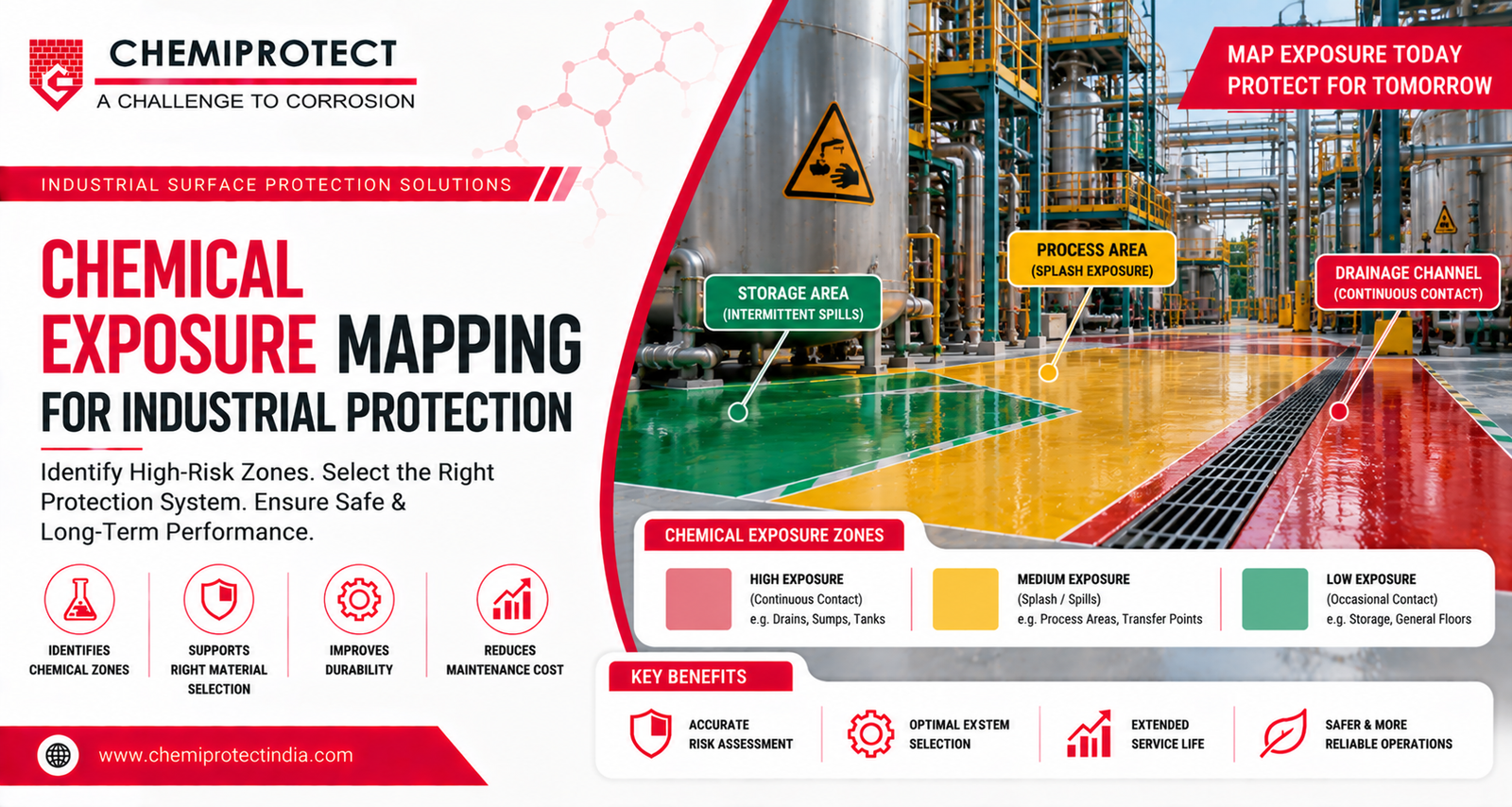
Chemical Exposure Mapping for Industrial Protection
October 6, 2026
What Is Chemical Exposure Mapping? Industrial
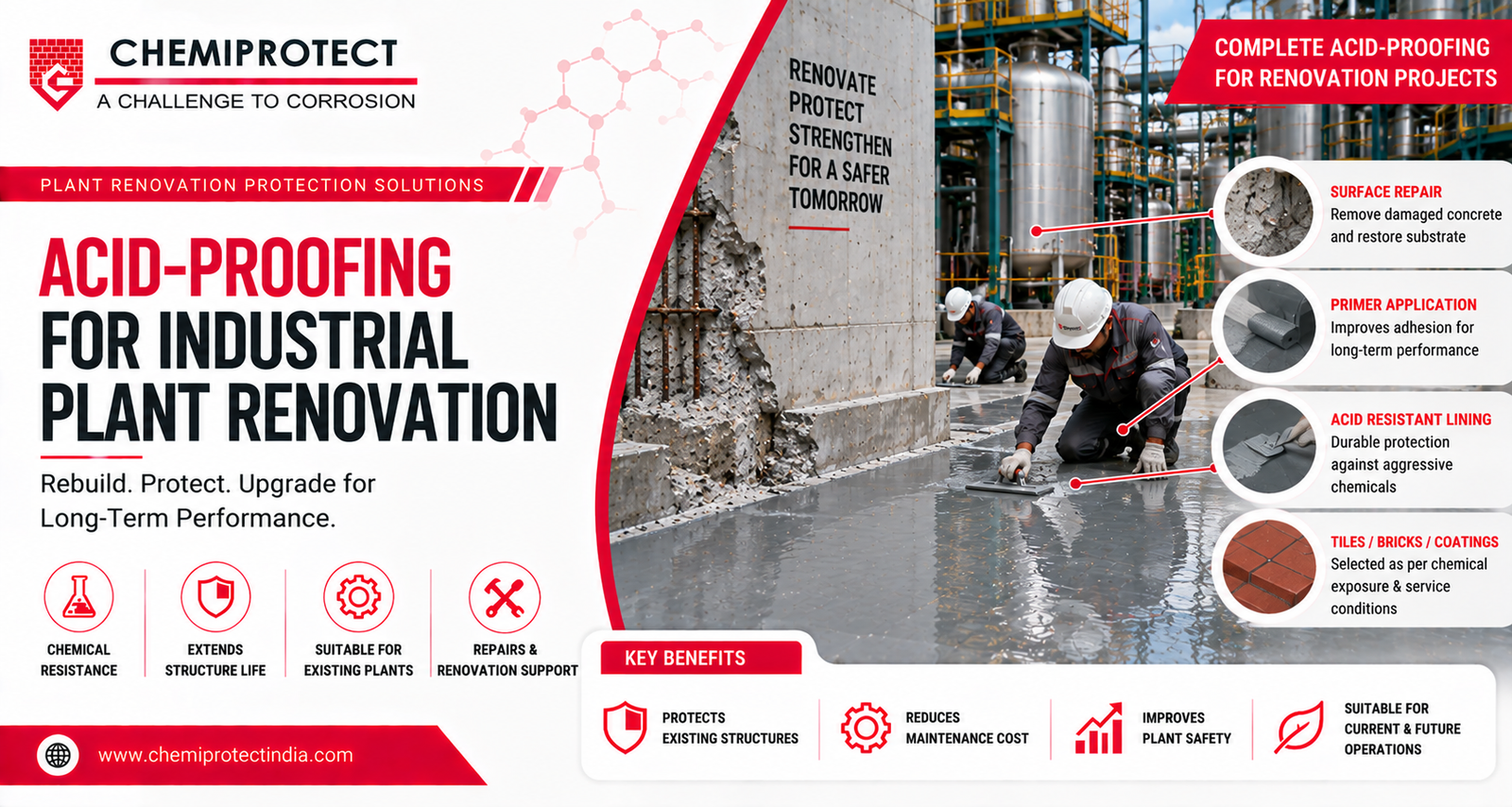
Acid-Proofing for Industrial Plant Renovation
October 3, 2026
Why Acid-Proofing Needs a Renovation-Specific Approach