Industrial Expansion Joint Sealing Solutions
Industrial Expansion Joint Sealing Solutions
Industrial floors, tanks, process areas, and concrete structures can experience movement caused by temperature changes, vibration, settlement, and equipment loads. Expansion joints accommodate this movement, but an unprotected joint can become a pathway for water, chemicals, dirt, and other contaminants. Industrial Surface Protection Solutions.
can include suitable joint treatment as part of a broader strategy for maintaining durable, chemical-resistant industrial environments.
What Are Industrial Expansion Joint Sealing Solutions?
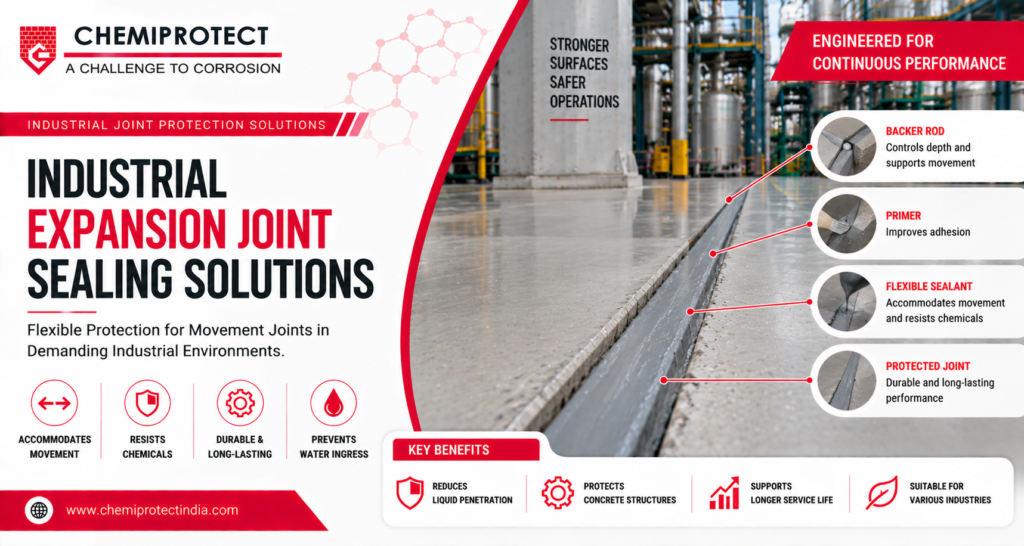
Industrial expansion joint sealing solutions protect movement joints while allowing them to perform their intended function. A system may include joint filler, backer material, primer where required, and a flexible sealant selected for the operating environment.
The purpose is not to prevent movement. The sealing system should accommodate expected movement while reducing entry of water, chemicals, dust, and contaminants. Selection depends on joint width, movement range, chemical exposure, temperature, traffic, and surrounding materials.
Why Do Industrial Expansion Joints Need Sealing?
Expansion joints are deliberate discontinuities in a structure. Without suitable sealing, liquids can enter the joint and reach the surrounding concrete or other construction materials. In chemical-processing areas, this can create additional exposure to aggressive substances and increase the risk of deterioration.
Industrial joints can also experience repeated mechanical movement. A rigid material that cannot accommodate this movement may crack or debond. A suitable flexible sealant helps maintain continuity while allowing the joint to open and close within its designed movement range.
Where Are Expansion Joint Sealing Systems Used?
Industrial Floors
Factory floors and process areas may experience heavy traffic, vibration, cleaning, and chemical spills. Sealed joints can help protect the surrounding flooring system while maintaining the required movement capability.
Chemical Processing Areas
Chemical plants can expose joints to acids, alkalis, process liquids, and wastewater. Joint materials should be selected according to the actual chemical conditions rather than relying on a general chemical-resistant label.
Tanks, Bunds, and Containment Areas
Containment structures need carefully detailed joints because liquid exposure can be prolonged. Joint sealing can support the overall barrier system when combined with compatible lining or coating materials.
Warehouses and Heavy-Duty Areas
Warehouses, workshops, and industrial traffic zones can expose joints to wheels, impact, abrasion, and repeated loading. The sealing approach should therefore consider mechanical as well as environmental stresses.
Key Components of an Expansion Joint Sealing System
Joint Preparation
The joint must be clean, sound, and free from loose material, dust, oil, and contaminants before sealing. Damaged edges may require repair, and the joint dimensions should be checked against the specified sealant system.
Backer Material
A backer material can help control sealant depth and prevent three-sided adhesion where the system requires it. Correct placement helps the sealant deform with joint movement rather than being unnecessarily restrained.
Primer and Sealant
Some sealants require a compatible primer to establish reliable adhesion to the joint faces. The sealant itself should be selected for movement capability, chemical exposure, temperature, moisture, and expected service conditions.
Compatible Surface Protection
Expansion joints often sit within larger flooring, lining, or coating systems. The surrounding protection should be detailed so that the joint remains functional without creating weak edges. Chemiprotect’s services include epoxy and polyurethane coatings, glass-flake systems, acid-resistant linings, and waterproofing solutions that can be considered alongside joint detailing. Industrial Flooring and Protective Coating Services.
Benefits of Proper Expansion Joint Sealing
Helps Reduce Liquid Penetration
A properly selected sealant can reduce the entry of water, process liquids, and contaminants through movement joints, helping protect vulnerable areas below and beside the joint.
Supports Chemical Protection
In chemical environments, joint sealing can form an important part of the overall protective barrier. The sealant must, however, be chemically compatible with the actual substances and exposure conditions.
Accommodates Joint Movement
Flexible joint systems are designed to move with the joint within their stated capability. This can reduce the risk of premature cracking or loss of adhesion caused by repeated movement.
Can Reduce Maintenance Problems
Damaged joints can allow liquids and debris into the structure and may require repeated repairs. Correct design, installation, and inspection can help identify problems before they become larger maintenance issues.
How to Select the Right Joint Sealing Solution
Assess Joint Movement
Determine whether the joint is expected to open, close, shear, or experience a combination of movements. Joint width and expected movement should be known before selecting a sealant.
Identify Chemical and Environmental Exposure
Consider acids, alkalis, oils, solvents, cleaning chemicals, wastewater, humidity, UV exposure, and temperature. Chemical resistance should be checked against the actual service conditions.
Consider Traffic and Mechanical Stress
Forklifts, pallet trucks, machinery, impacts, vibration, and abrasion can affect exposed joint areas. High-traffic locations may require a more robust detailing approach than lightly used areas.
Check Substrate Compatibility
Concrete, steel, masonry, coatings, and existing lining materials can require different preparation and adhesion approaches. The sealant should be compatible with surrounding materials.
Installation Quality Matters
Even a suitable sealant can fail if the joint is poorly prepared or incorrectly installed. Cleaning, drying, joint geometry, backer placement, primer use, sealant depth, and curing conditions should follow the selected system’s installation requirements.
Corners, intersections, changes in direction, terminations, and connections deserve particular attention. These locations can experience concentrated movement or stress and should be detailed before installation begins.
Product data sheets, installation guidance, safety documentation, detail drawings, and chemical resistance information can support project planning and quality control. Technical Resources and Chemical Resistance Guidance.
Maintenance of Sealed Expansion Joints
Regular inspection helps identify cracking, debonding, gaps, hardening, surface damage, or contamination before the joint becomes a larger source of leakage or deterioration. Joints should be inspected as part of routine maintenance.
Spills should be cleaned using methods compatible with the sealant and surrounding protective system. If a joint is damaged, the repair should address the cause of failure rather than simply applying a new layer over an unsuitable surface.
Why Choose Chemiprotect Engineers?
Chemiprotect Engineers has been developing corrosion-resistant and industrial protection solutions since 1970. Its range includes acid and alkali resistant mortars, epoxy products, glass-flake systems, polyurethane products, acid-resistant bricks and tiles, waterproofing products, and construction chemicals.
The company serves chemical processing, pharmaceuticals, fertilizers, electroplating, battery manufacturing, food, beverage, power, steel, petroleum, pulp and paper industries. Its product range can help teams coordinate surface protection with joint detailing.
Conclusion
Industrial expansion joint sealing solutions play an important role in protecting movement joints in demanding environments. A successful system needs to accommodate movement while limiting the entry of water, chemicals, dirt, and other contaminants.
The correct solution should be selected after evaluating joint movement, dimensions, chemical exposure, temperature, traffic, abrasion, substrate condition, and surrounding protective materials. Proper preparation and installation are equally important because even a high-performance sealant can fail when joint conditions are unsuitable.
For projects involving chemical-resistant floors, linings, waterproofing, and industrial joint protection, explore Chemiprotect’s industrial protection solutions.
to review suitable approaches for demanding operating environments.
FAQs
1. What is an industrial expansion joint sealing solution?
It is a flexible joint protection system that seals movement joints while preventing the entry of water, chemicals, dust, and contaminants.
2. Why do industrial expansion joints need sealing?
Sealing helps protect concrete and surrounding structures from chemical penetration while allowing the joint to expand and contract safely.
3. Where are expansion joint sealing systems commonly used?
They are used in industrial floors, chemical processing plants, tanks, bunds, containment areas, warehouses, and heavy-duty traffic zones.
4. What are the key components of an expansion joint sealing system?
The system includes joint preparation, backer material, primer, flexible sealant, and compatible surrounding surface protection.
5. How do you choose the right joint sealing solution?
Selection should consider joint movement, chemical exposure, temperature, traffic, substrate compatibility, and expected service conditions.
Let’s Blog
Latest Blog
When used with chemical resistant masonry units and the proper membrane MIPRO-VE will protect concrete and steel sub base from chemical attacks and physical abuse. MIPRO-VE is silica filled vinyl ester mortar supplied in two parts .
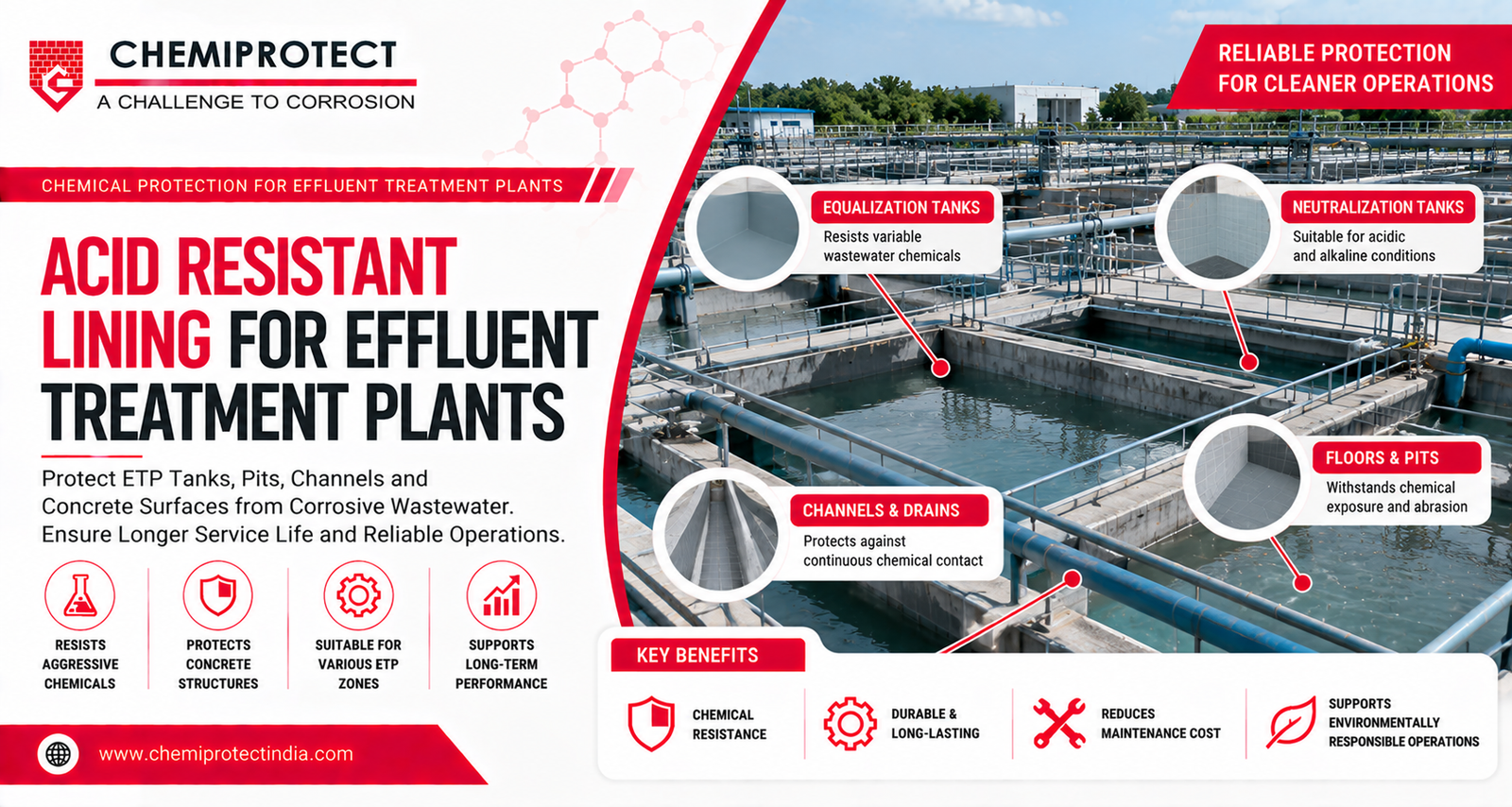
Acid Resistant Lining for Effluent Treatment Plants
October 18, 2026
Learn how acid resistant lining protects
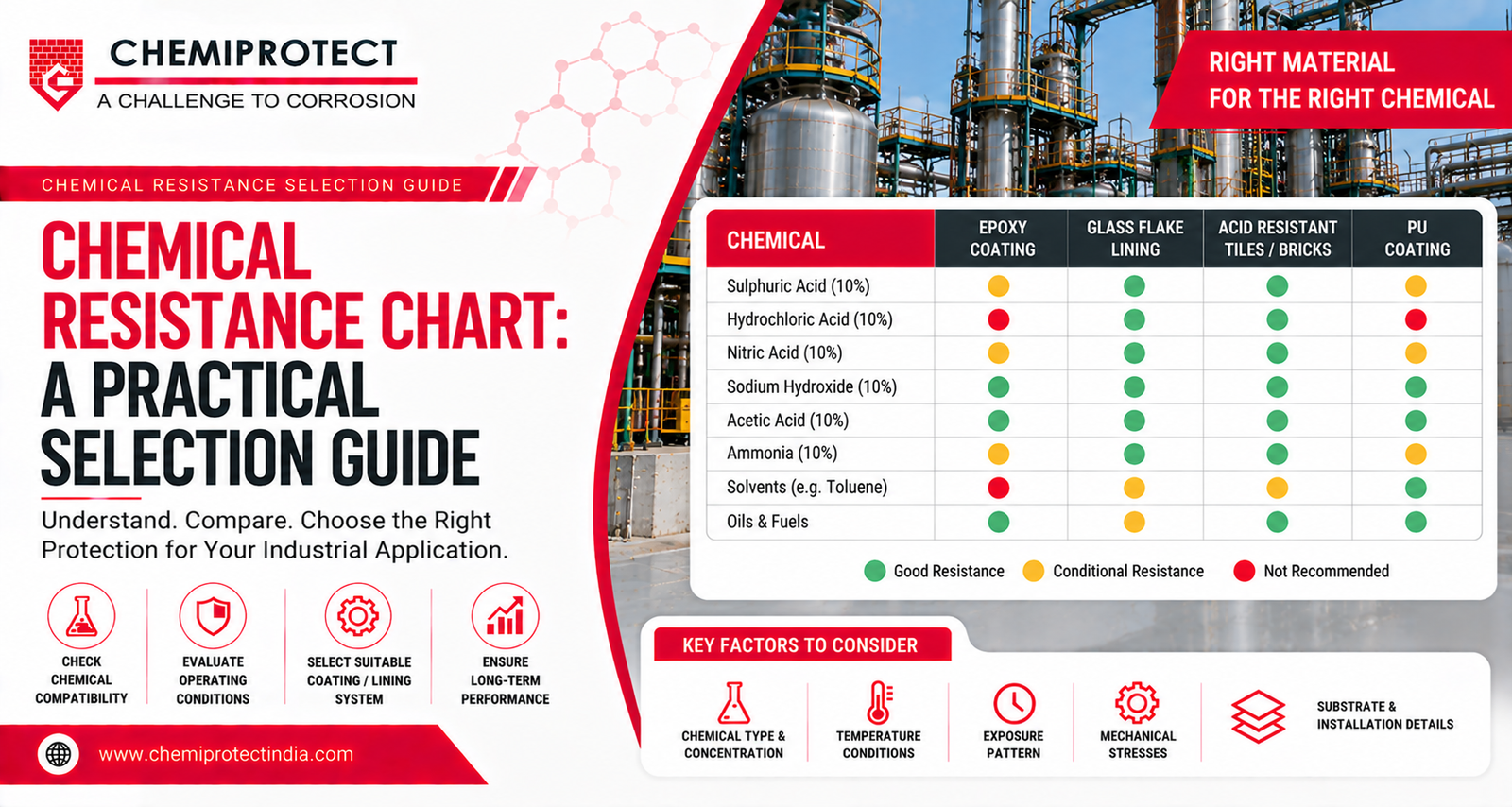
How to Read a Chemical Resistance Chart for Industrial Applications
October 15, 2026
Learn how to read a chemical