Industrial Floor Coating: A Practical Guide for Industry
Industrial Floor Coating: A Practical Guide for Industry
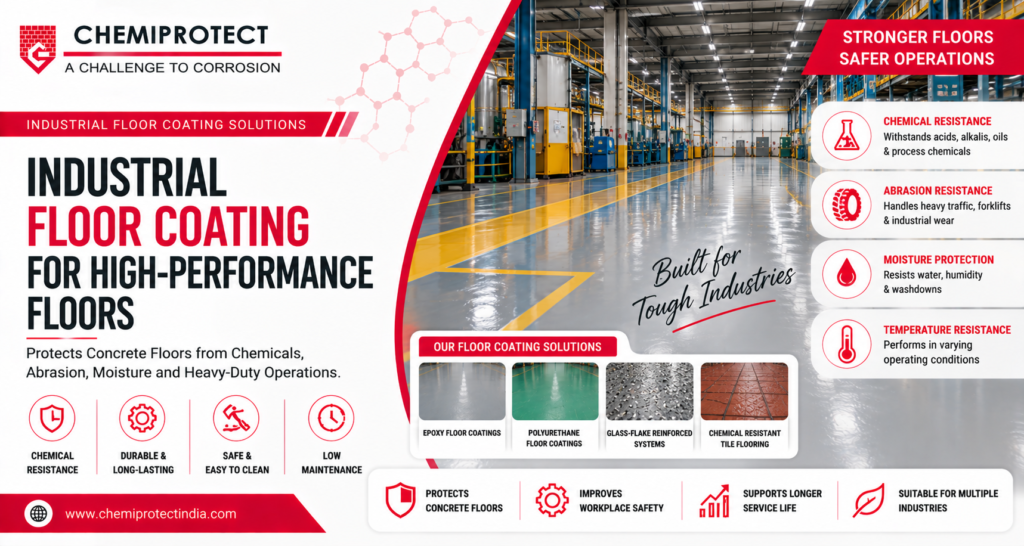
Industrial floor coating is a protective surface system applied to concrete floors in factories, warehouses, processing areas, workshops, and other demanding environments. Industrial floor coating systems can help protect the underlying floor from chemical exposure, abrasion, moisture, impact, stains, and routine industrial traffic. The right coating is not selected simply for appearance; it must match the operating conditions and the performance expected from the floor.
Why Do Industrial Floors Need Protective Coating?
Bare concrete can deteriorate when it is repeatedly exposed to chemicals, water, oils, cleaning agents, mechanical traffic, and abrasive materials. Small defects can become larger maintenance problems when contaminants enter the surface and repeated loading continues.
A properly specified coating creates a protective layer over the concrete and can make the surface easier to clean and maintain. It can also help reduce direct contact between aggressive substances and the substrate. However, performance depends on the coating chemistry, surface preparation, thickness, curing, and actual service environment.
What Is an Industrial Floor Coating System?
An industrial floor coating system normally consists of more than one layer. The design may include concrete preparation, primer, body coat, reinforced layer where required, and a topcoat or finish. The exact build-up depends on the exposure and the required mechanical and chemical performance.
Epoxy, polyurethane, vinyl ester, polyester, and other resin technologies can be considered for different industrial applications. A coating may be seamless, while other floor protection designs can incorporate chemical-resistant tiles or other wearing surfaces when the duty calls for them.
Key Factors to Consider Before Choosing a Coating
Chemical Exposure
Chemical exposure should be assessed first in areas where spills, splashes, process liquids, or cleaning chemicals are present. Identify the substances involved, their concentration, contact frequency, temperature, and whether exposure is intermittent or continuous. A coating suitable for one chemical may not provide the same resistance against another.
Where chemical compatibility is critical, consult product information and chemical resistance resources before finalizing the specification. The operating conditions should be compared with the documented resistance of the proposed system.
Traffic and Abrasion
Industrial floors may experience forklifts, pallet movement, wheeled equipment, foot traffic, dropped materials, and repeated cleaning.
Moisture and Temperature
Moisture in the concrete and temperature during installation can affect coating adhesion and curing. Operating temperatures can also influence the performance of resin systems. Areas subject to hot washdowns, thermal cycling, or elevated process temperatures need a coating selected for those conditions.
Surface Condition
The existing concrete must be assessed before coating. Dust, laitance, oil, grease, weak concrete, previous coatings, and other contaminants can interfere with adhesion. Cracks, joints, damaged areas, and uneven sections may also require repair or treatment before the coating is installed.
Common Industrial Floor Coating Options
Epoxy Floor Coatings
Epoxy systems are widely used where a hard, seamless, and cleanable floor is required. Depending on formulation and design, they can provide resistance to chemicals, abrasion, and routine industrial traffic. They are often considered for factories, warehouses, workshops, processing areas, and service zones.
Polyurethane Floor Coatings
Polyurethane systems can be considered where the floor requires a combination of durability, chemical resistance, and resistance to changing service conditions. They may be useful in areas exposed to frequent cleaning, temperature variation, or demanding traffic, subject to the specific product specification.
Glass-Flake Reinforced Systems
Glass-flake reinforced coatings can provide a thicker protective barrier where resistance to chemical permeation, corrosion, abrasion, and physical abuse is important. They can be considered for selected concrete or steel surfaces and demanding industrial environments. The resin type and system build-up should be matched to the exposure.
When Is Tile or Brick Lining More Suitable?
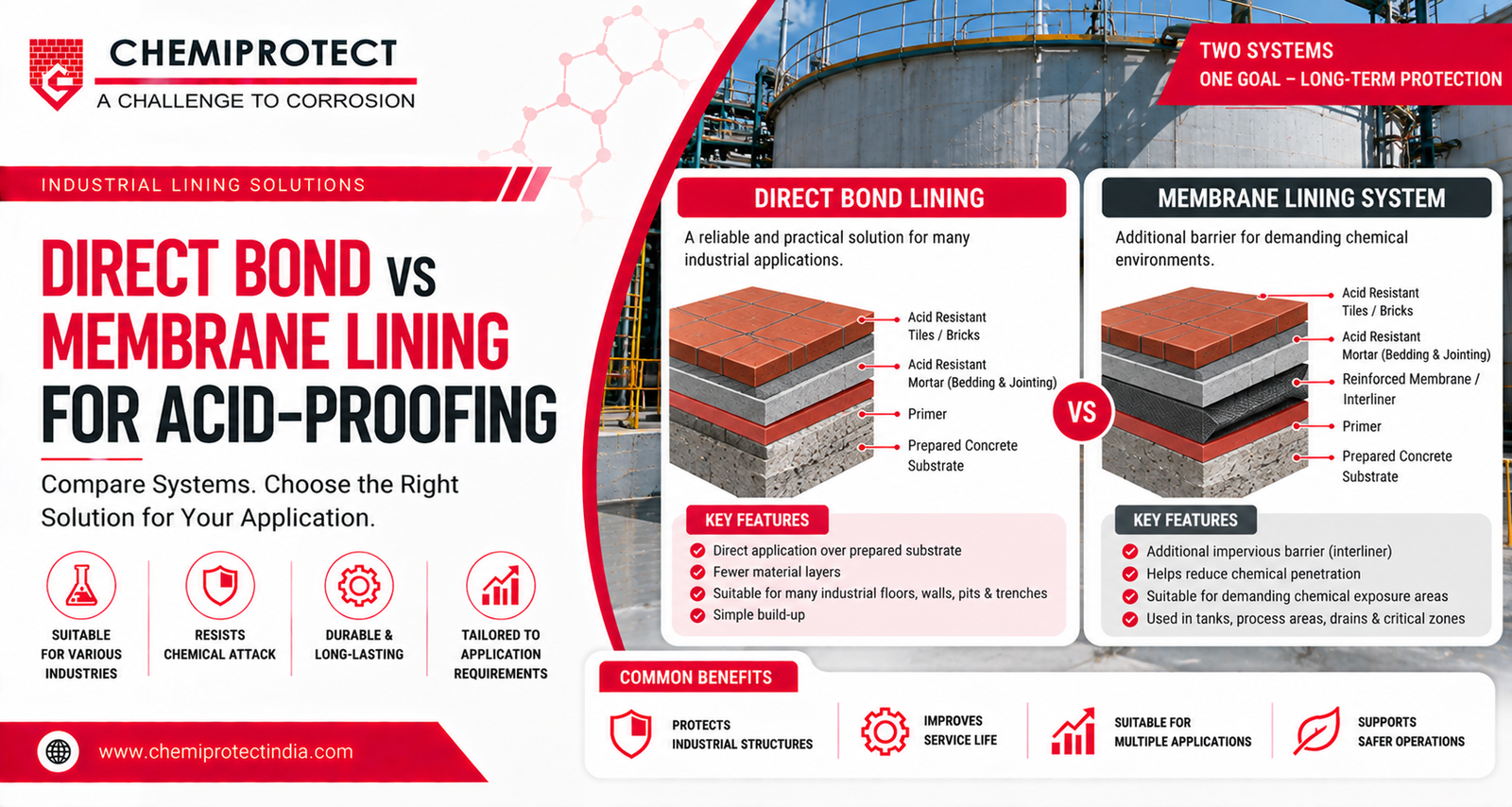
Not every industrial floor should be protected with a resin coating alone. Where the floor faces aggressive chemical exposure combined with severe mechanical duty, a tile or brick lining system may be more appropriate. Chemical-resistant tiles or bricks can provide a robust wearing surface, while acid-resistant mortars can be used for bedding and jointing.
The choice between a seamless coating and a tiled or brick-lined system should consider chemical exposure, traffic, temperature, substrate movement, maintenance expectations, and the consequences of failure. In some applications, hybrid systems combine a protective membrane with a chemically resistant facing.
Where Are Industrial Floor Coatings Used?
Industrial floor coatings are used across many sectors, including chemical processing, pharmaceuticals, food and beverage, battery manufacturing, electroplating, automobile production, power plants, fertilizers, textiles, metal processing, and warehouses. Within these facilities, floors may need protection in production areas, material handling zones, maintenance spaces, utility rooms, wash areas, and chemical handling locations.
The same facility can contain several different exposure zones. A dry warehouse aisle may require a different floor system from a chemical processing area or a washdown zone. Treating every floor area with one generic coating can result in unnecessary cost or inadequate protection.
Installation Practices That Affect Performance
Prepare the Surface Correctly
Mechanical preparation or another suitable method should remove weak surface material and contaminants and create the required surface profile. Repairs should be completed before coating, and moisture conditions should be checked according to the selected system.
Control Application and Curing
Mixing ratios, working time, application thickness, intercoat intervals, and curing conditions should follow the product specification. Poorly controlled application can lead to pinholes, weak adhesion, uneven thickness, premature wear, or other defects.
Detail Critical Areas
Edges, joints, drains, corners, equipment bases, ramps, and penetrations often require additional detailing. These locations can experience concentrated wear, movement, or chemical accumulation and should be incorporated into the floor design rather than treated as afterthoughts.
Benefits of a Properly Designed Industrial Floor Coating
A suitable floor coating system can provide several practical benefits:
- Protect the concrete substrate from selected chemical and environmental exposure
- Improve resistance to abrasion and routine industrial traffic
- Create a smoother, easier-to-clean surface
- Reduce penetration of liquids into the concrete
- Support cleaner and more controlled working areas
- Help reduce premature surface deterioration
- Provide a maintainable finish suited to the operating environment
These benefits are dependent on correct material selection, substrate preparation, system thickness, installation, curing, and ongoing maintenance. A coating should always be evaluated against the actual service conditions.
Why Choose Chemiprotect Engineers?
Chemiprotect Engineers has been developing industrial protection solutions since 1970, with product and service capabilities covering acid/alkali-resistant mortars, epoxy systems, polyurethane systems, glass-flake products, acid-resistant bricks, and acid-resistant tiles. This range allows floor protection to be considered according to the specific demands of an application.
Its approach also supports customized industrial solutions rather than treating every floor as identical. Depending on the site conditions, the required system may involve a coating, reinforced lining, tile or brick facing, or a combination of protective layers. Chemical exposure, substrate condition, temperature, traffic, and maintenance requirements should guide the final selection.
Conclusion
Choosing an industrial floor coating requires more than selecting a product based on its label. Chemical exposure, traffic, abrasion, moisture, temperature, substrate condition, application method, and maintenance requirements all influence the appropriate system. A well-designed floor can provide durable protection while making industrial surfaces easier to maintain.
For demanding environments, Chemiprotect Engineers can help evaluate suitable coating and lining approaches based on the actual operating conditions. Explore Chemiprotect’s industrial floor protection solutions to identify an approach suited to your facility and floor requirements.
FAQs
1. What is an industrial floor coating system?
An industrial floor coating system is a multi-layer protective system that may include concrete preparation, primer, body coat, reinforced layers, and a topcoat for chemical and mechanical protection.
2. Which industries use industrial floor coatings?
Industrial floor coatings are commonly used in chemical processing, pharmaceuticals, food and beverage, battery manufacturing, electroplating, automobile production, power plants, fertilizers, textiles, metal processing, and warehouses.
3. What factors should be considered before choosing a floor coating?
Important factors include chemical exposure, traffic, abrasion, moisture, temperature, and the condition of the concrete substrate.
4. When is tile or brick lining a better choice than a resin coating?
Tile or brick lining is often more suitable where floors are exposed to aggressive chemicals combined with severe mechanical duty and require a dedicated protective lining system.
5. Why is surface preparation important for industrial floor coating?
Proper surface preparation removes contaminants, repairs damaged areas, and creates the required profile for strong adhesion and long-term coating performance.
Let’s Blog
Latest Blog
When used with chemical resistant masonry units and the proper membrane MIPRO-VE will protect concrete and steel sub base from chemical attacks and physical abuse. MIPRO-VE is silica filled vinyl ester mortar supplied in two parts .
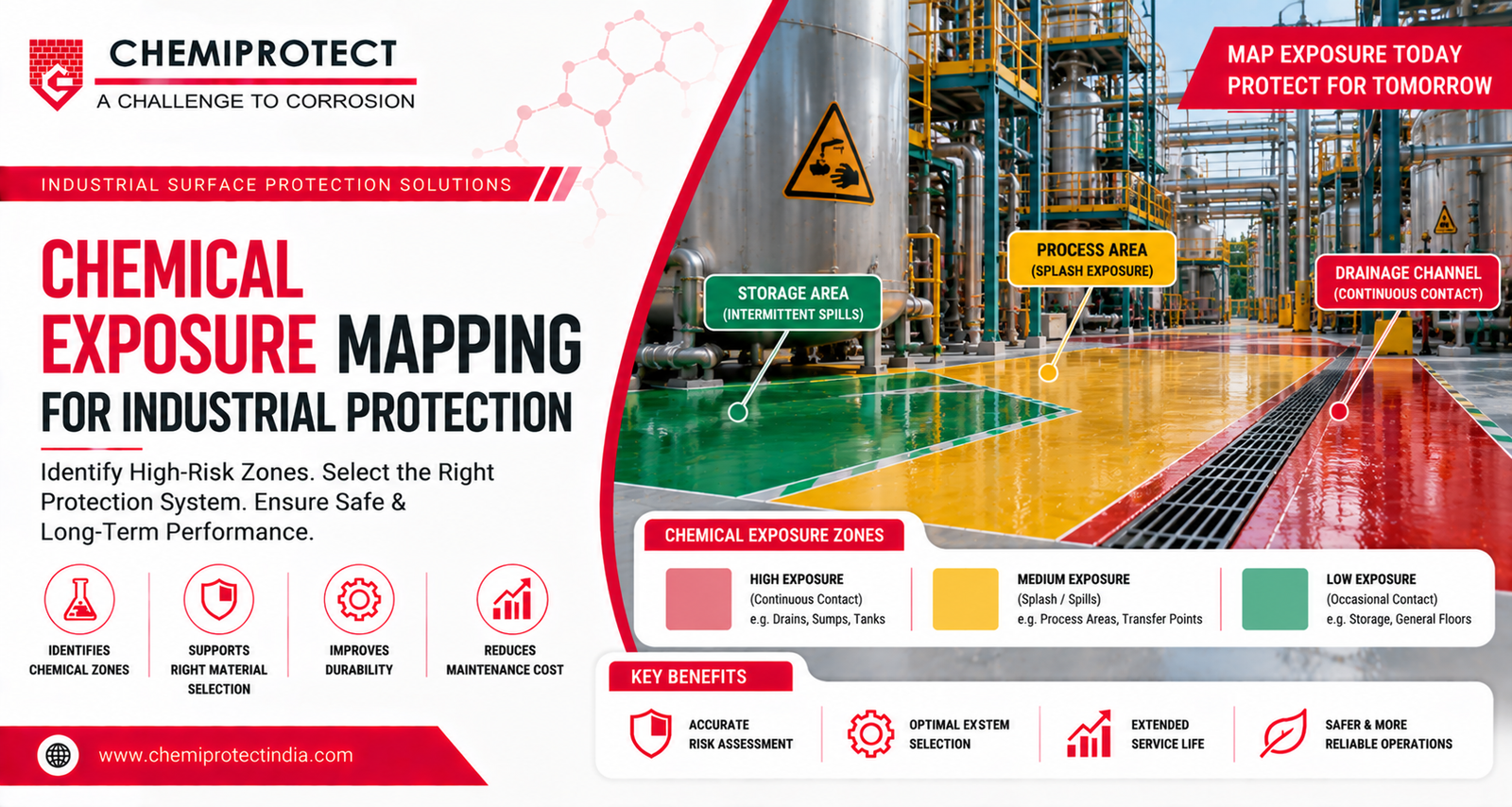
Chemical Exposure Mapping for Industrial Protection
October 6, 2026
What Is Chemical Exposure Mapping? Industrial
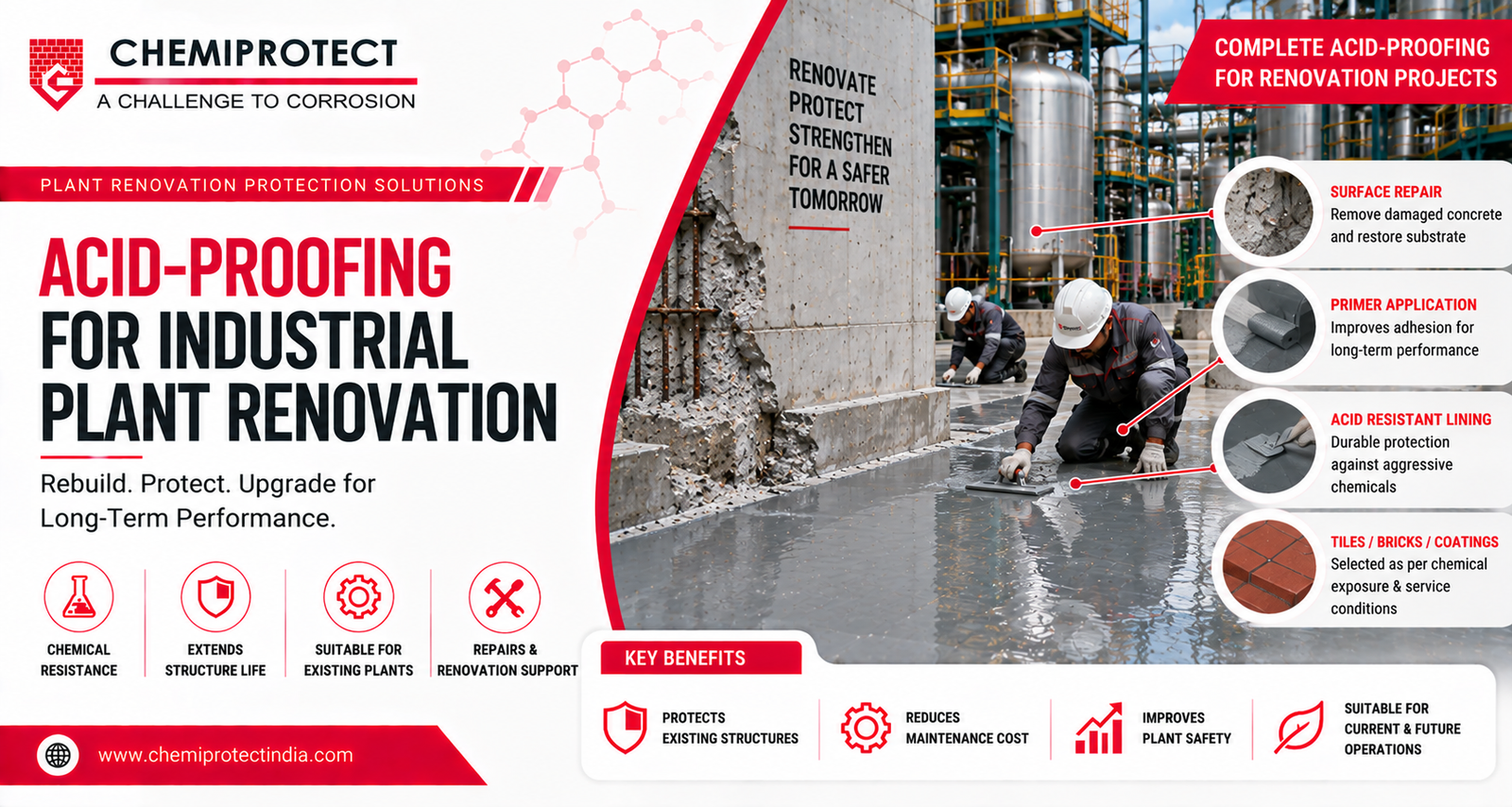
Acid-Proofing for Industrial Plant Renovation
October 3, 2026
Why Acid-Proofing Needs a Renovation-Specific Approach