Why Is Acid Resistant Cement Mortar Important for Industrial Lining Work?
Why Is Acid Resistant Cement Mortar Important for Industrial Lining Work?
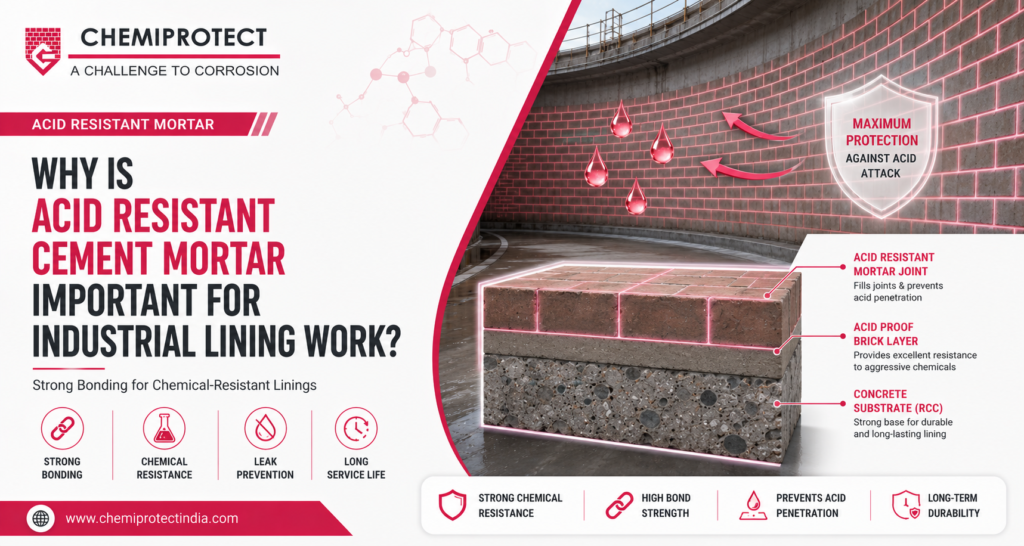
Acid resistant cement mortar is important for industrial lining work because it helps protect joints, floors, tanks, drains, pits, and trenches from chemical attack. In chemical plants, pharmaceutical units, fertilizer industries, laboratories, battery rooms, and wastewater treatment plants, surfaces often face acids, alkalis, and corrosive liquids. Normal mortar may not survive in these harsh conditions for a long time.
That is why industries use acid resistant cement mortar for chemical-resistant bonding and joint filling. It supports acid proof tile lining, acid resistant brick lining, and other industrial surface protection systems. CHEMIPROTECT provides reliable solutions for industries that need strong, safe, and long-lasting chemical protection.
What Is Acid Resistant Cement Mortar?
Acid resistant cement mortar is a special mortar used in chemical-resistant construction and lining work. It is designed to resist acids, alkalis, wastewater, and corrosive materials better than normal cement mortar.
It is commonly used for fixing acid proof tiles, acid resistant bricks, and other lining materials. It also helps fill joints and protect the surface from chemical leakage.
Why Is Acid Resistant Cement Mortar Needed?
In any lining system, joints are very important. Even if the tiles or bricks are strong, weak joints can allow chemicals to pass through. Once chemicals enter the base surface, they can damage concrete, steel, or other structures.
Acid resistant cement mortar helps seal these joints and improves the performance of the full lining system.
Common Problems with Normal Mortar
Chemical Weakness
Normal mortar may react with acids and corrosive liquids. This can make it weak over time.
Joint Failure
If mortar joints fail, chemicals can enter through gaps and damage the base surface.
Cracks and Leakage
Chemical exposure may cause cracks, leakage, and surface failure.
Frequent Repair Work
Weak mortar increases repair needs and maintenance costs in industrial areas.
Weak mortar increases repair needs and maintenance costs in industrial areas.
Acid resistant cement mortar offers many benefits for chemical-resistant lining and flooring systems.
Key Benefits of Acid Resistant Cement Mortar
Better Chemical Resistance
It helps protect joints and surfaces from acids, alkalis, and corrosive liquids.
Strong Bonding
It provides strong bonding between tiles, bricks, and the base surface.
Longer Lining Life
A good mortar system helps increase the life of acid proof tile lining and brick lining.
Reduced Leakage Risk
Proper joint filling reduces the chance of chemical leakage into the base surface.
Where Is Acid Resistant Cement Mortar Used?
Acid resistant cement mortar is used in many chemical-prone industrial areas.
Common application areas include:
- Chemical processing plants
- Pharmaceutical manufacturing units
- Fertilizer industries
- Battery rooms
- Electroplating units
- Pickling plants
- Laboratories
- Effluent treatment plants
- Wastewater treatment plants
- Acid storage areas
- Industrial drains
- Tanks and pits
- Neutralization pits
- Process floors
- Trenches and sumps
These areas need strong joint protection because chemical exposure can damage normal construction materials.
How Does Acid Resistant Mortar Help in Lining Systems?
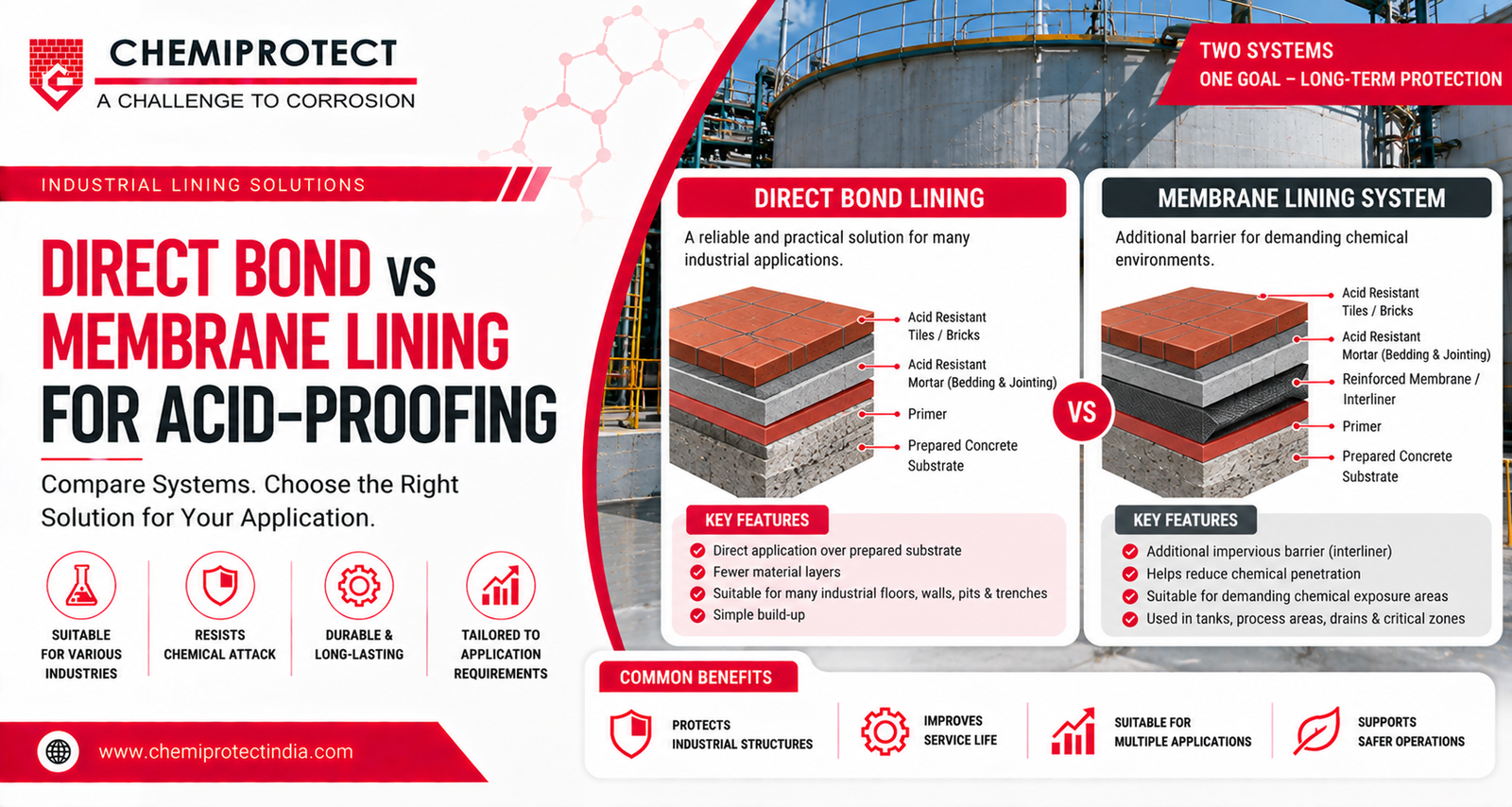
Acid resistant mortar helps create a strong lining system by bonding protective materials and sealing joints. It is used with acid proof tiles, acid resistant bricks, and other chemical-resistant materials.
A lining system is only strong when all parts work together. Tiles, bricks, mortar, surface preparation, and joint sealing must be suitable for the chemical condition.
Role of Acid Resistant Mortar
Acid resistant mortar helps with:
- Bonding tiles and bricks
- Filling joints properly
- Reducing chemical leakage
- Protecting concrete surfaces
- Improving lining strength
- Supporting long-term durability
CHEMIPROTECT helps industries choose suitable mortar systems based on actual site exposure.
What Is Acid Proof Mortar?
Acid proof mortar is used in areas where strong acid protection is required. It helps protect joints and bonding areas from acid attack. It is commonly used in acid proof brick lining, acid proof tile lining, tanks, drains, pits, and chemical floors.
Acid proof mortar is important because joints are often the weakest point in a lining system. If joints are not protected, chemicals can damage the surface below.
Acid Resistant Mortar vs Acid Proof Mortar
Both acid resistant mortar and acid proof mortar are used for chemical protection. The right choice depends on the type of chemical exposure.
- Acid resistant mortar helps resist acids, alkalis, and corrosive liquids
- Acid proof mortar is used for stronger acid protection needs
- Both are used in tile and brick lining work
- Both improve joint protection
- Both need proper surface preparation and application
How Acid Resistant Cement Supports Mortar Performance
Acid resistant cement is an important material used in chemical-resistant construction. It supports the performance of mortar systems by improving resistance against chemical attack.
When acid resistant cement is used correctly, it helps create stronger joints and better lining protection. It is useful in industrial areas where normal cement may fail.
Benefits of Acid Resistant Cement
Acid resistant cement helps with:
- Chemical-resistant bonding
- Better surface durability
- Stronger mortar performance
- Protection in wet and chemical areas
- Reduced maintenance problems
CHEMIPROTECT offers suitable solutions for acid resistant cement and related industrial protection systems.
What Is the Role of Acid Proof Cement?
Acid proof cement is used in areas that need strong protection against acid attack. It supports acid proof mortar, acid proof concrete, and lining systems.
In chemical industries, acid proof cement helps improve the performance of protective surfaces and joints. It is useful for drains, tanks, pits, floors, and trenches exposed to acids.
Where Acid Proof Cement Is Useful
Acid proof cement is useful in:
- Acid handling zones
- Chemical drains
- Neutralization pits
- Industrial floors
- Tanks and trenches
- Effluent treatment areas
- Laboratory floors
- Chemical storage areas
The correct selection depends on the chemical type, concentration, and temperature.
Can Acid Proof Concrete Work with Acid Resistant Cement Mortar?
Yes, acid proof concrete can work with acid resistant cement mortar in industrial protection systems. Acid proof concrete helps protect the base structure, while acid resistant cement mortar helps bond tiles or bricks and seal the joints.
Together, they can create a stronger chemical-resistant system. This combination is useful in areas where chemical exposure is regular or severe.
Complete Protection System
A complete chemical-resistant system may include:
- Acid proof concrete base
- Acid resistant cement mortar
- Acid proof tiles or bricks
- Proper joint sealing
- Surface preparation
- Regular inspection
Each layer has an important role in long-term protection.
Why Surface Preparation Is Important Before Mortar Application
Surface preparation is very important before applying acid resistant cement mortar. If the surface is dusty, oily, weak, or wet, the mortar may not bond properly.
Proper preparation improves adhesion and reduces the risk of early failure.
Basic Surface Preparation Steps
Before mortar application, the surface should be:
- Clean
- Strong
- Free from dust
- Free from oil and grease
- Properly repaired
- Free from loose particles
- Suitable for bonding
- Checked for moisture if needed
Good preparation helps improve performance and service life.
How to Choose the Right Acid Resistant Cement Mortar
Choosing the right acid resistant cement mortar depends on the site condition and chemical exposure. Every industry has different requirements.
Before choosing a mortar system, check:
- Type of acid or chemical
- Chemical concentration
- Operating temperature
- Surface condition
- Type of tile or brick
- Joint width
- Moisture level
- Traffic and load condition
- Expected service life
CHEMIPROTECT helps industries select suitable mortar and lining systems for long-term chemical protection.
Maintenance Tips for Acid Resistant Cement Mortar Joints
Even strong mortar joints need proper care. Regular inspection helps prevent bigger damage.
Simple Maintenance Practices
- Clean chemical spills quickly
- Check joints regularly
- Repair cracks early
- Keep drains and pits clean
- Avoid heavy impact on lined areas
- Use suitable cleaning methods
- Inspect high-risk chemical areas often
These steps help improve the life of the lining system.
Why Choose CHEMIPROTECT?
CHEMIPROTECT provides reliable chemical-resistant solutions for industrial floors, tanks, drains, pits, trenches, and lining systems. The company understands that strong joints are important for long-lasting chemical protection.
CHEMIPROTECT offers suitable solutions for acid resistant cement mortar, acid resistant mortar, acid proof mortar, acid resistant cement, acid proof cement, and acid proof concrete. With proper product selection and application guidance, industries can build safer and more durable lining systems.
Final Thoughts
Acid resistant cement mortar is a key part of industrial lining work. It protects joints, improves bonding, reduces leakage risk, and supports the life of acid proof tiles, acid resistant bricks, and chemical-resistant surfaces.
For chemical plants, pharmaceutical units, fertilizer industries, laboratories, wastewater treatment plants, and industrial drains, normal mortar may not be enough. CHEMIPROTECT helps industries choose the right acid resistant cement mortar system for strong and lasting chemical protection.
FAQs About Acid Resistant Cement Mortar
1. What is acid resistant cement mortar used for?
Acid resistant cement mortar is used for fixing, bonding, and joint filling in acid proof tile lining, acid resistant brick lining, industrial drains, tanks, pits, trenches, and chemical-resistant floors.
2. Is acid resistant cement mortar better than normal mortar?
Yes, acid resistant cement mortar is better for chemical-prone areas because normal mortar may weaken, crack, or fail when exposed to acids and corrosive liquids.
3. What is the difference between acid resistant mortar and acid proof mortar?
Acid resistant mortar helps resist acids, alkalis, and corrosive liquids. Acid proof mortar is used for stronger acid protection needs. Both are used in chemical-resistant lining systems.
4. Why are mortar joints important in lining work?
Mortar joints are important because weak joints can allow chemicals to pass through and damage the base surface. Proper joint filling helps protect the structure and increases lining life.
5. Why choose CHEMIPROTECT for acid resistant cement mortar?
CHEMIPROTECT provides reliable solutions for acid resistant cement mortar, acid resistant mortar, acid proof mortar, acid resistant cement, acid proof cement, and acid proof concrete. The company helps industries choose suitable systems for long-term chemical protection.
Let’s Blog
Latest Blog
When used with chemical resistant masonry units and the proper membrane MIPRO-VE will protect concrete and steel sub base from chemical attacks and physical abuse. MIPRO-VE is silica filled vinyl ester mortar supplied in two parts .
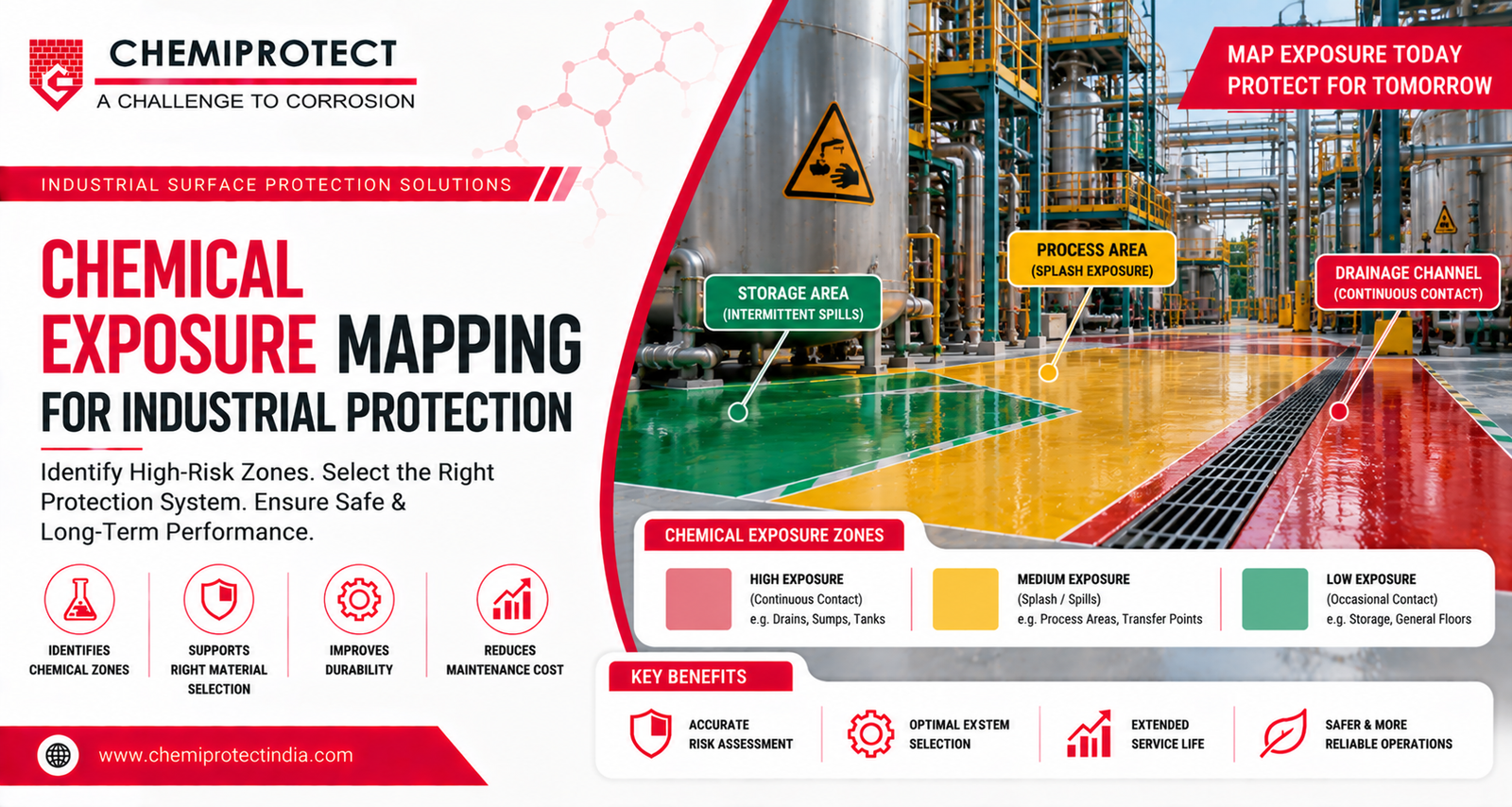
Chemical Exposure Mapping for Industrial Protection
October 6, 2026
What Is Chemical Exposure Mapping? Industrial
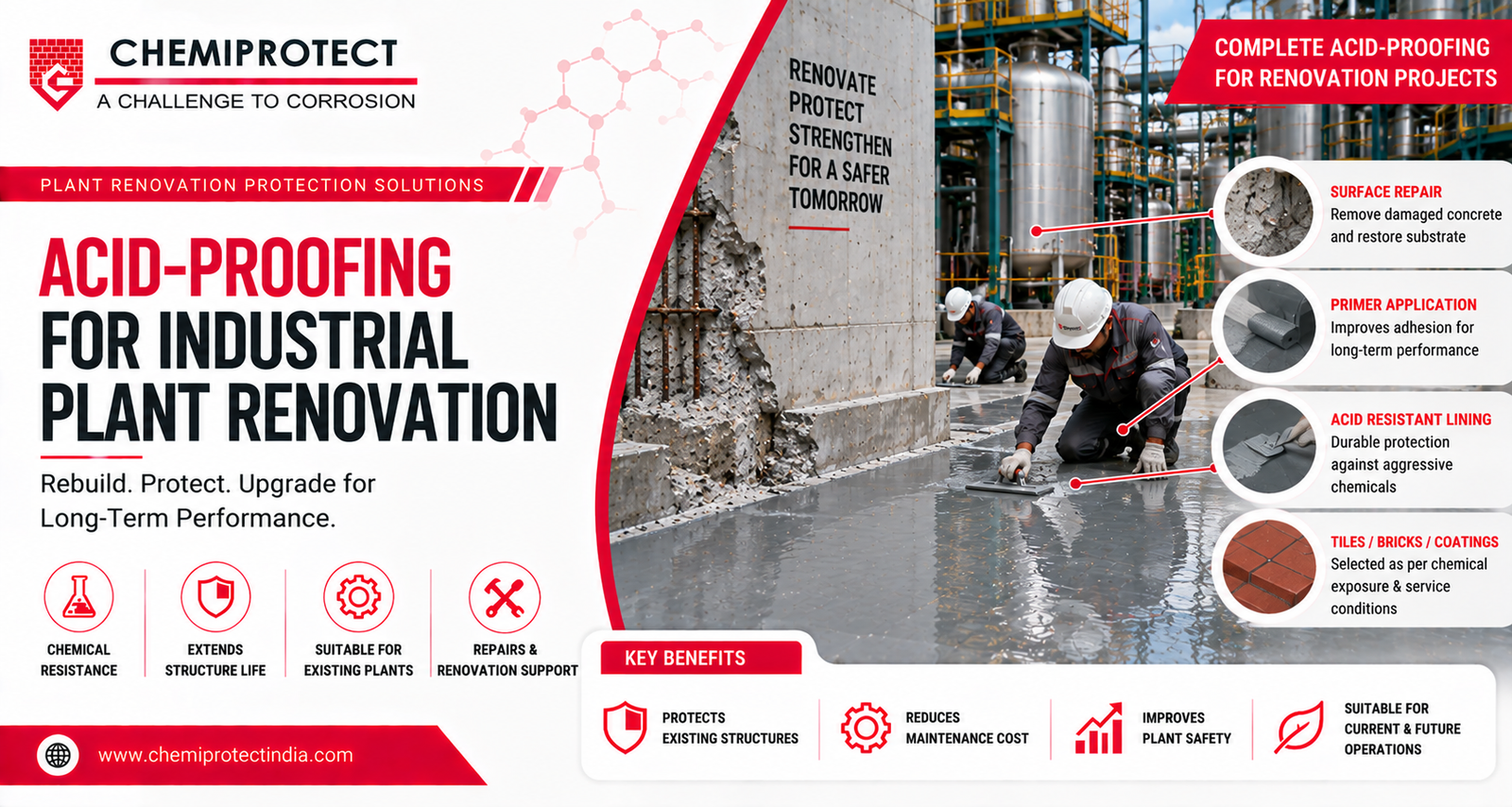
Acid-Proofing for Industrial Plant Renovation
October 3, 2026
Why Acid-Proofing Needs a Renovation-Specific Approach