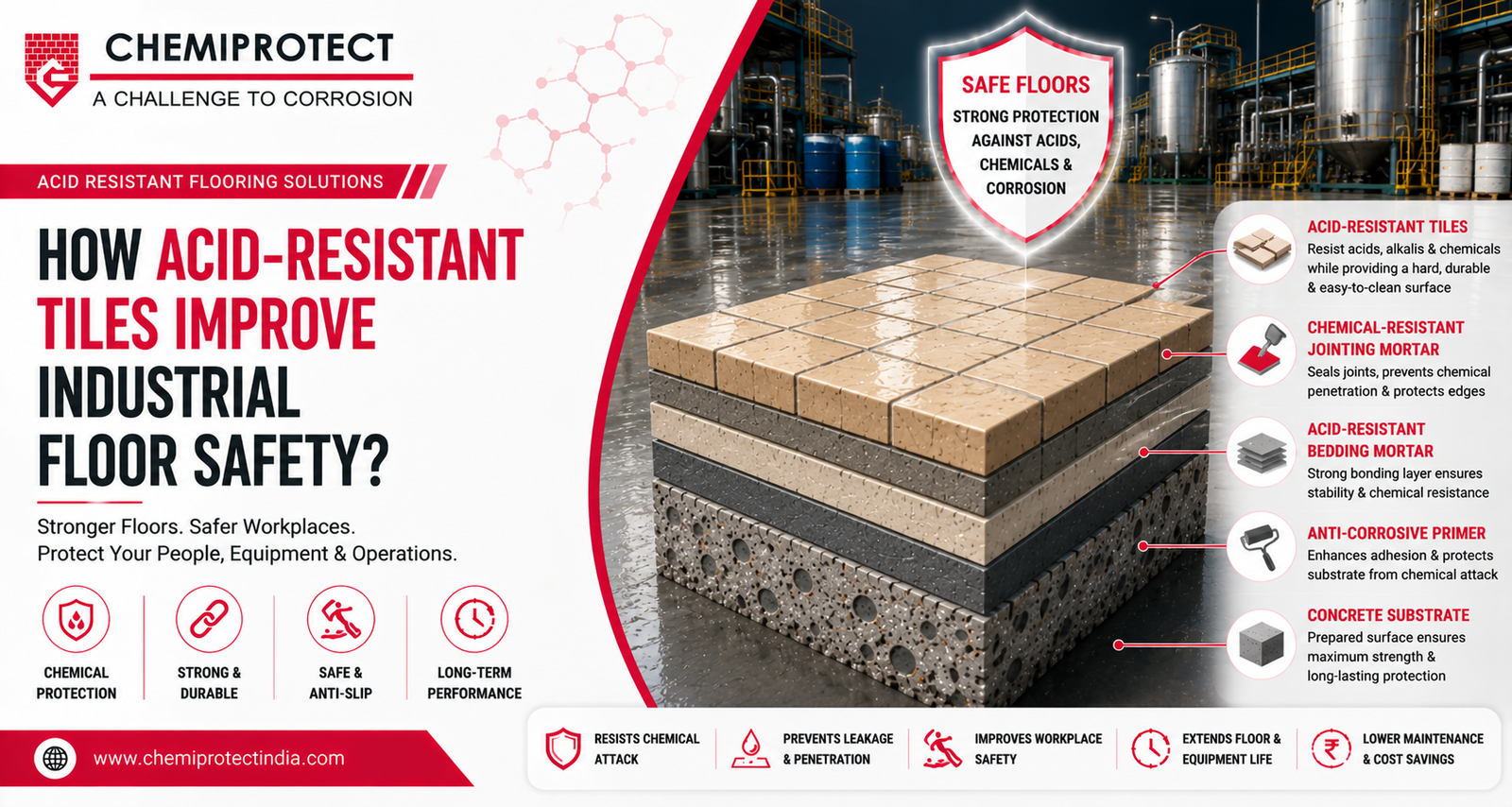
How Acid-Resistant Tiles Improve Industrial Floor Safety
Industrial floors can face demanding conditions
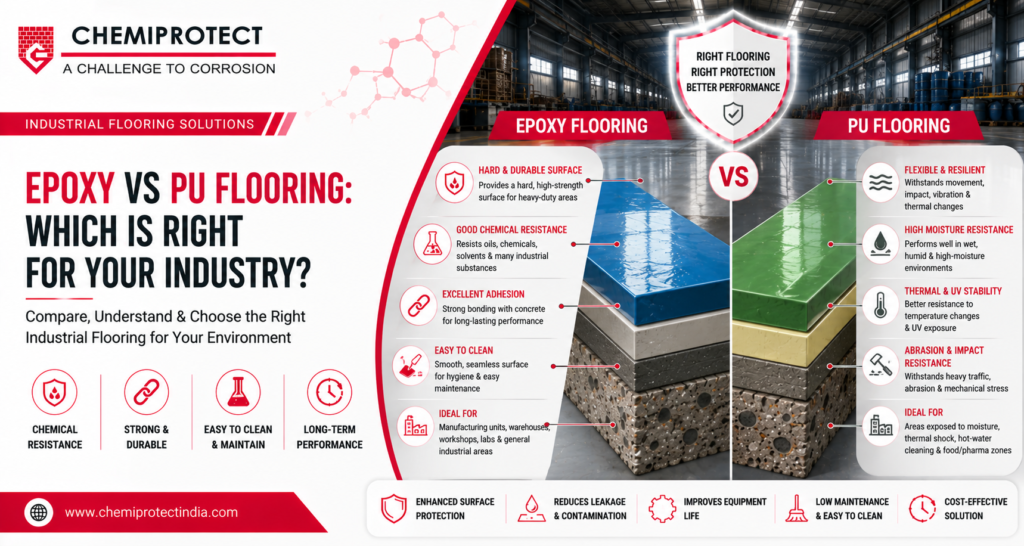
Industrial floors have to withstand much more than everyday foot traffic. Factories, warehouses, laboratories, pharmaceutical plants and processing facilities can expose floors to chemicals, moisture, oils, machinery, cleaning processes and continuous movement. Choosing the right flooring system is therefore an important part of protecting the underlying concrete and maintaining a suitable working environment.
Chemiprotect’s industrial flooring solutions include epoxy flooring, coating and grouting as well as PU flooring and coating systems for different industrial requirements. The company also provides epoxy flooring solutions designed for applications where durability, chemical resistance and easy maintenance are important.
But when comparing epoxy vs PU flooring, there is no single answer that works for every industry. The right choice depends on the floor’s operating conditions, moisture exposure, chemical environment, traffic and performance requirements.
Epoxy flooring is a protective flooring system created using epoxy resin and hardener. When properly mixed and applied, these components form a hard and durable surface over concrete.
According to Chemiprotect, epoxy flooring helps protect concrete against dust, moisture, oil, chemicals, stains and regular industrial wear. It also creates a smooth, sealed surface that is easier to clean and maintain.
Epoxy flooring can provide:
These characteristics make epoxy systems suitable for many industrial and commercial environments.
PU flooring, or polyurethane flooring, is another type of protective flooring system designed for demanding environments. Chemiprotect describes its PU flooring and coating solutions as durable, flexible and chemical-resistant systems for high-performance industrial and commercial spaces.
Compared with a hard epoxy surface, flexibility can be an important consideration when selecting a flooring system for environments exposed to particular operating conditions.
PU flooring may be considered for areas where moisture, thermal conditions or specific cleaning requirements make flexibility and resilience important factors.
Both epoxy and PU flooring can provide protective benefits, but their suitability can vary depending on the environment.
Epoxy forms a hard protective surface and is widely used where durability, chemical resistance and heavy industrial activity are important.
PU flooring provides a more flexible flooring solution and can be considered where the floor needs to accommodate demanding operating conditions.
Moisture should always be considered before selecting a flooring system. Epoxy can provide moisture protection when correctly selected and applied. However, Chemiprotect notes that PU flooring may also be considered for areas exposed to high moisture, thermal shock or hot-water cleaning.
Both systems can be used in environments where chemical resistance is required, but the specific chemical, concentration, temperature and exposure conditions should be evaluated before selecting the flooring system.
Epoxy flooring can be a suitable choice when the primary requirements involve a hard, durable and easy-to-maintain surface.
Factories often experience machinery movement, heavy traffic, dust, oil and regular cleaning. Epoxy can help create a sealed and durable surface for these conditions.
Warehouses can benefit from smooth flooring that is easier to clean and maintain while supporting regular movement of workers, equipment and forklifts.
Cleanability and surface protection are important considerations in laboratories and pharmaceutical environments. Epoxy flooring can provide a smooth, sealed finish suitable for selected applications.
Chemiprotect lists manufacturing units, warehouses, pharmaceutical plants, laboratories, chemical plants and food processing units among areas where epoxy flooring can be used.
PU flooring can be worth considering when the operating environment places greater emphasis on flexibility or particular moisture and thermal conditions.
Areas exposed to regular moisture or wet cleaning may require careful flooring selection. PU can be considered where moisture exposure is an important part of the operating environment.
Rapid temperature changes can place stress on flooring surfaces. Chemiprotect specifically notes that PU flooring may be considered for areas exposed to thermal shock.
Some industrial environments require frequent hot-water cleaning. In such conditions, PU flooring may be evaluated as an alternative depending on the complete site requirements.
The final selection should always be based on actual operating conditions rather than assuming that one flooring system is suitable for every wet or high-temperature application.
Chemical exposure is one of the most important factors when selecting industrial flooring. However, simply choosing epoxy or PU is not enough.
The type of chemical, concentration, contact time, temperature and frequency of exposure should all be considered. Different formulations can have different resistance characteristics.
For chemical-intensive environments, Chemiprotect provides chemical-resistant flooring and surface protection solutions designed around industrial requirements. Its industrial solutions serve sectors including chemical manufacturing, pharmaceuticals, food processing, electroplating, fertilizers, petroleum and other demanding industries.
A chemical resistance chart or technical recommendation should be consulted before finalising the flooring system.
Industrial floors can experience different types of traffic. Workers may move continuously across the surface, while forklifts, trolleys and machinery can create additional mechanical stress.
Epoxy flooring provides a hard protective surface suitable for many high-traffic industrial environments. Chemiprotect highlights durability, chemical resistance, dust control and long service life among the benefits of industrial epoxy flooring.
However, traffic should be considered alongside other factors such as impact, moisture, thermal conditions and chemical exposure. A flooring system should be selected according to the complete operating environment.
Regardless of whether epoxy or PU is selected, proper surface preparation is essential. Even a high-performance flooring system may experience premature problems if it is applied over an unsuitable substrate.
The concrete should be appropriately cleaned and prepared before application. Oil, grease, dust and loose particles should be removed, while cracks and other surface problems should be addressed.
Moisture should be evaluated before installation, particularly in areas where dampness or water exposure is expected.
Mechanical preparation, cleaning and other required preparation steps help create a suitable surface for coating adhesion.
Primer, coating layers and thickness should follow the requirements of the selected flooring system and site conditions.
Chemiprotect specifically identifies surface preparation as an important factor in achieving proper adhesion and long-term epoxy flooring performance.
The best flooring choice starts with the operating environment rather than the material name.
Consider:
Epoxy may be a strong choice for areas requiring a hard, durable and easy-to-clean surface. PU may be considered where flexibility, moisture exposure, thermal shock or hot-water cleaning are important factors.
In some industrial environments, the decision may require technical evaluation rather than a simple material comparison.
Both epoxy and PU flooring can have applications across different sectors. Chemiprotect serves a broad range of industries, including pharmaceuticals, chemicals, food and beverage, dairy, automobile, power plants, steel, petroleum and textile manufacturing.
Different industries have different flooring challenges. A pharmaceutical facility may prioritise cleanliness and maintenance, while a chemical plant may place greater emphasis on chemical resistance. A food processing facility may experience frequent cleaning and moisture, while an automobile facility may face mechanical traffic and oil exposure.
This is why flooring selection should always be based on the actual environment.
The epoxy vs PU flooring decision should not be based simply on which material is considered stronger. Both systems have different characteristics and can be suitable for different industrial requirements.
Epoxy flooring offers a hard, durable and easy-to-maintain surface and is widely used across factories, warehouses, laboratories, pharmaceutical facilities and other industrial environments. PU flooring offers durability, flexibility and chemical-resistant performance and may be considered for applications involving particular moisture, thermal shock or hot-water cleaning conditions.
The right system depends on your substrate, traffic, chemical exposure, moisture, temperature and cleaning requirements.
For more information about Chemiprotect’s flooring and protective systems, explore its industrial flooring and coating services. You can also contact Chemiprotect Engineers to discuss your specific industrial flooring requirements and identify a suitable solution.
With proper selection, surface preparation and application, the right flooring system can help protect industrial floors, improve maintainability and support long-term facility performance.
Epoxy flooring creates a hard, durable surface, while PU flooring offers greater flexibility for environments with moisture and thermal stress.
Epoxy flooring is ideal for manufacturing units, warehouses, laboratories, pharmaceutical plants, and other areas requiring durability and easy maintenance.
PU flooring can be considered for high-moisture areas, thermal shock conditions, and spaces that require frequent hot-water cleaning.
Both epoxy and PU can provide chemical resistance, but the correct system depends on the chemical type, concentration, temperature, and exposure conditions.
Proper cleaning, moisture evaluation, crack repair, and following the recommended primer and coating system help ensure strong adhesion and long-term performance.
When used with chemical resistant masonry units and the proper membrane MIPRO-VE will protect concrete and steel sub base from chemical attacks and physical abuse. MIPRO-VE is silica filled vinyl ester mortar supplied in two parts .
Industrial floors can face demanding conditions
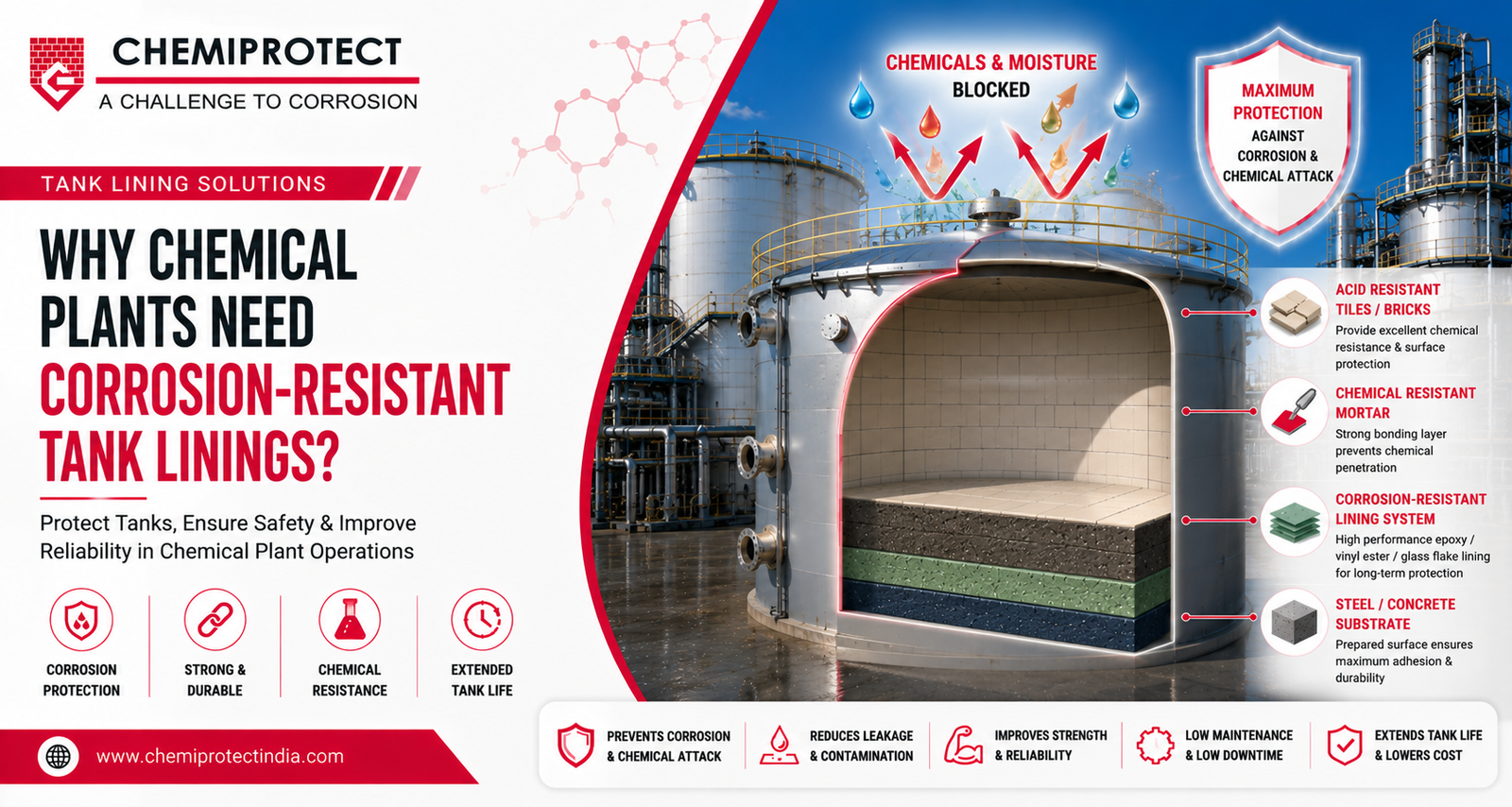
Chemical plants operate in environments where
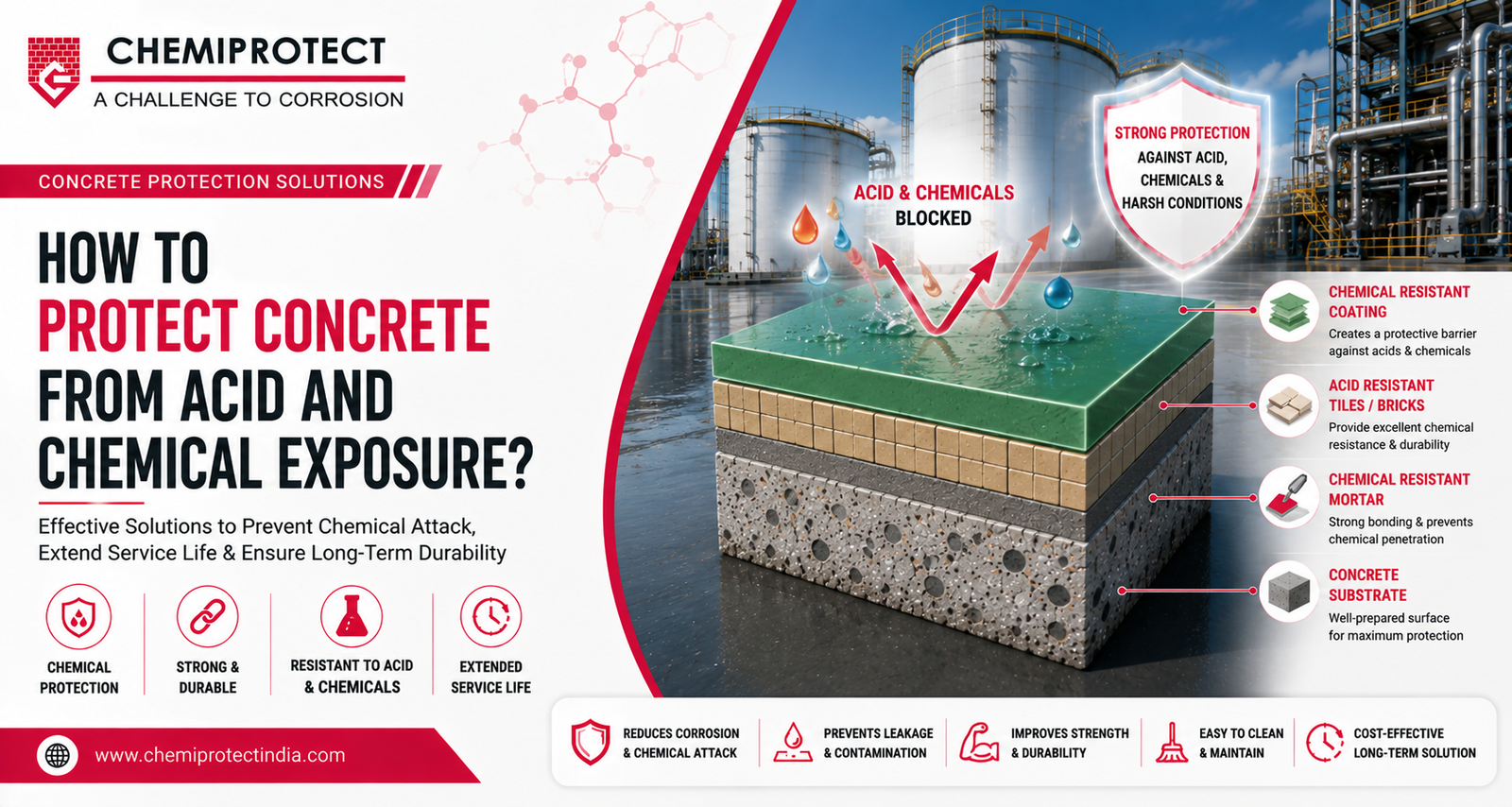
Concrete is widely used in industrial
Connect Now