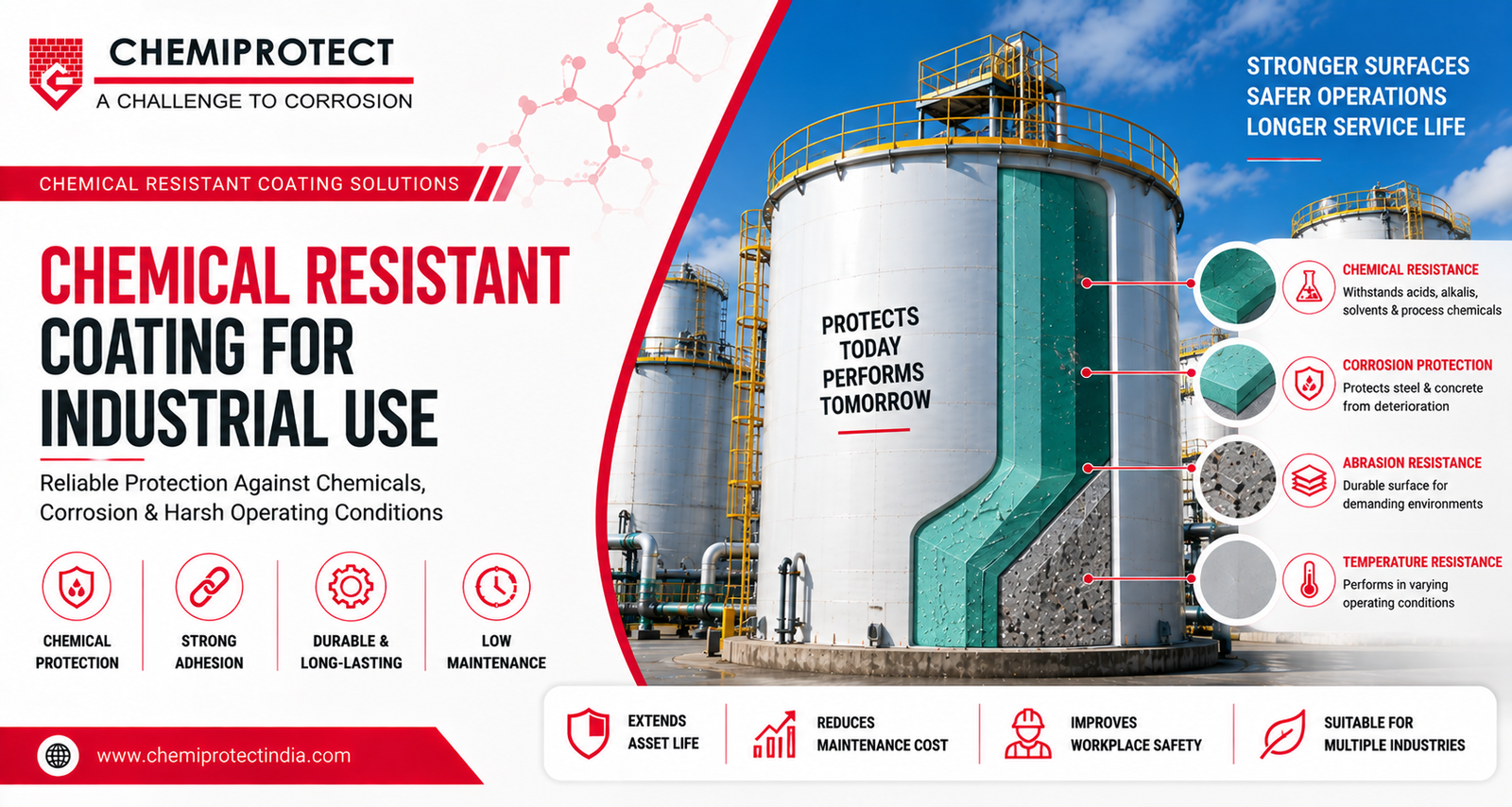
Chemical Resistant Coating: A Complete Industrial Guide
Chemical Resistant Coating for Industrial Environments
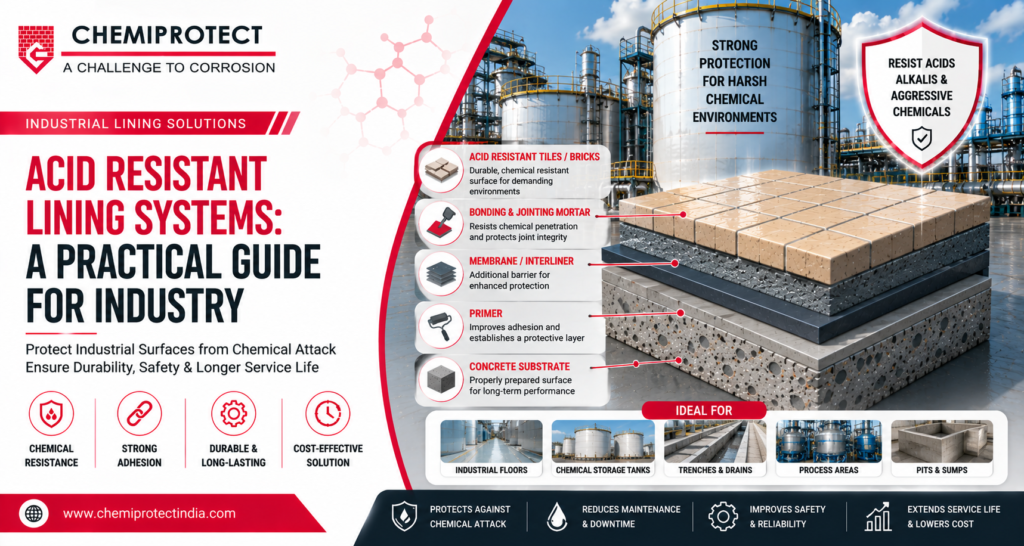
Acid resistant lining systems are engineered barriers that protect concrete, steel, masonry, and other substrates from aggressive chemicals. Exposure can come from acids, alkalis, process liquids, chemical spills, cleaning agents, and contaminated wastewater. A suitable system must control chemical penetration, protect the substrate, withstand operating conditions, and remain compatible with the structure underneath. Acid resistant lining systems are used for industrial floors, tanks, equipment, pits, and trenches where chemical exposure can shorten service life.
An acid resistant lining system is a combination of materials selected to work together as a protective assembly. Depending on the application, the system may include a prepared substrate, primer, membrane or interliner, acid-resistant bedding and jointing mortar, and acid-resistant brick, tile, or stone. Other applications may use resin-based coatings or reinforced glass-flake systems where a seamless barrier is more appropriate.
An important point is that the lining should be treated as a complete system rather than as an individual product. Adhesion, joint integrity, chemical compatibility, thickness, substrate condition, and installation quality all influence performance. A tiled lining can provide a durable wearing surface, while bedding and jointing mortar protect the spaces between units.
A lining can only perform reliably when the base is suitable for application. Concrete surfaces should be sound, clean, and appropriately prepared, with contaminants, weak material, laitance, and loose particles removed. Moisture and surface condition also need to be considered because they can affect adhesion and curing.
A primer may improve adhesion and establish the first protective layer. A membrane or interliner can provide an additional barrier between the substrate and the chemical-resistant facing. Chemiprotect’s published lining design, for example, describes a concrete base, MIPRO-EP primer, a glass-matt reinforced interliner, acid/alkali-resistant hybrid epoxy mortar, and an acid-resistant tile or brick facing.
The mortar is critical because joints can become vulnerable paths for chemical penetration. Acid- and alkali-resistant mortars are formulated for demanding industrial environments and selected according to the required chemical and service conditions.
The exposed surface may use acid-resistant bricks, acid-resistant tiles, or stone. These materials provide a hard, chemically resistant surface for areas exposed to chemicals, traffic, cleaning, and wear. Chemiprotect’s acid-resistant tiles are unglazed clay tiles designed for acid/alkali-resistant linings, while its acid-resistant bricks are intended for demanding industrial environments.
Brick and tile lining is commonly used where a robust, serviceable wearing surface is required. It can suit industrial floors, trenches, pits, drains, tanks, and process areas. The lining can be designed as direct-bond or membrane construction.
Resin systems can provide seamless chemical-resistant protection where tile joints are undesirable or the geometry calls for a continuous coating. Epoxy, vinyl ester, polyester, and hybrid resin systems can be selected for different exposure conditions. Glass-flake reinforced coatings can also be used where resistance to permeation, corrosion, abrasion, physical abuse, and thermal shock is required.
Some installations benefit from combining technologies. A reinforced membrane beneath a tiled surface can provide an additional barrier while the tile or brick handles the exposed service environment. The correct arrangement depends on the substrate, chemical exposure, temperature, traffic, and required service life.
Acid-resistant linings are used across industries where corrosive liquids can attack construction materials. Typical areas include chemical processing plants, fertilizer facilities, battery manufacturing and recycling units, electroplating operations, pharmaceutical plants, food and beverage facilities, pulp and paper plants, power stations, metal refineries, and other process environments.
Within these facilities, lining may be required in floors, bunds, tanks, sumps, drains, pits, trenches, channels, walls, and process equipment. Exposure can vary even within the same plant, so the specification should be based on the actual duty of each area rather than one generic system.
Start by identifying every significant chemical that may contact the surface. The type of acid or alkali, concentration, frequency of exposure, immersion conditions, and possibility of mixed chemicals can all affect material selection. Chemical resistance information should be checked against the actual operating conditions.
Temperature can change chemical resistance and affect resins, mortars, adhesives, and substrates. Mechanical conditions also matter. Traffic, impact, abrasion, thermal cycling, vibration, and heavy loads may require a more robust design than chemical exposure alone would suggest.
The existing concrete or steel condition must be evaluated before selecting the lining. Cracks, joints, contamination, moisture, surface profile, and previous coatings can influence the preparation method and system design. Curing requirements and access should also be considered during planning.
Even a chemically suitable material can fail if the system is installed incorrectly. Surface preparation, primer coverage, mixing, layer thickness, curing, mortar joints, and termination points all need controlled execution. Drains, corners, joints, penetrations, and equipment bases deserve particular attention because they can experience concentrated stress or exposure.
An installation procedure and inspection plan can help maintain consistency. Product data sheets, safety information, installation guidance, detail drawings, and chemical resistance resources can support selection and application, especially when the lining must meet a defined project specification.
A correctly selected and installed lining system can help:
The result depends on system design, chemical compatibility, substrate condition, installation quality, and operating conditions. No lining should be selected solely because it is described as acid resistant.
Chemiprotect Engineers has developed acid-proofing and corrosion-resistant solutions for industrial applications since 1970. Its product range includes acid/alkali-resistant mortars, epoxy products, glass-flake products, polyurethane systems, acid-resistant bricks, and acid-resistant tiles. This allows different components to be considered as part of a coordinated protection system.
The company also provides customized solutions based on project requirements. For a lining system, this approach is important because the appropriate combination of materials can vary according to chemical exposure, substrate, temperature, traffic, and installation conditions. Technical resources, product information, and chemical resistance guidance can assist engineers and plant teams in making a more informed specification.
Acid resistant lining systems are most effective when they are designed as complete protective assemblies. The right combination of substrate preparation, primer, interliner where required, chemical-resistant mortar, and brick or tile facing can provide dependable protection in demanding industrial environments. Seamless resin and reinforced glass-flake systems can offer alternatives where the application requires different performance characteristics.
Before specifying a system, evaluate the chemicals, concentration, temperature, immersion or splash exposure, mechanical loading, substrate condition, and maintenance requirements. Chemiprotect Engineers can help industrial users evaluate suitable acid-proofing and corrosion-resistant options for their operating conditions. Explore Chemiprotect’s industrial protection solutions to select a lining approach suited to the actual service environment.
An acid resistant lining system is a complete protective assembly that may include a prepared substrate, primer, interliner, chemical-resistant mortar, and acid-resistant brick, tile, or stone.
They are used in chemical processing plants, fertilizer facilities, battery manufacturing, electroplating, pharmaceutical plants, food and beverage industries, pulp and paper plants, power stations, and metal refineries.
The key components include substrate preparation, primer and interliner, acid-resistant bedding and jointing mortar, and acid-resistant bricks or tiles.
Selection should be based on chemical exposure, concentration, temperature, mechanical stress, substrate condition, and the actual operating environment.
Proper surface preparation, primer coverage, layer thickness, curing, mortar joints, and termination details are essential for long-term chemical resistance and system performance.
When used with chemical resistant masonry units and the proper membrane MIPRO-VE will protect concrete and steel sub base from chemical attacks and physical abuse. MIPRO-VE is silica filled vinyl ester mortar supplied in two parts .
Chemical Resistant Coating for Industrial Environments
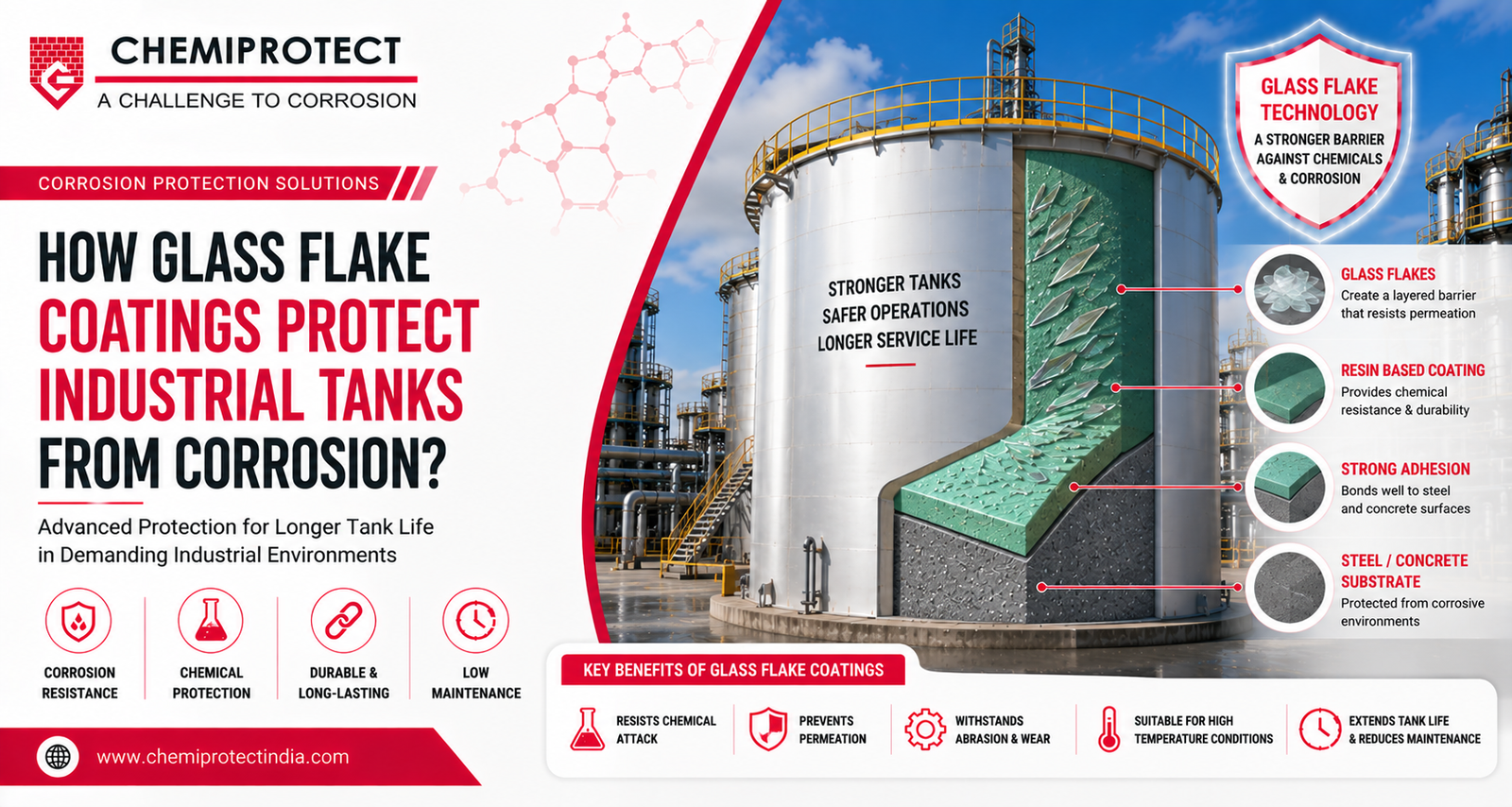
Industrial tanks are regularly exposed to
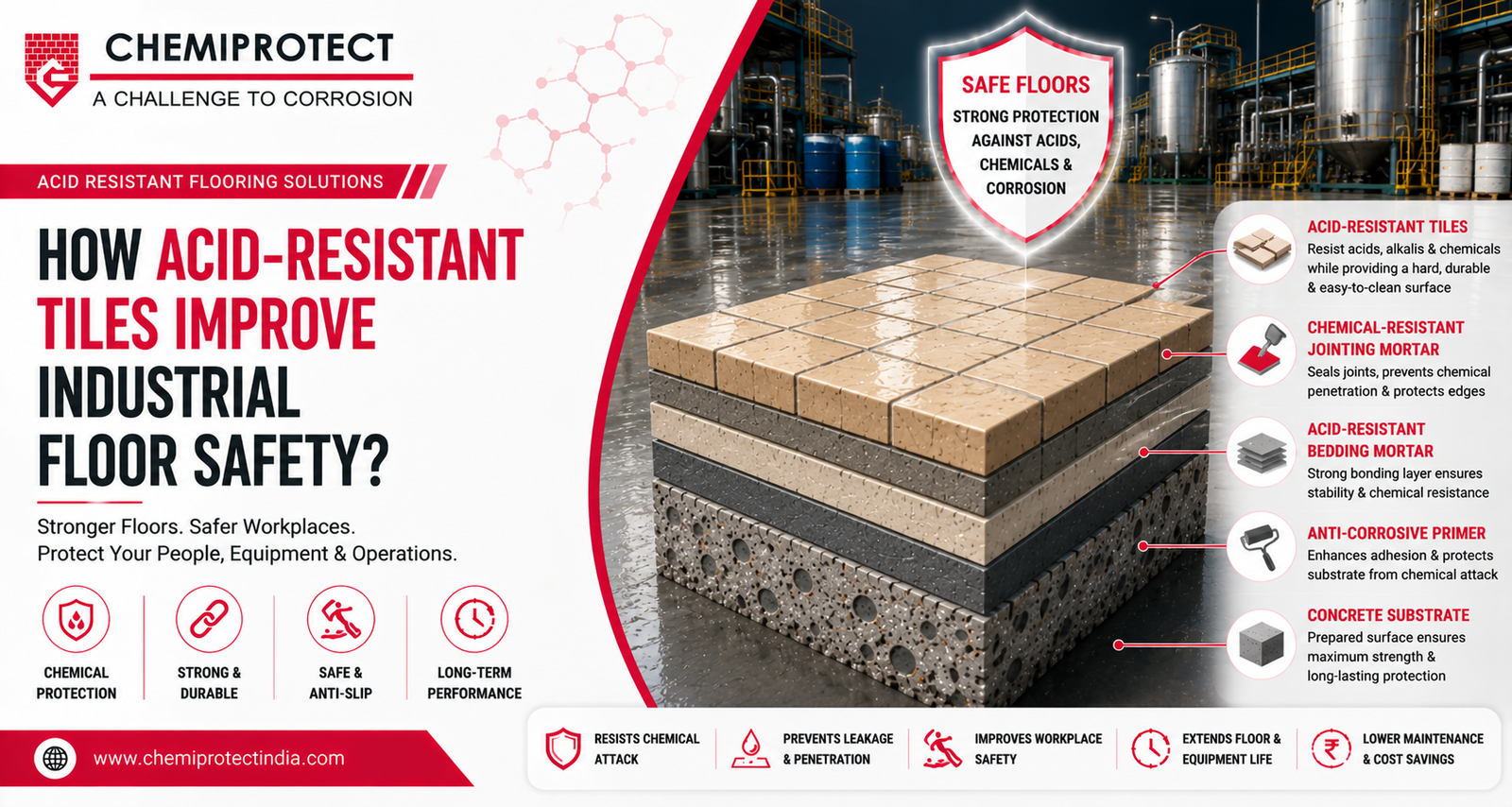
Industrial floors can face demanding conditions
Connect Now