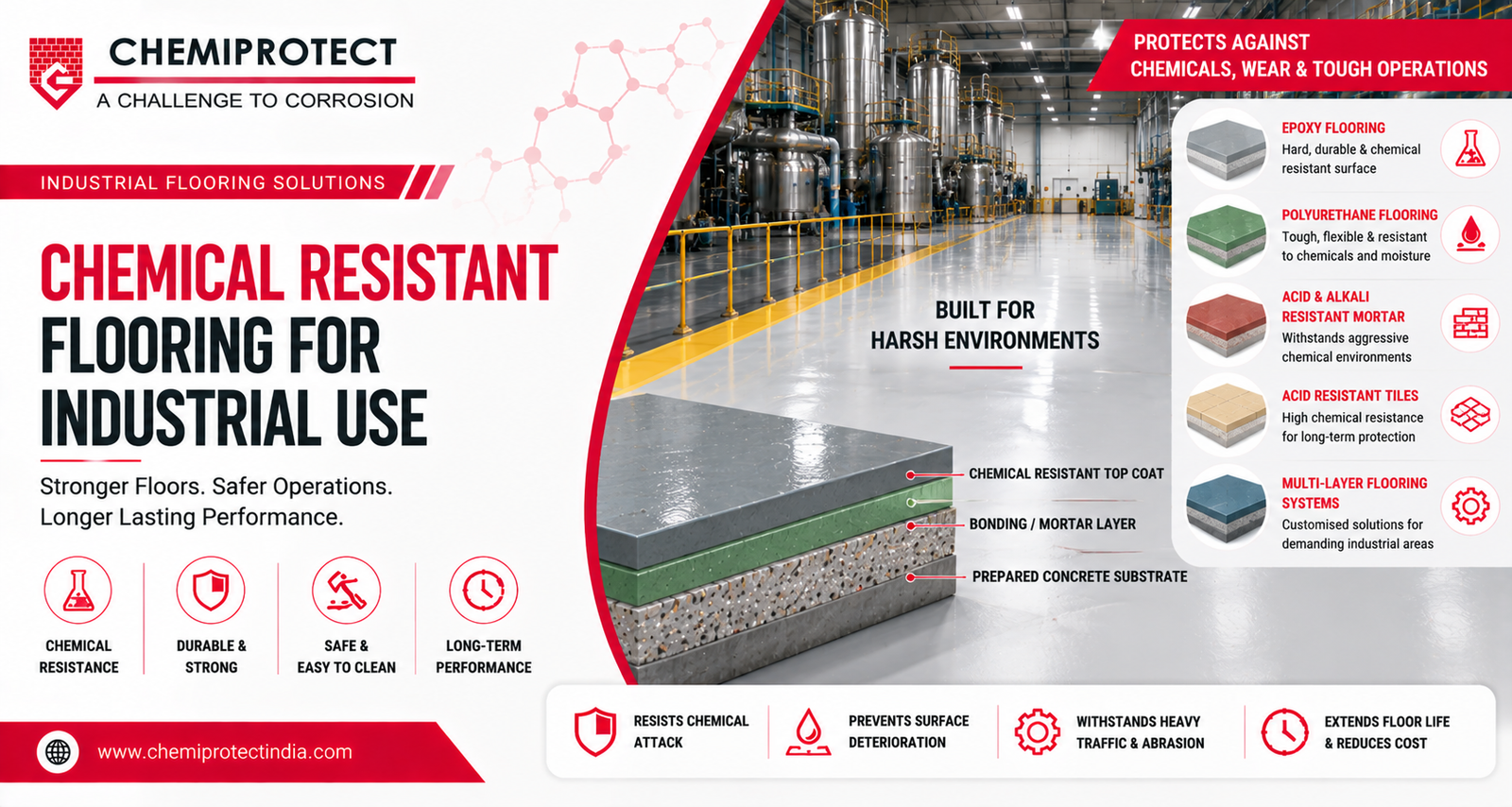
Chemical Resistant Flooring: A Complete Industrial Guide
Chemical Resistant Flooring for Industrial Environments
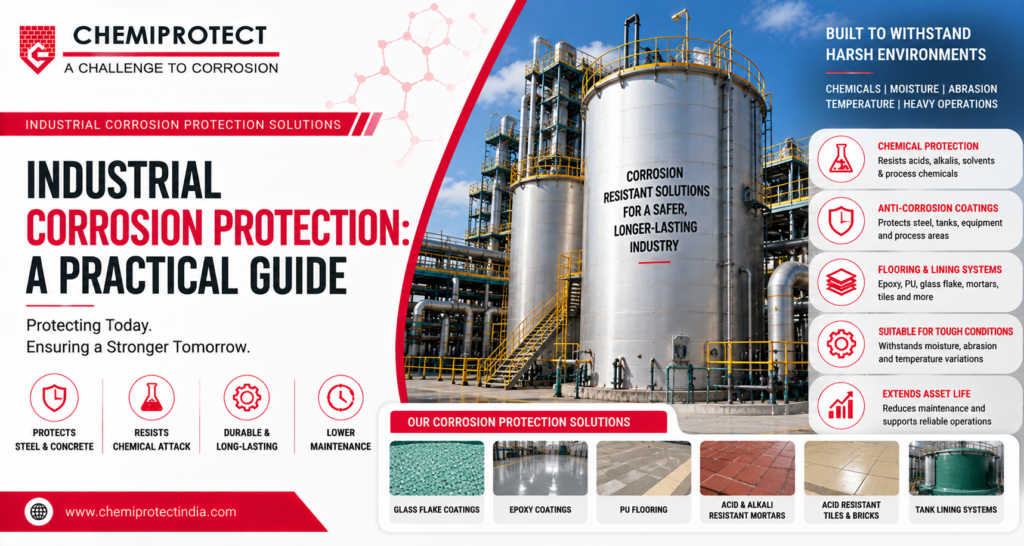
Industrial facilities operate in environments where steel, concrete, tanks, process equipment, floors, walls, and other structures can be exposed to chemicals, moisture, salts, abrasion, temperature changes, and continuous industrial activity. Over time, these conditions can contribute to corrosion and deterioration, affecting both the condition of the asset and the reliability of operations.
A planned industrial corrosion protection strategy can help reduce exposure-related damage by using suitable coatings, linings, mortars, flooring systems, and other protective materials. Chemiprotect Engineers develops corrosion-resistant solutions for industrial environments and offers products designed for different operating conditions.
Industrial corrosion protection refers to the methods and protective systems used to reduce corrosion-related deterioration of industrial structures and surfaces. Depending on the application, protection may involve anti-corrosion coatings, chemical-resistant linings, resin systems, acid-resistant tiles or bricks, mortars, membranes, or combinations of these materials.
The objective is not simply to cover a surface. A suitable protection system should be selected according to the substrate, corrosive environment, chemical exposure, temperature, mechanical conditions, and expected service life. Correct specification and installation are therefore as important as the protective material itself.
Corrosion can gradually affect exposed metal and other construction surfaces. In industrial plants, deterioration may occur around process areas, storage zones, equipment foundations, drains, trenches, floors, and other locations exposed to aggressive substances.
Protective systems can create a barrier between the substrate and the surrounding environment. This can help limit direct contact with corrosive substances and support the long-term condition of the protected surface.
Corrosion-related deterioration can create maintenance requirements and interfere with normal plant operations. A suitable protection system can help reduce the frequency of repairs when it is correctly specified for the service environment.
Acids, alkalis, solvents, process chemicals, and aggressive cleaning agents can affect surfaces differently. The severity of exposure depends on chemical type, concentration, temperature, and duration of contact. Chemical resistance should therefore be evaluated against the actual substances present at the facility.
Water and humidity can contribute to corrosion, particularly when surfaces remain wet or when moisture reaches vulnerable substrates. Outdoor structures may also experience changing weather conditions, while process areas can be exposed to regular washing or water-based operations.
Corrosive environments are often accompanied by mechanical wear. Traffic, impact, equipment movement, cleaning activity, and abrasive materials can damage a protective surface and create areas where the substrate becomes more exposed. The protection system should therefore be assessed for both chemical and mechanical demands.
Glass flake reinforced coatings can provide protective layers for steel and concrete in demanding industrial environments. The closely packed glass flakes can help reduce permeation and provide resistance to corrosion, abrasion, and physical exposure. The appropriate resin and coating system should be selected according to the service conditions.
Epoxy systems can provide adhesion, surface protection, and resistance to a range of industrial conditions. They may be considered for floors, walls, equipment areas, and other prepared substrates where a durable resin-based barrier is required.
Mortar systems can be used in specialised flooring and lining applications where chemical exposure is a major concern. They can form part of a complete lining arrangement together with primers, membranes, tiles, or bricks. Chemiprotect provides acid and alkali resistant mortar systems for industrial applications.
Acid-resistant tiles and bricks can provide a physical lining over suitable substrates. These systems may be considered for areas where aggressive chemicals are handled and where a dedicated lining is required. Chemiprotect’s acid resistant bricks and tiles are designed for acid and alkali-resistant lining applications.
The first step is to understand where the protection system will be used and what it will be exposed to. Chemical type, concentration, temperature, moisture, immersion conditions, traffic, abrasion, and impact should all be identified before selecting the system.
Steel, concrete, masonry, and other substrates have different preparation and protection requirements. The existing condition of the surface should be assessed, including contamination, cracks, weak areas, moisture, previous coatings, and other factors that may affect adhesion or performance.
A protective coating or lining should be considered as part of a complete system. Primer, intermediate layers, top coats, membranes, bedding materials, jointing materials, and lining components may all contribute to performance. The compatibility of the complete system should be evaluated before application.
Surface preparation is a critical part of corrosion protection. Dust, oil, grease, rust, loose material, old coatings, and other contaminants can interfere with adhesion. Depending on the substrate and selected system, cleaning, mechanical preparation, repairs, priming, and moisture assessment may be required.
Application conditions also matter. Mixing, thickness, curing time, temperature, humidity, and application method should follow the technical requirements of the selected product. Poor preparation or unsuitable application conditions can reduce the expected service life of a protective system.
Corrosion protection systems can be relevant across many industrial sectors. Applications may include chemical plants, fertilizer facilities, pharmaceutical manufacturing, battery manufacturing and recycling, electroplating, petrochemical operations, power plants, food and beverage processing, pulp and paper facilities, steel plants, metal refineries, and other process industries.
Protection requirements vary between facilities and should be assessed according to the actual operating conditions.
Regular inspection helps identify wear, cracking, blistering, impact damage, exposed substrate, or other changes before they become larger maintenance issues. Cleaning procedures should also be compatible with the installed protection system.
Where operating conditions change, the existing protection should be reviewed to confirm that it remains suitable. Chemiprotect provides product documentation, installation guidance, and chemical resistance information through its technical resources and chemical resistance guides.
These resources can help technical teams review product specifications and evaluate suitable protection systems for their applications. View Chemiprotect resources for product data, installation guidance, brochures, drawings, and chemical resistance information.
Chemiprotect Engineers focuses on corrosion-resistant and acid-proofing solutions for demanding industrial environments. Its product range includes acid and alkali resistant mortars, epoxy products, polyurethane products, glass-flake systems, acid-resistant bricks and tiles, waterproofing products, and construction chemicals.
The company supports different industrial requirements through product information, installation guidance, chemical resistance data, and customised solutions. Selecting the right system still requires consideration of the actual operating environment and the technical requirements of the project.
Industrial corrosion protection is an important consideration for facilities where chemicals, moisture, abrasion, temperature, and physical wear can affect structures and surfaces. A suitable protection system can help reduce direct exposure and support the durability of industrial assets.
The right solution depends on the substrate, chemical environment, temperature, mechanical conditions, application method, and expected service life. Coatings, linings, mortars, tiles, bricks, and other protective systems may each have a role depending on the application.
For industries evaluating industrial corrosion protection solutions, Chemiprotect Engineers offers a range of specialised coatings, linings, mortars, flooring systems, and corrosion-resistant materials for demanding industrial environments.
Industrial corrosion protection includes coatings, linings, mortars, membranes, and tile or brick systems used to protect steel, concrete, and industrial surfaces from corrosion and deterioration.
The main causes include chemical exposure, moisture, humidity, abrasion, impact, equipment movement, and other harsh operating conditions.
Common systems include glass flake coatings, epoxy-based protection, acid and alkali resistant mortars, and acid-resistant tile or brick lining systems.
Selection should be based on the operating environment, substrate type, chemical exposure, temperature, moisture, abrasion, and the complete protection system.
Proper cleaning, rust removal, repairs, priming, moisture assessment, and correct application conditions help ensure strong adhesion and long-term protective performance.
When used with chemical resistant masonry units and the proper membrane MIPRO-VE will protect concrete and steel sub base from chemical attacks and physical abuse. MIPRO-VE is silica filled vinyl ester mortar supplied in two parts .
Chemical Resistant Flooring for Industrial Environments
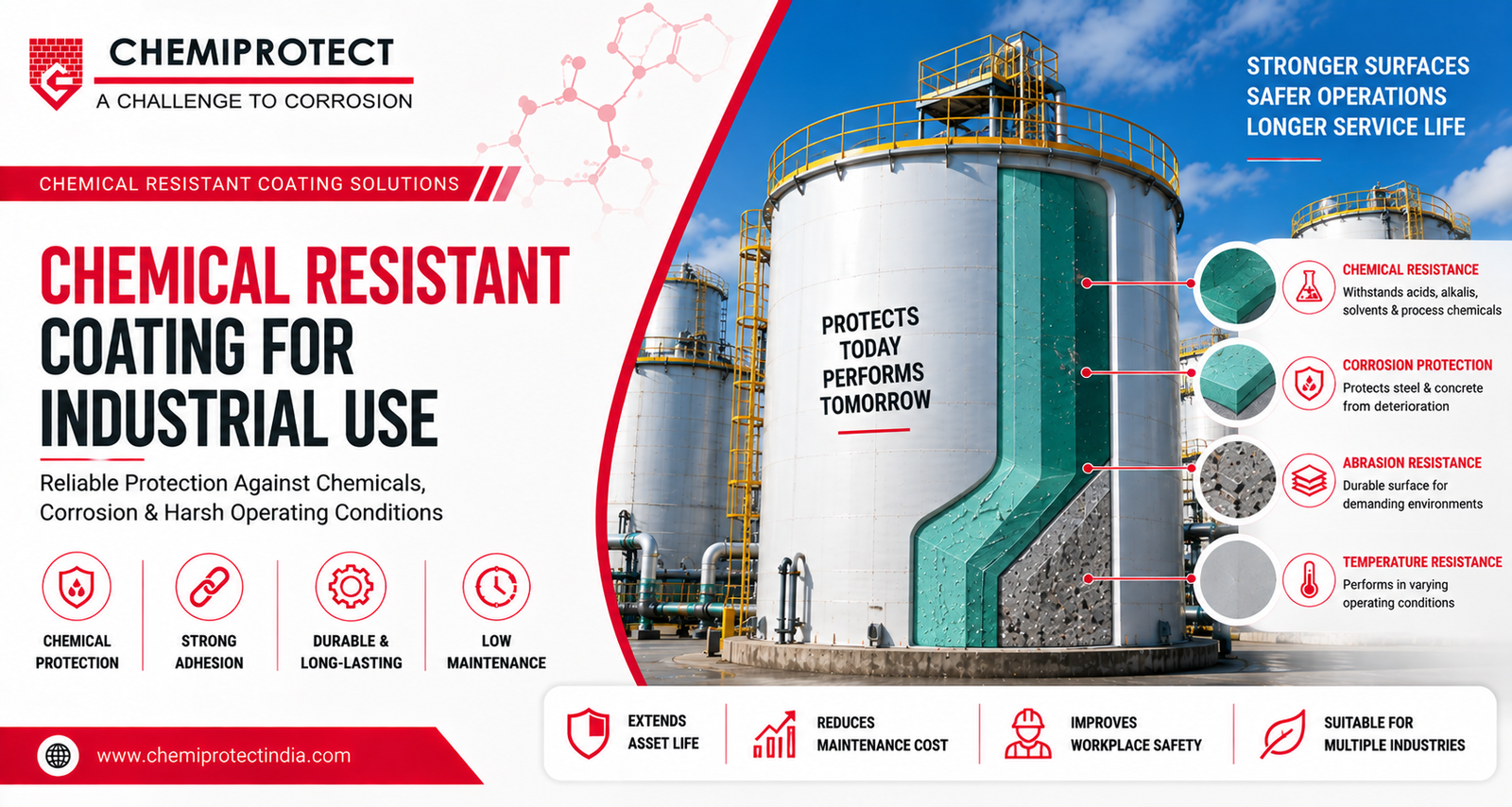
Chemical Resistant Coating for Industrial Environments
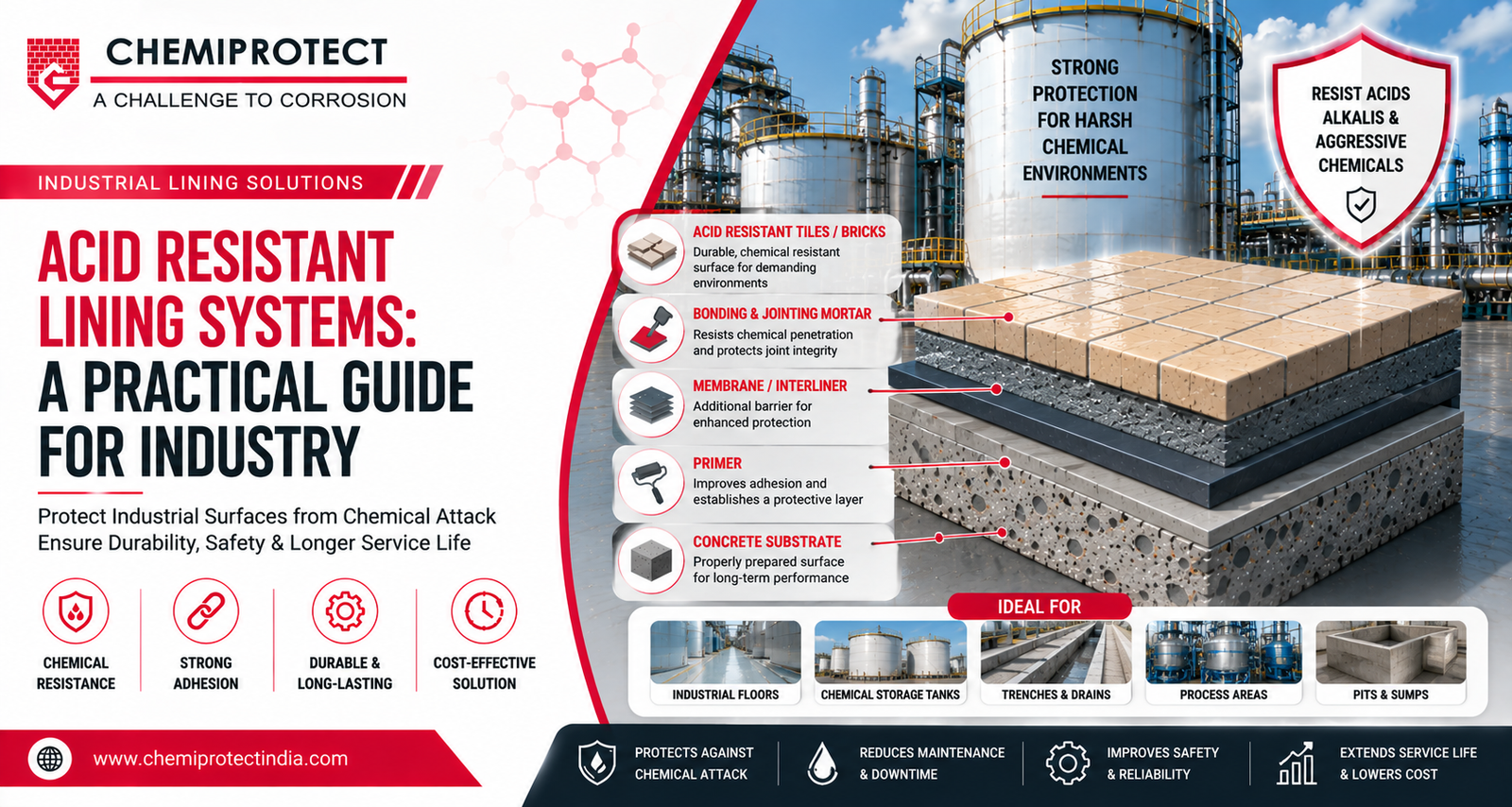
Acid resistant lining systems are engineered
Connect Now