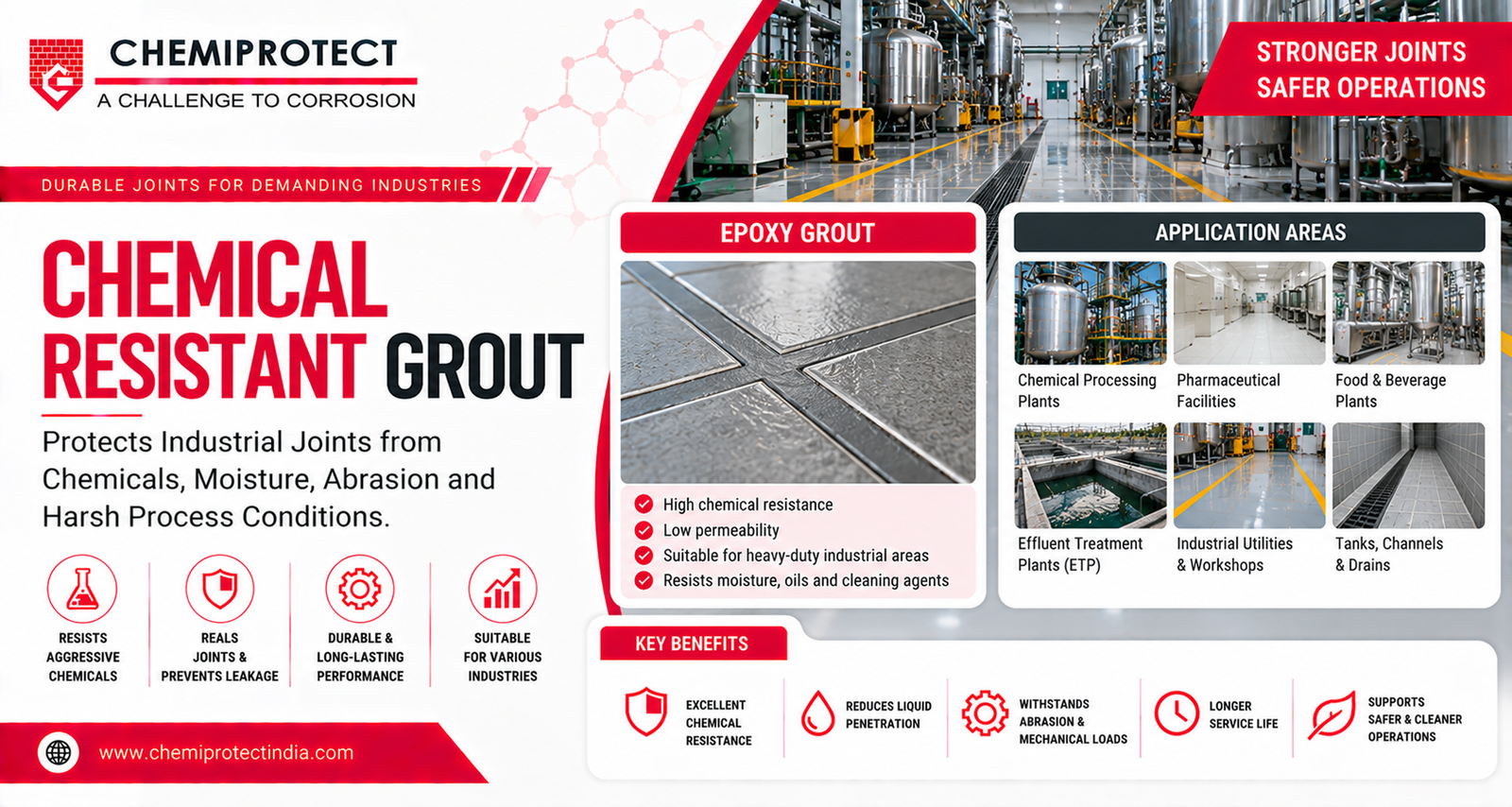
Chemical Resistant Grout: A Practical Industrial Guide
Learn how chemical resistant grout protects
Industrial floors are exposed to conditions that ordinary concrete and conventional floor coatings may not withstand for long. Chemical spills, continuous moisture, impact, abrasion, temperature changes, and heavy traffic can gradually weaken the floor surface and create maintenance problems. industrial corrosion protection should therefore be planned according to the actual operating environment.
Polyurethane mortar flooring is designed for demanding environments where the floor must provide durable protection while remaining suitable for regular industrial operations. The system combines polyurethane resin, cementitious components, and selected aggregates to create a dense, mechanically strong and chemically resistant surface.
Polyurethane mortar flooring is a heavy-duty flooring system formed from a polyurethane-based binder combined with cementitious materials and graded aggregates. Once installed and cured, it creates a robust surface that can protect the underlying concrete from aggressive industrial exposure.
Unlike a conventional decorative floor coating, polyurethane mortar flooring is selected primarily for performance. Its formulation can be specified according to the expected chemical exposure, moisture conditions, mechanical loading, cleaning practices, and operating temperatures of the facility.
Food and beverage facilities require floors that can withstand frequent washing, moisture, organic residues, cleaning chemicals, and mechanical traffic. Polyurethane mortar flooring can provide a seamless, hygienic and durable surface for production and processing zones.
Chemical plants may expose floors to acids, alkalis, solvents, salts and other aggressive substances. A correctly selected polyurethane mortar system helps reduce chemical attack on concrete and supports easier maintenance of process areas.
Manufacturing environments can experience frequent cleaning, material movement, spills and controlled process conditions. Polyurethane flooring can be used where a dense and durable floor surface is required without relying on conventional porous concrete.
Areas exposed to regular water, steam cleaning or washdown require flooring that can tolerate moisture and repeated cleaning. Proper detailing around drains, coves, joints and transitions is essential for maintaining the overall protection system.
Forklifts, pallet movement, equipment handling and repeated foot traffic can subject floors to impact and abrasion. Polyurethane mortar flooring provides a hard-wearing surface suited to these demanding conditions.
The flooring system must be compatible with the chemicals actually present at the site. Exposure concentration, temperature, contact time and frequency of spills should be assessed before selecting the system.
Industrial floors may be exposed to standing water, washdown and process moisture. The system and installation method should be selected with the substrate moisture condition and operating environment in mind.
Material handling and equipment traffic can produce repeated mechanical stress. A suitable polyurethane mortar system should provide sufficient resistance to wear, impact and surface damage for the intended use.
Some industrial areas experience hot water, steam cleaning or temperature fluctuations. The flooring specification should consider the operating and cleaning temperatures so the system can perform reliably under actual conditions.
A properly installed seamless floor minimizes exposed joints and helps prevent the accumulation of contaminants. Where hygiene is important, floor-to-wall coves and correctly detailed drainage can further improve cleanability.
Selection should begin with the actual operating conditions rather than with the flooring material alone. Identify the chemicals used, expected concentration and temperature, cleaning method, traffic level, impact exposure, moisture conditions and required service life. chemical resistant flooring systems should be evaluated against these exposure conditions before a final specification is made.
Substrate condition is equally important. Existing concrete should be evaluated for strength, contamination, cracks, laitance, moisture and previous coatings. The selected flooring system must be compatible with both the substrate and the expected service environment.
Thickness should also be matched to the application. Areas with severe mechanical, chemical or thermal exposure may require a heavier-duty system than lightly trafficked zones. Joints, drains, edges, penetrations and floor-to-wall transitions should be included in the specification rather than treated as separate afterthoughts.
Surface preparation is a critical part of industrial flooring installation. Concrete should be sound, clean and free from oil, grease, dust, laitance, loose particles and other contaminants that could interfere with adhesion.
Mechanical preparation methods may be used to create the required surface profile and remove weak surface material. Cracks, damaged concrete and construction joints should be assessed and treated according to the flooring specification.
Moisture conditions should also be checked before installation. Where the substrate or surrounding conditions are unsuitable, application may result in adhesion problems, blistering or premature deterioration.
Polyurethane mortar flooring should be installed by trained applicators following the specified system and application sequence. Mixing ratios, working time, environmental conditions, thickness and curing requirements should be controlled throughout the installation. industrial floor protection depends on both material selection and disciplined execution.
Special attention should be given to coves, drains, joints, corners, penetrations and changes in floor level. These locations can become weak points if they are not properly detailed.
Quality control should include inspection of surface preparation, material mixing, application thickness, finish and curing. The completed floor should be checked for visible defects and overall continuity before being placed into service.
A properly specified polyurethane mortar floor can help reduce downtime associated with frequent surface repairs and deterioration. Its performance is determined by the complete system, including the resin formulation, aggregate structure, thickness, substrate preparation and detailing.
Specification should therefore consider the process area as a whole. The floor, drains, coves, joints and transitions should work together as one protective surface so that isolated weak points do not compromise the wider installation.
Regular removal of process residues, chemicals and contaminants helps maintain the floor surface and reduces prolonged exposure to aggressive substances.
Drains, joints, edges, coves and high-traffic zones should be inspected periodically. Early identification of damage can help prevent localized defects from becoming larger maintenance issues.
Any damaged area should be assessed promptly so that the appropriate repair method and compatible materials can be selected. Repairs should restore both the surface and the surrounding protective detailing.
Polyurethane mortar flooring can provide a durable and reliable protective surface for industrial areas exposed to chemicals, moisture, abrasion, impact, heavy traffic and demanding cleaning conditions. Its performance depends on selecting the right formulation and thickness for the actual operating environment.
Successful installation also requires sound substrate preparation, correct detailing around joints and drains, controlled application and proper curing. These factors help the flooring system protect the underlying concrete and support long-term industrial operation.
For facilities evaluating industrial polyurethane flooring solutions, the system should be specified according to the chemical exposure, mechanical loading, moisture conditions and service requirements of each area. A properly engineered and professionally installed flooring system can help improve durability, maintainability and protection of industrial concrete surfaces.
When used with chemical resistant masonry units and the proper membrane MIPRO-VE will protect concrete and steel sub base from chemical attacks and physical abuse. MIPRO-VE is silica filled vinyl ester mortar supplied in two parts .
Learn how chemical resistant grout protects
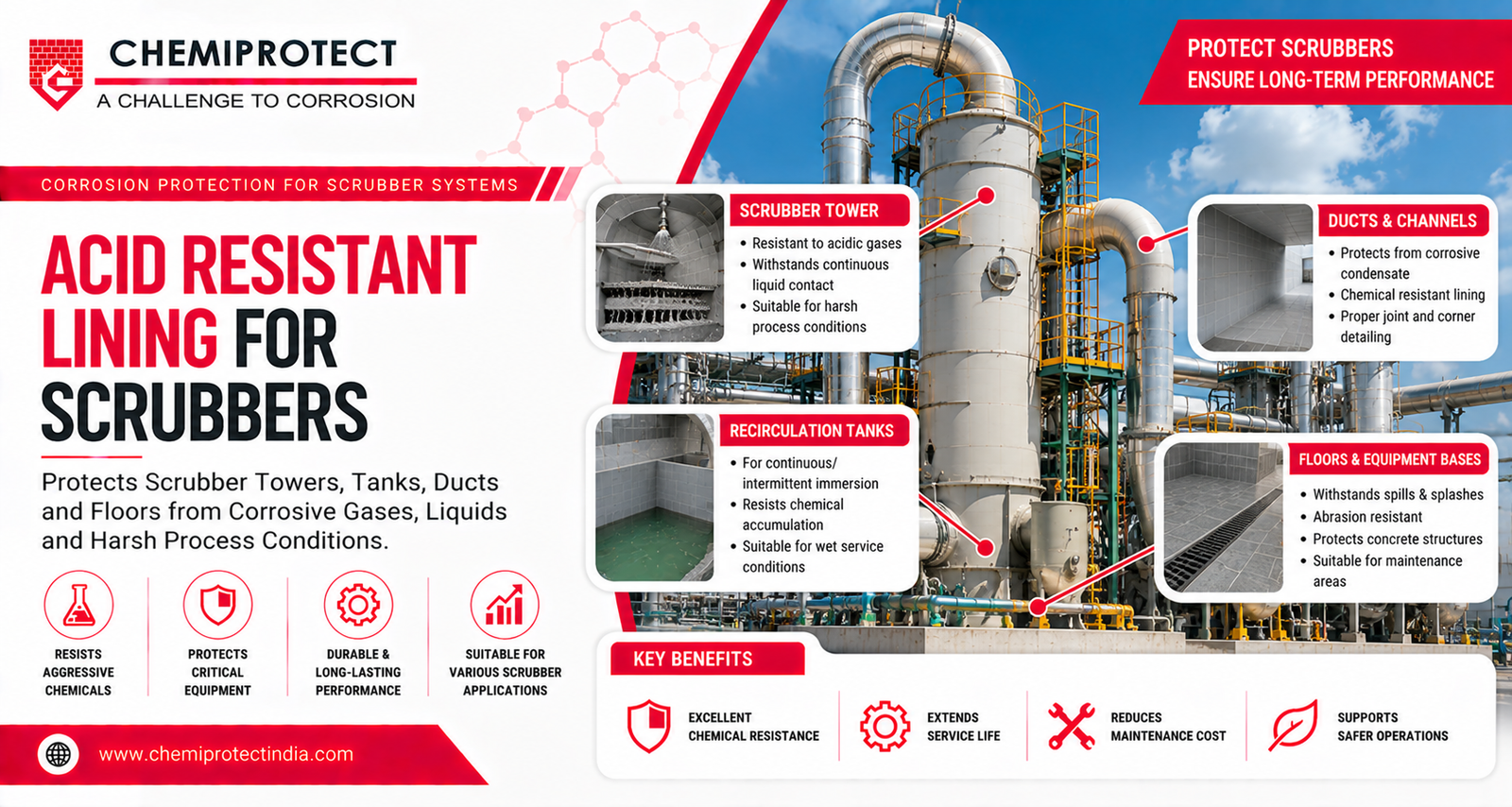
Learn how acid resistant lining protects
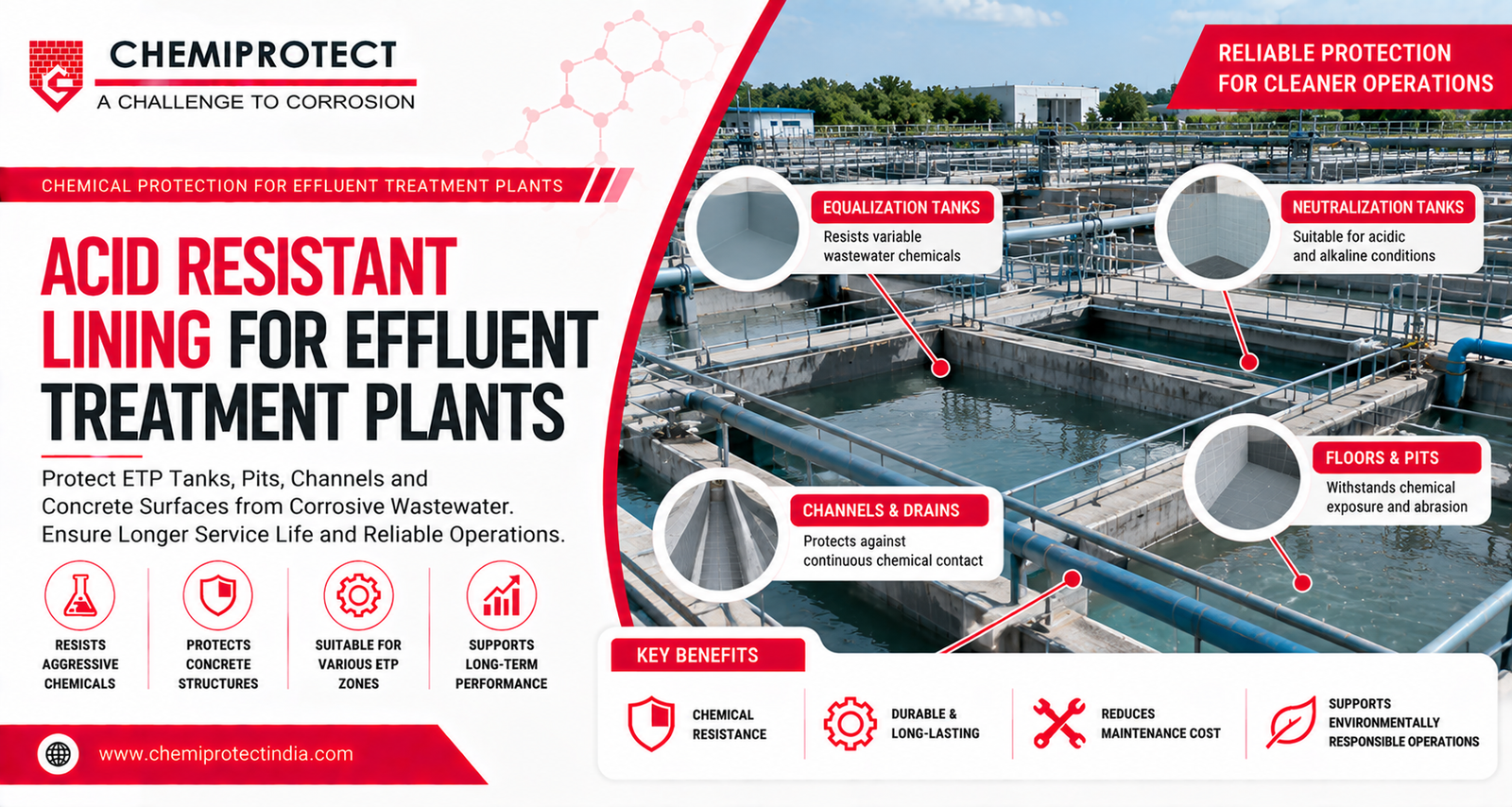
Learn how acid resistant lining protects
Connect Now