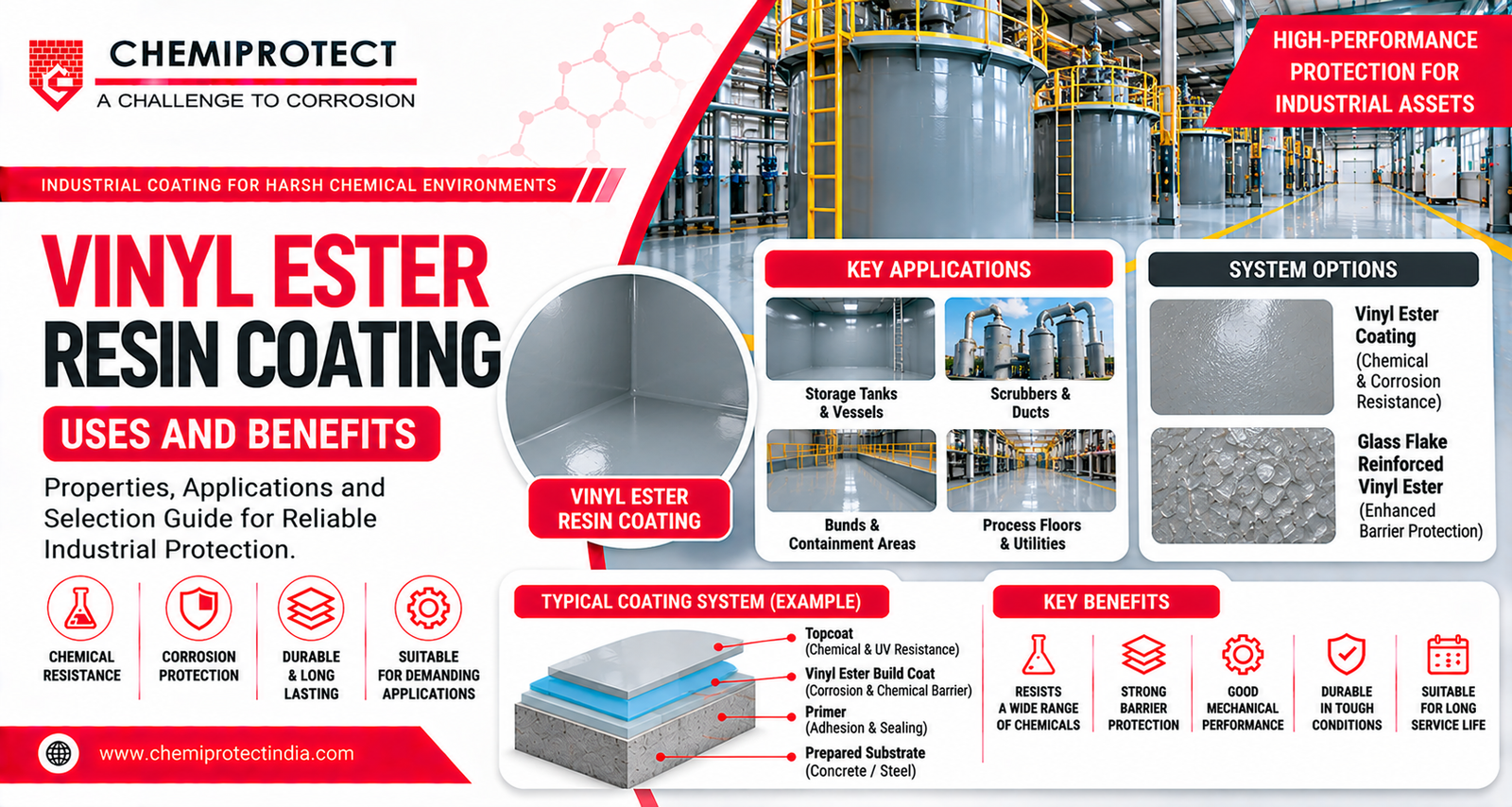
Vinyl Ester Resin Coating: Properties, Benefits and Industrial Uses
Discover vinyl ester resin coating applications,
Electroplating operations depend on tanks that hold process baths safely and consistently. Depending on the plating line, these vessels may contain acidic or alkaline solutions, salts, cleaners, activation chemicals and rinse water. The lining must protect the tank structure while remaining compatible with the process liquid, operating temperature and cleaning regime. Selecting electroplating tank lining by product name alone is risky: performance depends on the full exposure profile, tank construction, fabrication details, application quality and inspection plan. A review of industrial chemical protection solutions can help connect the selected surface system to the actual process environment.
Electroplating tanks operate as part of a connected process. A failure in one vessel can interrupt production, contaminate a bath, damage supporting steel or concrete, and create a spill that affects nearby equipment. Corrosion may begin at welds, corners, nozzles, supports or areas where the lining has been damaged during loading and unloading. A suitable lining is therefore both a corrosion-control measure and a way to protect process reliability. The suitability of chemical-resistant lining systems should be confirmed against the site’s actual operating conditions.
Different baths impose different conditions. Some solutions are acidic, others alkaline, and some contain complex mixtures or elevated temperatures. The same tank may also experience changes during cleaning, draining or maintenance. A lining suitable for one stage should not automatically be assumed suitable for another. Build the specification around the most demanding credible exposure, while considering whether separate tanks require different systems.
List every liquid that may contact the tank, including the main plating bath, pretreatment chemicals, cleaners, rinse water and maintenance solutions. Record concentration ranges, temperature, immersion duration, replenishment frequency and any known contaminants. Include abnormal but foreseeable conditions such as an over-concentrated bath, heating-control fault or prolonged shutdown with liquid left in the vessel. These details help identify the chemical and thermal limits that matter.
Tank operation also affects material choice. Determine whether the vessel is continuously immersed, intermittently filled or exposed mainly to splashes and vapours. Consider agitation, circulation, heating coils, suspended workpieces and mechanical contact from racks. Ask the process team about planned chemistry changes because a lining that performs well today may become unsuitable after a new bath formulation is introduced.
Resin-based linings are considered for many industrial containment applications because they can form a continuous protective layer when applied to a suitable substrate. Epoxy systems may be appropriate for selected chemical environments, while vinyl ester and other specialised resin systems may be evaluated for more aggressive service. No resin family should be treated as universally resistant. The precise formulation, cure, thickness and exposure conditions determine suitability. Review the available industrial tank lining materials against the specified exposure before finalising the design.
Glass flake-reinforced systems may be considered where a barrier with a tortuous diffusion path and good corrosion resistance is required. For tanks or channels with severe chemical exposure, a brick or tile lining with compatible chemical-resistant mortar may also be appropriate. These systems rely on sound joints, correct detailing and suitable substrate preparation. Review the complete lining assembly rather than comparing only the visible topcoat. Chemiprotect’s [chemical-resistant product range] can help start a technical discussion about available system components.
Before specifying a lining, identify the tank substrate: carbon steel, stainless steel, concrete or another material. Each substrate needs a different preparation and detailing approach. Steel tanks require attention to weld quality, sharp edges, surface profile and removal of contamination. Concrete tanks need assessment of strength, moisture, cracks and surface porosity. Existing linings must be checked for adhesion and compatibility before any overcoating is considered.
Penetrations, flanges, nozzles, drains, agitator supports and heating connections are frequent weak points. The lining must be terminated in a way that protects edges and allows equipment maintenance. Internal corners may need radiusing or reinforced detailing, depending on the system. Design removable components and access points so routine inspection does not repeatedly damage the protective layer. Any movement or vibration should be considered when selecting flexible or rigid details.
Surface preparation is a major determinant of lining performance. Remove oil, grease, rust, salts, laitance, old coating and other contaminants using methods appropriate to the substrate and project specification. For steel, the required cleanliness and surface profile should be defined by the selected system. For concrete, weak material must be removed and repairs completed before lining. Environmental conditions such as humidity, substrate temperature and dew point should be monitored during application.
Application teams should follow the approved method statement and product data. Control mixing ratios, batch size, induction time where applicable, pot life, layer thickness, recoat windows and curing conditions. Inspect each stage before it is covered by the next layer. Holiday testing, thickness checks, adhesion testing or other quality checks may be required depending on the lining and project risk. Record results so the owner has a traceable handover package.
A lining should be inspected at planned intervals and after events that could cause damage, such as impact, overheating, chemical contamination or unexpected process changes. Look for blistering, cracking, pinholes, discolouration, softening, debonding and damage around fittings. Inspection frequency should reflect the chemical severity, operating temperature, consequence of failure and history of the tank rather than a generic calendar alone.
A good specification states the tank dimensions, substrate, operating liquids, concentrations, temperatures, immersion conditions, cleaning chemicals and expected service duty. It should also describe surface preparation, lining build-up, thickness, reinforcement, edge details, curing requirements and inspection methods. Where a process change is anticipated, include a review step before the new chemistry is introduced. This makes the specification useful beyond the initial installation.
Common mistakes include selecting a lining from the tank’s main bath chemistry alone, overlooking cleaning and pretreatment chemicals, and assuming a coating suitable for splash exposure is also suitable for immersion. Welds, nozzles, drains and heating connections are also frequently under-detailed.
Avoid applying a new lining over an unknown or poorly bonded existing coating. Do not return a tank to service before the specified cure and inspection are complete. Any change in bath formulation or operating temperature should trigger a compatibility review.
A dependable tank lining specification starts with the exact bath chemistry, temperature, immersion conditions and tank construction. Evaluate the complete lining assembly, detail vulnerable interfaces and verify installation quality before commissioning. For industrial lining requirements and relevant material categories, visit the Chemiprotect Engineers website and seek a technical review based on the vessel’s service conditions.
When used with chemical resistant masonry units and the proper membrane MIPRO-VE will protect concrete and steel sub base from chemical attacks and physical abuse. MIPRO-VE is silica filled vinyl ester mortar supplied in two parts .
Discover vinyl ester resin coating applications,
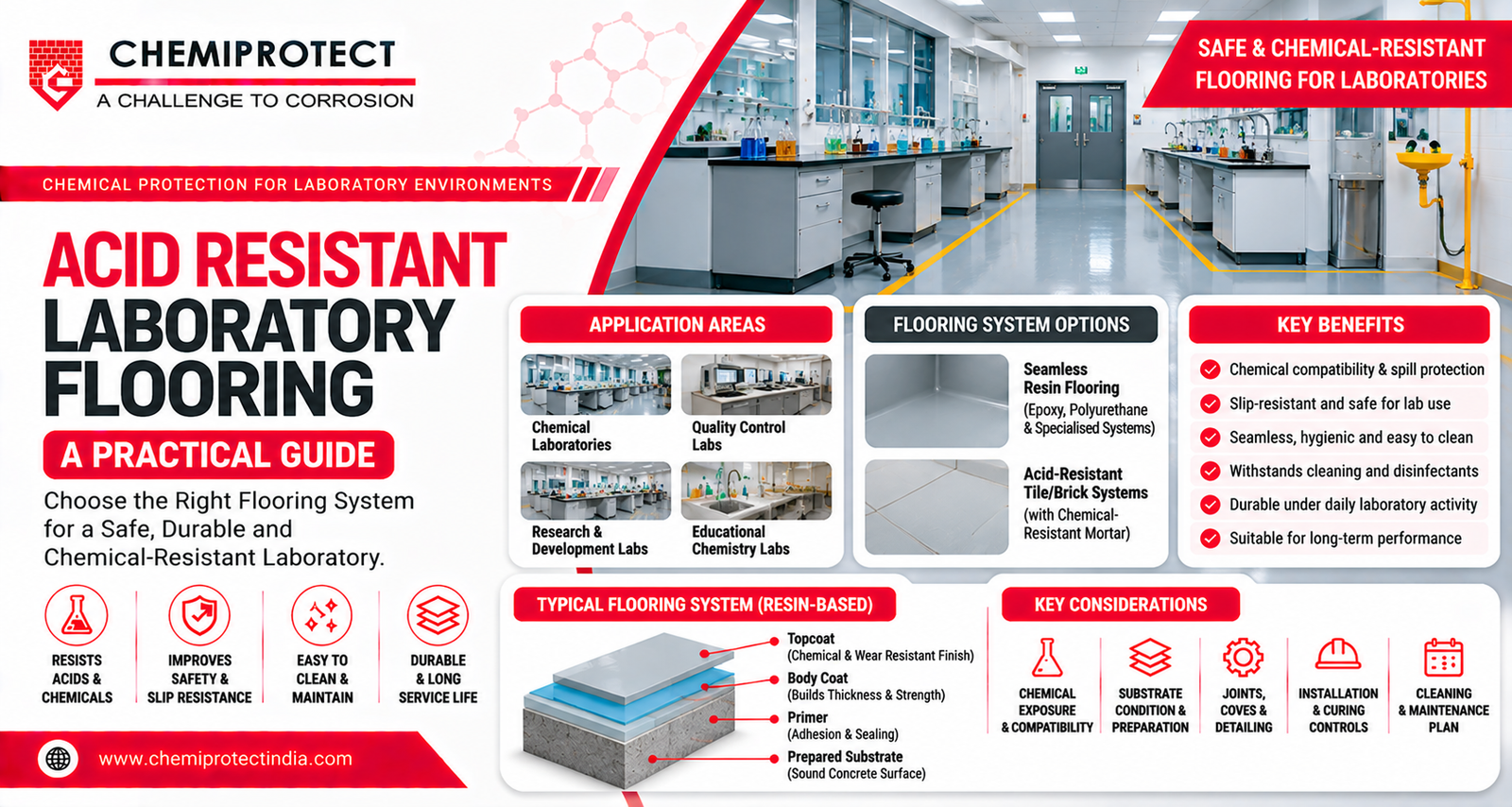
A guide to acid resistant laboratory
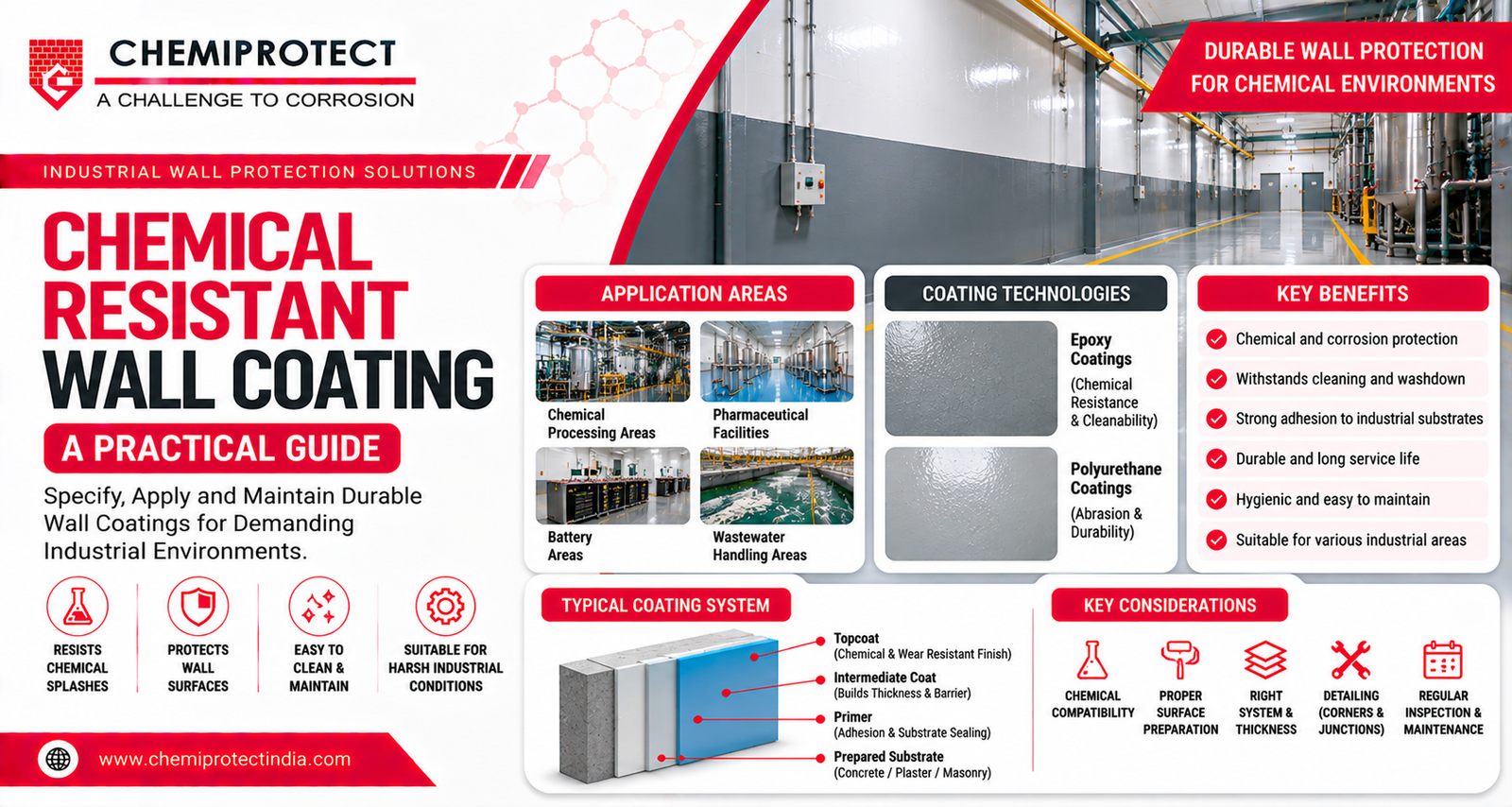
Learn to specify chemical resistant wall
Connect Now