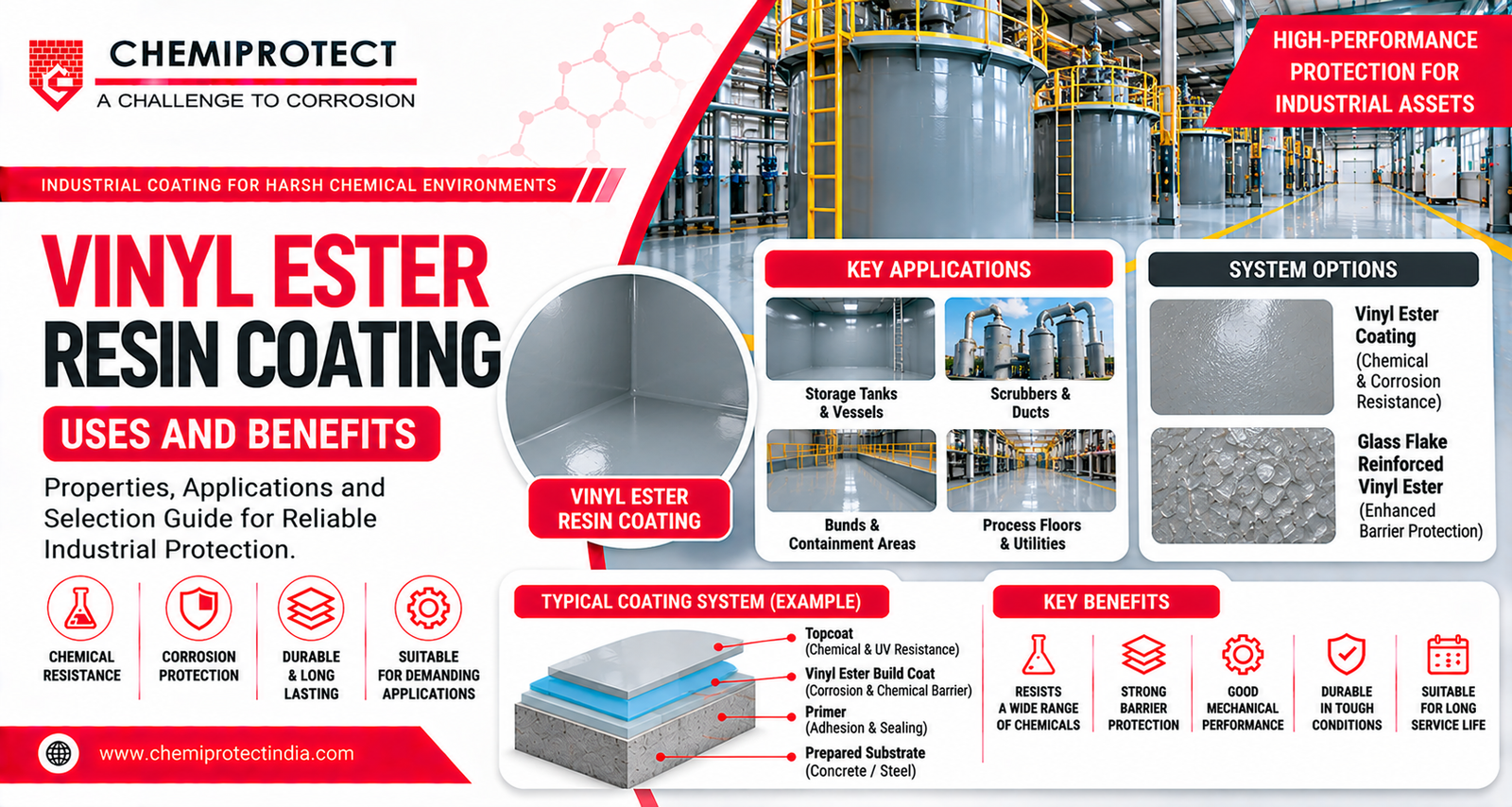
Vinyl Ester Resin Coating: Properties, Benefits and Industrial Uses
Discover vinyl ester resin coating applications,
Industrial structures often need protection from both water ingress and chemical exposure. These risks can overlap in process areas, utility spaces, chemical storage zones, wastewater facilities and manufacturing buildings. Ordinary waterproofing may prevent water penetration but may not tolerate aggressive liquids, cleaning chemicals or chemical-laden washdown. Chemical resistant waterproofing must therefore be selected according to the substances involved, the structure’s movement and the route by which liquids may reach vulnerable materials. A review of industrial chemical protection solutions can help connect the selected surface system to the actual process environment.
Conventional waterproofing systems are generally designed around water exposure, while industrial environments may introduce acids, alkalis, salts, oils, solvents or process mixtures. A membrane that performs well under rainwater or clean-water exposure may soften, swell, crack or lose adhesion when exposed to a different chemical. The term waterproof does not automatically mean chemically resistant. The suitability of industrial waterproofing systems should be confirmed against the site’s actual operating conditions.
Industrial protection needs a defined performance brief. Determine whether the system will face standing liquid, intermittent splashes, washdown, vapour, hydrostatic pressure or immersion. Identify whether the liquid is chemically aggressive and whether it may collect at joints or penetrations. The most appropriate solution may combine waterproofing with a chemical-resistant top layer, a reinforced lining or a separate containment detail.
Review the asset to be protected: concrete slab, basement, retaining wall, bund, roof, service trench, tank surround or process-area floor. Record the substrate condition, crack pattern, joints, drainage, water pressure and access for installation. Determine whether moisture is entering from the outside, rising through the structure or arriving from process operations. The source of moisture must be understood before selecting a membrane.
Prepare a chemical exposure schedule for each area. Include chemical identity, concentration, temperature, contact duration, cleaning agents and spill likelihood. Consider whether the structure will be exposed to one substance or several in sequence. Also assess mechanical damage from traffic, equipment, sharp edges and maintenance activity. These factors influence whether the waterproofing layer needs protection from above or reinforcement.
Depending on the application, options may include liquid-applied resin systems, sheet membranes, cementitious materials or multi-layer protective assemblies. Each has a different installation method and performance profile. Liquid-applied systems can help detail complex geometry, while sheet membranes may suit areas where consistent factory thickness is important. Cementitious systems may be considered for selected damp substrates, but chemical resistance must be confirmed. Review the available chemical-resistant membrane systems against the specified exposure before finalising the design.
Where chemicals can contact the finished surface, the exposed layer must be compatible with the liquid and the expected duration of contact. A waterproof membrane beneath an incompatible finish does not create a reliable chemical barrier. Confirm compatibility between primer, membrane, reinforcement, topcoat, sealant and repair materials. Chemiprotect’s [waterproofing and construction chemical solutions] can be reviewed as part of a broader system-selection discussion.
Water and chemicals frequently exploit discontinuities rather than passing directly through an intact surface. Construction joints, movement joints, pipe sleeves, drains, anchor points and wall-floor junctions should be identified on drawings. Each needs a detail compatible with the selected system and the expected movement. A rigid coating should not be expected to bridge an active joint unless it has been designed and tested for that purpose.
Where cracks are present, determine whether they are dormant or moving. Repair methods should match the cause and the waterproofing design. At penetrations, coordinate sleeves, flanges and sealants so that the membrane can be terminated continuously. Avoid leaving exposed membrane edges where liquids can travel behind the system. A carefully detailed interface is often more important than adding extra coating thickness to an otherwise weak junction.
Prepare the substrate to the product requirements. Remove laitance, loose concrete, dust, oil and other contaminants. Repair voids and sharp irregularities that could cause thin spots or puncture a membrane. Check moisture and environmental conditions, and confirm that the surface is suitable for the chosen material. Do not apply a system over unresolved leaks or unstable substrate defects.
Follow the approved method statement for mixing, application rate, layer thickness, reinforcement, overlap, curing and testing. Protect the installation from rain, dust, traffic and damage while it cures. Where a protective screed or finish is required, ensure it is compatible and does not puncture or debond from the waterproofing layer. Record inspection results before the work is concealed.
Testing should be appropriate to the system and project risk. Water testing may be suitable for certain waterproofing applications, while thickness, adhesion or holiday checks may be relevant to resin-based systems. Chemical exposure testing should not be improvised on a live structure. Define the acceptance method with the designer and supplier before work starts, including any limitations on test duration or pressure.
After commissioning, inspect drainage, joints, terminations and areas exposed to chemical handling. Keep the surface clean using approved methods and repair damage promptly. If a leak or chemical ingress occurs, identify the pathway before patching. Repeated failure at the same location may indicate movement, poor detailing or a mismatch between the system and the exposure. Maintenance records help improve future specifications.
Waterproofing and chemical resistance should be coordinated with process containment, drainage, ventilation and maintenance planning. A floor may need to direct spills towards a collection point, while a bund must retain liquids without allowing leakage through joints. These requirements should be developed with process engineers and safety personnel, not left solely to the finishing contractor.
Before procurement, prepare drawings and schedules that show substrates, chemical zones, joints, terminations, thicknesses and testing requirements. Ask suppliers to confirm system compatibility in writing. Include installer qualifications, inspection hold points and repair materials in the specification. This creates a practical basis for comparing bids and reduces the risk of treating waterproofing and chemical protection as unrelated tasks.
One mistake is assuming that a waterproof membrane is automatically resistant to process chemicals. Another is selecting a system without checking water pressure direction, substrate moisture, movement joints and the compatibility of protective layers.
Do not cover the membrane before required inspections are complete. Avoid patching recurring leaks without identifying the source, movement or weak interface responsible for the failure.
Chemical resistant waterproofing should be designed around both water movement and the chemicals that may contact the structure. Correct system selection, joint detailing, installation controls and inspection help create a more dependable protective assembly. For industrial protection requirements, consult the Chemiprotect Engineers website and review the proposed system against the site’s exposure profile.
When used with chemical resistant masonry units and the proper membrane MIPRO-VE will protect concrete and steel sub base from chemical attacks and physical abuse. MIPRO-VE is silica filled vinyl ester mortar supplied in two parts .
Discover vinyl ester resin coating applications,
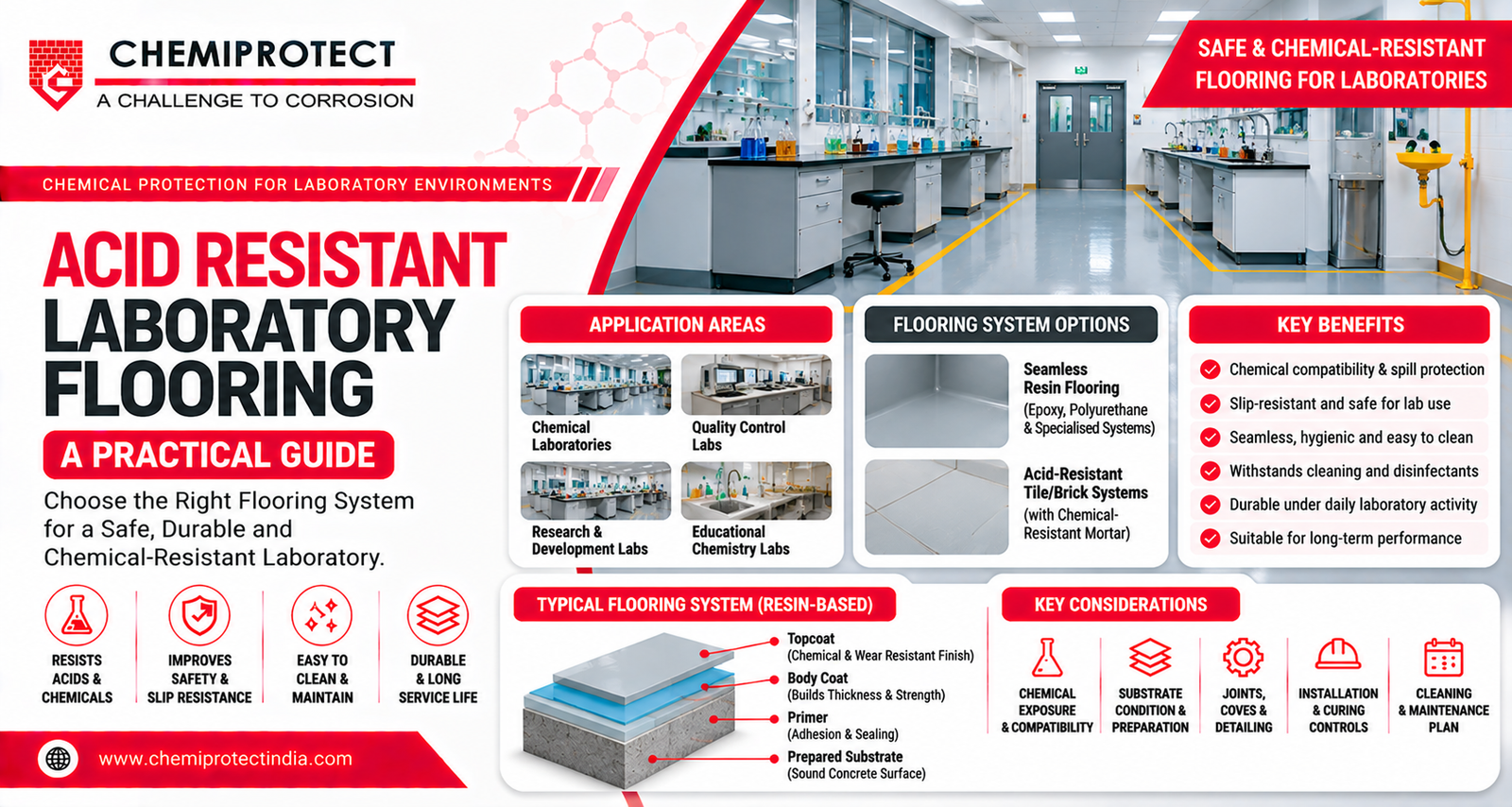
A guide to acid resistant laboratory
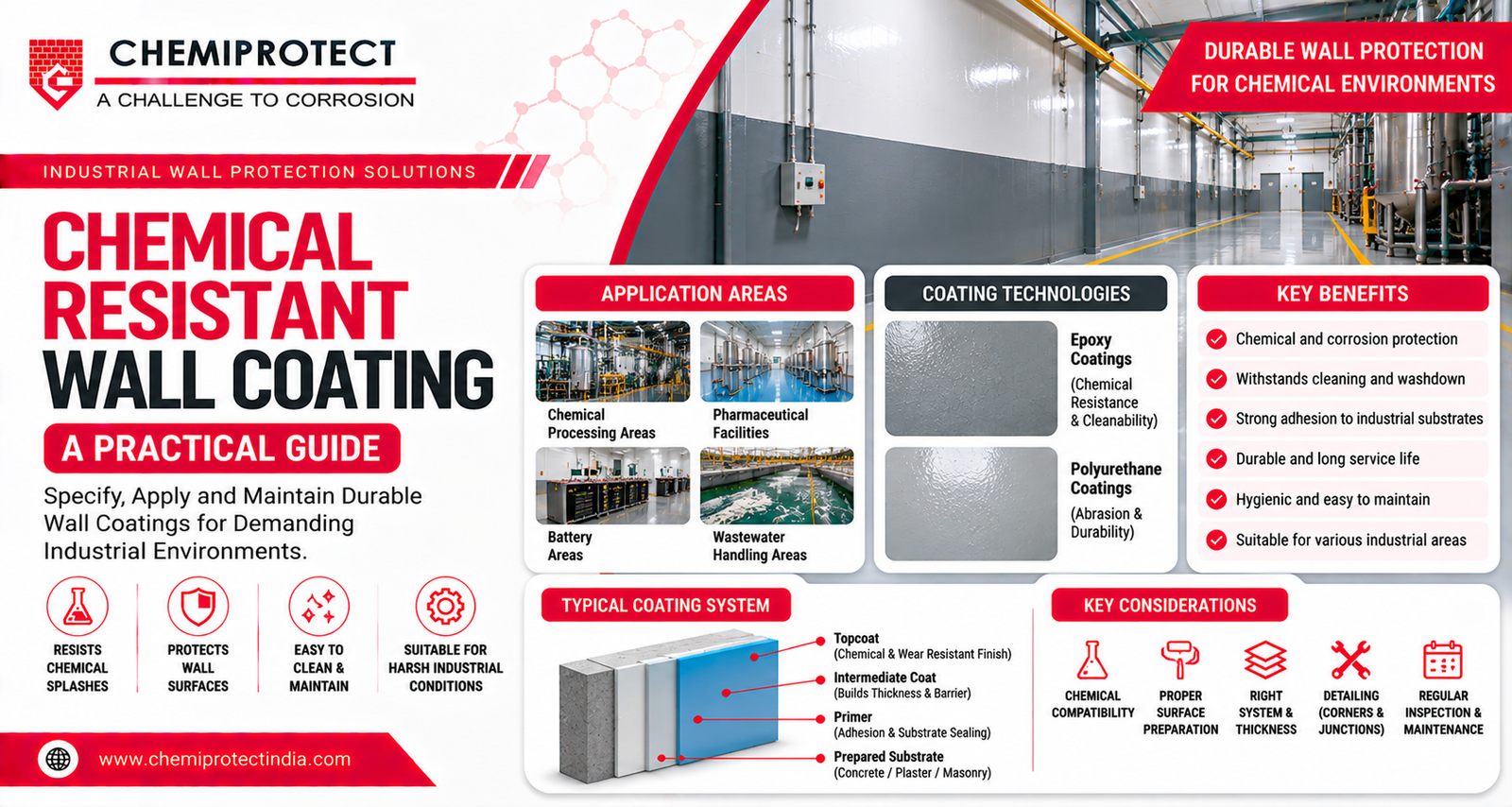
Learn to specify chemical resistant wall
Connect Now