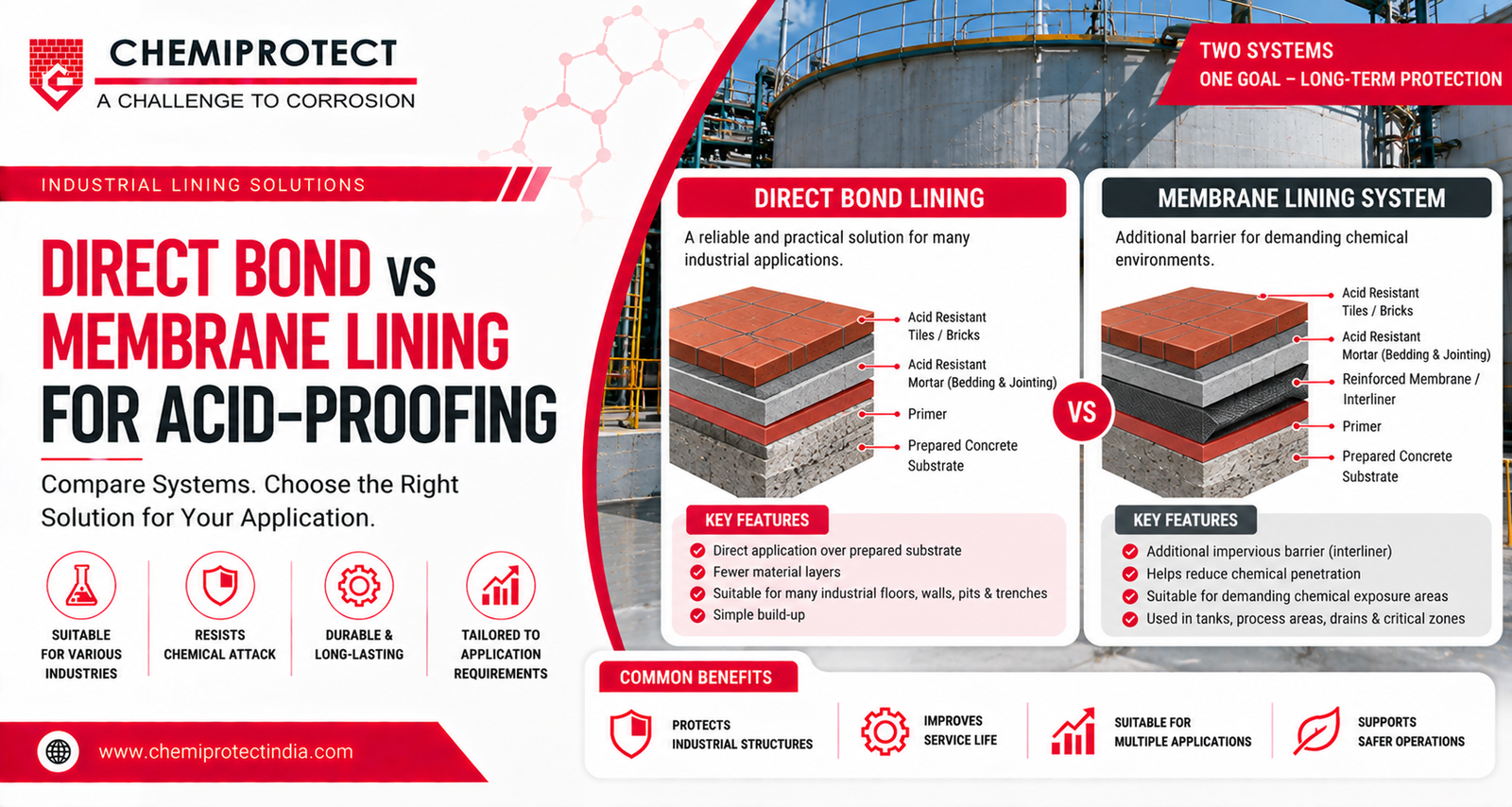
Acid Resistant Lining for Chemical Tanks – Benefits, Applications and Selection Guide
Acid Resistant Lining for Chemical Tanks – Benefits, Applications and Selection Guide
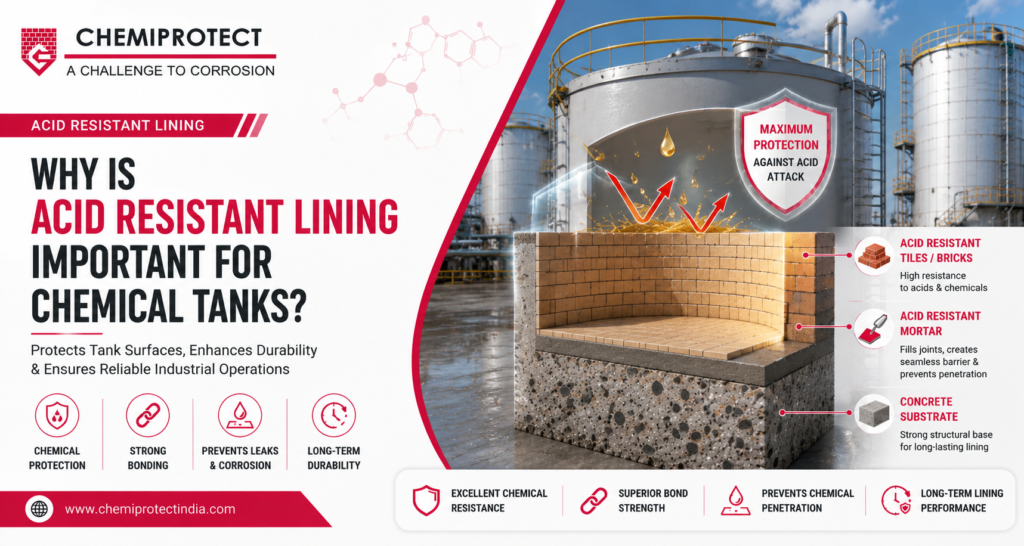
Chemical storage and processing tanks are regularly exposed to aggressive substances that can attack metal, concrete and other construction materials. Acids, alkalis, solvents and chemical solutions can gradually damage tank surfaces, leading to corrosion, leakage, contamination and costly maintenance.
Acid Resistant Lining for Chemical Tanks provides a protective barrier between the tank substrate and the chemicals being stored or processed. A correctly selected lining can help protect the underlying surface from chemical attack and improve the service life of industrial tanks.
Chemiprotect Engineers provides acid-resistant solutions for industrial applications, including acid-resistant tiles, bricks and mortar, glass flake lining, epoxy and PU-based systems.
What Is Acid Resistant Tank Lining?
Acid Resistant Tank Lining is a protective layer applied to the internal or external surfaces of tanks to reduce damage caused by aggressive chemical exposure.
The lining system is selected according to factors such as the chemical being stored, concentration, temperature, exposure conditions and substrate.
Depending on the application, industrial tank protection may involve resin-based coatings, glass flake systems, acid-resistant tiles, bricks and chemical-resistant mortars.
The purpose is to create a durable barrier that separates the tank structure from the corrosive environment.
Why Do Chemical Tanks Need Protective Lining?
Chemical tanks can experience continuous or intermittent exposure to aggressive substances. Without suitable protection, the tank material may gradually deteriorate.
Corrosion and chemical attack can lead to:
- Surface deterioration
- Loss of structural integrity
- Leakage
- Contamination
- Increased maintenance
- Reduced equipment service life
A properly designed lining system helps reduce direct contact between the chemical and the underlying substrate.
How Does Acid Resistant Lining Work?
An acid-resistant lining creates a protective barrier over the tank surface. The selected material is designed to withstand the chemical environment for which it is specified.
Depending on the system, the barrier may resist chemical penetration, moisture, abrasion and other operating stresses.
The performance of the lining depends on more than the material itself. Surface preparation, application method, thickness, curing and compatibility with the chemical environment are all important considerations.
Key Benefits of Acid Resistant Tank Lining
1. Protection Against Chemical Attack
The primary purpose of a chemical-resistant lining is to protect the underlying tank surface from aggressive chemicals.
A suitable lining can help reduce direct chemical contact and minimise deterioration caused by acids and other corrosive substances.
2. Improved Equipment Life
Chemical attack can shorten the useful life of tanks and process equipment. Protective lining helps create an additional layer of defence, potentially reducing surface deterioration and maintenance requirements.
3. Reduced Corrosion Risk
For metallic tanks and equipment, chemical exposure can accelerate corrosion. A suitable lining can act as a barrier between the metal surface and corrosive substances.
4. Resistance to Industrial Conditions
Chemical tanks may also experience abrasion, temperature changes, splashing and mechanical wear. The lining system should therefore be selected according to the complete operating environment rather than chemical exposure alone.
Common Applications of Chemical Tank Lining
Acid-resistant lining systems can be considered for a range of industrial environments.
Acid Storage Tanks
Tanks used for storing acids require materials capable of handling the specific chemical and concentration involved. A suitable lining helps protect the tank substrate from direct exposure.
Chemical Processing Tanks
Processing tanks can experience repeated chemical exposure during industrial operations. Lining systems can provide additional protection where aggressive chemicals are part of the process.
Effluent and Waste Treatment Tanks
Industrial wastewater may contain corrosive chemicals and compounds. Appropriate lining can help protect tank surfaces from chemical attack and deterioration.
Pickling and Chemical Processing Areas
Metal treatment and chemical processing operations can expose equipment and structures to acidic environments. Acid-resistant systems can be used where appropriate to protect surfaces.
Choosing the Right Acid Proof Lining
Selecting an Acid Proof Lining requires careful evaluation of the operating conditions.
Important factors include:
- Type of chemical
- Chemical concentration
- Operating temperature
- Exposure duration
- Immersion conditions
- Substrate type
- Abrasion requirements
- Required service life
- Application conditions
Different chemicals can behave differently depending on concentration and temperature. Therefore, a lining suitable for one tank may not necessarily be appropriate for another.
Types of Acid Resistant Lining Systems
Glass Flake Lining
Glass flake systems combine resin with glass flakes to create a barrier against chemical penetration. The layered structure can provide chemical and corrosion resistance along with resistance to abrasion.
Chemiprotect Engineers offers MIPROGLASS 101 glass flake-filled coating systems based on different resin technologies for suitable industrial applications.
Acid Resistant Tiles and Bricks
Acid-resistant tiles and bricks can be used to provide durable protection in environments involving aggressive chemical exposure. These systems are typically installed using suitable chemical-resistant mortars.
They can be considered for areas where mechanical durability and chemical resistance are important.
Epoxy Systems
Epoxy-based systems can provide chemical resistance and strong adhesion when correctly selected and applied. Their suitability depends on the chemical environment, temperature and required performance.
PU Systems
Polyurethane systems can provide protection and durability for selected industrial applications. The correct system should be chosen according to the required chemical and mechanical resistance.
Importance of Surface Preparation
Surface preparation is one of the most important stages of any lining project.
The substrate should be assessed for corrosion, contamination, moisture, damaged areas and other conditions that could affect adhesion.
Poor surface preparation can reduce the effectiveness of even a high-performance lining system. Appropriate preparation creates a suitable foundation for the lining and helps improve its adhesion and service performance.
The exact preparation method should follow the requirements of the selected lining system and project conditions.
Application and Curing
Correct application is essential for achieving reliable lining performance.
The application method, number of coats, thickness and curing period depend on the selected material. Environmental conditions such as temperature and humidity may also influence curing.
For industrial applications, lining installation should follow the manufacturer’s technical recommendations and appropriate quality-control procedures.
Why Choose Chemiprotect Engineers?
Chemiprotect Engineers provides corrosion and chemical-resistant solutions for industrial environments. Its product range includes acid-resistant tiles, bricks and mortar, glass flake lining, epoxy and PU-based systems.
The availability of different technologies allows lining solutions to be considered according to the substrate, chemical exposure and operating conditions.
For chemical tank protection, selecting the appropriate system and applying it correctly are essential to achieving reliable long-term performance.
Conclusion
Acid Resistant Lining for Chemical Tanks provides an important protective barrier against aggressive chemicals and corrosive operating conditions. By separating the chemical environment from the underlying tank surface, a suitable lining can help reduce deterioration, corrosion and maintenance requirements.
The correct solution depends on several factors, including chemical type and concentration, temperature, exposure conditions, substrate and mechanical requirements. Options may include glass flake systems, acid-resistant tiles and bricks, epoxy and PU-based solutions.
Surface preparation, application, thickness and curing are equally important to the overall performance of the lining.
Chemiprotect Engineers offers a range of chemical-resistant solutions designed for different industrial requirements, helping businesses select suitable protection for tanks, process equipment and other exposed surfaces.
FAQs
1. What is acid resistant lining for chemical tanks?
Acid resistant lining is a protective layer applied to tank surfaces to reduce damage caused by acids, alkalis, solvents, and other aggressive chemicals.
2. Why do chemical tanks need acid resistant lining?
Chemical tanks are continuously exposed to corrosive substances that can cause surface deterioration, corrosion, leakage, and reduced equipment life. A suitable lining helps protect the underlying tank structure.
3. What types of acid resistant lining systems are available?
Common systems include glass flake lining, acid resistant tiles and bricks, epoxy systems, and PU-based systems. The suitable system depends on the chemical, concentration, temperature, substrate, and operating conditions.
4. How do you select the right acid proof lining for a chemical tank?
Selection depends on factors such as chemical type and concentration, operating temperature, exposure duration, immersion conditions, substrate type, abrasion requirements, and required service life.
5. Why is surface preparation important before applying tank lining?
Proper surface preparation helps ensure good adhesion and reliable lining performance. The substrate should be checked for corrosion, contamination, moisture, damaged areas, and other conditions that may affect the lining.
Let’s Blog
Latest Blog
When used with chemical resistant masonry units and the proper membrane MIPRO-VE will protect concrete and steel sub base from chemical attacks and physical abuse. MIPRO-VE is silica filled vinyl ester mortar supplied in two parts .
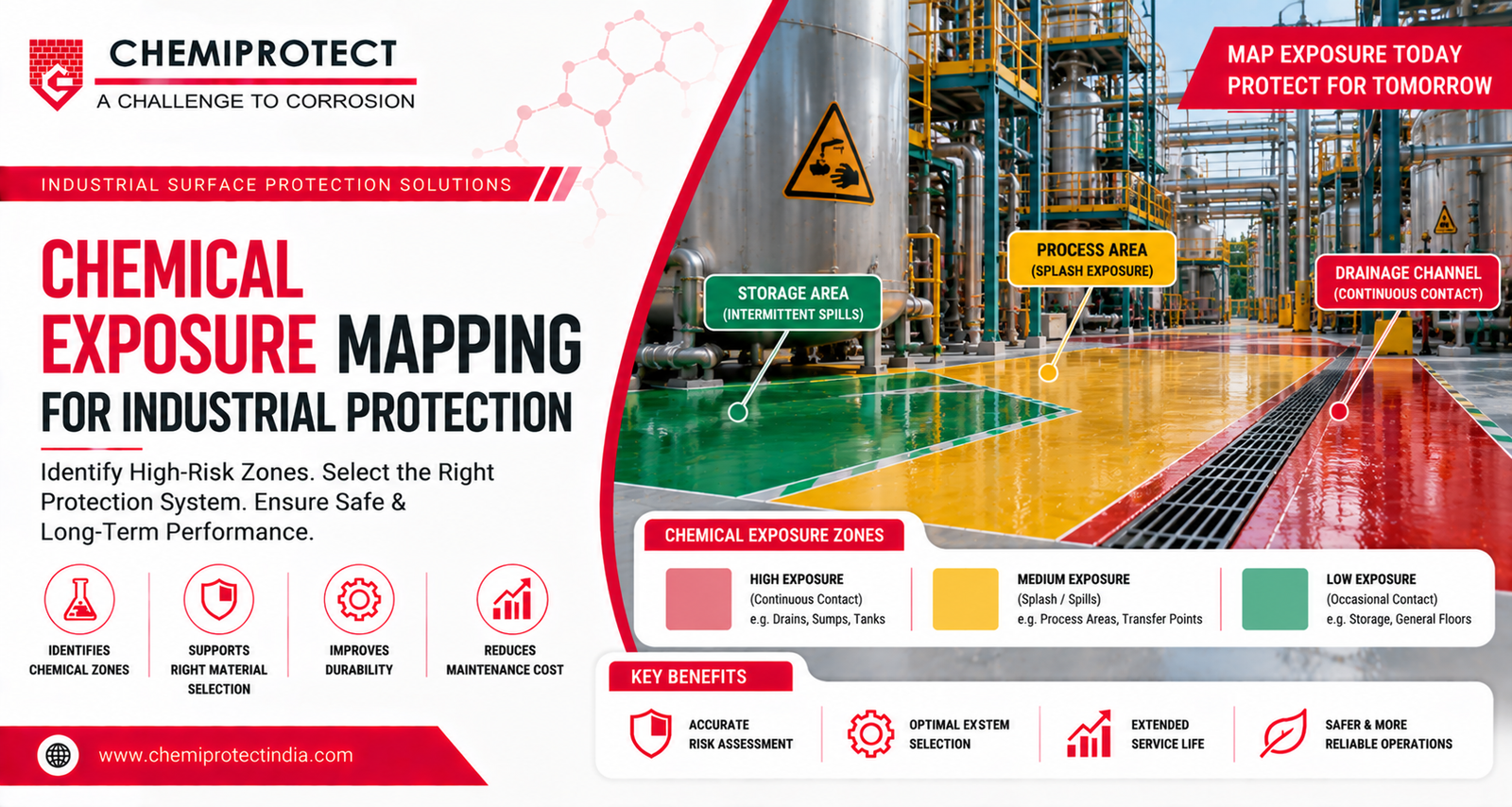
Chemical Exposure Mapping for Industrial Protection
October 6, 2026
What Is Chemical Exposure Mapping? Industrial
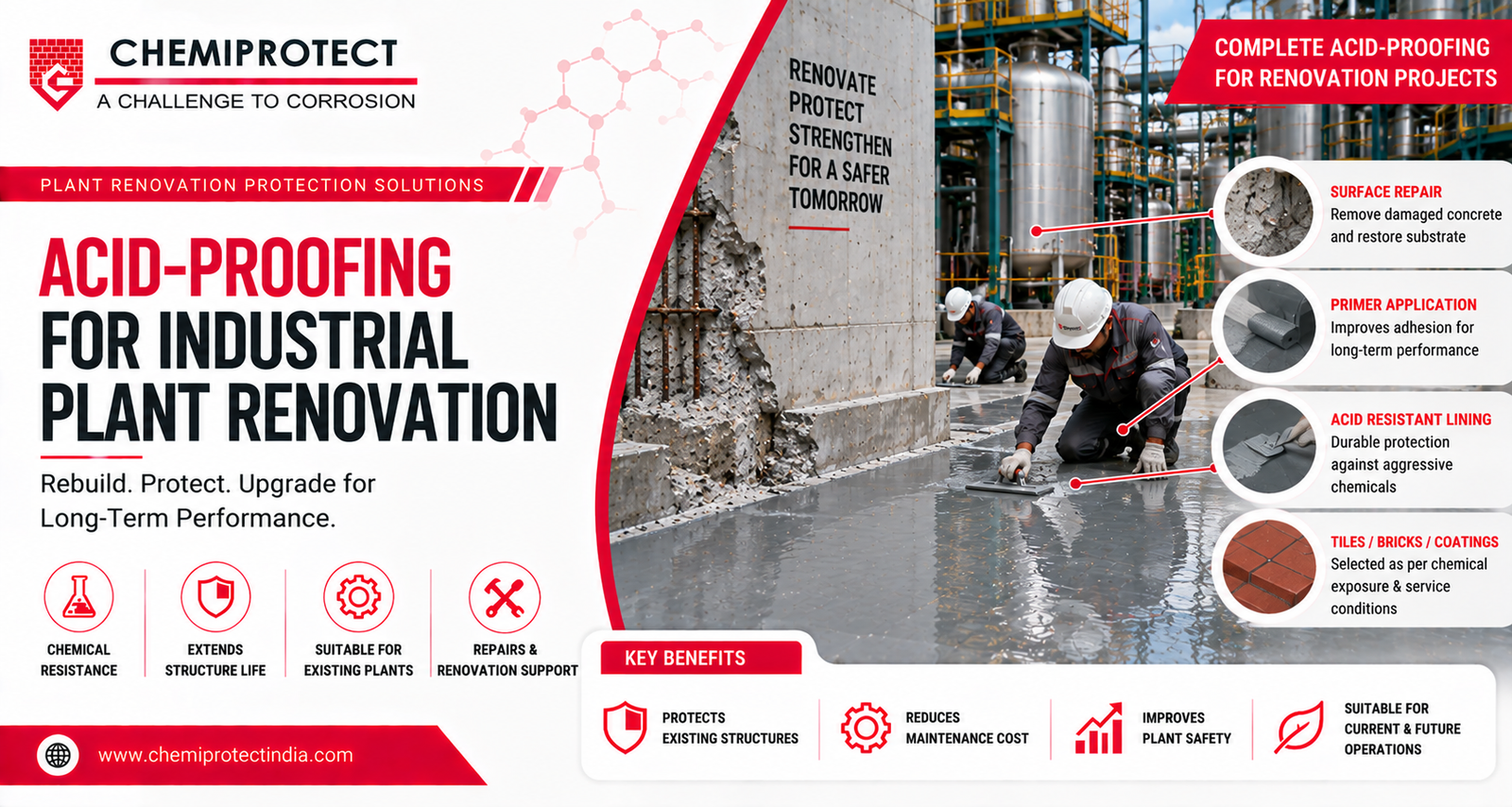
Acid-Proofing for Industrial Plant Renovation
October 3, 2026
Why Acid-Proofing Needs a Renovation-Specific Approach