Glass Flake Coating for Corrosion Protection – Benefits and Applications
Glass Flake Coating for Corrosion Protection – Benefits and Applications
Corrosion is a major concern for industries where steel, concrete and process equipment are exposed to chemicals, moisture and harsh operating conditions. Over time, these factors can damage surfaces, reduce equipment life and increase maintenance requirements.
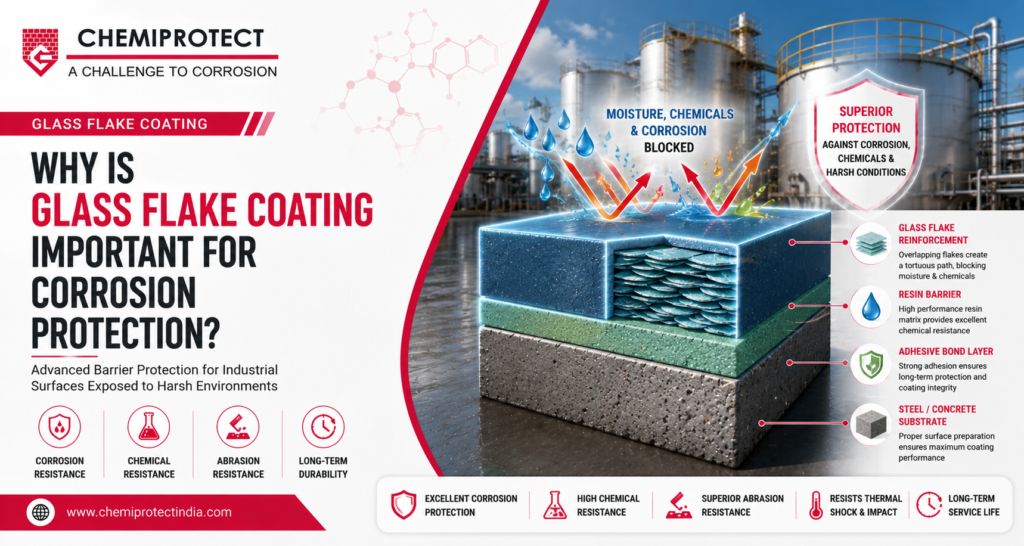
Glass Flake Coating for Corrosion Protection provides a durable barrier between the substrate and the surrounding environment. The coating contains glass flakes within a resin system. During application, the flakes align within the coating to create a layered barrier that helps resist chemical penetration, corrosion and abrasion.
Chemiprotect Engineers offers MIPROGLASS 101 glass flake-filled coatings based on different resin systems for protecting steel and concrete surfaces in demanding industrial environments.
What Is Glass Flake Coating?
Glass Flake Coating is a resin-based protective coating reinforced with glass flakes. Depending on the application, different resin technologies can be selected to provide the required chemical and mechanical resistance.
The glass flakes form overlapping layers within the resin. This increases the path that moisture and chemicals must travel before reaching the underlying substrate.
MIPROGLASS 101 is available in different resin systems, including isophthalic polyester, bisphenol polyester, vinyl ester, superior-grade vinyl ester and epoxy.
How Does Glass Flake Coating Protect Against Corrosion?
When applied to a properly prepared surface, the glass flakes create a dense barrier within the resin. This structure helps reduce the penetration of moisture and aggressive chemicals.
The coating can also provide resistance against abrasion, physical wear and thermal shock, making it suitable for industrial environments where surfaces experience multiple forms of stress.
Key Benefits of Glass Flake Coating
Corrosion Resistance
The primary purpose of a glass flake system is to protect substrates from corrosive conditions. Its layered structure helps limit the penetration of moisture and chemicals.
Chemical Resistance
Industrial surfaces may come into contact with acids, alkalis, solvents and other aggressive substances. The appropriate resin grade can be selected according to the required chemical resistance and service conditions.
Abrasion Resistance
Industrial equipment can experience mechanical wear from materials, equipment movement and repeated operations. Glass flake reinforcement contributes to resistance against abrasion and surface wear.
Physical and Thermal Resistance
Industrial coatings may also experience impact, handling and temperature changes. Glass flake systems provide resistance to physical abuse and thermal shock in suitable applications.
Applications of Glass Flake Coating
Glass flake systems can be used across industries where corrosion and chemical exposure are major concerns.
Chemical Storage Tanks
Tanks used for storing acids require materials capable of handling the specific chemical and concentration involved. A suitable lining helps protect the tank substrate from direct exposure.
Process Equipment
Process equipment may experience chemical exposure, moisture, abrasion and temperature variations. Glass flake coatings can be selected according to the operating environment.
Steel Structures
Steel structures exposed to atmospheric conditions can develop corrosion. Protective coatings help isolate the steel from moisture and other corrosive elements.
Concrete Surfaces
Concrete may also require protection when exposed to chemicals or harsh industrial environments. MIPROGLASS 101 is designed for suitable applications on both steel and concrete substrates.
Tanks and Process Plants
Glass flake systems can be used on tanks and process plants exposed to chemical splashing and spillage. Resin selection should be based on the specific chemical and operating conditions.
Glass Flake Coating vs Conventional Coatings
Conventional protective coatings create a barrier over industrial surfaces, while glass flake technology adds reinforcement through its layered structure.
The overlapping glass flakes create a longer path for moisture and chemicals to pass through the coating. This can improve resistance to permeation while also supporting abrasion and physical durability.
However, coating selection should always consider the actual service environment, including chemical exposure, temperature, substrate condition and mechanical requirements.
Importance of Resin Selection
The resin system plays an important role in determining coating performance. Different industrial environments require different levels of chemical and mechanical resistance.
MIPROGLASS 101 is available in resin technologies including:
- Isophthalic polyester
- Bisphenol polyester
- Vinyl ester
- Superior-grade vinyl ester
- Epoxy
- Hybrid epoxy
The appropriate system should be selected according to the chemical exposure and operating conditions of the application.
Application of Glass Flake Coating
Proper application is essential for achieving the intended performance of a protective coating.
MIPROGLASS 101 systems can be applied by brush or spray and are designed to cure at ambient temperature. The recommended coating thickness is approximately 400–500 microns, achieved using one primer and two to four coats depending on the application environment.
Surface preparation is equally important. Contamination, corrosion, moisture and poor surface condition can affect adhesion and coating performance.
Industrial application should therefore follow the manufacturer’s technical recommendations and project requirements.
Why Does Surface Preparation Matter?
A high-performance coating can still fail prematurely if the underlying surface is not properly prepared.
Before application, the substrate should be assessed for contamination, corrosion, moisture and other conditions that could affect adhesion.
The correct primer and coating system should then be selected according to the substrate and operating environment. Proper preparation provides a suitable foundation for long-term coating performance.
Choosing the Right Corrosion Protection Coating
Selecting a Corrosion Protection Coating requires consideration of several factors, including:
- Type of substrate
- Chemical exposure
- Operating temperature
- Immersion conditions
- Abrasion requirements
- Physical exposure
- Required coating thickness
- Application method
- Expected service conditions
A coating exposed to continuous chemical immersion may require a different resin system from one used for atmospheric corrosion protection.
Why Choose Chemiprotect Engineers?
Chemiprotect Engineers provides corrosion-resistant solutions for industrial applications. Its MIPROGLASS 101 range includes glass flake-filled coating systems based on different resin technologies.
These systems are designed for suitable steel and concrete applications involving corrosion, chemical exposure, abrasion and physical stress.
The availability of multiple resin grades allows the coating system to be selected according to the specific requirements of an industrial application.
Conclusion
Glass Flake Coating for Corrosion Protection provides a durable barrier for industrial surfaces exposed to corrosion, chemicals, abrasion and demanding operating conditions. Its layered glass-flake structure helps reduce permeation while providing resistance to physical and environmental stresses.
The technology can be used for steel and concrete surfaces, tanks, process equipment and process plants where reliable surface protection is required.
Selecting the right resin system, preparing the substrate correctly and following recommended application procedures are essential for achieving the desired performance.
Chemiprotect Engineers’ MIPROGLASS 101 range provides multiple resin-based glass flake coating options that can be selected according to the requirements of industrial corrosion protection applications.
FAQs
1. What is Glass Flake Coating?
Glass Flake Coating is a resin-based protective coating reinforced with glass flakes. The overlapping flakes create a barrier that helps protect industrial surfaces from chemicals, moisture, corrosion, and abrasion.
2. How does Glass Flake Coating protect against corrosion?
The glass flakes form a dense, layered barrier within the resin, making it more difficult for moisture and aggressive chemicals to penetrate and reach the underlying substrate.
3. Where can Glass Flake Coating be used?
Glass flake systems can be used for chemical storage tanks, process equipment, steel structures, concrete surfaces, tanks, and process plants exposed to chemicals and demanding industrial conditions.
4. How do you select the right Glass Flake Coating system?
Selection depends on factors such as substrate type, chemical exposure, operating temperature, immersion conditions, abrasion requirements, coating thickness, application method, and expected service conditions.
5. Why is surface preparation important before applying Glass Flake Coating?
Proper surface preparation is essential for good adhesion and long-term coating performance. The substrate should be assessed for contamination, corrosion, moisture, and other conditions that could affect the coating.
Let’s Blog
Latest Blog
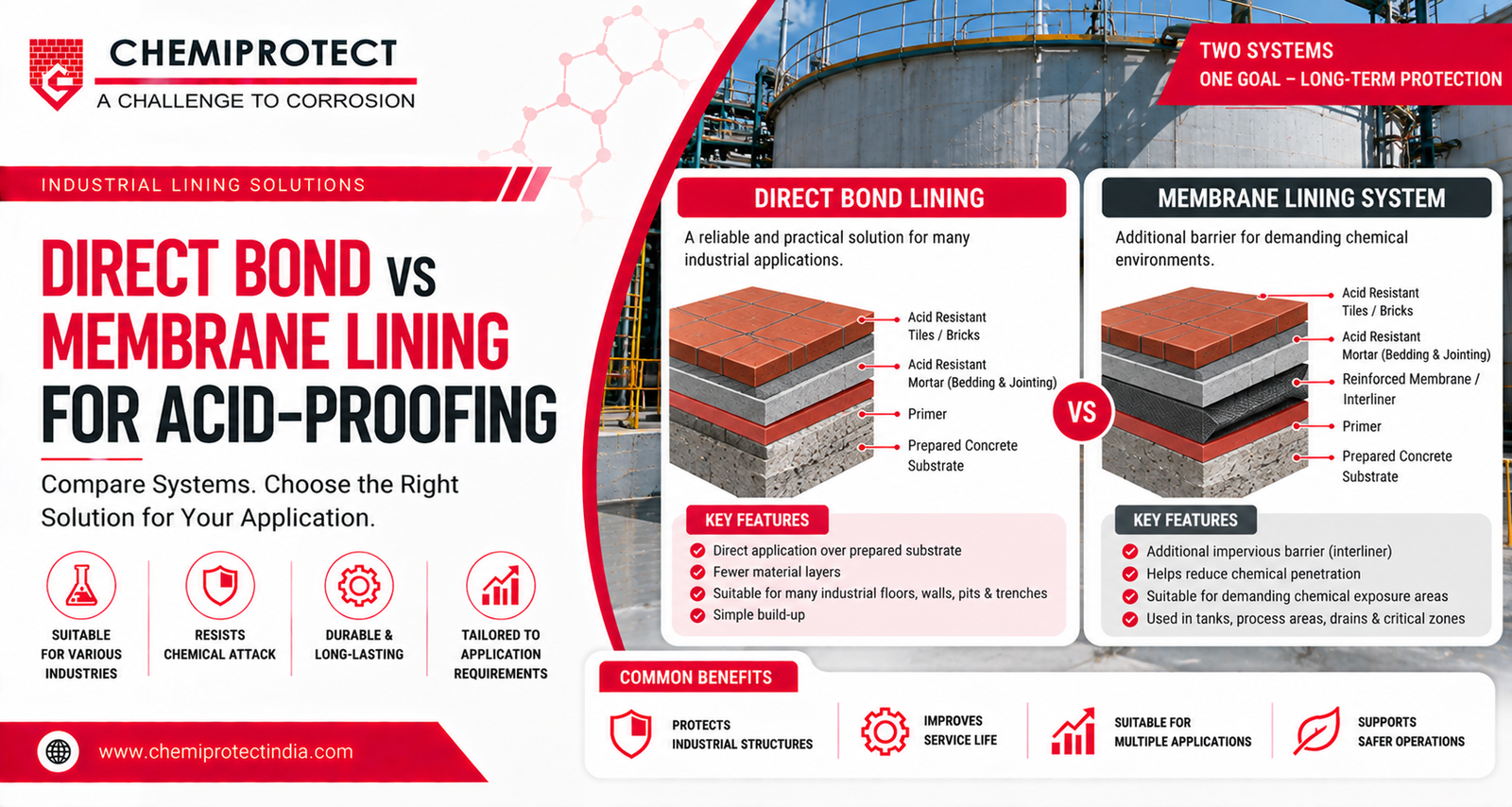
When used with chemical resistant masonry units and the proper membrane MIPRO-VE will protect concrete and steel sub base from chemical attacks and physical abuse. MIPRO-VE is silica filled vinyl ester mortar supplied in two parts .
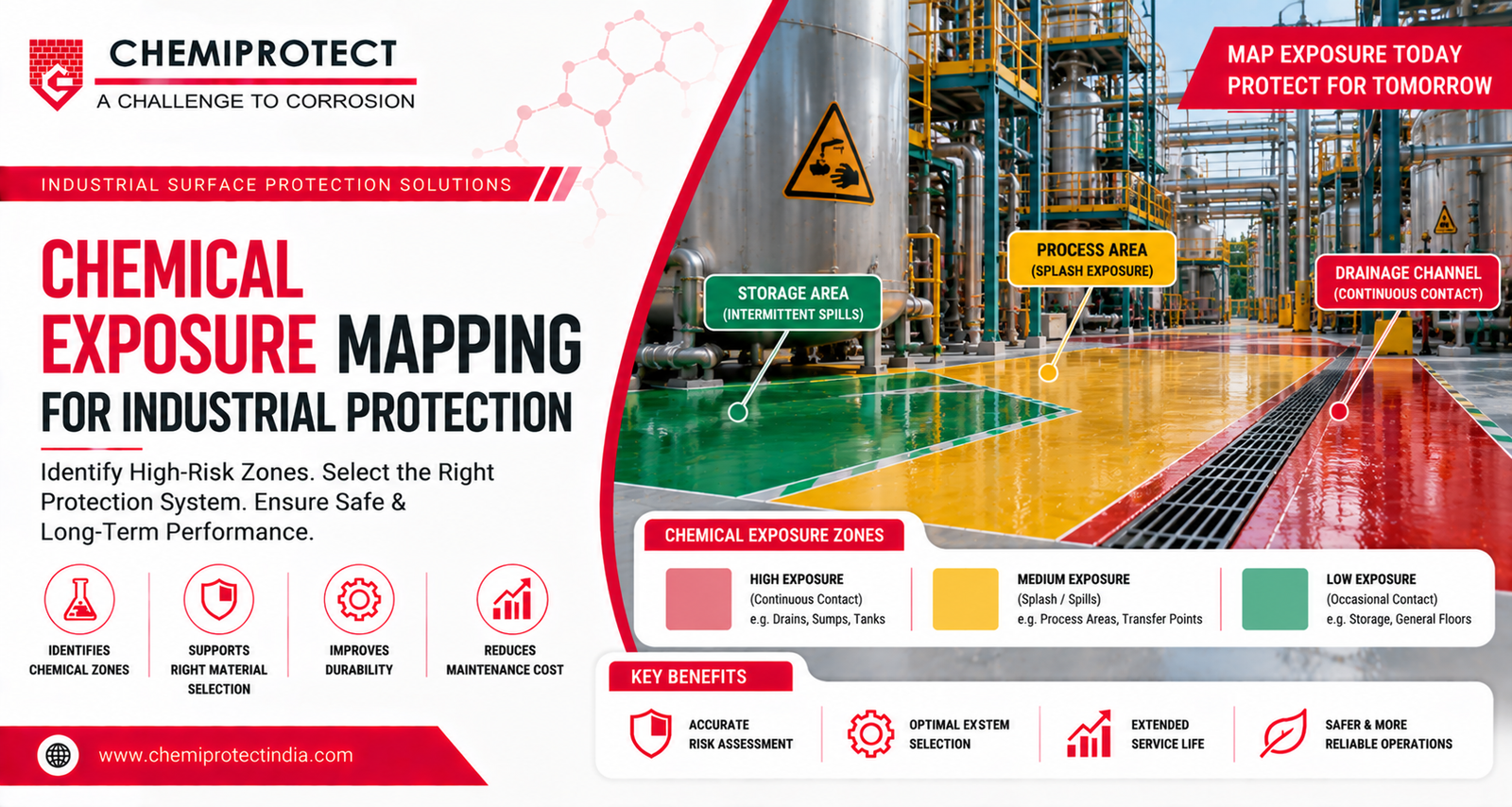
Chemical Exposure Mapping for Industrial Protection
October 6, 2026
What Is Chemical Exposure Mapping? Industrial
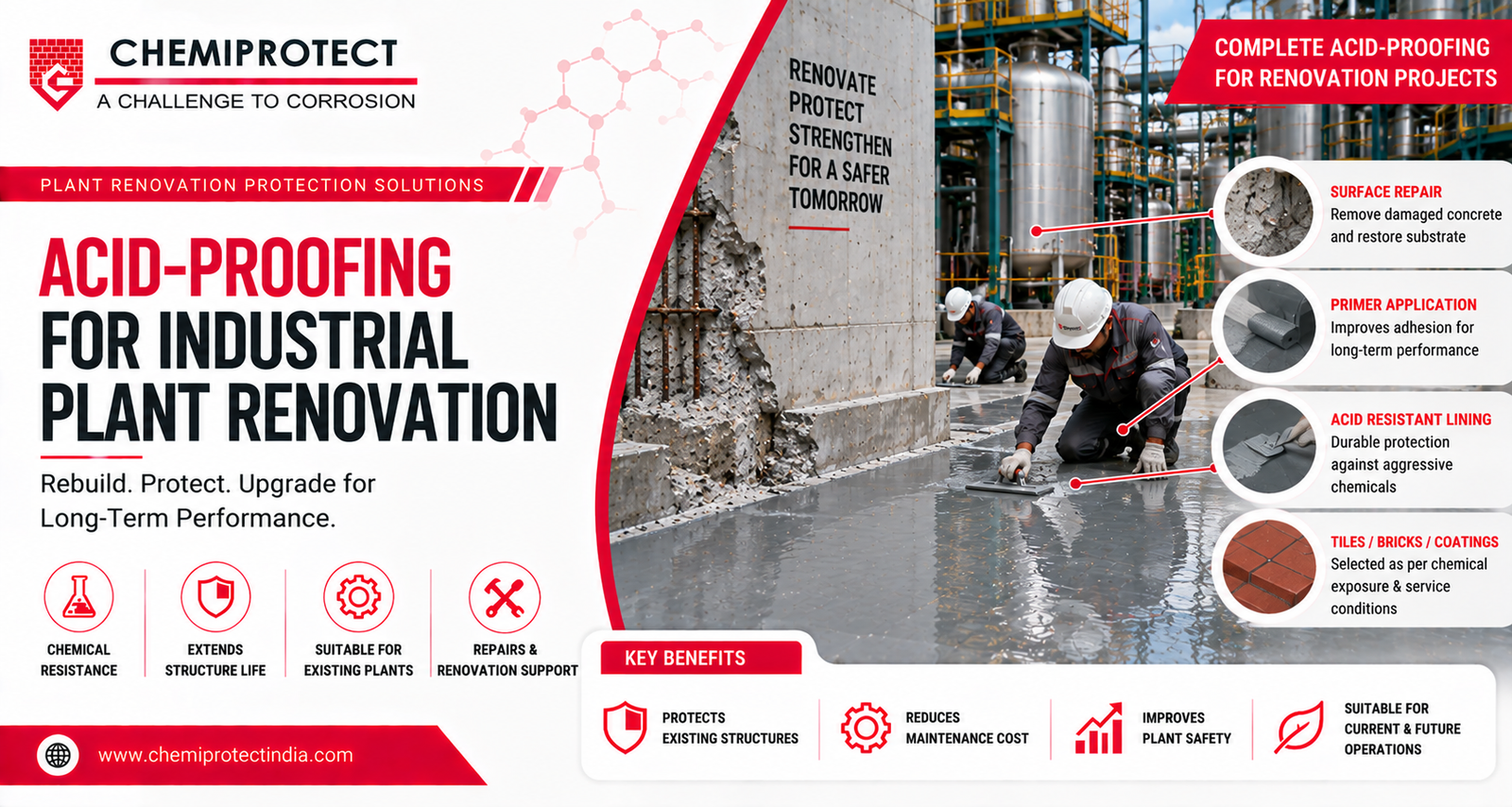
Acid-Proofing for Industrial Plant Renovation
October 3, 2026
Why Acid-Proofing Needs a Renovation-Specific Approach