Difference Between Acid Resistant Tiles and Epoxy Coating: Which One Is Right?
Difference Between Acid Resistant Tiles and Epoxy Coating: Which One Is Right?
Industrial floors and surfaces are exposed to chemicals, acids, alkalis, moisture, abrasion, heavy loads, and continuous movement. Conventional concrete may deteriorate under these conditions, making protective systems important for durability and service life.
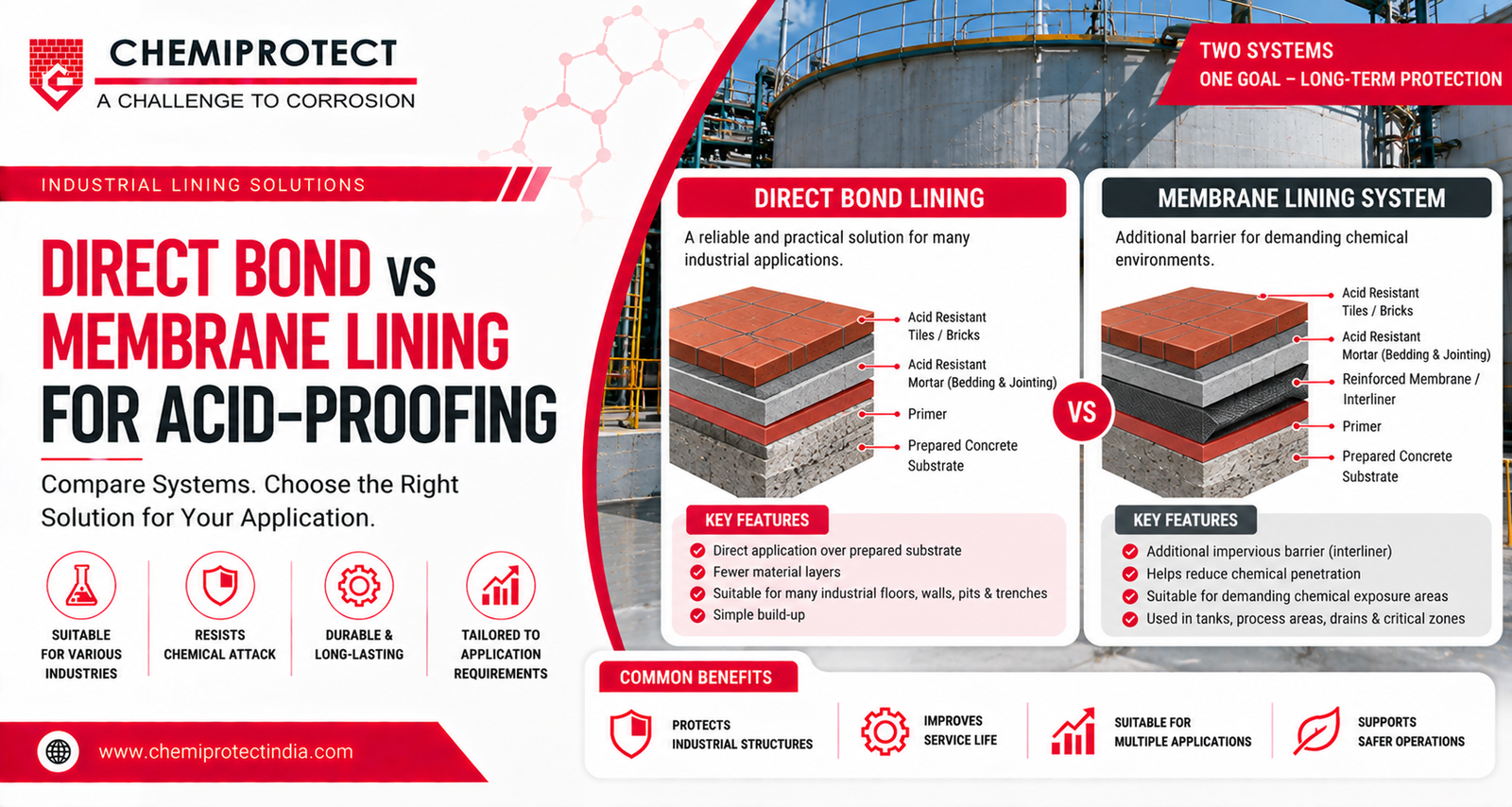
Two commonly used solutions are acid resistant tiles and epoxy coatings. Both provide surface protection, but they differ in construction, chemical resistance, installation, maintenance, and applications.
Understanding the difference between acid resistant tiles and epoxy coating can help industries select the right system according to their operating conditions and protection requirements.
What Are Acid Resistant Tiles?
Acid resistant tiles are specially manufactured tiles designed to protect surfaces exposed to acids, alkalis, and other aggressive chemicals. They are generally installed with chemical-resistant bedding and jointing mortars to create a protective lining over the substrate.
Chemiprotect Engineers offers acid and alkali-resistant unglazed clay tiles for chemically aggressive environments. These tiles are available in different sizes and thicknesses for industrial applications where resistance to corrosive substances is required.
The tiled lining creates a physical barrier between the chemical environment and the substrate and can protect floors, tanks, trenches, drains, and process areas.
What Is Epoxy Coating?
Epoxy coating is a resin-based protective system applied over a properly prepared surface, commonly concrete. Epoxy resin and hardener form a hard coating that seals the surface and protects it from moisture, chemicals, stains, abrasion, and regular industrial wear.
Epoxy systems are commonly used in factories, warehouses, laboratories, pharmaceutical facilities, workshops, and industrial areas. They can provide chemical resistance along with a smooth, easy-to-clean surface.
Key Difference Between Acid Resistant Tiles and Epoxy Coating
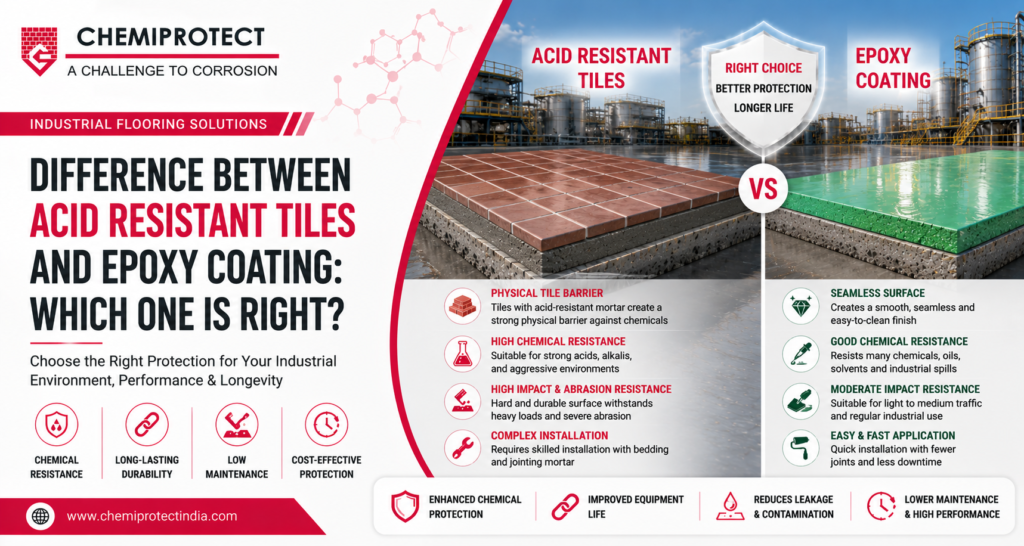
The main difference is how each system protects the substrate. Acid resistant tiles create a physical tiled lining, usually supported by chemical-resistant bedding and jointing materials. Epoxy coating creates a continuous resin-based layer directly over the prepared surface.
This difference affects installation, maintenance, mechanical performance, and suitability. 9
Chemical Resistance
Chemical resistance is an important factor when selecting a protective system. Acid resistant tiles are designed for applications involving acids, alkalis, and corrosive chemicals.
However, resistance should always be checked against the actual chemical, concentration, temperature, and exposure duration. A tile should not be selected only because it is described as acid resistant.
Epoxy coatings can also provide chemical resistance, but performance depends on the specific resin formulation and service conditions. A Chemical Resistant Epoxy Coating should therefore be selected using product-specific chemical resistance data.
Durability and Mechanical Performance
Acid resistant tiles provide a hard physical surface and can be suitable for demanding industrial environments. When properly installed, they can provide long-term protection against aggressive chemical exposure.
Epoxy coatings also provide a hard protective surface and can withstand traffic, cleaning, abrasion, and routine industrial activity when the correct system is selected.
For areas exposed to heavy impact, severe abrasion, or continuous chemical exposure, the complete system should be evaluated. Substrate preparation, lining thickness, bedding, jointing, and installation quality can influence performance.
Installation Method
Acid resistant tile systems generally involve surface preparation, primer where required, chemical-resistant bedding mortar, tile installation, and chemical-resistant jointing. Correct installation is important to prevent chemical penetration through joints or weak areas.
Epoxy coating generally involves surface preparation followed by primer and one or more coating layers. Correct mixing, application thickness, curing, and environmental conditions are important for achieving expected performance.
Both systems require proper surface preparation. Dust, oil, loose material, moisture, and other contaminants can affect adhesion.
Surface Finish and Maintenance
Epoxy coating creates a smooth and seamless surface, making it relatively easy to clean and maintain. This can be beneficial where regular washing, hygiene, and dust control are important.
Acid resistant tiles have joints between individual tiles, which require suitable chemical-resistant jointing materials. The tiled surface provides a robust finish for areas where aggressive chemical exposure is a primary concern.
Maintenance depends on operating conditions, chemical exposure, traffic, and installation quality.
When Should You Choose Acid Resistant Tiles?
Acid resistant tiles may be considered when the application requires a dedicated lining system for aggressive chemical exposure. They are commonly used in chemical plants, fertilizer facilities, pharmaceutical industries, battery manufacturing and recycling, electroplating areas, laboratories, petrochemical facilities, and other industries where corrosive substances are handled.
They can also be used for floors, tanks, trenches, drains, and process areas.
When Should You Choose Epoxy Coating?
Epoxy coating may be suitable when an industry requires a seamless, smooth, durable, and easy-to-clean protective surface. It is commonly considered for factories, warehouses, workshops, laboratories, pharmaceutical areas, processing facilities, and industrial floors.
A suitable Acid Resistant Flooring system can provide surface protection while also improving cleanability and overall floor appearance.
For areas exposed to specific chemicals, the selected epoxy formulation should be checked against the required chemical resistance before application.
Acid Resistant Tiles vs Epoxy Coating: Which Is Better?
There is no universal answer because the better option depends on the application.
Acid Resistant Tiles vs Epoxy Coating should be evaluated based on chemical type and concentration, operating temperature, exposure duration, mechanical loading, abrasion, substrate condition, cleaning requirements, expected service life, installation conditions, and maintenance needs.
Acid resistant tiles may be preferred where aggressive chemical exposure and a dedicated tiled lining are major requirements. Epoxy coating may be preferred where a seamless surface, easier cleaning, and suitable chemical and mechanical resistance are required.
Can Epoxy Coating Replace Acid Resistant Tiles?
Epoxy coating cannot automatically replace acid resistant tiles in every application. Although epoxy systems can provide chemical and corrosion protection, their suitability depends on the formulation and operating conditions.
For severe chemical environments, a tile lining system with appropriate chemical-resistant bedding and jointing may offer advantages that a conventional epoxy floor coating cannot provide.
On the other hand, epoxy can be a practical choice for industrial floors where seamless protection and easy maintenance are important.
The correct solution should therefore be selected after evaluating the actual service conditions.
Why Choose Chemiprotect Engineers?
Chemiprotect Engineers provides corrosion-protection and industrial surface protection solutions for demanding environments. Its range includes acid and alkali-resistant mortars, acid resistant bricks and tiles, glass-flake products, epoxy products, polyurethane products, waterproofing products, and construction chemicals.
The company supports product selection with technical information and application guidance.
Conclusion
The difference between acid resistant tiles and epoxy coating mainly lies in their construction, installation method, surface characteristics, and suitability for different operating conditions.
Acid resistant tiles provide a dedicated tiled lining system for aggressive chemical environments, while epoxy coatings create a seamless resin-based protective surface that can provide chemical resistance, durability, and easy maintenance.
Neither system is universally better. The right choice depends on chemical exposure, temperature, substrate, mechanical conditions, cleaning requirements, and expected service life.
For reliable performance, industries should evaluate their specific operating environment and select a system supported by appropriate technical and chemical resistance data. Chemiprotect Engineers offers acid-resistant lining and epoxy-based protection solutions for different industrial requirements.
FAQs
1. What is the difference between acid resistant tiles and epoxy coating?
Acid resistant tiles create a dedicated tiled lining using chemical-resistant bedding and jointing mortars, while epoxy coating forms a seamless resin-based protective layer directly over the prepared surface.
2. Which is better for aggressive chemical environments?
Acid resistant tiles are commonly preferred for areas exposed to aggressive acids, alkalis, and corrosive chemicals where a dedicated lining system is required.
3. Where is epoxy coating commonly used?
Epoxy coating is widely used in factories, warehouses, workshops, laboratories, pharmaceutical facilities, processing plants, and other industrial areas that require a smooth, durable, and easy-to-clean surface.
4. Can epoxy coating replace acid resistant tiles?
No. Epoxy coating cannot automatically replace acid resistant tiles in every application. The correct solution depends on chemical exposure, operating conditions, and performance requirements.
5. How do I choose the right flooring system?
The selection should be based on chemical type and concentration, operating temperature, exposure duration, mechanical loading, substrate condition, cleaning requirements, and expected service life.
Let’s Blog
Latest Blog
When used with chemical resistant masonry units and the proper membrane MIPRO-VE will protect concrete and steel sub base from chemical attacks and physical abuse. MIPRO-VE is silica filled vinyl ester mortar supplied in two parts .
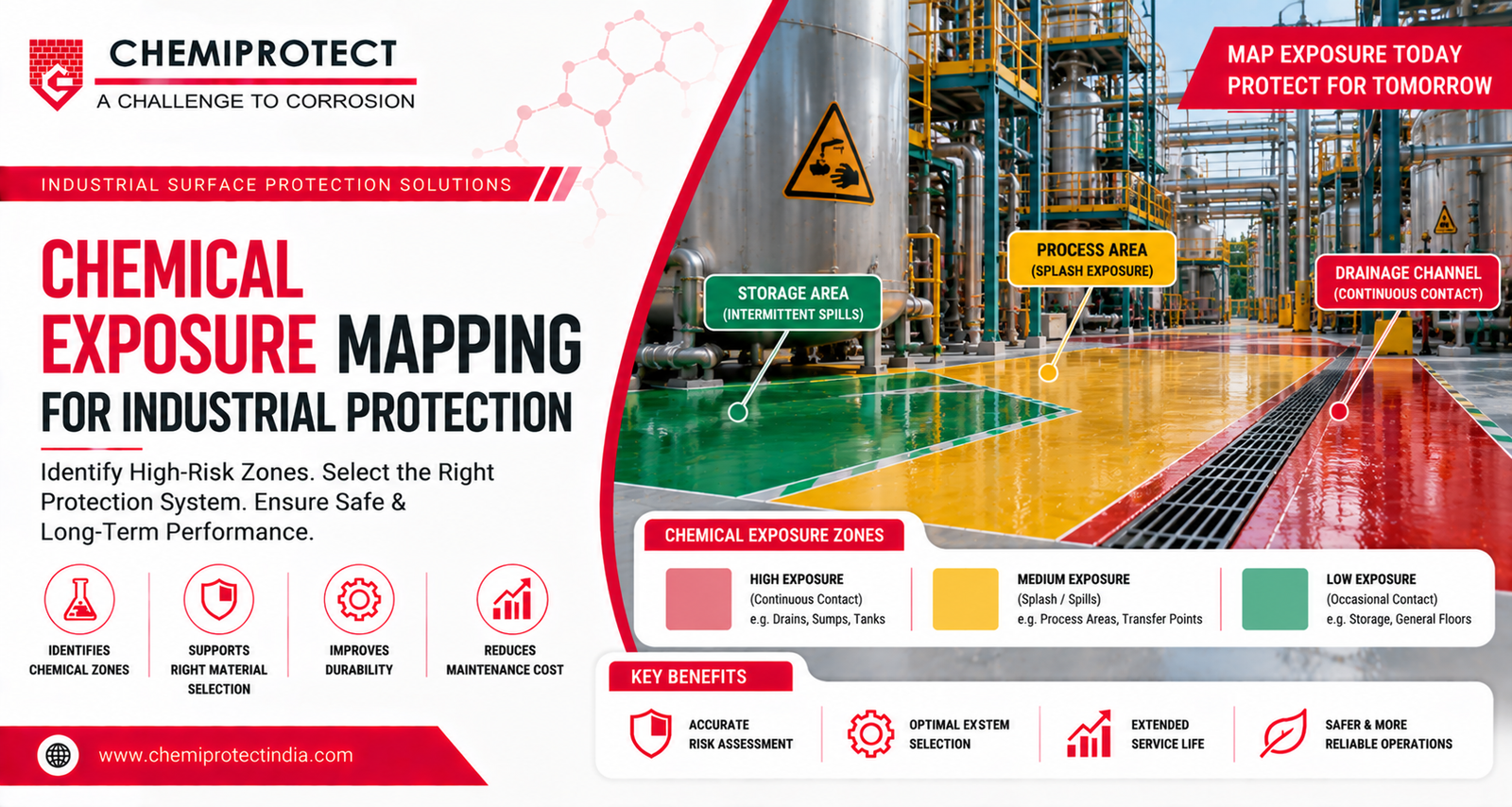
Chemical Exposure Mapping for Industrial Protection
October 6, 2026
What Is Chemical Exposure Mapping? Industrial
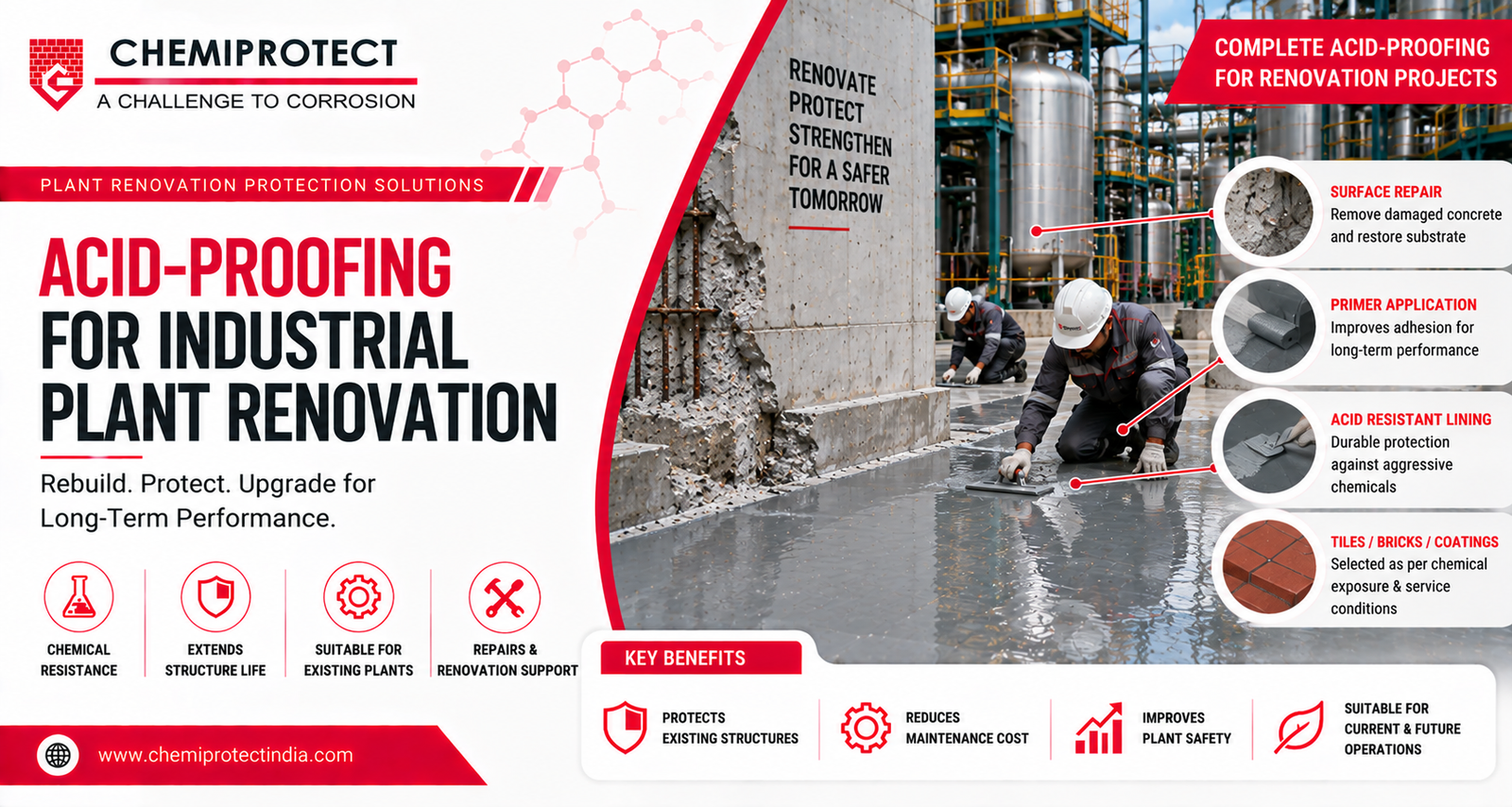
Acid-Proofing for Industrial Plant Renovation
October 3, 2026
Why Acid-Proofing Needs a Renovation-Specific Approach