Chemical Resistant Coating: A Complete Industrial Guide
Chemical Resistant Coating for Industrial Environments
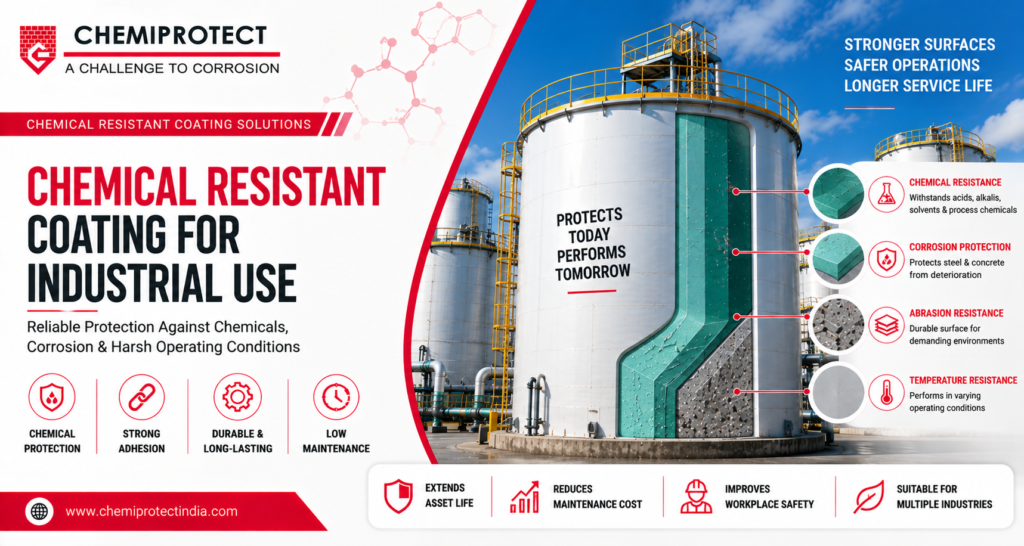
Industrial surfaces can be exposed to acids, alkalis, solvents, process chemicals, moisture, abrasion, temperature changes, and physical wear. Steel and concrete may gradually deteriorate when they remain exposed to aggressive substances without suitable protection. For facilities operating under these conditions, a properly selected coating can form an important part of the overall surface protection strategy.
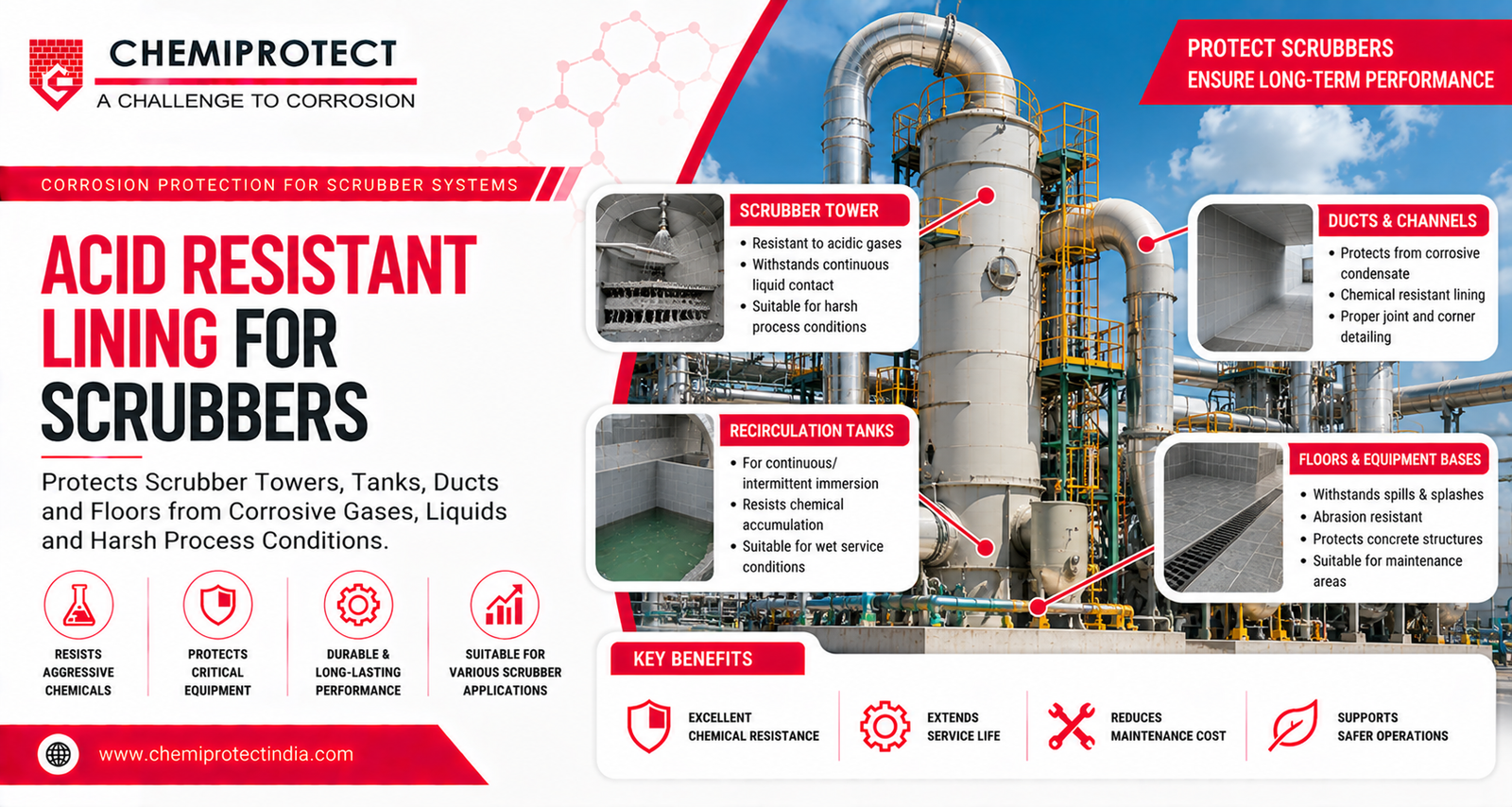
A Chemical Resistant Coating system is selected according to the substance being handled, the substrate, temperature, exposure duration, mechanical conditions, and required service life. Chemiprotect Engineers provides coating and lining solutions for demanding industrial environments, including epoxy, polyurethane, and glass-flake reinforced systems.
What Is Chemical Resistant Coating?
Chemical resistant coating is a protective layer applied to a prepared substrate to reduce direct contact between the surface and aggressive chemicals or environmental conditions. Depending on the formulation, coatings may be based on epoxy, polyester, vinyl ester, polyurethane, or other resin technologies.
The coating is not selected only for its chemical resistance. Adhesion, thickness, flexibility, abrasion resistance, temperature capability, curing conditions, and compatibility with the substrate can all influence performance. The complete system should therefore be specified for the actual operating environment.
Why Is Chemical Resistant Coating Important?
Protection Against Chemical Attack
Acids, alkalis, solvents, salts, and process liquids can affect surfaces in different ways. Repeated splashing, spillage, or immersion may increase the risk of deterioration. A suitable coating can provide a barrier between the aggressive substance and the underlying surface, helping reduce chemical penetration and surface damage.
Protection of Steel and Concrete
Steel can be vulnerable to corrosion when moisture and aggressive substances reach exposed surfaces. Concrete can also be affected by chemical penetration, surface degradation, and repeated exposure. Protective coatings can be used on suitable prepared substrates to support longer-lasting surface protection.
Factors to Consider Before Selecting a Chemical Resistant Coating
Chemical Type and Concentration
The first step is identifying the actual chemicals present at the facility. Resistance can vary according to chemical type and concentration, so a coating should not be selected solely because it is labelled chemical resistant. Product-specific resistance data should be reviewed for the intended service conditions.
Temperature and Exposure
Operating temperature and exposure duration can influence coating performance. Occasional splashes, frequent spills, prolonged contact, and continuous immersion create different demands. Elevated temperatures may also require a coating system with suitable thermal capability.
Abrasion and Mechanical Conditions
Chemical exposure can occur alongside abrasion, impact, traffic, cleaning, or equipment movement. A coating that offers chemical resistance may still be unsuitable if the surface experiences mechanical conditions beyond its design capability. Both chemical and physical requirements should be assessed together.
Substrate Condition
The substrate must be suitable for coating application. Oil, grease, dust, rust, loose material, moisture, old coatings, and surface defects can affect adhesion. Surface preparation should be selected according to the substrate and the specified coating system.
Types of Chemical Resistant Coating Systems
Epoxy-Based Coatings
Epoxy coatings can provide strong adhesion and a durable protective surface on suitably prepared concrete and steel. They are used in industrial environments where resistance to chemicals, moisture, abrasion, and routine operating conditions is required. The formulation should be matched to the actual exposure rather than treated as a universal solution.
Glass Flake Reinforced Coatings
Glass flake reinforced coatings contain graded glass flakes arranged within a resin matrix. This structure can provide resistance to permeation, corrosion, abrasion, physical abuse, and thermal shock. Chemiprotect’s MIPROGLASS 101 range includes polyester, vinyl ester, epoxy, and hybrid epoxy resin options for suitable industrial applications.
Polyurethane Coatings
Polyurethane coatings can be considered where durability, flexibility, chemical resistance, and surface protection are required together. They may be used in industrial and commercial environments depending on the formulation and operating conditions. The selected system should be checked for compatibility with the substrate and expected exposure.
Where Is Chemical Resistant Coating Used?
Chemical resistant coatings can be used across a wide range of industrial environments. Applications may include chemical manufacturing, pharmaceutical facilities, fertilizer plants, battery manufacturing and recycling, electroplating areas, petrochemical operations, power plants, food and beverage processing, steel plants, metal refineries, and other process industries.
Coating requirements differ between applications. A chemical processing area may prioritise resistance to aggressive chemicals, while a steel or power facility may also require abrasion, temperature, and physical impact resistance. The coating system should therefore be selected according to the specific service environment.
How Is Chemical Resistant Coating Applied?
Surface Preparation
Proper preparation is essential for coating performance. The surface should be cleaned and prepared to remove contaminants and weak material. Depending on the substrate, preparation may involve mechanical cleaning, grinding, blasting, repairs, moisture assessment, and priming.
Primer and Coating Layers
Many systems use a primer followed by one or more coating layers. The complete specification should define the compatible primer, coating type, application thickness, number of coats, and curing requirements. Chemiprotect’s technical resources provide product information and installation guidance for evaluating appropriate systems.
Technical teams can review chemical resistance data and installation resources before finalising a coating specification.
Curing and Service Conditions
Mixing, application temperature, humidity, curing time, and film thickness can influence final performance. The coating should be allowed to cure according to the product requirements before the protected area is returned to service.
How to Maintain Chemical Resistant Coating
Regular inspection can help identify wear, cracking, blistering, impact damage, or exposed substrate at an early stage. Cleaning methods should be compatible with the coating, and chemical spills should be addressed promptly when prolonged exposure could affect the surface.
Areas subject to heavy traffic, repeated chemical exposure, or frequent cleaning may require more regular inspection. If operating conditions change, the suitability of the existing coating should also be reviewed.
How to Choose the Right Chemical Resistant Coating?
There is no single coating suitable for every industrial environment. Selection should consider the chemical type and concentration, temperature, exposure duration, substrate, mechanical loading, abrasion, application conditions, and expected service life.
- Identify the chemicals and their concentrations.
- Determine temperature and exposure conditions.
- Assess the steel, concrete, or other substrate.
- Evaluate abrasion, impact, and mechanical loading.
- Check product-specific chemical resistance data.
- Confirm surface preparation and application requirements.
- Consider inspection and maintenance requirements.
Why Choose Chemiprotect Engineers?
Chemiprotect Engineers provides industrial surface protection solutions including epoxy products, polyurethane products, glass-flake reinforced coatings, acid and alkali resistant mortars, acid resistant bricks and tiles, waterproofing products, and construction chemicals.
Its product range is intended for different industrial requirements, while technical resources provide product data sheets, installation guidance, brochures, drawings, and chemical resistance information. Selecting the correct system should always be based on the actual service conditions and the technical requirements of the project.
Conclusion
Chemical Resistant Coating can help protect industrial steel, concrete, tanks, process areas, and other suitable surfaces from aggressive chemicals, corrosion, abrasion, moisture, and physical wear. The effectiveness of a coating depends on selecting the right formulation and applying it correctly to a properly prepared substrate.
For industries evaluating Chemical Resistant Coating solutions, Chemiprotect Engineers offers specialised coating, lining, flooring, mortar, and corrosion-protection systems for demanding industrial applications.
FAQs
1. What is a chemical resistant coating?
A chemical resistant coating is a protective layer applied to steel, concrete, and other prepared substrates to reduce direct contact with aggressive chemicals and harsh industrial environments.
2. Where is chemical resistant coating commonly used?
It is used in chemical plants, pharmaceutical facilities, fertilizer plants, battery manufacturing, electroplating, petrochemical operations, power plants, food processing, steel plants, and metal refineries.
3. What factors should be considered before selecting a coating?
The coating should be selected based on chemical type and concentration, operating temperature, exposure duration, abrasion, mechanical conditions, and substrate condition.
4. What are the main types of chemical resistant coating systems?
The primary systems include epoxy-based coatings, glass flake reinforced coatings, and polyurethane coatings for different industrial applications.
5. Why is surface preparation important before coating application?
Proper cleaning, repairs, moisture assessment, priming, and applying the correct coating layers help achieve strong adhesion and long-term coating performance.
Let’s Blog
Latest Blog
When used with chemical resistant masonry units and the proper membrane MIPRO-VE will protect concrete and steel sub base from chemical attacks and physical abuse. MIPRO-VE is silica filled vinyl ester mortar supplied in two parts .
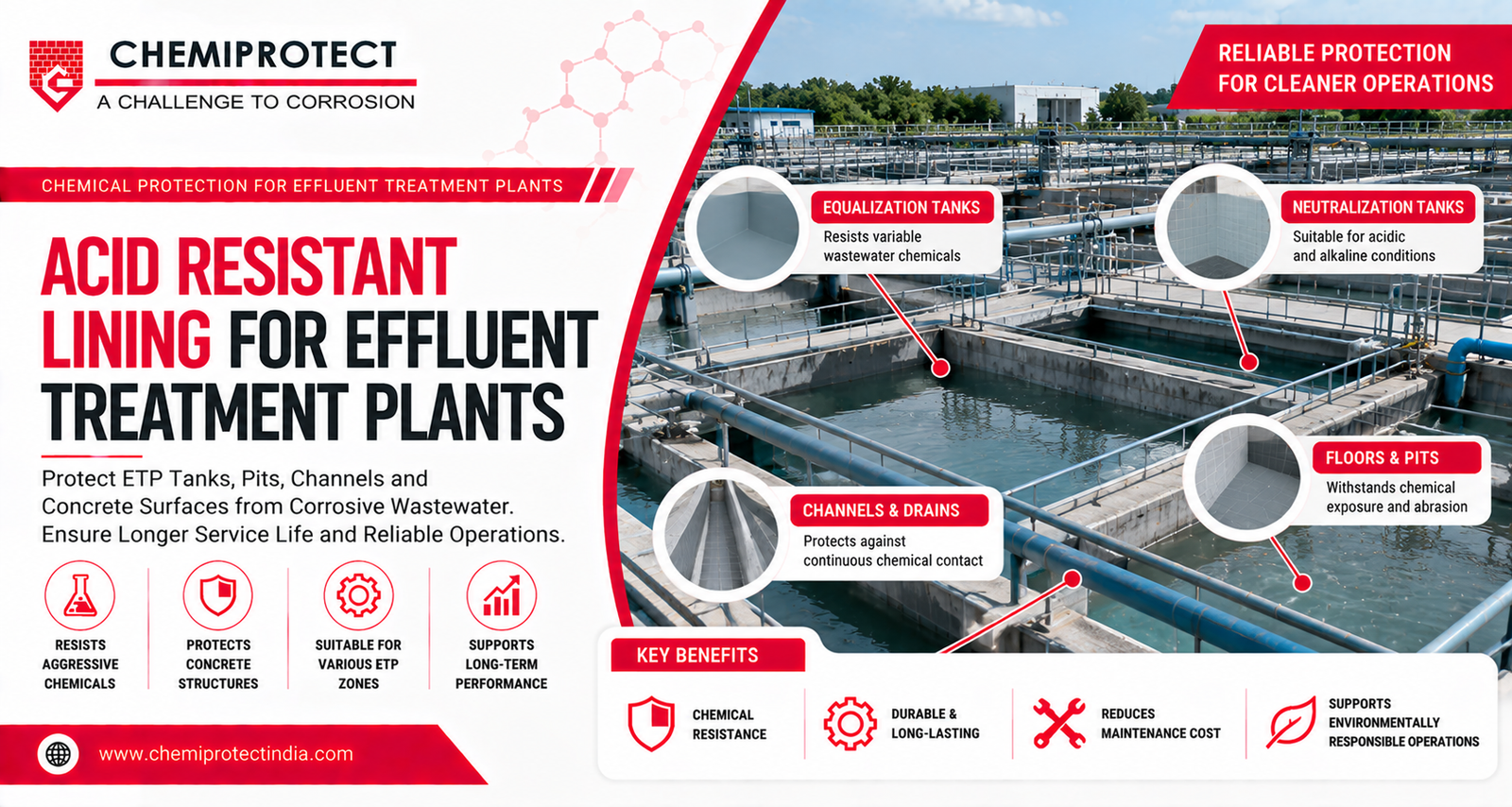
Acid Resistant Lining for Effluent Treatment Plants
October 18, 2026
Learn how acid resistant lining protects
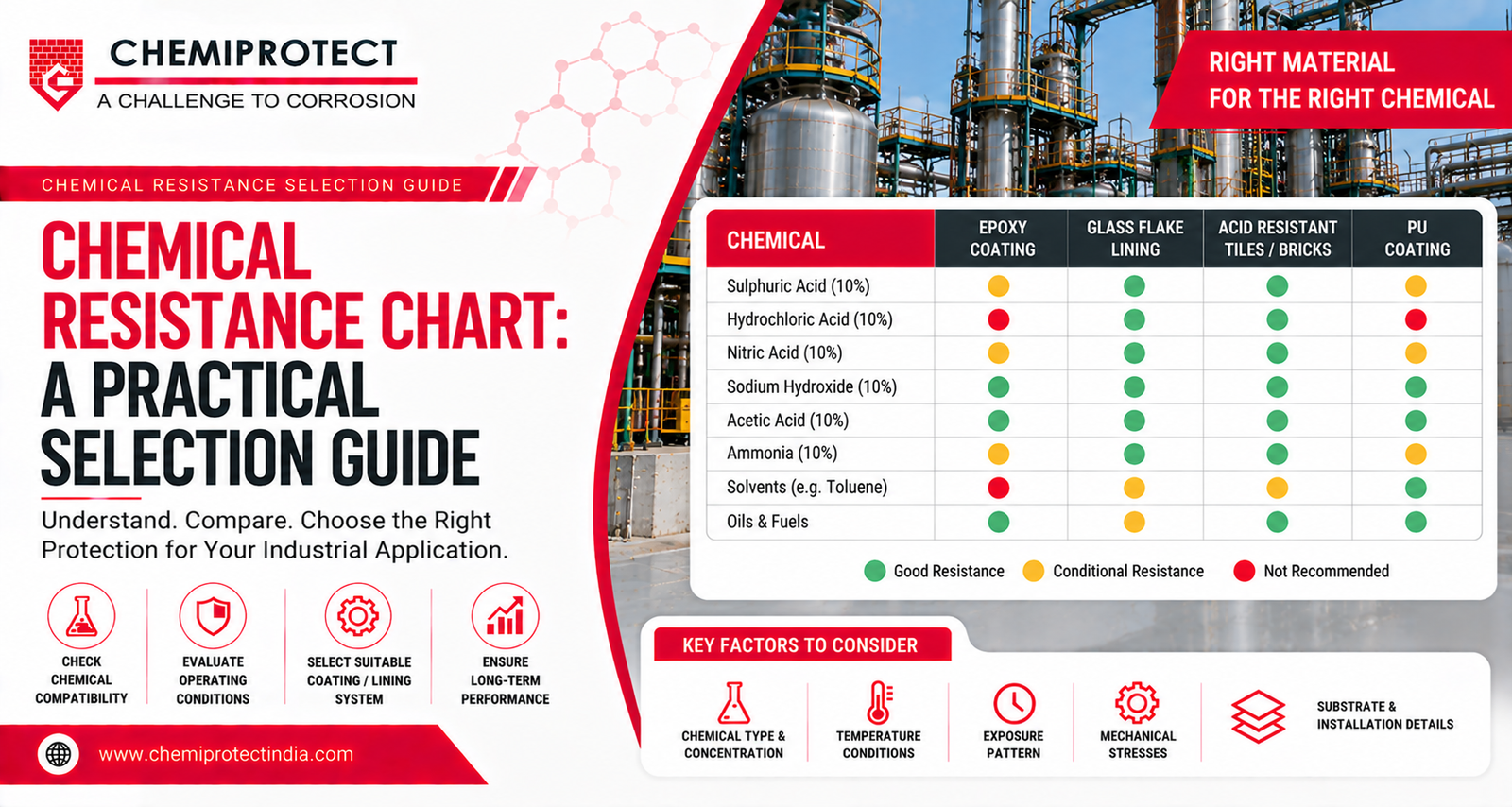
How to Read a Chemical Resistance Chart for Industrial Applications
October 15, 2026
Learn how to read a chemical