Chemical Resistant Grout: A Practical Industrial Guide
Why Industrial Areas Need Chemical Resistant Grout
Industrial floors, walls, tanks, channels, trenches, and process areas can be exposed to chemicals, moisture, cleaning agents, spills, abrasion, and continuous operational activity. While tiles, bricks, and protective linings may provide resistance to aggressive environments, the joints between these materials also need suitable protection.
Conventional grout may not be appropriate for areas where chemical exposure or frequent wet cleaning is expected. A suitable chemical resistant grout helps seal joints and reduce the possibility of aggressive liquids penetrating into the underlying substrate. chemical resistant grout solutions can be selected according to the specific application and exposure conditions.
Its performance needs to match the surrounding tiles, bricks, mortar, coating, substrate, and actual service conditions.
What Is Chemical Resistant Grout?
Chemical resistant grout is a specialized joint-filling material designed for areas where joints may be exposed to chemicals, moisture, cleaning agents, or demanding industrial conditions.
It is commonly used between chemically resistant tiles, acid-resistant bricks, and other protective lining materials. Its purpose is to create a durable joint that supports the continuity of the overall protective surface. epoxy grout systems can be selected according to the specific application and exposure conditions.
Depending on the application, the grout may need to withstand acids, alkalis, salts, solvents, oils, cleaning chemicals, moisture, or repeated wash-down conditions.
Chemical concentration, temperature, contact duration, immersion conditions, mechanical loading, and substrate compatibility should all be considered during specification.
Where Is Chemical Resistant Grout Used?
Chemical Processing Areas
Chemical processing facilities may have floors, trenches, channels, bunds, equipment bases, and containment areas exposed to aggressive chemicals. Joints in these areas require protection compatible with the chemicals handled within the facility.
Pharmaceutical Manufacturing Areas
Pharmaceutical facilities often require frequent cleaning and controlled hygiene conditions. Suitable grout can help maintain sealed joints around flooring and wall systems where cleaning chemicals and moisture are present.
Food and Beverage Facilities
Food and beverage plants can experience repeated washing, sanitation, moisture, and chemical cleaning. Chemical resistant grout may be used where joint durability and resistance to cleaning chemicals are important.
Effluent Treatment Areas
Effluent treatment plants, wastewater areas, sumps, channels, and drainage zones may experience continuous moisture and chemical exposure. Properly specified grout can help protect joints and reduce liquid penetration into the substrate.
Industrial Utility and Maintenance Areas
Utility rooms, equipment foundations, battery-related areas, workshops, and other industrial zones can experience chemical spills, oils, cleaning agents, and mechanical wear. Grout selection should reflect the specific exposure conditions of each area.
Key Requirements of Chemical Resistant Grout
Chemical Resistance
The grout should be compatible with the chemicals expected in the service area. The assessment should consider chemical type, concentration, temperature, frequency of exposure, and whether contact is through splashing, intermittent exposure, or immersion.
Low Permeability
Industrial joints may become pathways for moisture and chemicals to reach the substrate. A suitable grout should provide appropriate resistance to liquid penetration for the intended application.
Mechanical Resistance
Industrial floors can experience equipment movement, foot traffic, trolleys, impact, abrasion, and maintenance activity. The grout should suit the expected mechanical conditions.
Adhesion and Compatibility
The grout needs to work effectively with the surrounding lining system. Compatibility with tiles, bricks, mortar, coatings, and substrate is important for maintaining the integrity of the complete system.
How to Select the Right Chemical Resistant Grout
Selection should begin with a detailed review of the service environment. Identify every chemical that may contact the joint and record its concentration, operating temperature, exposure frequency, and contact duration. chemical resistant construction materials can be selected according to the specific application and exposure conditions.
The type of substrate and surrounding lining should also be assessed. A grout used with acid-resistant tiles or bricks should be compatible with the bedding material and the substrate beneath it. Compatibility helps support adhesion and reduce premature deterioration.
Mechanical conditions should also be included in the specification. Areas exposed to forklifts, trolleys, impact, vibration, abrasion, or equipment movement may require a grout system suited to those conditions.
Joint width and depth, drainage, cleaning procedures, curing requirements, and expected service life should also be considered. A detailed specification helps avoid generic selection.
Installation Considerations
Proper installation is essential for the performance of chemical resistant grout. Joints should be prepared and cleaned according to the requirements of the selected system. Dust, oil, loose material, moisture, or other contaminants that could affect adhesion should be addressed before application.
Mixing and application should follow the manufacturer’s technical requirements. Incorrect proportions, inadequate mixing, incomplete filling, or unsuitable application conditions can affect the final performance of the grout.
Joints should be filled continuously and finished appropriately to minimize voids, pinholes, and weak sections. Curing conditions should also be controlled before the area is exposed to chemicals, moisture, traffic, or cleaning activity.
Inspection after installation should check joint continuity, visible defects, transitions, corners, drains, penetrations, and other details. Early identification of defects can reduce the need for extensive repairs after the facility returns to service.
Maintenance of Chemical Resistant Grout
Routine inspection can help identify cracking, abrasion, impact damage, deterioration, exposed substrate, or defects around joints and transitions. Areas exposed to frequent chemical cleaning should receive particular attention.
Cleaning procedures should remain compatible with the installed grout and surrounding lining. Changes in chemical concentration, process conditions, temperature, production activity, or cleaning chemicals should prompt a review of the existing protection system.
Localized damage should be addressed promptly. Early repair can reduce the opportunity for aggressive chemicals or moisture to reach the underlying substrate and affect adjacent areas.
Chemical Resistant Grout as Part of a Complete Protection System
Grout should be considered one component of a complete industrial surface protection system. Depending on the application, the overall system may include acid-resistant tiles or bricks, compatible mortar, chemical resistant coatings, flooring systems, coves, drains, and protective detailing.
Complete-system performance depends on component compatibility. A highly resistant tile or brick may still have a vulnerable joint if the grout is not suitable for the service environment.
A system-based approach therefore considers the substrate, chemical exposure, temperature, immersion, mechanical loading, drainage, cleaning, joint design, installation conditions, and expected service life before the final specification is prepared.
Conclusion
Chemical resistant grout plays an important role in industrial areas where joints may be exposed to aggressive chemicals, moisture, cleaning agents, and mechanical activity. By providing suitable joint protection, it can support the continuity and durability of tiled, brick-lined, and other chemically protected surfaces.
The appropriate solution should be selected according to the actual exposure profile rather than by product name alone. Chemical compatibility, concentration, temperature, contact duration, mechanical conditions, substrate, joint dimensions, installation, and maintenance requirements should all be considered.
For demanding industrial environments, chemical resistant grout should be specified as part of a complete protection system. A properly planned solution can help support chemical resistance, surface durability, maintainability, and long-term protection of the underlying substrate. industrial corrosion protection solutions can be selected according to the specific application and exposure conditions.
Let’s Blog
Latest Blog
When used with chemical resistant masonry units and the proper membrane MIPRO-VE will protect concrete and steel sub base from chemical attacks and physical abuse. MIPRO-VE is silica filled vinyl ester mortar supplied in two parts .
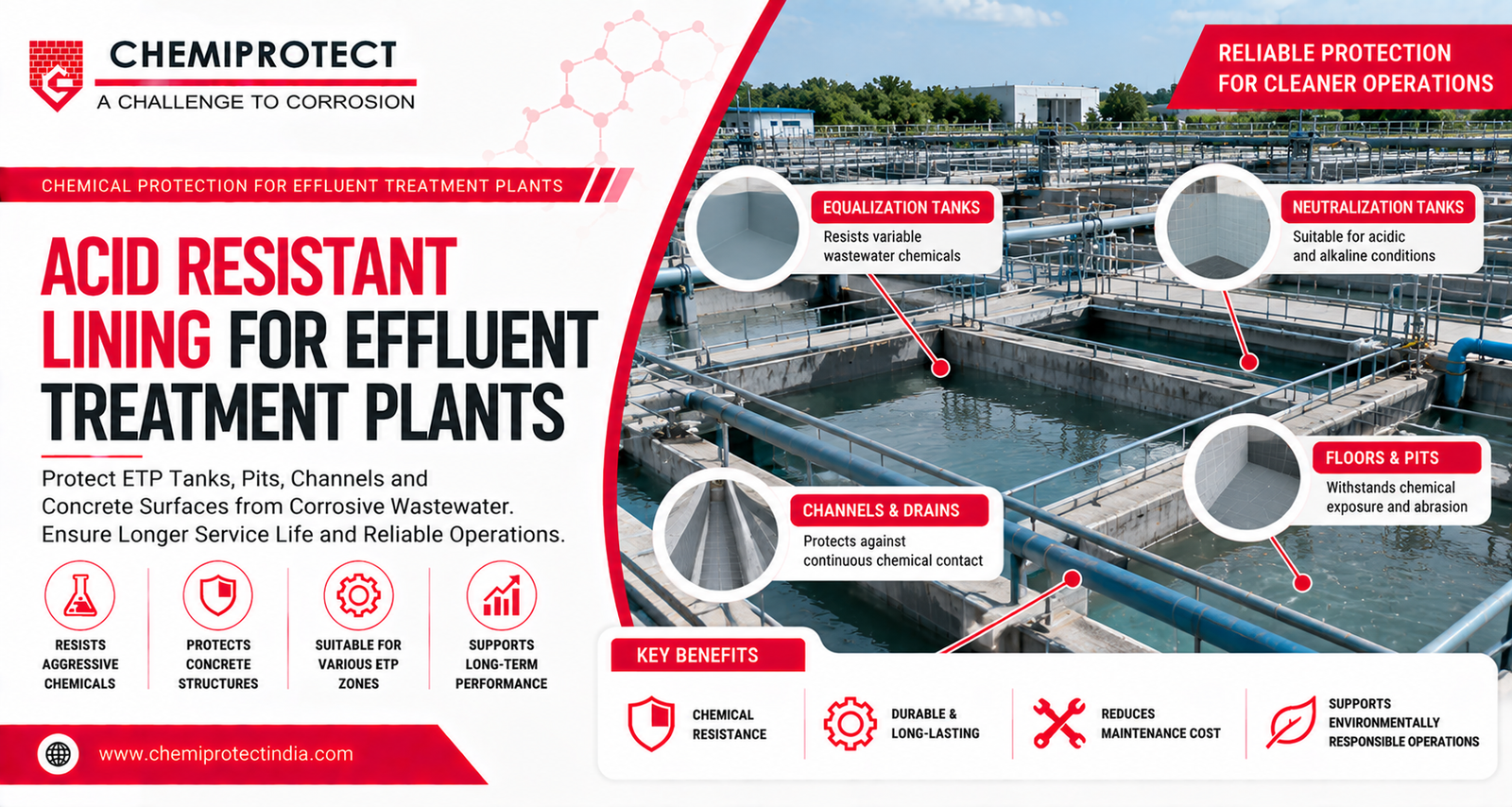
Acid Resistant Lining for Effluent Treatment Plants
October 18, 2026
Learn how acid resistant lining protects
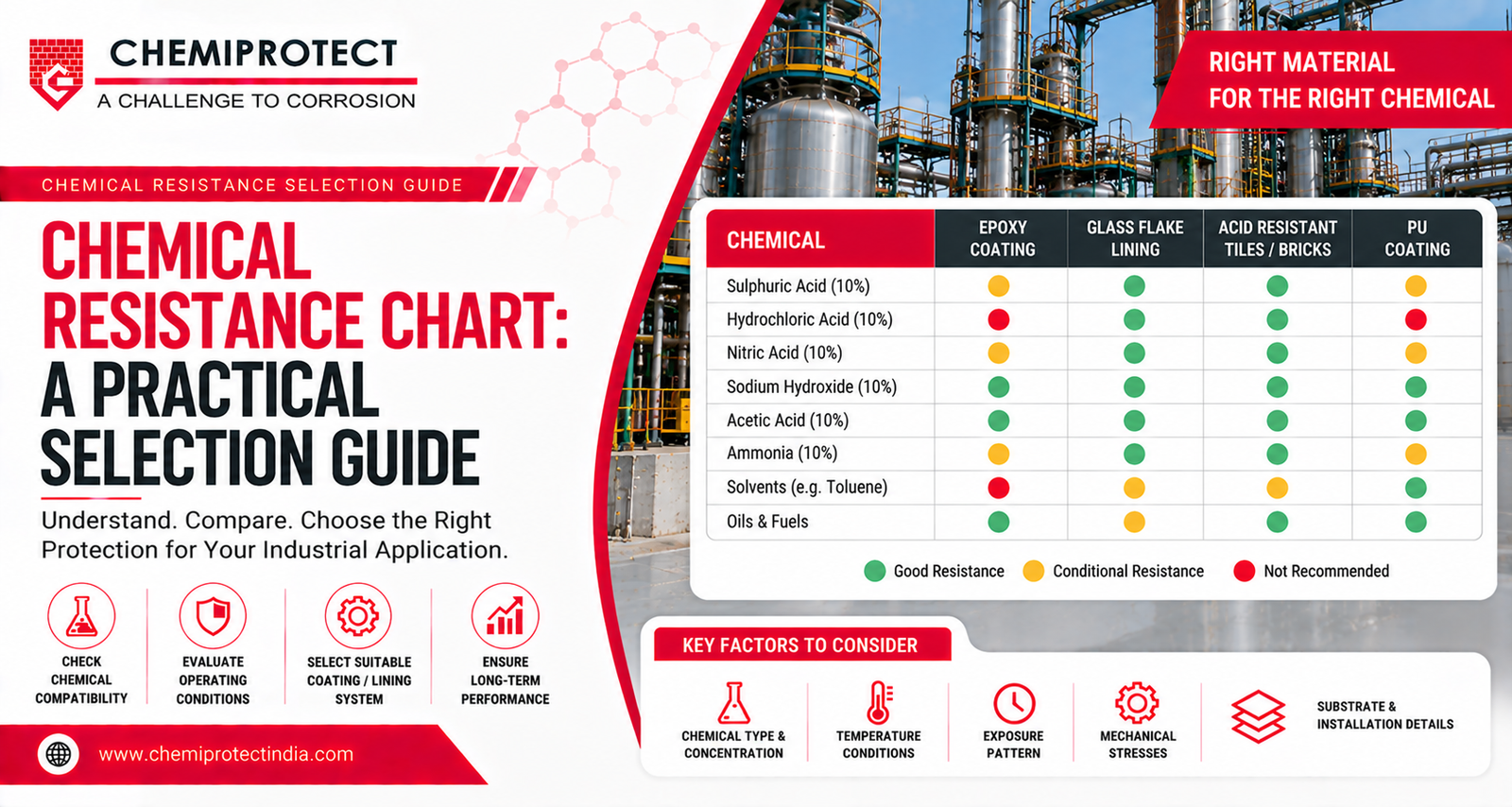
How to Read a Chemical Resistance Chart for Industrial Applications
October 15, 2026
Learn how to read a chemical