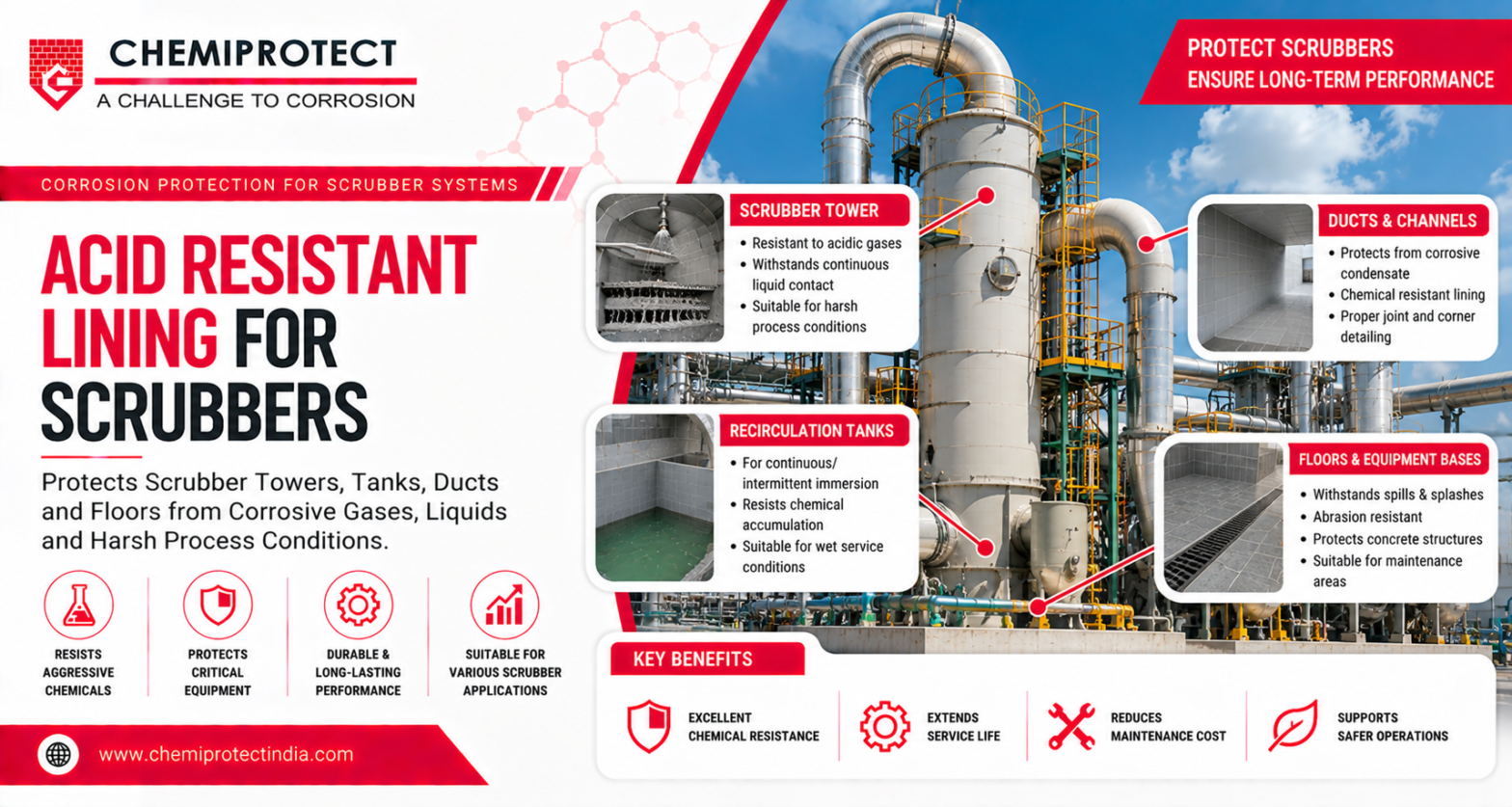
Learn how acid resistant lining protects scrubbers from corrosive gases, liquids, moisture, abrasion, and demanding industrial process conditions.
Category: Uncategorized
Acid Resistant Lining for Effluent Treatment Plants
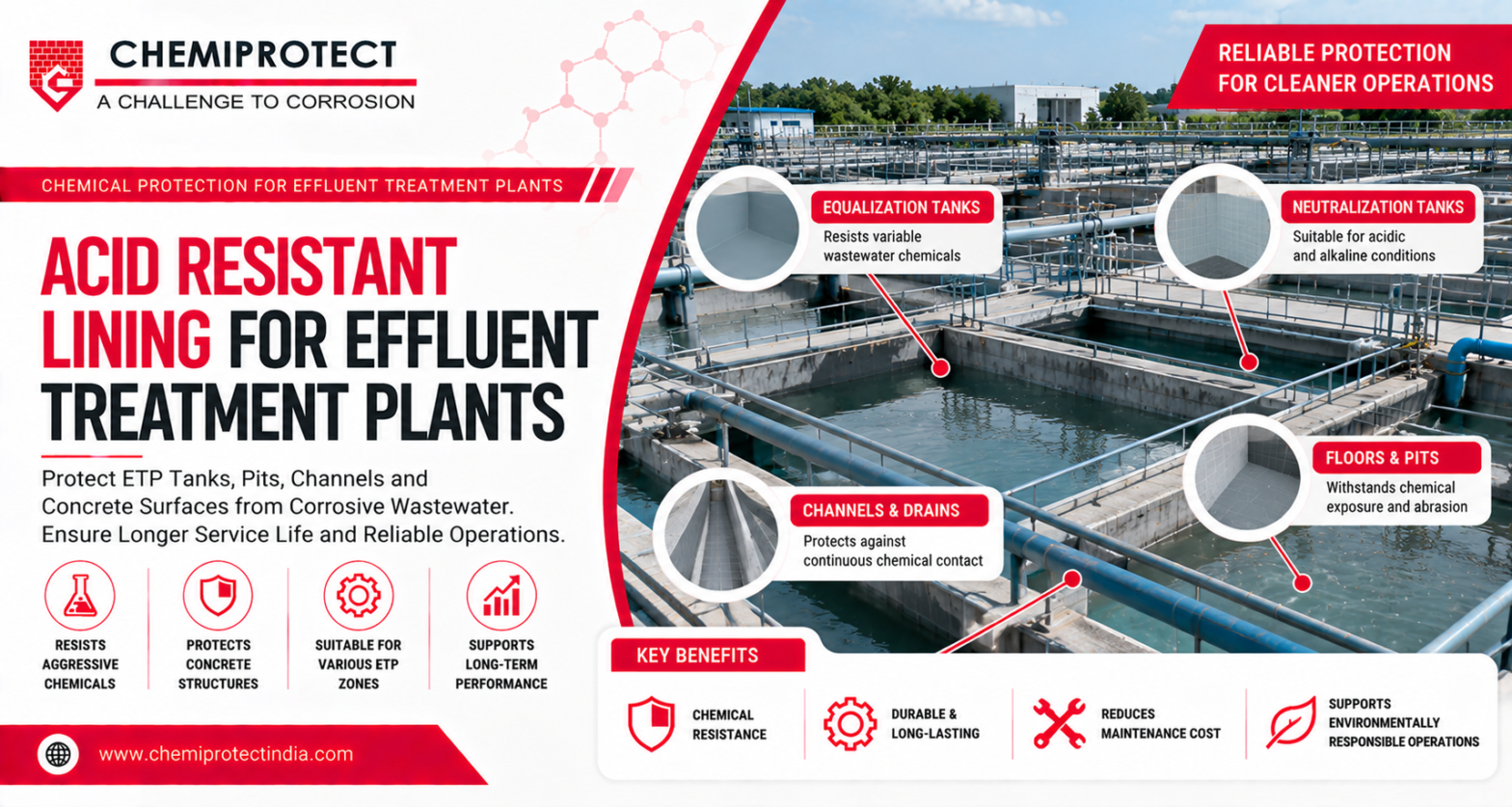
Learn how acid resistant lining protects ETP tanks, pits, channels, floors, and concrete surfaces from corrosive wastewater and chemicals.
How to Read a Chemical Resistance Chart for Industrial Applications
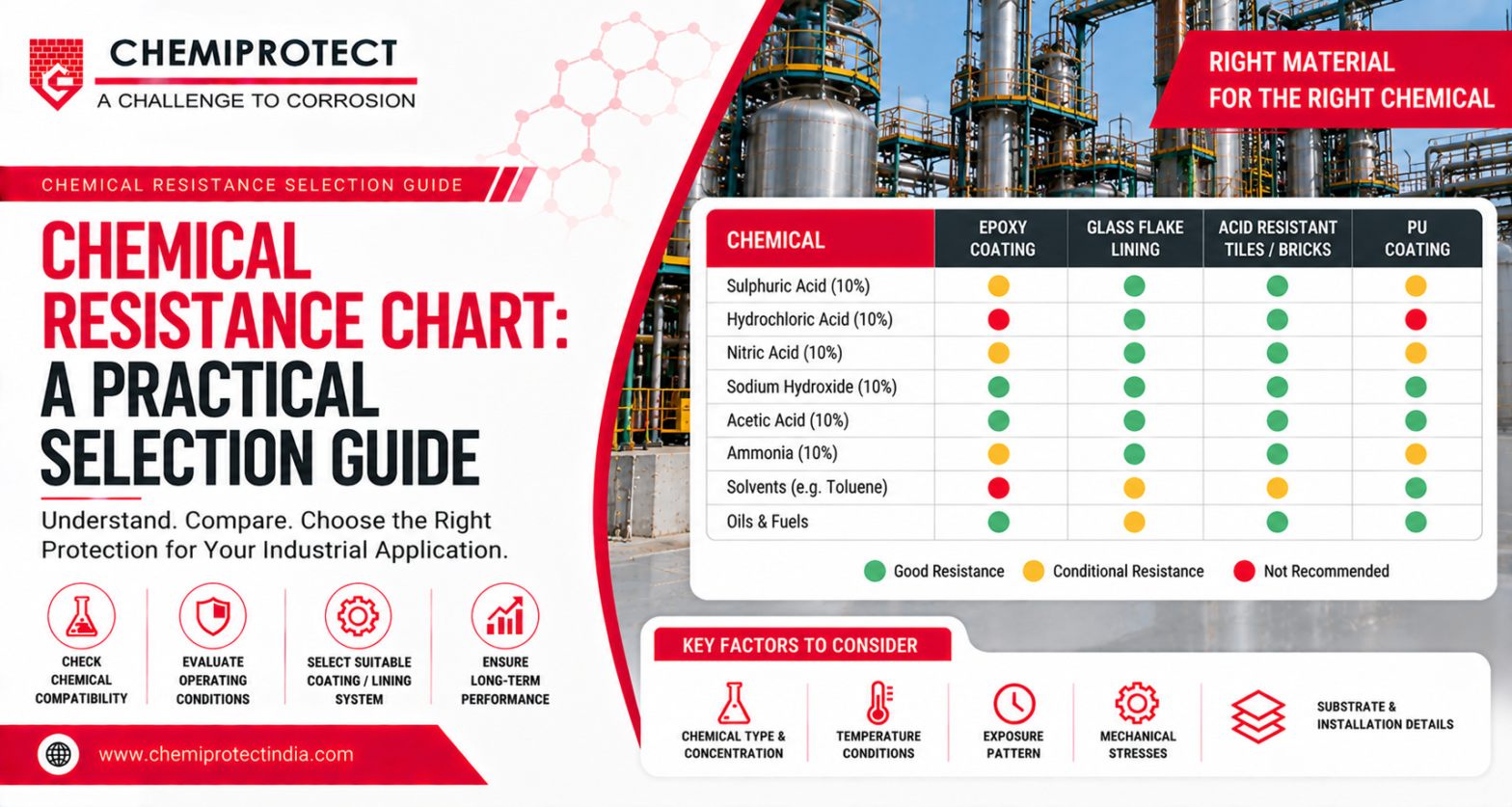
Learn how to read a chemical resistance chart and evaluate chemical type, concentration, temperature, exposure, and system compatibility.
Glass Flake Lining vs Epoxy Coating: Which Protection System Fits Your Application?
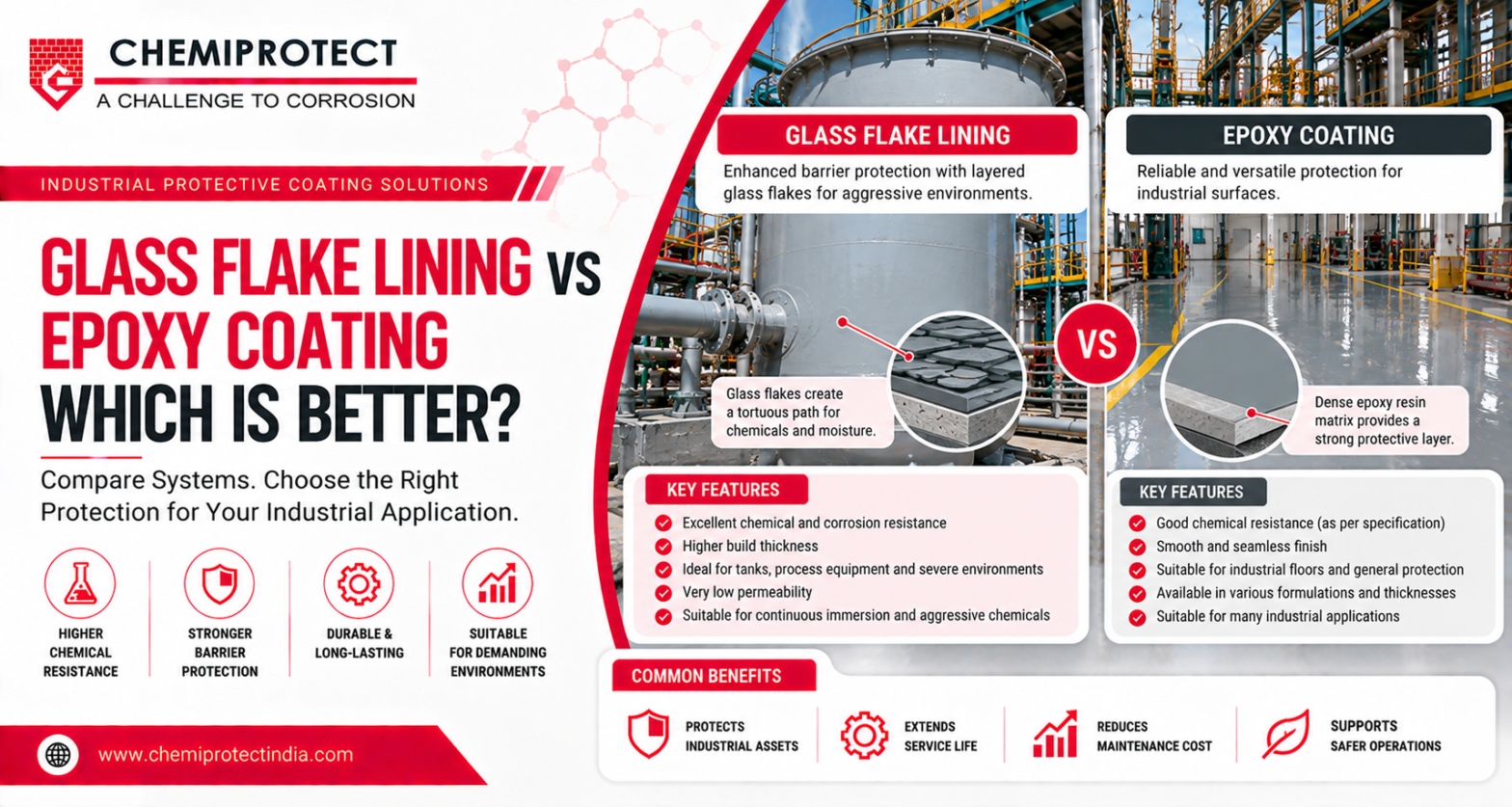
Understanding Glass Flake Lining and Epoxy Coating Industrial surfaces exposed to acids, alkalis, solvents, salts, moisture, and process chemicals need protection selected around their actual service conditions. Two systems frequently considered are glass flake lining and epoxy coating. Although both can provide chemical and corrosion protection, they are not identical systems and should not be… Continue reading Glass Flake Lining vs Epoxy Coating: Which Protection System Fits Your Application?
direct bond vs membrane lining
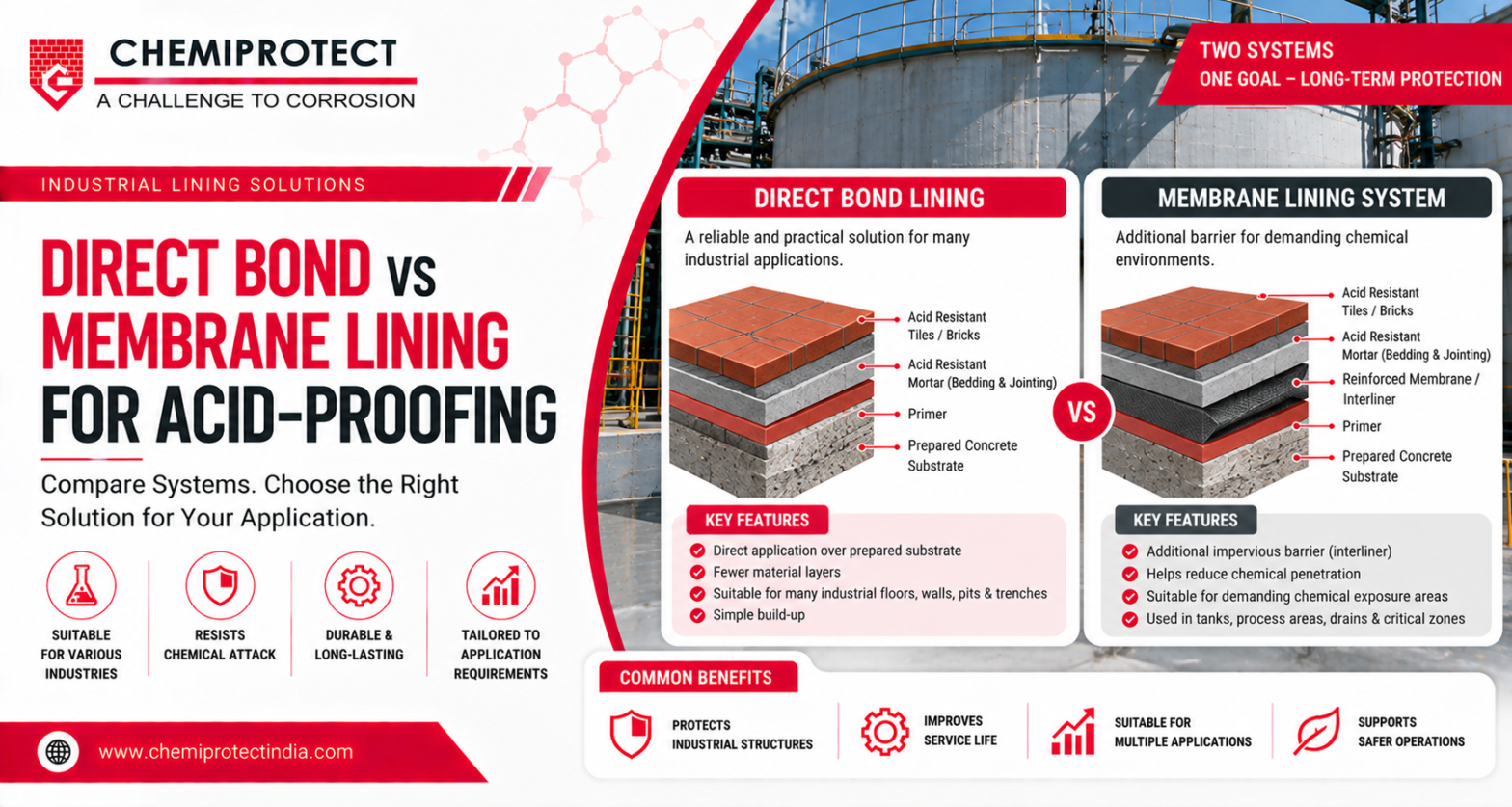
Understanding the Difference Between Direct Bond and Membrane Lining Industrial lining systems are designed to separate vulnerable substrates from aggressive chemicals, but not every application requires the same construction. Two established approaches for brick, tile, or stone lining are direct bond and membrane lining. The key difference is the protective layer between the substrate and… Continue reading direct bond vs membrane lining
Chemical Exposure Mapping for Industrial Protection
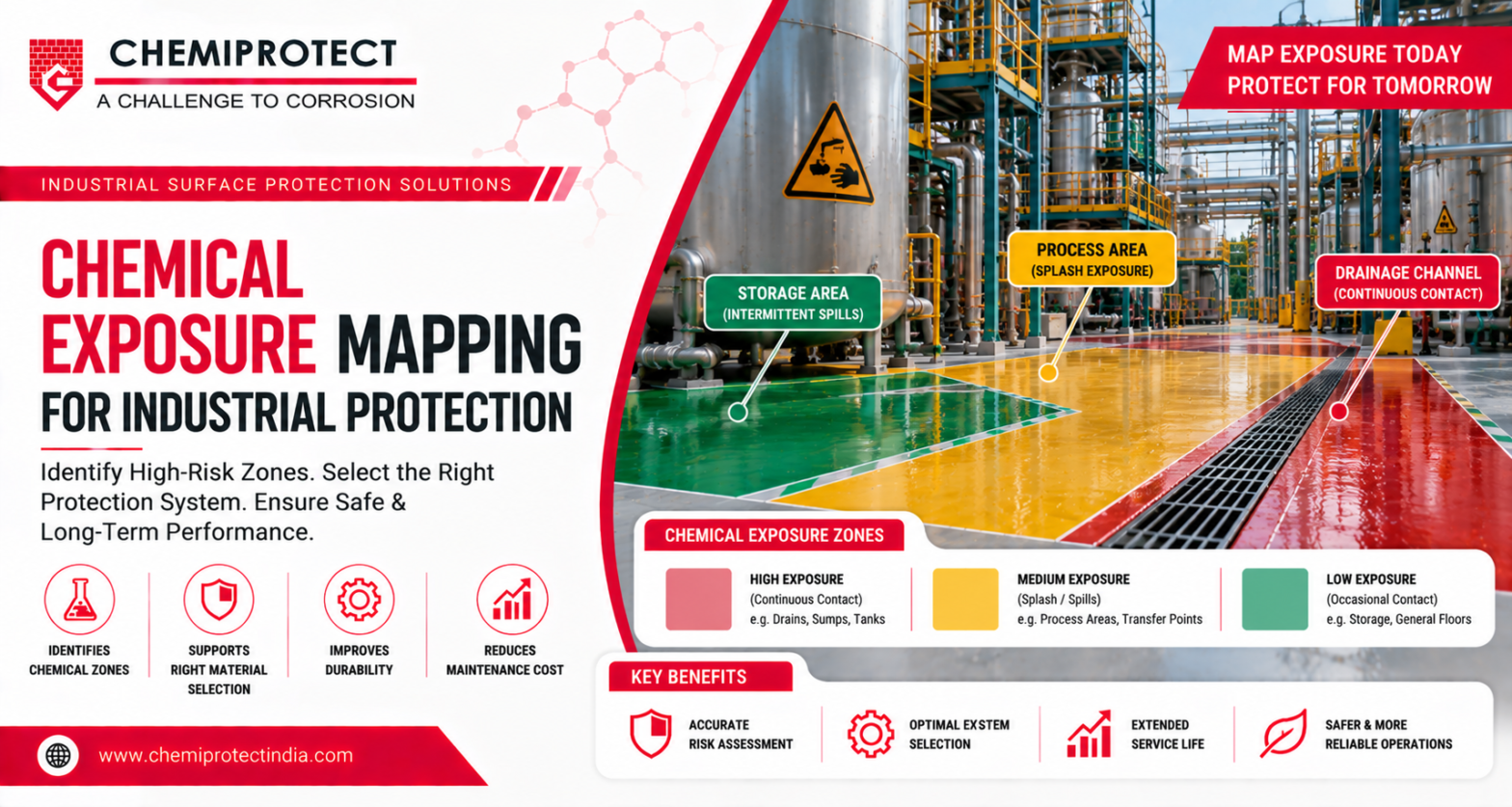
What Is Chemical Exposure Mapping? Industrial facilities rarely expose every surface to chemicals in exactly the same way. One section may handle continuous liquid contact, another may experience occasional splashes, while a nearby floor may only encounter diluted cleaning agents. Treating the entire plant as one chemical environment can therefore lead to an unnecessarily broad… Continue reading Chemical Exposure Mapping for Industrial Protection
Acid-Proofing for Industrial Plant Renovation
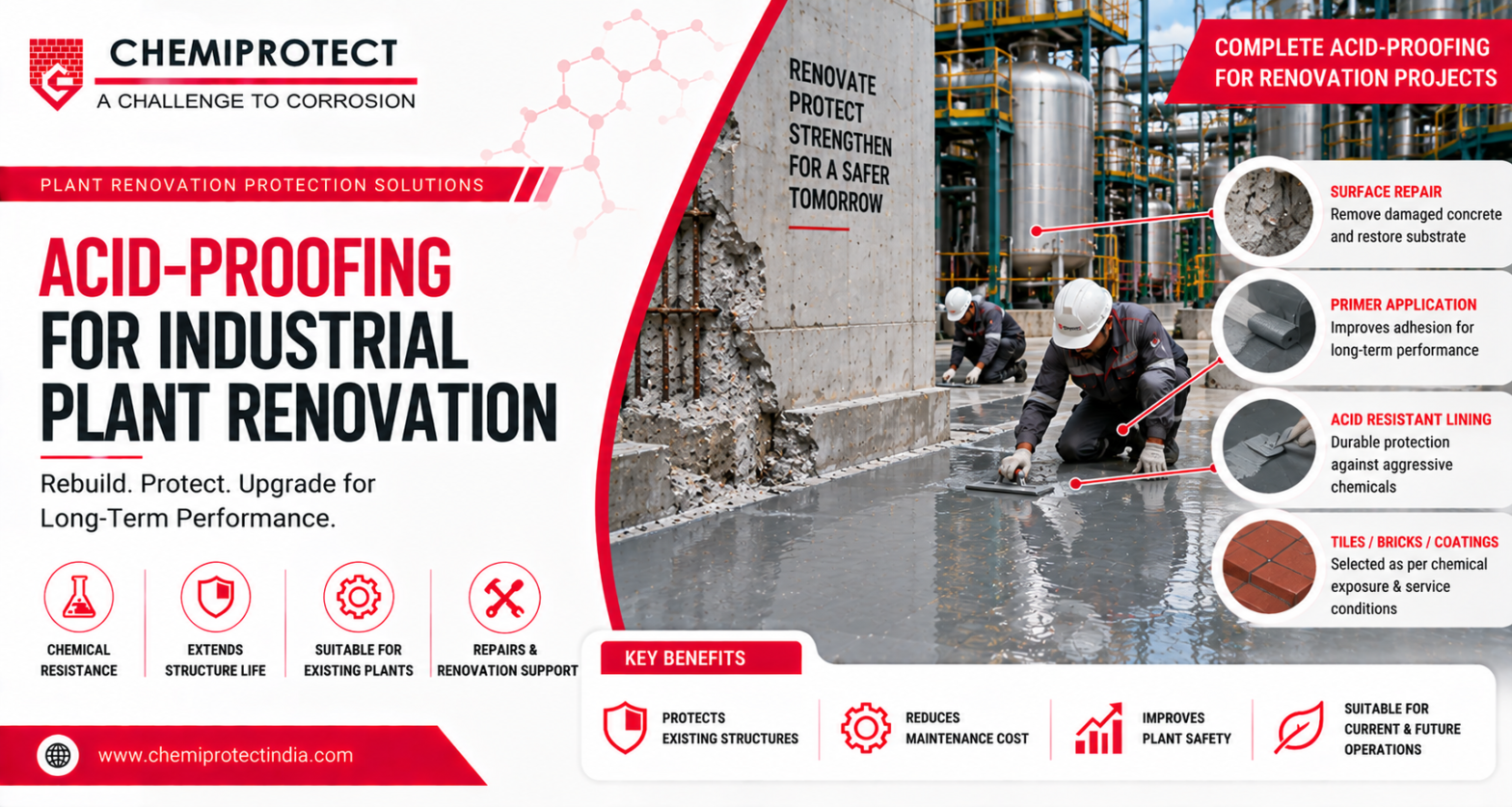
Why Acid-Proofing Needs a Renovation-Specific Approach Renovating an operating industrial plant presents a different protection challenge from constructing a new facility. Existing concrete, steel, masonry, coatings, joints, drains, and process areas may already show years of chemical exposure, traffic, moisture, repairs, or wear. Before a new protective layer is installed, the condition of the existing… Continue reading Acid-Proofing for Industrial Plant Renovation
Industrial Expansion Joint Sealing Solutions
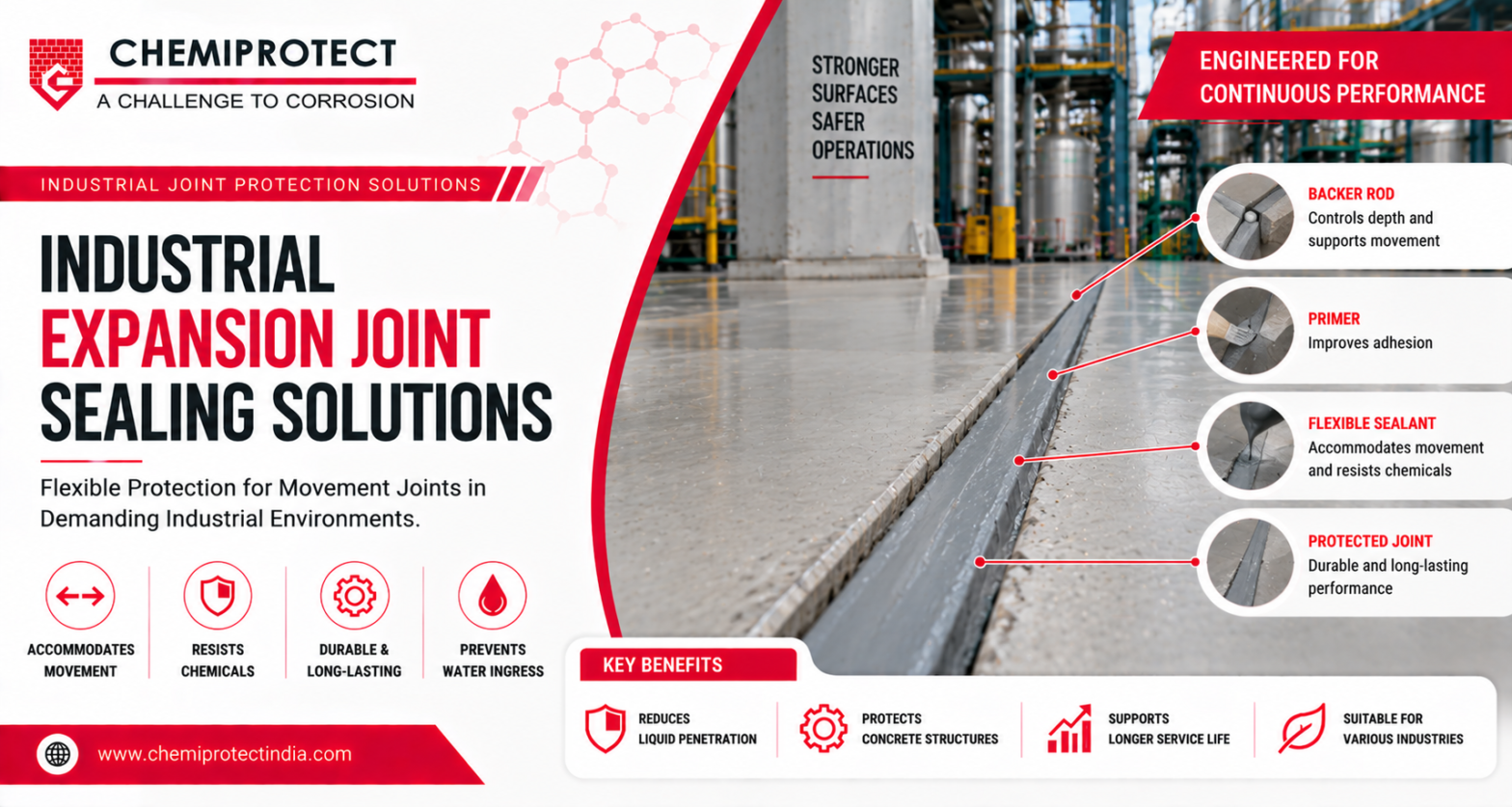
Industrial floors, tanks, process areas, and concrete structures can experience movement caused by temperature changes, vibration, settlement, and equipment loads. Expansion joints accommodate this movement, but an unprotected joint can become a pathway for water, chemicals, dirt, and other contaminants. Industrial Surface Protection Solutions. can include suitable joint treatment as part of a broader strategy… Continue reading Industrial Expansion Joint Sealing Solutions
Industrial Concrete Repair for Chemical Exposure
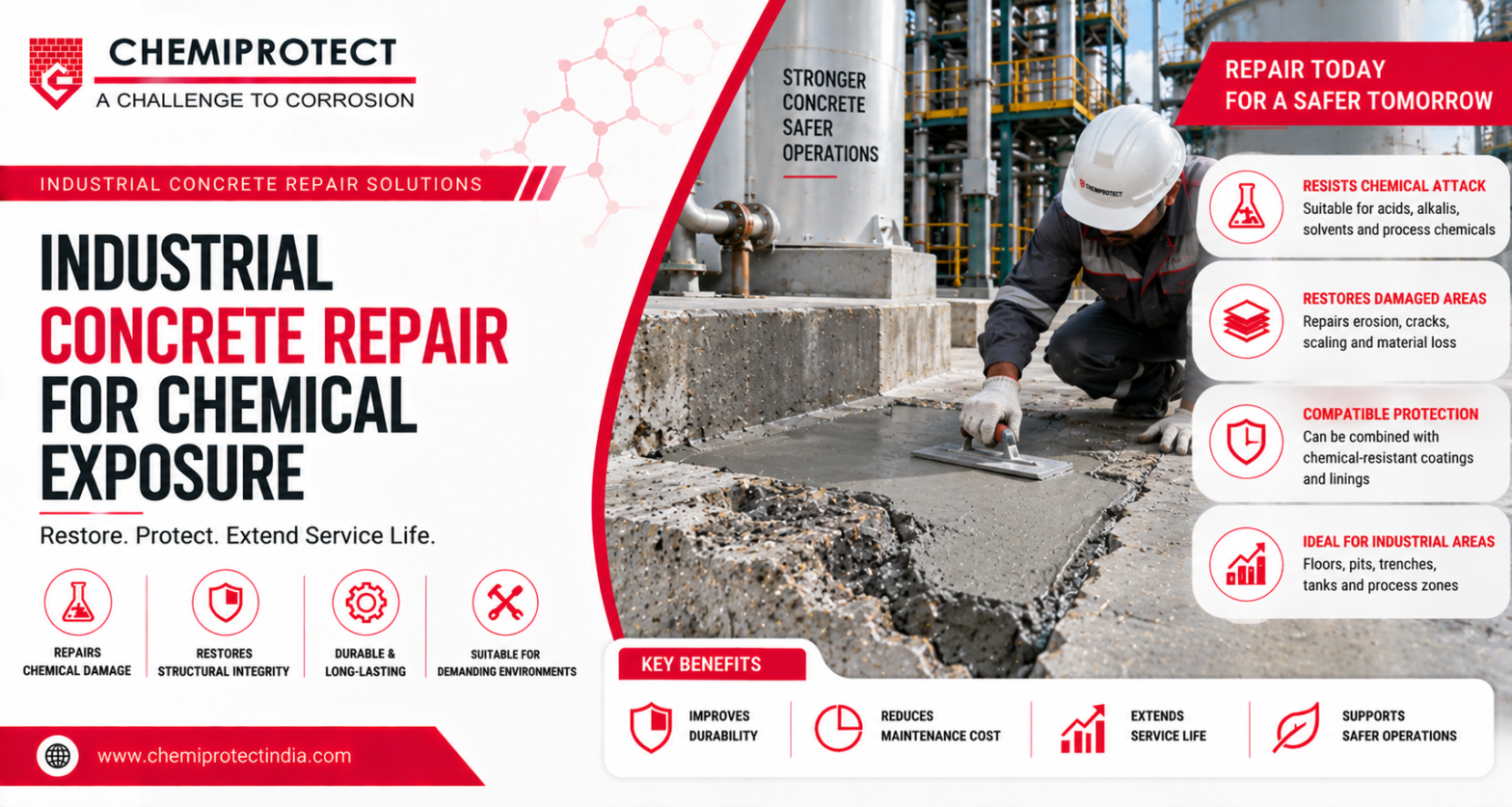
Industrial concrete can deteriorate when exposed to acids, alkalis, process chemicals, contaminated water, cleaning agents, and other aggressive substances. Damage may appear as erosion, cracking, scaling, material loss, or deterioration around joints and equipment bases. Repair should also address the source of chemical exposure. Industrial Concrete Protection Solutions. can support a broader approach that combines… Continue reading Industrial Concrete Repair for Chemical Exposure
Chemical Spill Containment Systems for Industries
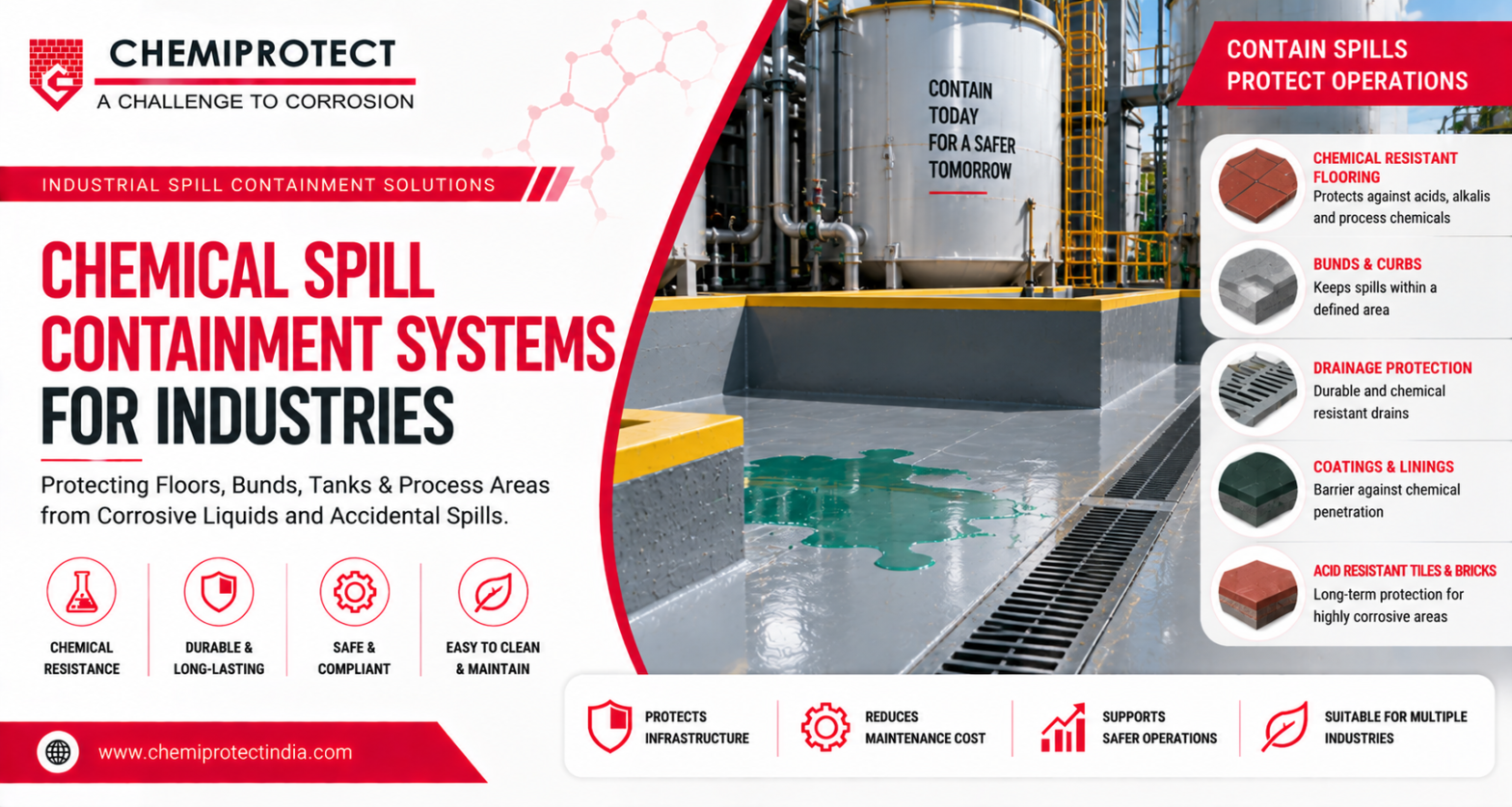
Industrial facilities that handle chemicals need surfaces capable of dealing with accidental spills, process liquids, cleaning chemicals, and contaminated wastewater. A spill that reaches unprotected concrete can lead to surface deterioration, chemical penetration, difficult cleanup, and costly repairs. Chemical Resistant Industrial Protection Solutions. can form part of a broader strategy for protecting floors, bunds, pits,… Continue reading Chemical Spill Containment Systems for Industries