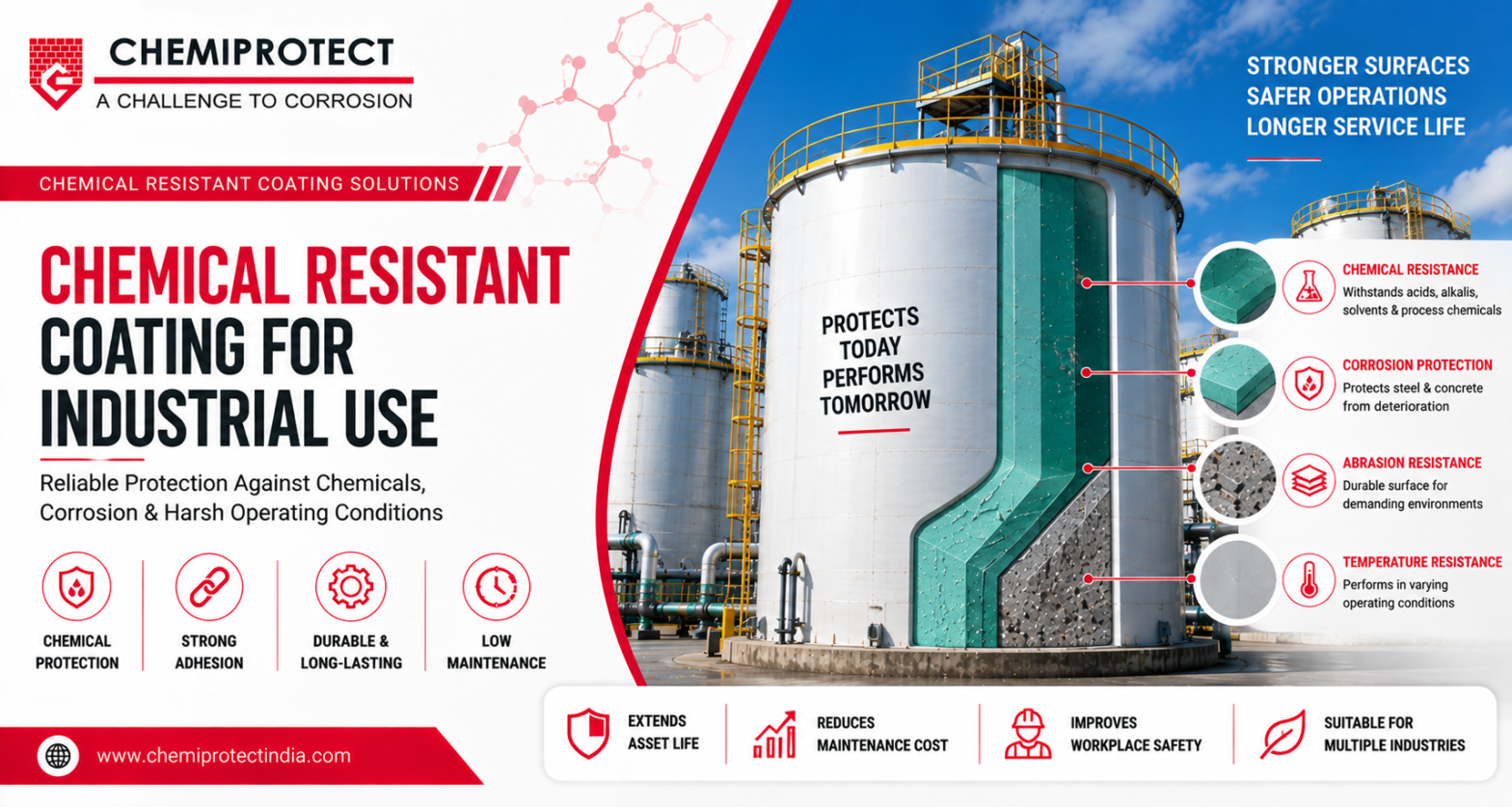
Chemical Resistant Coating for Industrial Environments Industrial surfaces can be exposed to acids, alkalis, solvents, process chemicals, moisture, abrasion, temperature changes, and physical wear. Steel and concrete may gradually deteriorate when they remain exposed to aggressive substances without suitable protection. For facilities operating under these conditions, a properly selected coating can form an important part… Continue reading Chemical Resistant Coating: A Complete Industrial Guide
Category: Uncategorized
Acid Resistant Lining Systems: A Practical Guide for Industry
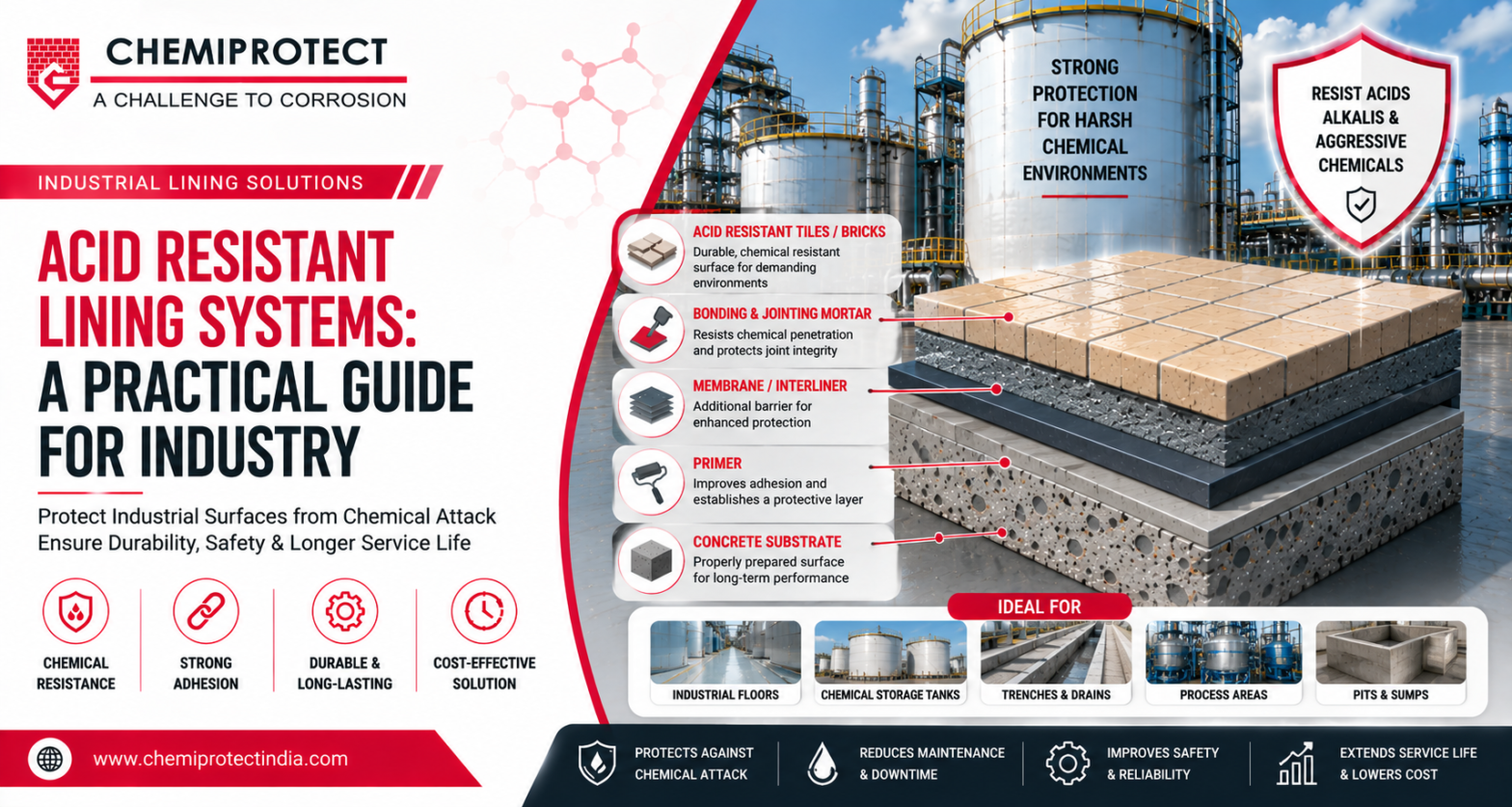
Acid resistant lining systems are engineered barriers that protect concrete, steel, masonry, and other substrates from aggressive chemicals. Exposure can come from acids, alkalis, process liquids, chemical spills, cleaning agents, and contaminated wastewater. A suitable system must control chemical penetration, protect the substrate, withstand operating conditions, and remain compatible with the structure underneath. Acid resistant… Continue reading Acid Resistant Lining Systems: A Practical Guide for Industry
How Glass Flake Coatings Protect Industrial Tanks from Corrosion
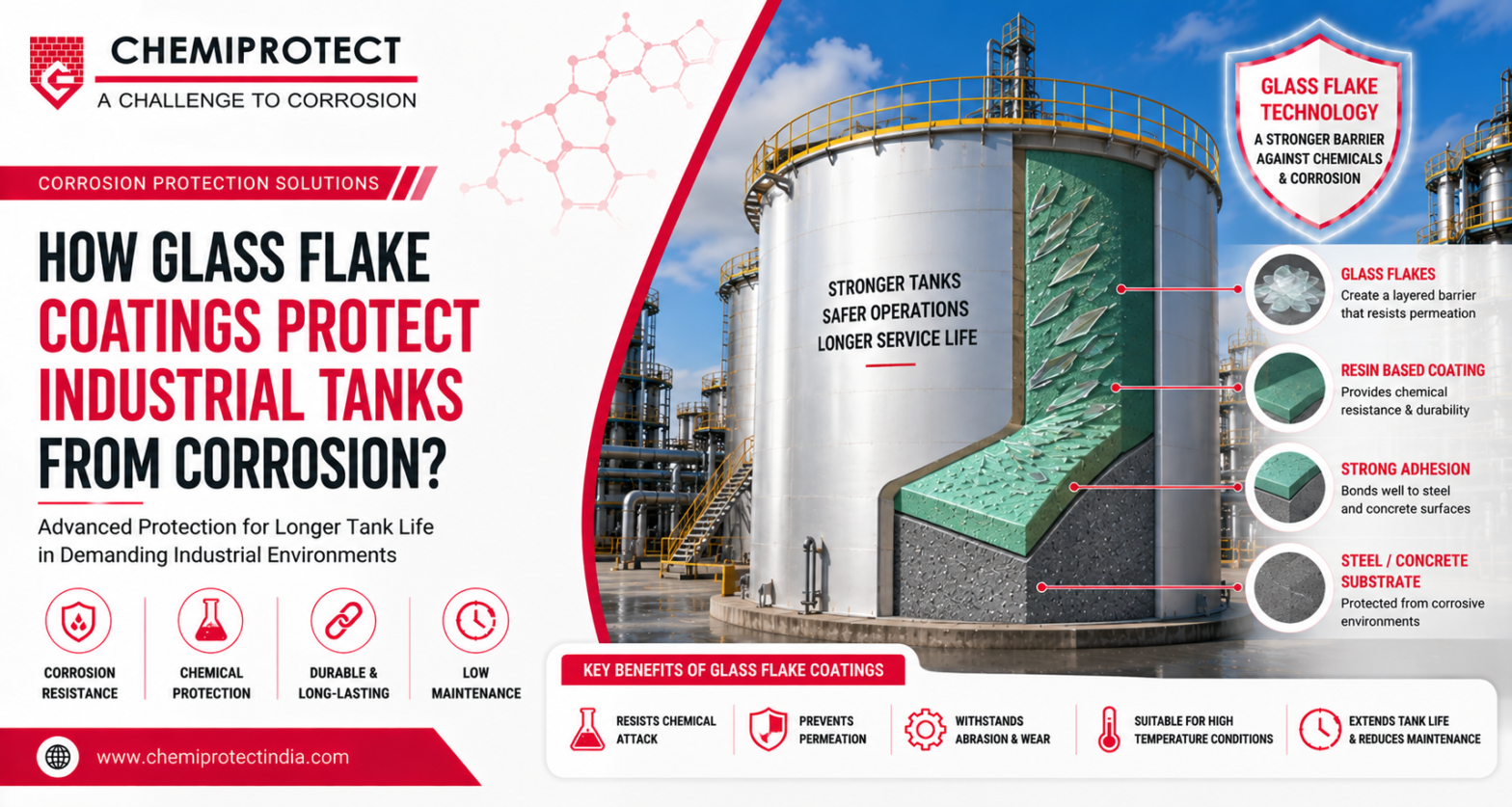
Industrial tanks are regularly exposed to chemicals, moisture, temperature changes and demanding operating conditions. Over time, these conditions can cause corrosion and surface deterioration, particularly when the tank material is exposed to aggressive environments. Glass flake coatings provide a protective barrier designed for demanding industrial applications. Chemiprotect’s glass flake products are developed as part of… Continue reading How Glass Flake Coatings Protect Industrial Tanks from Corrosion
How Acid-Resistant Tiles Improve Industrial Floor Safety
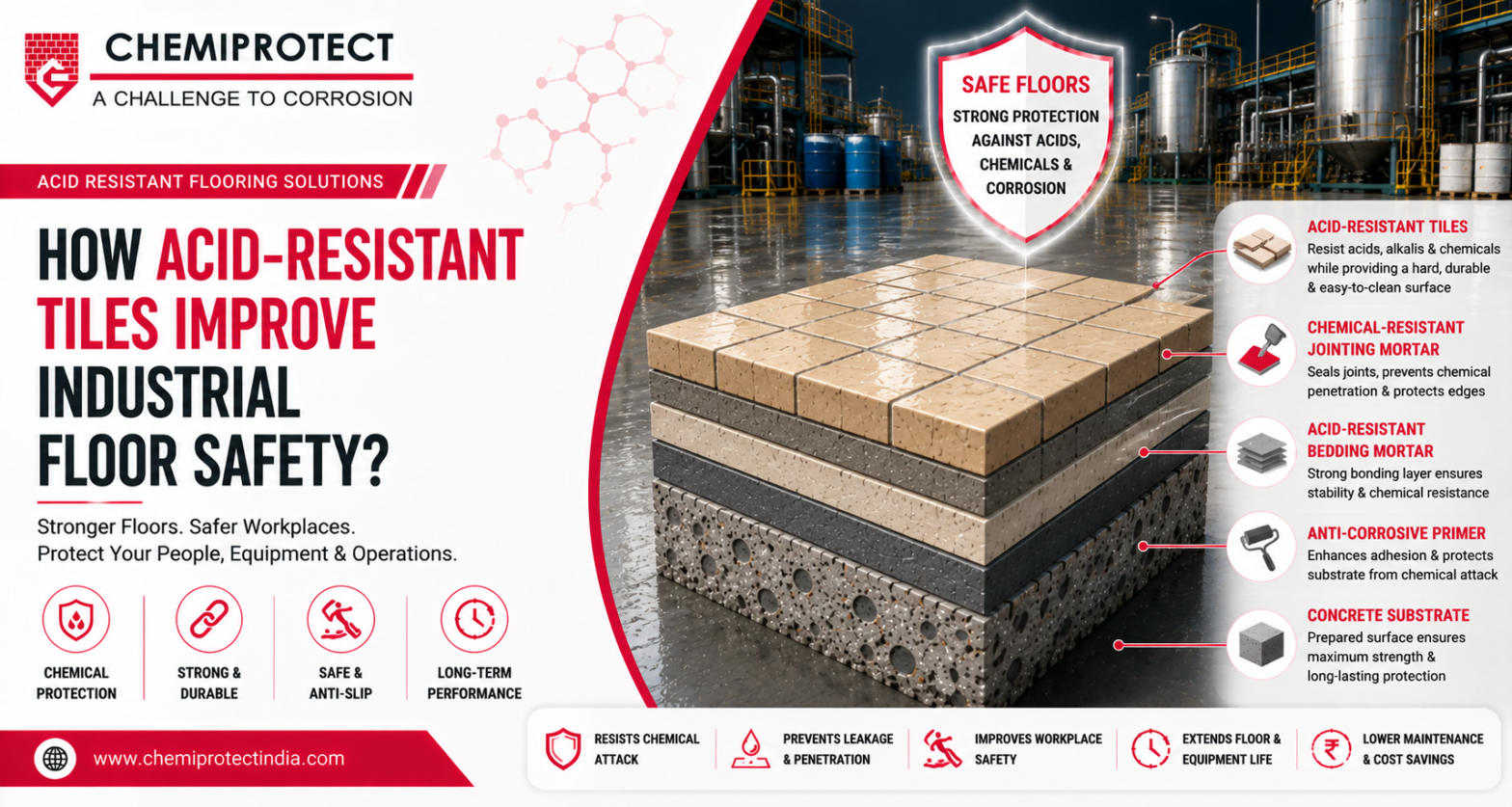
Industrial floors can face demanding conditions every day. Chemical spills, acids, alkalis, moisture, heavy movement and regular cleaning can gradually affect unprotected surfaces. In chemical plants, laboratories, pharmaceutical facilities and other industrial environments, choosing the right flooring system is therefore an important part of protecting both the floor and the working environment. Acid-resistant tiles are… Continue reading How Acid-Resistant Tiles Improve Industrial Floor Safety
Epoxy vs PU Flooring: Which Is Right for Your Industry?
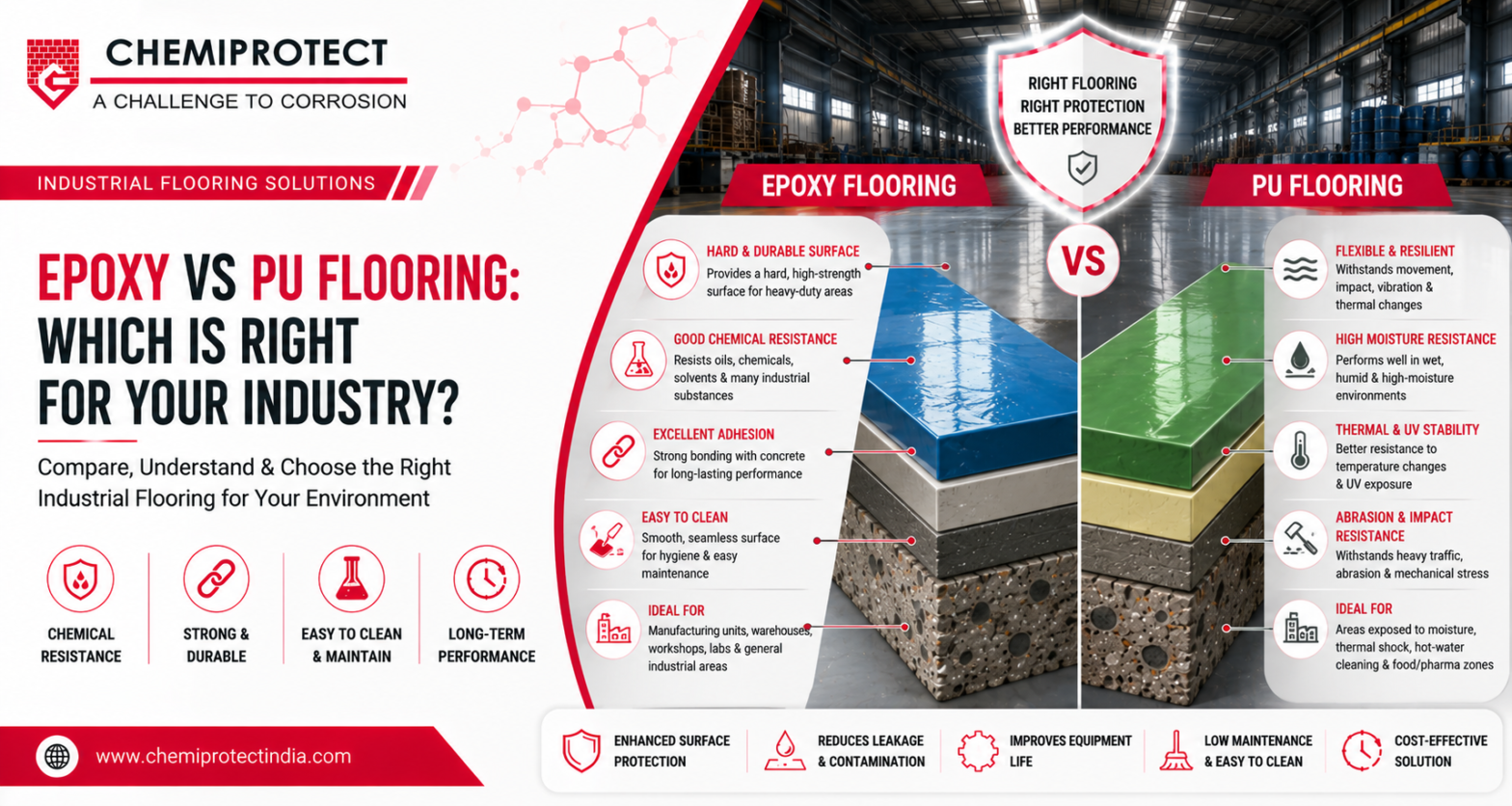
Industrial floors have to withstand much more than everyday foot traffic. Factories, warehouses, laboratories, pharmaceutical plants and processing facilities can expose floors to chemicals, moisture, oils, machinery, cleaning processes and continuous movement. Choosing the right flooring system is therefore an important part of protecting the underlying concrete and maintaining a suitable working environment. Chemiprotect’s industrial… Continue reading Epoxy vs PU Flooring: Which Is Right for Your Industry?
Why Chemical Plants Need Corrosion-Resistant Tank Linings
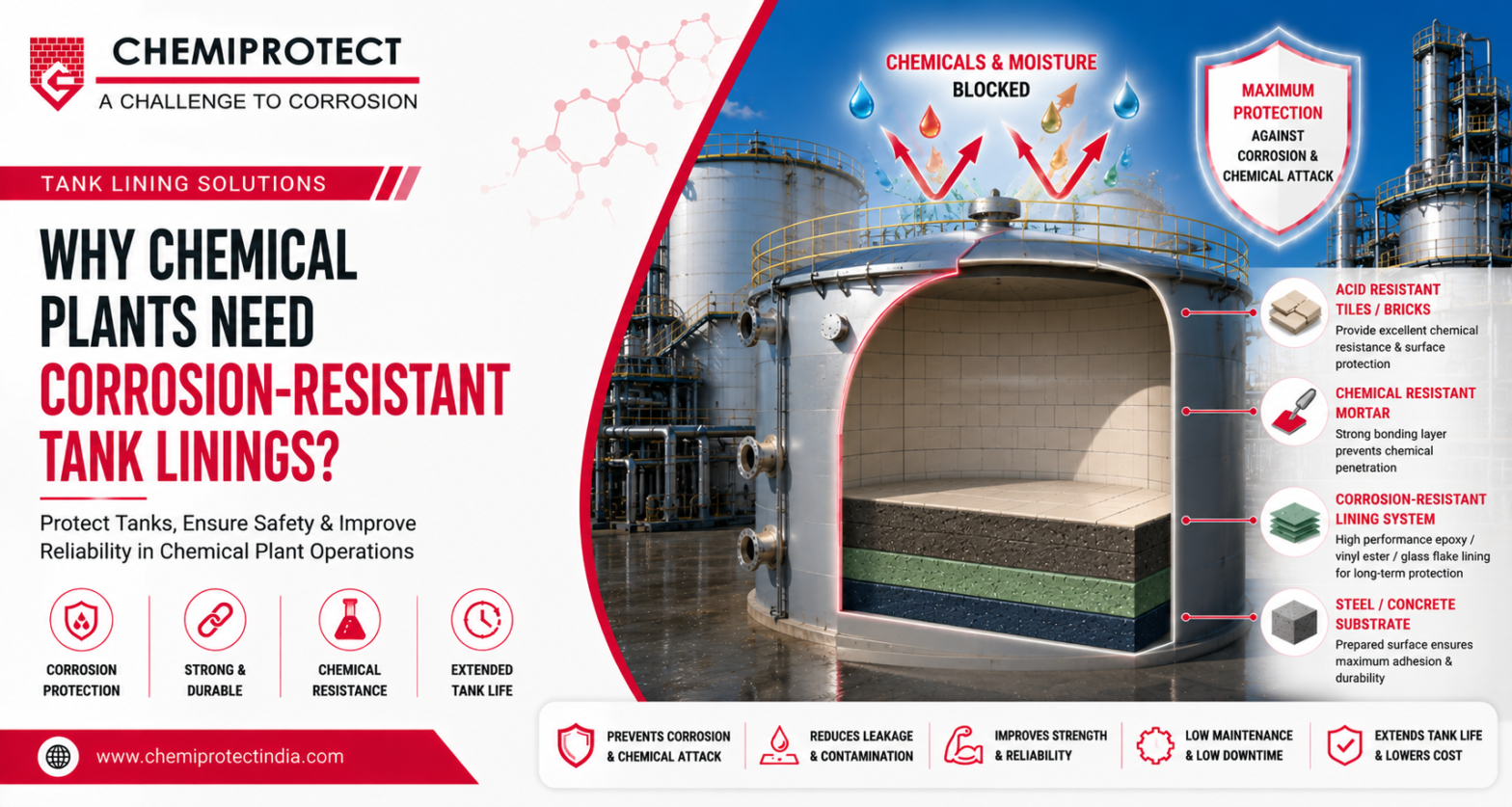
Chemical plants operate in environments where tanks, vessels and other industrial structures can be exposed to aggressive chemicals, moisture, temperature variations and physical wear. Without suitable protection, these conditions can affect the underlying steel or concrete and create long-term maintenance challenges. Corrosion-resistant tank linings provide a protective barrier between the tank surface and the surrounding… Continue reading Why Chemical Plants Need Corrosion-Resistant Tank Linings
How to Protect Concrete from Acid and Chemical Exposure
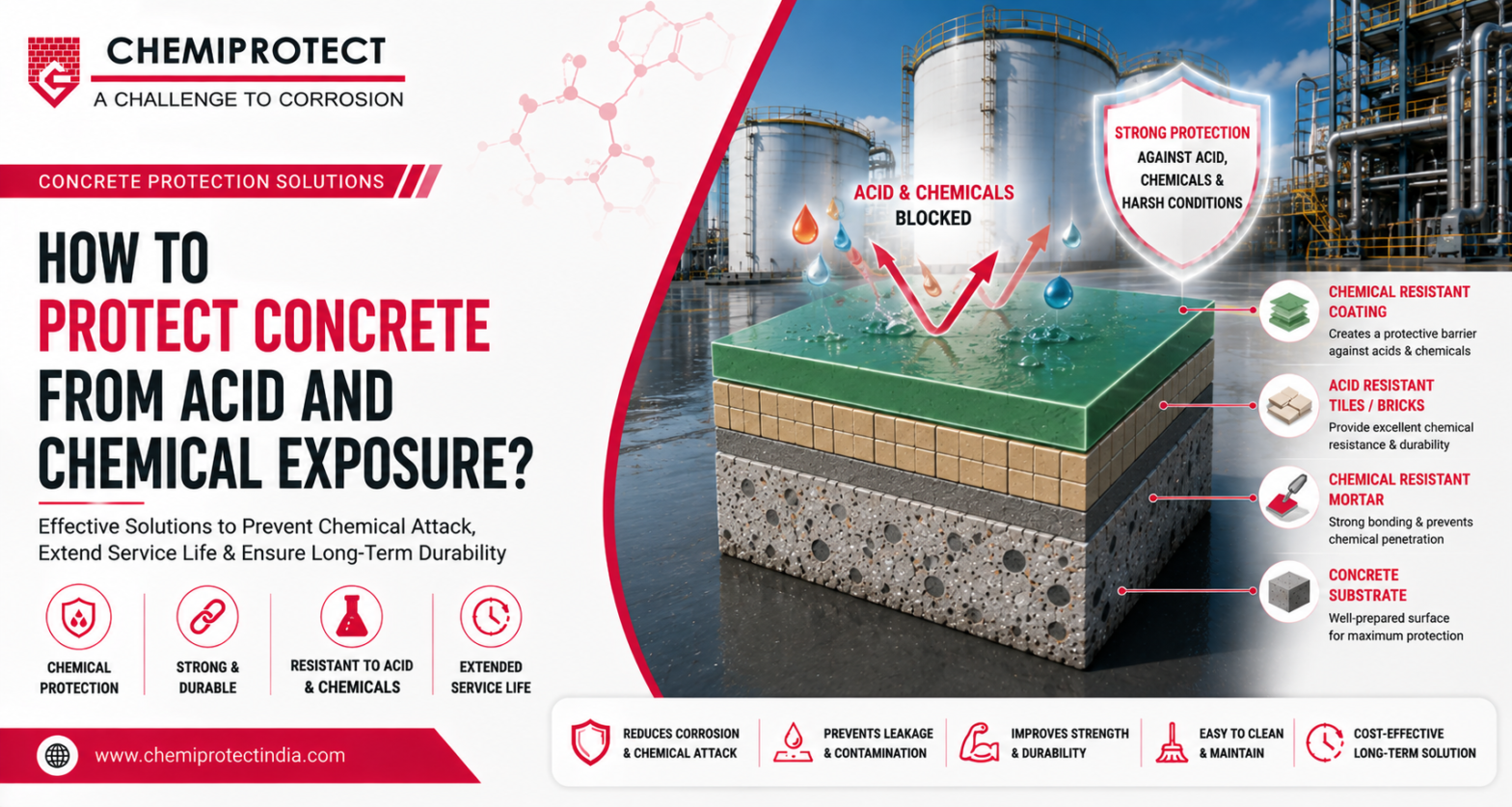
Concrete is widely used in industrial floors, tanks, trenches, drains, processing areas, and other infrastructure because of its strength and versatility. However, concrete can deteriorate when repeatedly exposed to acids, alkalis, solvents, chemicals, moisture, and other aggressive substances. Chemical exposure can damage the concrete surface, increase porosity, cause cracking, and reduce service life. For industries… Continue reading How to Protect Concrete from Acid and Chemical Exposure
How to Choose Acid Resistant Lining for Chemical Tanks: A Complete Guide
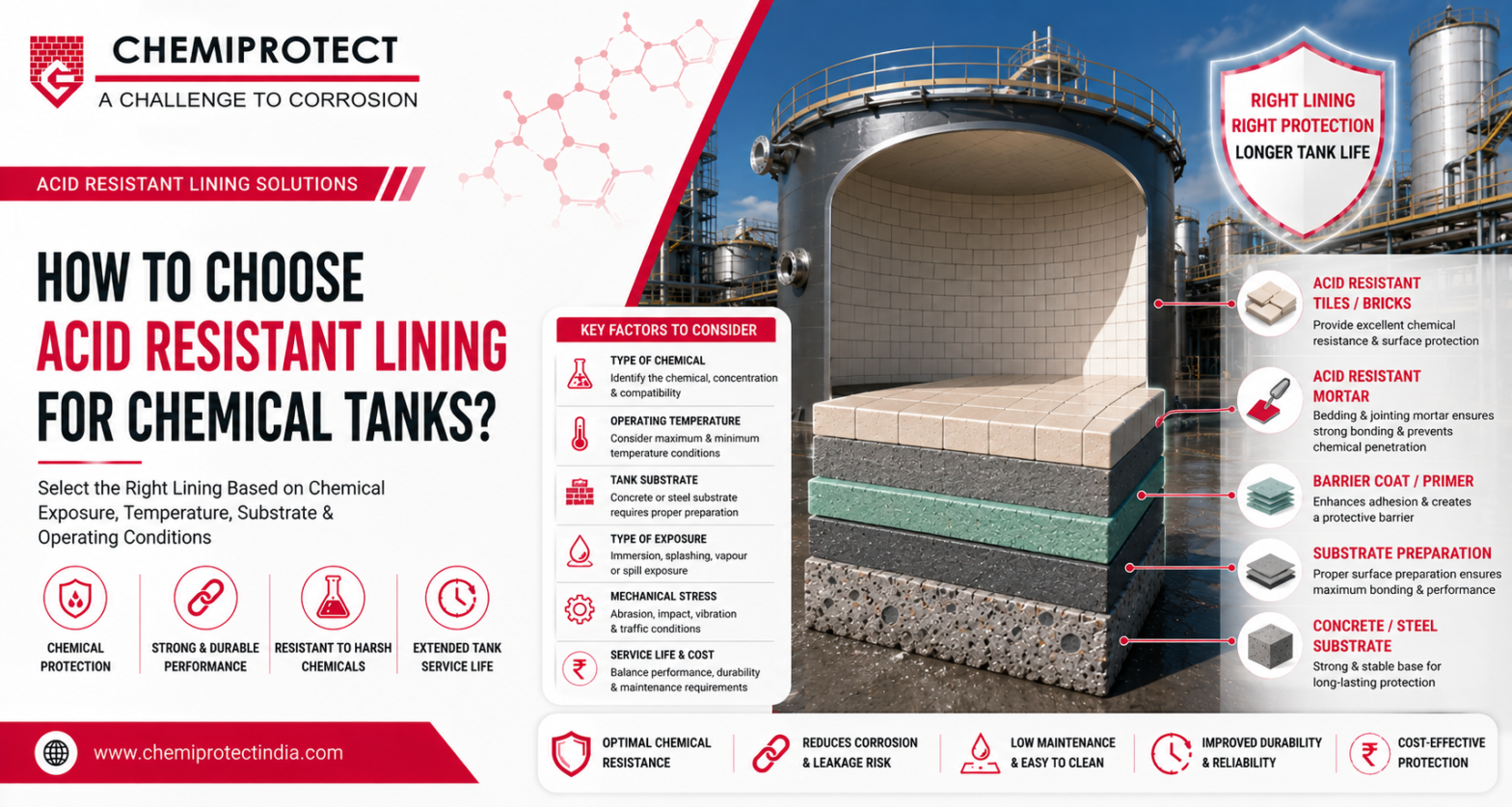
Chemical storage and processing tanks are regularly exposed to acids, alkalis, solvents, moisture, temperature variations, and mechanical stress. Without proper protection, these conditions can cause corrosion, surface deterioration, leakage, and premature damage to the tank structure. Choosing the right lining is therefore essential for protecting chemical tanks and improving their service life. The appropriate lining… Continue reading How to Choose Acid Resistant Lining for Chemical Tanks: A Complete Guide
Difference Between Acid Resistant Tiles and Epoxy Coating: Which One Is Right?
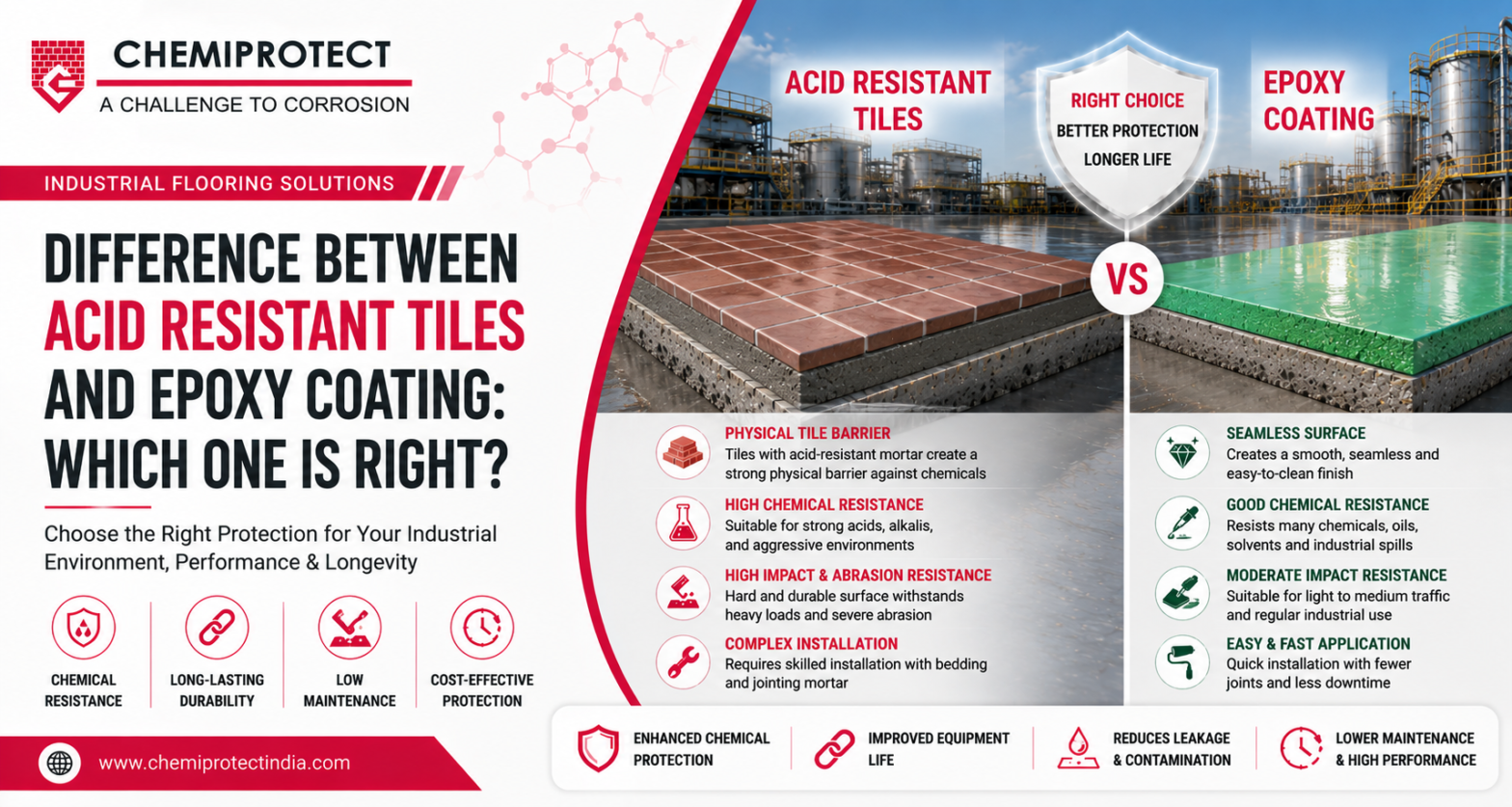
Industrial floors and surfaces are exposed to chemicals, acids, alkalis, moisture, abrasion, heavy loads, and continuous movement. Conventional concrete may deteriorate under these conditions, making protective systems important for durability and service life. Two commonly used solutions are acid resistant tiles and epoxy coatings. Both provide surface protection, but they differ in construction, chemical resistance,… Continue reading Difference Between Acid Resistant Tiles and Epoxy Coating: Which One Is Right?
Polyurethane Flooring for Industrial Applications – Benefits and Uses
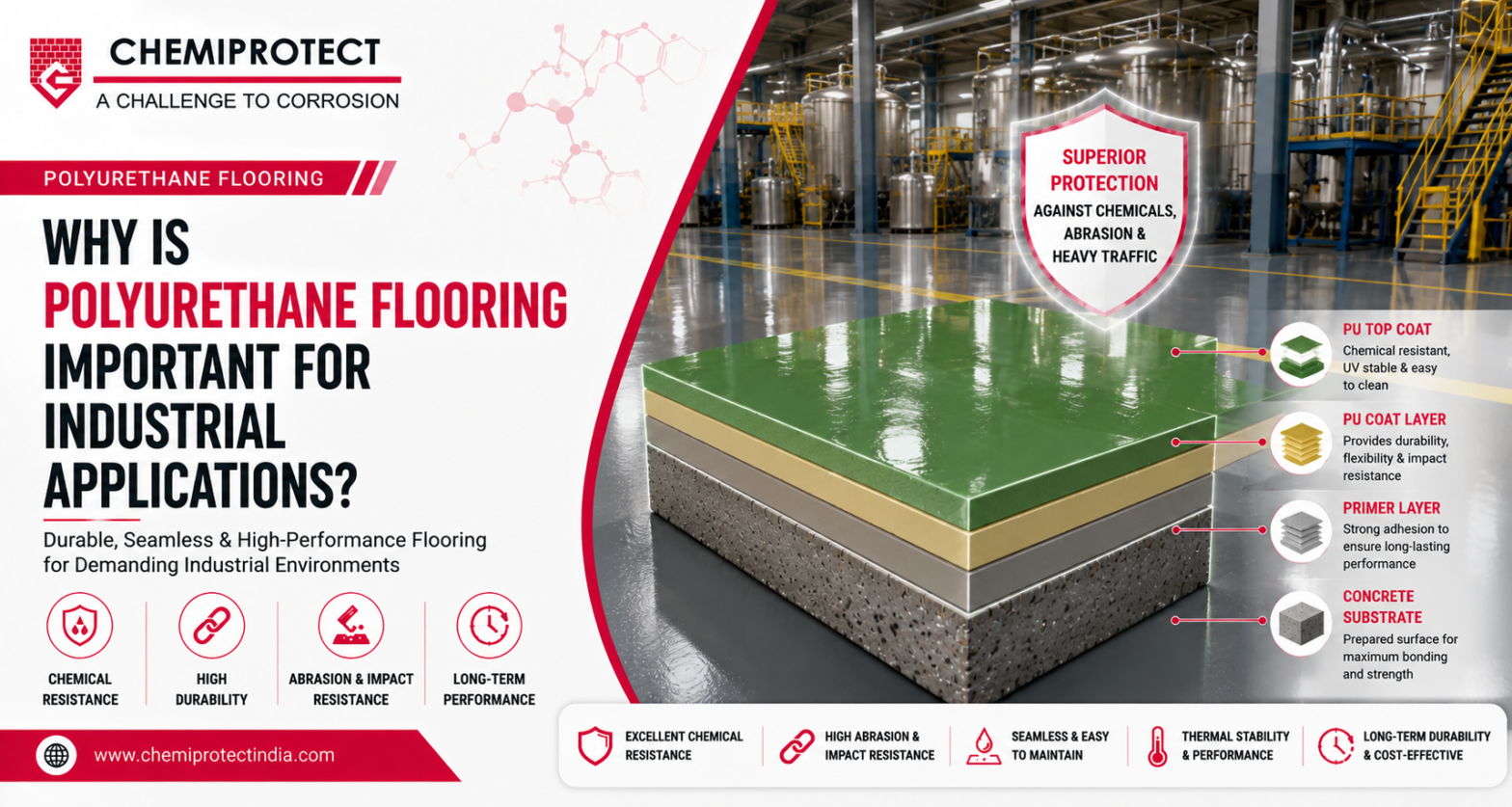
Industrial floors face demanding conditions every day. Heavy equipment, chemical spills, temperature variations, moisture, abrasion and continuous movement can damage conventional flooring. For industries requiring durable and reliable surfaces, selecting the right protective flooring system is essential. Polyurethane Flooring for Industrial Applications provides a durable surface designed for challenging operating environments. Polyurethane, commonly known as PU, can offer resistance… Continue reading Polyurethane Flooring for Industrial Applications – Benefits and Uses